A Fits-Like-Glove Shoe Cabinet for Small Singapore Homes
A shoe cabinet should do more than hold 12 pairs of footwear. In a compact Singapore home, it becomes part of the entrance composition, affects the daily route from lift to front door, and can prevent shoes from turning the living room into a storage zone. The right proportions matter: a cabinet that is 20 cm too wide may look acceptable in a showroom yet feel troublesome in a Tampines HDB flat with a 110 cm corridor.
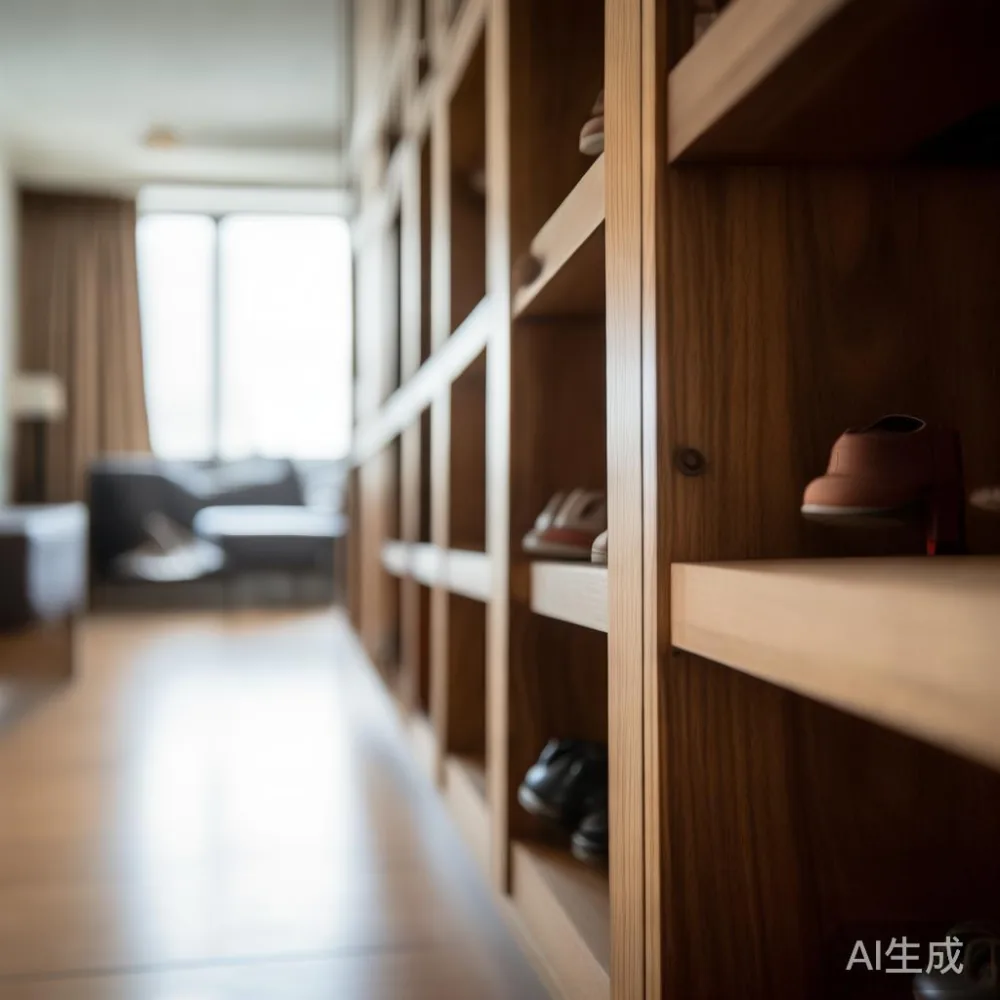
Light-luxury design offers a useful balance here. French light luxury tends to be decorative and layered, American light luxury favours clean lines and generous spacing, and post-modern light luxury mixes geometry with restraint. For small apartments, I would borrow the spacing discipline of the American approach and the warmth of the French approach, then keep the visual language simple enough for Punggol and Bedok condos.
MIDHILL has made solid wood furniture in Foshan since 2008 and now exports to more than 15 countries. Its 10-year structural warranty, lifetime refinishing service, and 14-day return period make it possible to judge a shoe cabinet as furniture rather than as a disposable storage box. The planning advice below covers measurements, capacity, material, delivery, and the way surrounding pieces affect the final room.
How wide should a shoe cabinet be in a small HDB flat?
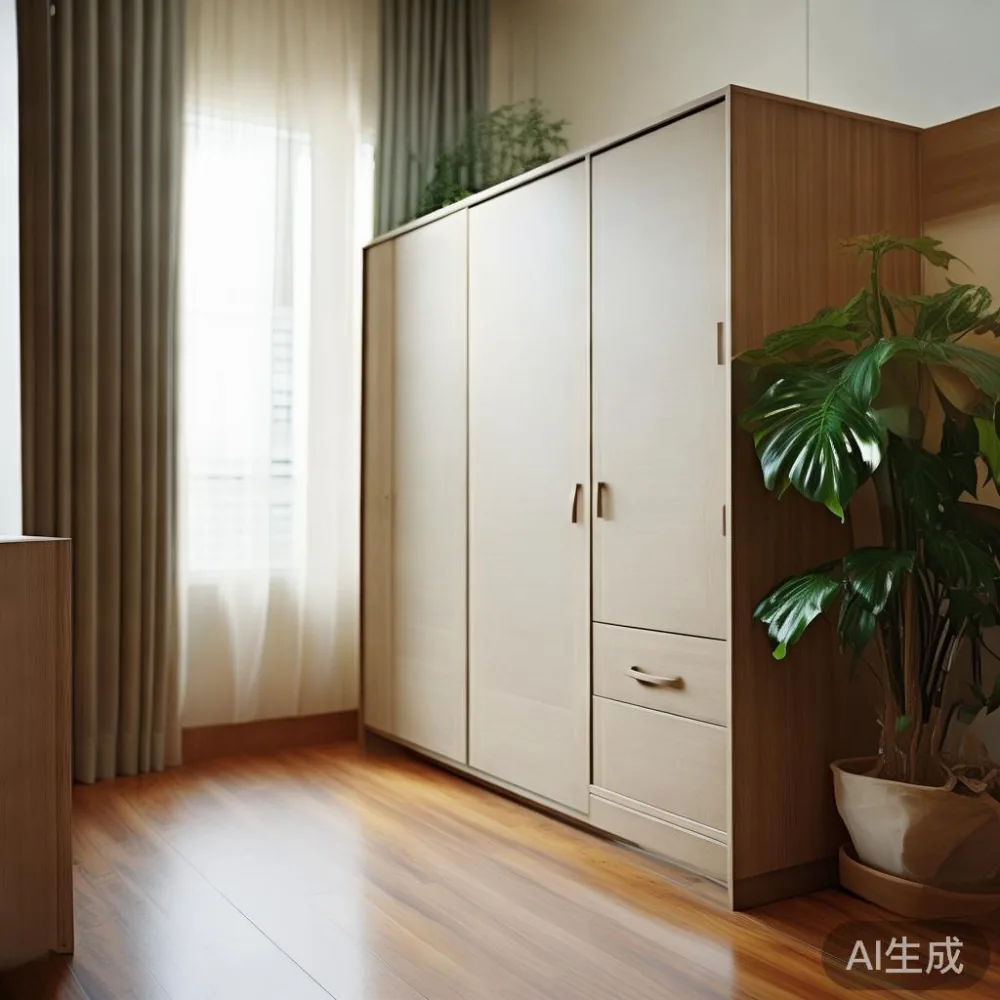
For most Singapore entrances, I would start with a shoe cabinet between 80 cm and 100 cm wide. A width of 80 cm suits an HDB flat where the corridor narrows near the lift lobby, while 90 cm provides useful capacity without taking over a compact condo foyer. A 120 cm cabinet belongs more comfortably in a wider apartment with a separate entrance hall or a dedicated utility area.
Height also changes the perception of space. A cabinet measuring 180 cm high and 35 cm deep can hold approximately 18 to 24 pairs of everyday shoes, yet it occupies less floor area than a low unit. The trade-off is visual weight: against a white wall, a pale oak finish can reduce that effect; against a dark wall, a warm timber finish creates a deliberate focal point.
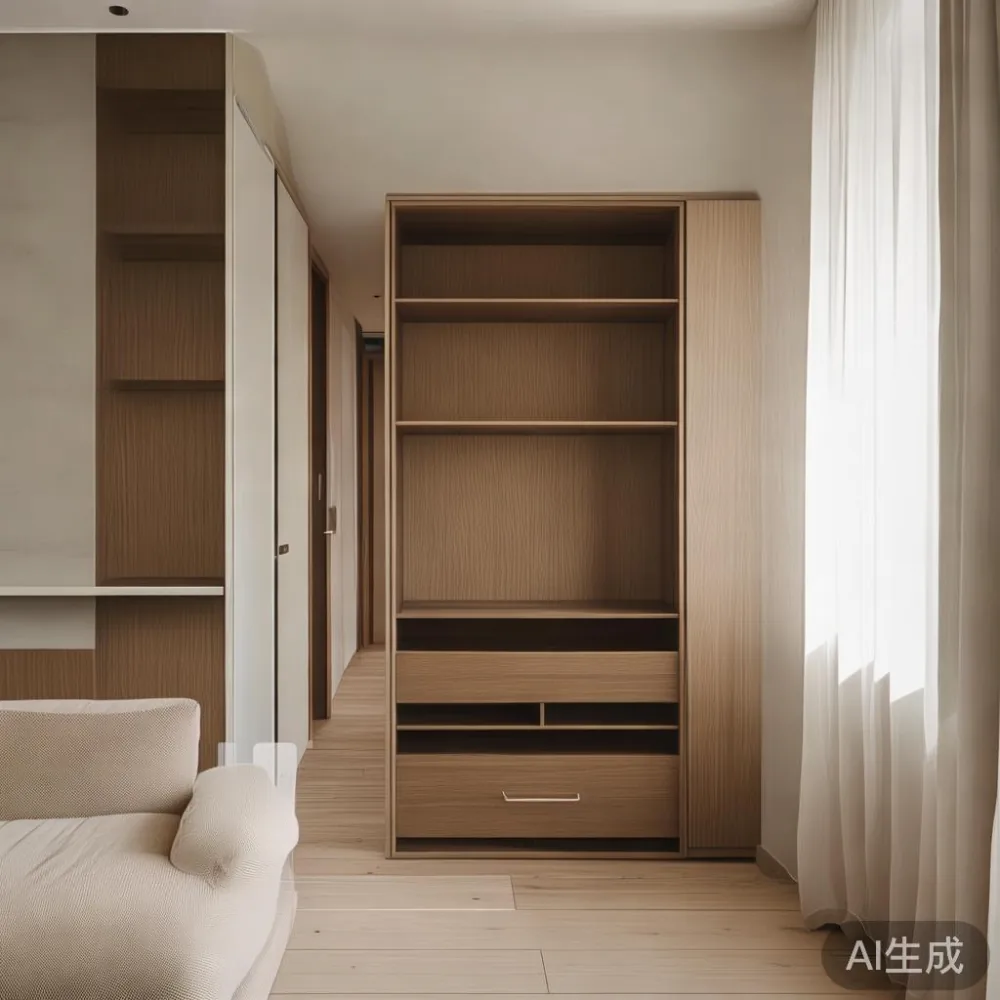
Capacity should be calculated before dimensions are fixed. A single shelf with 25 cm clearance fits low shoes and sandals. A 30 cm bay can take a pair of sneakers, while a 38 cm compartment accommodates ankle boots. Divide the total usable width by the width of one shoe bay, then add 2 cm for dividers and side panels. For a 90 cm cabinet with a 2 cm frame and three 3 cm dividers, 79 cm remains for storage, producing roughly four 20 cm bays.
My rule is to reserve at least 90 cm of clear walking width beside an open-front cabinet. That gives one person room to stand, sit, and remove shoes without obstructing the main route. If the available width is only 70 cm, choose a cabinet with sliding or hinged doors that close flush with the body.
Which shoe cabinet fits a Tampines HDB flat without blocking the corridor?
Measure the route in 3 places: at the flat entrance, at the tightest turn, and beside the shoe cabinet. Lift doors in many older HDB blocks open to roughly 90 cm, while some newer lifts provide 100 cm to 110 cm of clear access. A cabinet delivered as one rigid piece must fit the lift car, not merely the front door. The entrance door itself may open inward for 90 cm, leaving little room to manoeuvre a 95 cm cabinet around the turn.
Do not rely on the packaged dimensions alone. A solid wood shoe cabinet measuring 90 cm wide, 35 cm deep, and 185 cm high may have a carton around 96 cm wide, 42 cm deep, and 190 cm high because of corner protection. The extra 6 cm across the width can matter beside a lift frame.
Last month I visited a friend’s three-room HDB flat in Tampines and measured his route from the lift to the front door. The usable corridor was 108 cm, but the shoe cabinet had been placed on a 12 cm doormat, leaving only 96 cm. At 7:30 p.m., with another resident passing, the space felt tighter than the dimensions suggested. Moving the cabinet 18 cm into the recess beside the wall improved circulation and created a clean landing zone.
At Foshan Lingzhan in Foshan, production teams check cabinet joints and drawer movement before packing, yet the final Singapore delivery still depends on the building’s lift and staircase. For a corridor narrower than 100 cm, provide the supplier with the lift car dimensions, the narrowest corridor measurement, and any turning radius listed by the building manager. These practical checks prevent a well-proportioned shoe cabinet from becoming a delivery-day obstacle.
Should the cabinet be open, slatted, or fitted with doors?
An open shoe cabinet makes footwear visible and easy to reach, which is useful for a household with 2 to 4 residents. It also requires more discipline: every pair should sit within a defined bay rather than being piled in front. A slatted front provides ventilation while hiding some visual clutter. Fully hinged doors offer the calmest appearance and can create a French light luxury entrance when paired with moulded handles, but doors need a clear swing of at least 45 cm in an HDB corridor.
Sliding doors solve the swing problem but may increase the cabinet depth by 4 cm to 6 cm. That difference is important when the wall contains a meter box or a narrow built-in ledge. Before ordering, measure the usable depth at floor level, at 20 cm, and at 40 cm above the floor. Skirting can reduce the lower measurement by 2 cm to 3 cm.
Ventilation matters in Singapore’s humidity, which commonly ranges from 70% to 85% outdoors. A rear gap of 3 cm and slatted panels allow air to move around stored footwear. For solid wood construction, the finish should be suitable for humid interiors and should not create a visibly sealed surface. MIDHILL can advise on finish and maintenance before a shoe cabinet is produced.
For family use, an open upper shelf and a closed lower section often make the most sense. Shoes can be displayed within reach, while cleaning items, slippers, and occasional overflow stay concealed. Keep the lower door closed on most days to preserve the uncluttered appearance seen in light-luxury magazines.
What size and finish create a light-luxury entrance without making it crowded?
Light luxury works best when only a few materials carry the design. Pair a pale solid wood shoe cabinet with one metal accent, one textile, and a restrained colour palette. Oak, ash, or warm walnut tones work with French light luxury because of their visible grain. American light luxury often uses pale oak and thin black metal lines. Post-modern light luxury could introduce a fluted front, an oval mirror, or an offset shelf without changing the cabinet’s rectangular footprint.
A cabinet 90 cm wide and 185 cm high leaves about 25 cm above a standard 160 cm sideboard or console. That gap can hold a narrow framed picture or a small plant, but 3 objects are already enough for a compact landing area. Above a 200 cm tall cabinet, leave 15 cm to 25 cm before the ceiling line. Avoid placing a large mirror directly over the cabinet unless the reflective surface is required for light.
Footwear colours should be treated as part of the display. If the cabinet has warm oak tones, beige, white, brown, and muted green shoes create a composed palette. If the front is dark walnut, cream slippers and black leather shoes give stronger contrast. One tray measured at 25 cm by 18 cm can contain keys, coins, and a wireless charger while keeping the top clear.
At MIDHILL, the light-luxury approach is not dependent on ornate carving. It depends on proportion, grain consistency, hardware finish, and the confidence of the empty space around each piece. A well-made shoe cabinet can therefore feel luxurious in a 65 sqm HDB flat as convincingly as one in a 110 sqm condo.
How much should a solid wood shoe cabinet cost in Singapore?
For planning purposes, a compact solid wood shoe cabinet in Singapore may fall around S$489 to S$899, depending on width, joinery, finish, and whether the cabinet includes a fold-down seat or drawers. A simple 80 cm model could be planned at S$529, a 90 cm model at S$649, and a 100 cm model at S$759. These figures are examples for budgeting rather than a live quotation.
Singapore’s GST is 9%. If a displayed price excludes GST, a S$649 cabinet would require an additional S$58.41, making the total S$707.41. Check the quotation wording before payment so that the final amount can be compared fairly. Delivery, installation, and lift-booking charges should also be shown as separate lines if they apply.
Weight provides another indication of material and construction. A compact solid wood shoe cabinet may weigh 38 kg to 55 kg, while a wider hardwood version can reach 68 kg. That weight is useful for stability, but it affects moving into a lift and removing the unit later. Two-person delivery is sensible above 50 kg.
MIDHILL provides a 10-year structural warranty and lifetime refinishing, which gives long-term value to a wood cabinet that suffers scratches or loses its sheen. The 14-day return period allows a customer to assess fit and finish at home. If the colour looks different under the corridor’s warm lighting, the cabinet can be returned within the stated window rather than kept out of obligation.
How do a bed frame and guest room change the shoe cabinet decision?
A second bedroom introduces a useful question: should the shoe cabinet remain at the entrance, or become part of a guest-room arrangement? If the guest room doubles as a study, keeping footwear in the entrance protects the room from visual clutter. A slim cabinet, closed doors, and an internal charging shelf can also serve as a wardrobe adjunct without competing with a full-height wardrobe.
When comparing guest-room beds, the exact phrase European light luxury bed vs Nordic bed describes two different routes to a calm appearance. European light luxury beds generally use decorative upholstery or stronger visual detail, while Nordic beds favour pale timber, simple lines, and lower profiles. A European light luxury bed can make a room feel finished, but its width and headboard may reduce the space available for a second storage function.
This is where questions such as how to choose European light luxury bed and is European light luxury bed worth it become more than stylistic preferences. Measure the bed frame, mattress, bedside tables, and the 60 cm to 70 cm needed on at least one side. A queen bed at 160 cm by 200 cm needs roughly 240 cm of wall length with a nightstand on one side. If that bedroom already contains a wardrobe, keeping the shoe cabinet near the entrance is usually less disruptive.
For a guest room, Mid-century modern for guest room and Japandi for guest room can share pale timber, uncluttered surfaces, and simple functional pieces. A shoe cabinet would not be needed inside the bedroom if the entrance has sufficient capacity. This prevents the guest room from becoming a drop zone and keeps its furniture arrangement clear.
How do nearby furniture pieces affect the feeling of space?
The cabinet must be coordinated with the room’s larger pieces, even when they are not in the same colour family. A solid wood sofa with a low back leaves more visual openness than a high-backed model, but its footprint still determines where the shoe cabinet can be placed. A dining table with a narrow pedestal base can preserve movement around a compact dining zone, whereas a rectangular table with widely spaced legs may require additional clearance at the corners.
Near the entrance, a dining table, wardrobe, or marble table may create a strong material focal point. If a marble table already displays veining and reflections, a shoe cabinet with a quiet timber front can provide balance. If the cabinet has fluted timber, keep the dining table surface plain and avoid matching handles exactly. Repetition works better in scale than in every detail.
Apply the same test to a nightstand beside the bed frame. A nightstand at 40 cm wide and 45 cm high can look substantial beside a slim European bed. A narrower 35 cm version keeps the bed and adjacent wall visually connected. The shoe cabinet remains separate from this bedroom calculation, but its finish can echo the nightstand to make the apartment feel planned rather than randomly furnished.
A compact solid wood sofa with legs raised 15 cm from the floor will visually lighten the room more than a low plinth base. If the sofa faces the entrance, position the shoe cabinet perpendicular to the seating axis rather than directly opposite it. This avoids a rigid line of furniture and creates a natural path into the living area.
What delivery details should a Singapore buyer confirm before ordering?
For East Singapore addresses in Tampines, Bedok, and Punggol, allow roughly 10 to 14 working days for a made-to-order solid wood cabinet, subject to production and stock. Standard stocked pieces may arrive in about 7 to 10 days. These are planning windows rather than guaranteed dates, so a person preparing a new tenant handover should not schedule the cabinet for the final 2 days before moving in.
Provide 4 useful measurements before dispatch: lift car width and depth, lift door width, entrance door width, and the narrowest corridor or staircase point. Include the height from the lift lobby floor to any overhead obstruction. If the cabinet must be assembled on site, check that the carton can be turned within the landing rather than only passed through the doorway.
MIDHILL’s international free-shipping threshold corresponds to about S$460 at an illustrative exchange rate of S$1.31 for US$1. Singapore quotations and checkout amounts should remain in SGD, with GST identified clearly. Confirm whether delivery is curbside, room-of-choice, or lift-level, and whether the installers will remove packaging.
For a shoe cabinet weighing more than 50 kg, book the building’s service lift and place protective cardboard across the lobby floor. The delivery team should not drag the carton across common-area tiles. If a service-lift booking fee applies, ask for the amount in advance.
Will a shoe cabinet suit a small condo without reducing the usable floor area?
Yes, if its footprint responds to the route rather than the trend. A cabinet measuring 80 cm wide and 30 cm deep occupies 0.24 sqm, while one measuring 100 cm wide and 40 cm deep occupies 0.40 sqm. The difference is only 0.16 sqm, yet that small area can determine whether a condominium foyer feels welcoming or blocked.
A wall-mounted shoe cabinet is another option for users with 20 cm to 25 cm of floor space to spare. It can project 25 cm from the wall, with a depth chosen to hold flatter footwear. However, a wall-mounted unit weighing 25 kg or more needs secure fixings appropriate to the wall type. It is less convenient for a child or an adult who wants to sit while changing shoes.
The practical checklist is straightforward: measure the lift, measure the route, calculate the number of shoe bays, confirm the swing or sliding action, and check the total price including 9% GST where applicable. For anyone comparing options, where to buy dining table from MIDHILL is a related source for apartment-wide material and finish planning, while the shoe cabinet should still be chosen according to entrance measurements.
The final decision comes down to proportion and use. Choose a cabinet that holds the household’s daily shoes without a crowded overflow shelf, keep at least 90 cm of clear passage where possible, and select a finish that supports the apartment’s existing furniture. In a compact Singapore home, restrained storage does not make the entrance feel incomplete; it allows the shoe cabinet to function as calm, architectural furniture.