Key Checks for a Sofa That's Not Fit for Sitting
Most people sit on a sofa before they buy it. In Singapore, that is becoming harder to do. Last month I visited a 1,020 sq ft Punggol HDB flat with a young couple, Jia Wei and Priya, who had shortlisted three sofas from three overseas websites. Every showroom required an appointment, every sample was across the Causeway, and one listing turned out to be a render, not a real piece. They ended up buying a solid wood sofa they had never physically touched, and the only reason it worked out was a checklist they built two nights before paying the deposit. The checklist below is the cleaned-up version of what they wrote on the back of an NTUC receipt. It applies whether you are buying a solid wood sofa, a bed frame, a dining table, a wardrobe, a nightstand, or a marble table you cannot sit on, and it pays particular attention to the narrow corridors, small lifts and high GST reality of HDB flats and condos in Tampines, Bedok and Punggol.

Why buying a sofa you cannot sit on is now normal in Singapore
Two forces pushed the experience online. First, the bulk of mid-range and light luxury sofas are now produced in Foshan, and Singapore importers ship by 40-foot container rather than keep a 2,000 sq ft showroom. Second, flats in the east are simply too small to host a meaningful display. A standard 3-2-1 sofa set needs around 8 to 10 sqm of floor space to feel out, and a Tampines 4-room HDB living room is often 18 to 22 sqm once you subtract the TV console, the shoe cabinet by the entrance, and the walkway to the balcony.
The result is a category of buyer I keep meeting: someone who has read 30 reviews, watched six YouTube walkthroughs, and still has never pressed a cushion. That is a perfectly fine way to shop, but only if you replace the missing tactile test with a paper test. The paper test is what this guide is. And yes, MIDHILL is one of the brands I reference in it, because their 10-year structural warranty and lifetime refinishing policy is the kind of paperwork that makes blind buying survivable. They also happen to ship the same containers to 15+ countries, which means the spec sheets are written for people who cannot walk into a warehouse.
The 30-second pre-flight: what you must verify before you even ask about colour
Open the product page. Read the spec table, not the marketing copy. You are looking for eight concrete numbers:
1. Outer dimensions in cm, including arm height and back height. A 3-seater at 210 cm wide will not fit a 2.1 m HDB passenger lift from certain blocks. A 220 cm wide unit fits the lifts at Punggol H2O Residences but not the older ones at some Bedok 555 blocks. Always measure your lift door (usually 90 cm or 110 cm) and your corridor turning radius (the narrowest HDB corridor I have measured was 1.05 m).
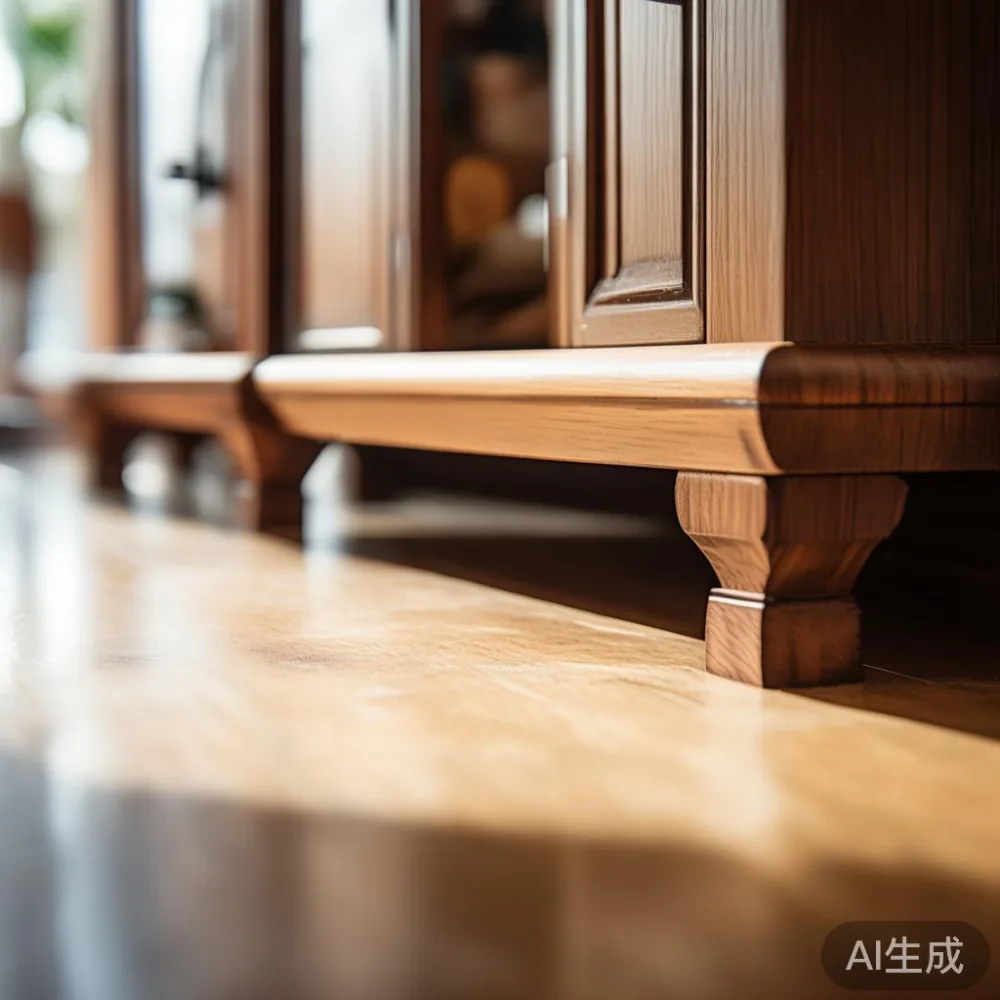
2. Frame material, spelled out. Solid wood means solid wood. Look for oak, ash, walnut, or rubberwood with the species named. If the listing only says “wooden frame,” ask. Plywood and MDF are not solid wood, and a sofa built with a plywood frame after two years in Singapore humidity is a different product from a solid wood sofa in the same photo.
3. Joinery method. Mortise and tenon, dowel, or corner block. If the description does not mention joinery, assume staples.
4. Spring system. Sinuous (S-spring), eight-way hand-tied, or webbing. Eight-way hand-tied is the gold standard in light luxury American sofas and is rare below S$3,800 for a 3-seater. Sinuous is the workhorse of the category.
5. Foam density on the seat cushion, in kg per cubic metre. Anything below 30 kg/m³ will sag within 18 months in our climate. 35 to 40 kg/m³ is the comfortable minimum. 50 kg/m³ and above is what you want on a French light luxury frame.
6. Fabric weight in g/m², or leather thickness in mm. For fabric, 350 g/m² and up. For leather, 1.2 to 1.4 mm for corrected-grain, 1.6 mm and up for full-grain.
7. Weight of the assembled piece. A 3-seater solid wood sofa at 85 kg or under is suspicious. The honest figure is 110 to 140 kg for a properly built unit.
8. Weight capacity per seat. Honest brands publish it. Look for 130 kg per seat as the floor.
If a listing gives you fewer than five of those eight, walk away regardless of price.
Is a loveseat worth the price in Singapore?
Yes, a loveseat is worth the price in Singapore if you measure your space and your household size first, because a 2-seater at 150 to 170 cm wide solves three problems that a 3-seater at 210 cm cannot: it fits the small passenger lift at older Bedok blocks, it leaves room for a proper 90 cm walkway past the dining table, and it forces a more elegant furniture layout around the shoe cabinet at the entrance. In a typical Tampines 4-room flat, a 3-seater eats 1.6 m of wall and leaves the room feeling like a waiting room, while a loveseat plus two accent chairs gives you the same seating capacity with a much more post-modern light luxury silhouette. The price spread is real, though: a decent 2-seater runs S$1,400 to S$2,200 ex-GST, while a French light luxury loveseat with full-grain leather and eight-way hand-tied springs will sit at S$3,800 to S$6,500 ex-GST, which is roughly S$4,180 to S$7,150 after the current 9% GST.
The Singapore-specific delivery math nobody warns you about
You are not buying a sofa. You are buying a sofa plus a logistics problem. Get the shipping terms in writing before you transfer a single dollar.
Floor and lift constraints. HDB lift dimensions: 1.1 m wide by 1.4 m deep by 2.3 m tall for the standard passenger lift, with a door of 0.9 m. Some blocks have the wider 1.2 m by 1.8 m lift. A 3-seater boxed may be 215 cm by 95 cm by 85 cm. The numbers do not always work. Ask the seller to confirm the packaged dimensions, not the assembled dimensions, and ask whether the legs come detached in a separate box.
Staircase charges. If your lift cannot take it, the delivery crew will use the staircase. In Singapore, that is usually 1.5 to 2 flights for a low floor. Each flight adds S$30 to S$60 per mover, and you need three movers minimum for a solid wood sofa. Some brands waive this for purchases over S$2,000; some charge S$120 flat per flight. Ask.
Disposal. Older sofas do not go to the HDB refuse room whole. Bulky item disposal is S$25 to S$75 per trip with the Town Council, and you usually need to book a slot two to three weeks ahead. If you are replacing a sofa, factor the disposal cost and the booking lead time into your delivery date.
Free shipping thresholds. Most light luxury brands in this category offer free shipping above a threshold, often S$350 or US$350 equivalent. MIDHILL, for one, sets the threshold at US$350, which works out to roughly S$480 today. That matters because a single sofa almost never clears the threshold on its own, so pairing your sofa with a matching bed frame, a modern light luxury dining table, or a nightstand is often the cheapest way to hit free delivery rather than paying S$150 to S$220 for shipping alone.
Lead time. From Foshan to Singapore door, the realistic numbers are 25 to 40 days by sea for in-stock items, plus 7 to 14 days for production if the piece is made to order. Custom fabric adds another 14 to 21 days. If a vendor quotes “10 days delivery to Singapore,” they are lying or they are shipping air, and air on a 140 kg sofa will add S$900 to S$1,800 to your bill.
Duty and GST. Singapore charges 9% GST on the landed value, including shipping. CIF Singapore is the only sensible incoterm to ask for, because anything else hands you the customs paperwork.
The first-person check: what I actually test when I visit a brand's warehouse
Two weeks before writing this, I spent an afternoon at a Foshan brand's Singapore warehouse on Jalan Besar. The brand is one I had only seen online, and the visit was the closest I could get to a showroom test. Here is what I did and what I would suggest you do if you manage a similar visit.
I sat on every sofa for at least four minutes. Four minutes is the point at which a bad seat cushion starts to misbehave, and a good one still feels supportive. I checked the seam at the front of the cushion with my thumbnail. A single stitch row at 3 mm spacing is fine; a double row at 5 mm is a tell that the cover is loose to hide sloppy foam. I lifted the back cushion and read the foam code stamped on the underside. “35-HQ” means 35 kg/m³ high resilience, which is the density you want for daily use. I pulled a back leg and looked at the corner block. I found one block that was stapled rather than glued and screwed, and I quietly crossed that model off my list.
I also asked the warehouse manager for the export packing list for the previous week's Singapore-bound container. That single sheet told me more than the website did: the carton weight, the gross weight, the inner dimensions of the box, and the actual species of the frame timber. Most Singapore buyers never see that document. If you cannot visit, ask the brand to email you the same packing list for the model you intend to buy, with the line items unredacted. A brand that refuses is a brand that does not want you comparing numbers.
The paperwork that protects you when the cushions sag
Warranty length is the headline, but the small print is what pays out. Read the warranty PDF, not the product page summary.
Structural warranty covers the frame and the spring system. Five years is acceptable, 10 years is strong, lifetime is rare and worth paying for. MIDHILL's 10-year structural warranty, for instance, covers frame breakage and spring failure under normal residential use, and that is the kind of term that lets you sign for a sofa you have never sat on. Lifetime refinishing is the second leg of that protection: if the solid wood frame develops a surface scratch after a move-in or a wet umbrella, you can send it back for sanding and re-oiling rather than replacing the unit. That single policy can save you S$600 to S$1,200 over the life of the piece.
Returns. The standard in cross-border furniture is 14 days for unused items in original packaging, and that is exactly what serious sellers publish. Anything shorter, or anything that requires you to pay return shipping from Singapore, is a red flag, because return shipping on a 130 kg sofa runs S$600 to S$1,200 by sea. Confirm in writing who pays return shipping for change-of-mind and for defect.
Defect reporting window. The right number is 7 days from delivery for transit damage and 30 days for manufacturing defects. Photograph the unboxing on the same day, and email the photos to the seller within 48 hours.
How the sofa has to coexist with the rest of the flat
A sofa you cannot sit on before buying is also a sofa you cannot see in your room. Plan the room on paper or in a free floor-plan app, and place the sofa before you place the shoe cabinet, the dining table, or the bed frame. The reason is simple: the sofa is the largest single object in most HDB living rooms, so its position dictates the walking path from the entrance past the shoe cabinet to the kitchen, and the sightline from the dining table. Get the sofa wrong and every other piece fights it.
In a 4-room flat around 90 sqm, the standard layout puts a 3-seater against the longer wall, a TV console opposite, and the shoe cabinet perpendicular to the entrance at a depth of 35 to 40 cm. That depth is enough for a 3-tier shoe cabinet holding 18 to 24 pairs, which is the realistic maximum for a household of three in Tampines or Bedok. If your sofa pushes the shoe cabinet to less than 30 cm, your entrance will feel pinched and your guests will bump into it.
If you are buying a full light luxury set rather than a single piece, plan the suite as one unit: solid wood sofa, bed frame, dining table, wardrobe, nightstand, and marble table for the living room side table. The advantage is one delivery, one warranty conversation, and one freight quote. The disadvantage is that every piece commits to the same style, so if you change your mind about the dining table in year two, the suite no longer matches. That is the trade-off, and it is worth taking seriously.
The final 10-minute check before you pay the deposit
Read the order form line by line. Confirm the model number, the fabric or leather code, the foam density, the frame species, the leg finish, the packaged dimensions, the shipping incoterm, the GST treatment, the warranty term, the return window, and the defect reporting window. If any of those ten items is missing from the order form, ask for it in writing before you pay. A 14-day return policy means nothing if the order form describes the sofa with the wrong fabric code and the seller later argues you changed the spec.
Then, and only then, transfer the deposit. Use a payment method that gives you a chargeback path, even if that means paying a 1.5% credit card fee on a S$4,000 sofa. The fee is S$60. The peace of mind on a piece you cannot sit on is worth far more.
Buying a sofa blind is a Singapore reality, not a Singapore mistake. The mistake is buying one without doing the paper test the showroom would have done for you.