Master Furniture Warranty Reading: Tips for Savvy Shoppers
I learned this lesson the hard way. Last month I visited a friend's new Tampines HDB resale flat and watched him wheel a 1.8 m solid wood bed frame up a 1.1 m-wide service corridor on a trollev dolly. The frame arrived with a 3-page warranty booklet, and he had never opened it. Two months later, one of the middle support slats cracked, and the maker told him the "lifetime" coverage he remembered from the website only applied to the frame itself, not the slats, not the drawer runners, and not the lacquer. He paid S$180 for the fix. That is the moment I sat down with my own MIDHILL paperwork and read it properly, line by line, with a highlighter and a coffee.

This guide is for anyone in Singapore who has just ordered a solid wood bed frame, a dining table, a wardrobe, or a shoe cabinet from a Foshan maker like MIDHILL and wants to know what is actually covered before something goes wrong. We will work through the eight clauses that matter, translate the legal language into plain English, and finish with the questions you should send to your supplier before you pay the deposit. A short detour through local HDB constraints is unavoidable because lift and corridor widths dictate which warranty claims are realistic in the first place.
Why does the fine print matter so much in Singapore HDB flats?
Picture this. Your new 2.4 m-tall shoe cabinet arrives in Tampines, the lift opening measures 1.2 m by 2.1 m, and the trolley fits with 8 cm to spare. Great. The warranty then says "free replacement for transit damage reported within 48 hours of delivery." You sign the delivery note, the movers leave, and at midnight you notice a 12 cm crack on the back panel. You call the supplier the next morning and they point to clause 7: "damage must be photographed in original packaging before assembly." You have already built the cabinet. The claim is refused. This scenario is common in Bedok and Punggol BTOs, where owners do their own assembly in tight corridors to avoid paying the S$80 assembly fee.

Local context matters more than people think. A typical Singapore HDB service lift is roughly 1.1 m to 1.3 m wide. A solid wood dining table for six sits at about 1.8 m long, so it almost never enters the lift in one piece. That means any warranty for "factory defects" has to be tested at the doorstep, before the legs are bolted on. If the piece goes up in a lift and a panel chips on the way, that is transit damage, not a manufacturing fault, and the two are covered differently. Knowing this distinction saved my colleague S$240 when a marble table top showed a hairline crack after the legs were attached in the flat. The supplier replaced the top within nine working days once we produced the unboxing video.
What is the best work from home for a small apartment?
The best work from home for a small apartment is a single solid wood bed frame with a pull-out desk, because it converts a 3 m by 3 m HDB bedroom into a sleep-plus-office zone without claiming a second room, and because the bed and desk share a single warranty document, claims stay simple. This is the format most Singapore freelancers in Punggol and Sengkang adopt when their unit is a 4-room 92 sqm flat and they need a guest room, a study, and a master bedroom in one footprint.
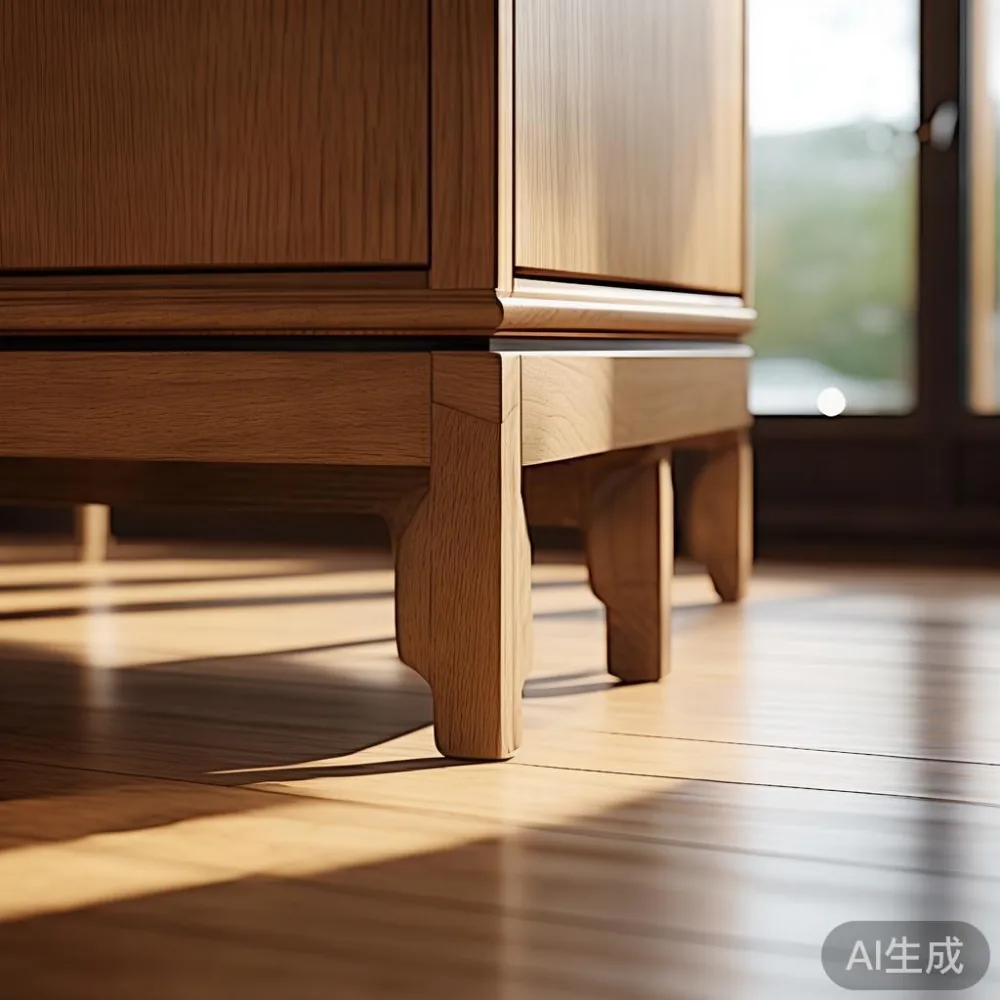
Why a single document helps: a separate desk and a separate bed frame mean two warranty registrations, two delivery windows, and two chances for a courier to scratch a panel against the corridor wall. A combined unit, or a light luxury solid wood sofa that folds flat into a single bed, carries one warranty number, one delivery, and one checklist. MIDHILL ships these combinations as one carton in most cases, which is why the warranty booklet is usually stapled to the back of the assembly manual rather than slipped inside a separate envelope. Keep that booklet. Photocopy it. Photograph page 1 and page 8, the two pages that list coverage and exclusions.
When you shop, ask whether the light luxury American or French style sofa bed is classified as a "bed frame" or as a "sofa" under the warranty. The classification changes which moving parts are covered. Hydraulic lift mechanisms on a sofa bed are usually covered for 3 years; gas struts on a European-style storage bed are usually covered for 5; drawer runners on a nightstand with two drawers are usually covered for only 1 year. Knowing the category before you buy is the only way to compare like for like between two suppliers.
Which warranty clauses actually protect your shoe cabinet?
The shoe cabinet is the easiest piece to misunderstand, because it is treated by some makers as a wardrobe, by others as a cabinet, and by others as a "storage accessory." Coverage shifts accordingly. A 1.2 m three-tier shoe cabinet from MIDHILL, weighing about 38 kg and built from imported oak with a matte lacquer, falls under the maker's main furniture warranty line, which is a 10-year structural warranty on the joinery and a 1-year surface warranty on the finish.
Structural coverage means the legs, the shelves, the back panel, the cam-lock joints, and the anti-tip hardware. If a middle shelf bows more than 5 mm under a 12 kg load after eight months, that is structural. If the matte lacquer develops orange-peel texture in the humidity of a Singapore bathroom-adjacent entryway, that is surface, and the surface warranty is shorter. A Post-modern king bed UAE export that shares the same Foshan factory will often carry the same 10-year structural term, because the joinery standard is identical even if the headboard style is different. That is the kind of detail you can only see by comparing the small print across two brochures.
Drawer runners deserve their own paragraph. Most mid-range shoe cabinets use side-mount full-extension runners rated for 30,000 to 50,000 cycles. A Singapore household opens a shoe cabinet roughly 4 to 6 times a day, which works out to about 2,000 cycles a year. The runner warranty, where it exists, is typically 2 years. After that, replacement sliders cost around S$18 to S$32 per pair plus labour. If your contract specifies "YDT" or "Hettich" runners, write the brand into the warranty email and ask the supplier to confirm in writing that the named brand is what will be shipped, not a substitute.
How do you decode the eight common warranty phrases?
Here are the phrases I have seen most often on Foshan paperwork translated for a Singapore buyer.
"Structural defect." Means a load-bearing component fails under normal use. A cracked leg on a solid wood sofa, a snapped slat on a bed frame, a split side panel on a wardrobe. Excludes cosmetic surface issues.
"Normal residential use." Means a household of up to four adults in a non-rental property. Excludes commercial use, which includes home-based businesses with regular foot traffic, even if the front door says "Studio." A bed frame used by a tenant who rotates every three months wears out about 2.5 times faster than the same frame in an owner-occupied flat.
"Free replacement." Usually means free parts only. Labour, disassembly, and the trip to your flat in Clementi or Bukit Batok are often charged separately. Ask for the labour rate in writing; typical Singapore rates for a carpenter visit run S$60 to S$120 per hour with a one-hour minimum.
"Lifetime." In furniture language, lifetime usually means the reasonable useful life of the product, often defined as 7 to 10 years. After that, the maker may offer repair at cost. MIDHILL offers lifetime refinishing on solid wood tops, which is a separate benefit from the warranty and worth understanding on its own.
"Acts of God." Includes Singapore humidity, which sits at 70 to 90 percent year-round. Most surface warranties exclude warping above 5 mm caused by humidity, but they do cover warping caused by manufacturing glue failure. A moisture meter reading taken at delivery, kept in your records, is your strongest evidence in a dispute.
"Pro-rata." The maker pays a percentage of the replacement cost based on how long you have owned the piece. A dining table covered for 5 years, claimed in year 3, might attract a 40 percent replacement discount rather than a free new table.
"Void if relocated." Some warranties reset to zero if you move the piece. Singapore HDB upgraders move every 5 to 7 years on average, so this clause can wipe out half a warranty. Ask whether the warranty transfers to the new address, and whether the counter resets.
"Original packaging." The maker wants the piece returned in its foam, its cardboard, and its wooden crate. A flat-pack wardrobe from Foshan comes in 3 to 5 cartons weighing 18 to 42 kg each. Keep the cartons for at least 60 days. A Tampines mover once charged S$120 just to dispose of 14 bulky cartons after a customer assembled the unit on day 2.
What about shipping, GST, and the 14-day return window?
Singapore imports furniture with an 8 percent GST on the CIF value plus a small customs fee. A Foshan shipment above S$400 in declared value will attract GST, and most warranties attach to the GST-paid invoice, not the marketing brochure. Keep the invoice PDF and the payment receipt in the same folder.
Free shipping over US$350 translates to about S$470 at current rates. Below that threshold, a Foshan-to-Singapore shipment on a shared container runs S$180 to S$260 for a single carton, and S$40 to S$60 per additional carton. Delivery to a Tampines ground-floor unit takes 28 to 38 days door-to-door from Foshan, including 12 to 18 days at sea and 2 to 4 days for Singapore customs clearance and last-mile delivery. Punggol waterfront units sometimes add a S$25 pier-side handling surcharge.
The 14-day return window starts on the day of delivery, not the day of ordering. To use it, the piece must be unused, in original packaging, and photographed from six angles. Return shipping from a HDB flat to the maker's Singapore warehouse in Tuas costs S$60 to S$95 per carton, and is usually deducted from the refund. A S$1,580 dining table ordered, delivered, and returned in this window typically refunds about S$1,420 after the deductions.
Which questions should you send to your supplier before paying the deposit?
Send these five questions by email and insist on a written reply that is signed, dated, and attached to your order. Keep the thread for the entire life of the warranty.
1. "Is the 10-year structural warranty pro-rata or full replacement, and does it reset if I relocate from Tampines to a Bedok BTO in year 4?"
2. "Do the drawer runners on the shoe cabinet carry a separate brand name and a separate warranty term, and which brand will actually be shipped?"
3. "What is the labour rate in SGD per hour for an on-site repair inside a Singapore HDB flat, and is there a minimum charge?"
4. "Does the lifetime refinishing benefit apply to the matte lacquer on my light luxury American-style solid wood bed frame, and how many refinishing sessions are included?"
5. "If the marble table top arrives with a hairline crack, is replacement covered under transit damage or under structural defect, and who pays the S$60 disassembly fee?"
Suppliers who answer these clearly within 24 hours are usually the suppliers who honour their paperwork three years later. Suppliers who reply with a sticker emoji and a brochure are usually the suppliers who vanish when the slat cracks.
How do you build a paper trail that holds up in a dispute?
A paper trail is the difference between a S$0 repair and a S$400 repair. Here is the minimum file I keep for every MIDHILL order, and I keep it in a single folder named with the order number.
Day 0. The order confirmation email with the warranty booklet attached. The marketing brochure with the dimensions in cm. A screenshot of the product page with the warranty headline.
Day of delivery. An unboxing video, shot in 4K from a phone on a tripod, that captures the carton condition, the foam, the wooden crate, and every panel as it is removed. Read the serial number on the carton aloud. Photograph the moisture meter reading on the floor of your entryway. Photograph the lift door and the corridor corner where the trolley turned.
Day 7. A second set of photographs after the piece has settled into the room's humidity. A 30-second video of every drawer opening and closing on the shoe cabinet.
Day 30. A short email to the supplier confirming that the piece is in good condition, with one photo. This shows good faith and starts a paper trail that future claims can reference.
Year 1. A photograph of the piece in its current condition. Year 3. Another. Year 5. Another. By the time you reach the 10-year structural mark, you have seven dated records showing that you maintained the piece, used it in a residential setting, and reported nothing wrong until the moment something went wrong.
This is not bureaucracy for its own sake. It is the difference between a phone call that ends in a free replacement part shipped from Foshan in 14 days, and a phone call that ends in "sorry, our records show no prior contact."
What is the smartest way to use the warranty once you have it?
Use the warranty like a service plan, not like an insurance policy. Most Singapore owners never make a claim because the small issues resolve themselves with a tube of wood filler and a 30-minute YouTube video. Reserve your claims for the structural problems you cannot fix yourself, and you will find suppliers more willing to help, because your claim history is clean.
If something minor does go wrong, fix it yourself, log the fix in your file, and email the supplier once a year with a summary. This builds a relationship. When the real issue arrives in year 6, the maker already knows your name, your flat, and your style choices. That personal history is worth more than any clause in the booklet.
Finally, treat the warranty as one signal among several. A 10-year structural term with a S$60 labour minimum and a 48-hour transit damage window is a real warranty. A "lifetime" term with no labour coverage, no named runner brands, and a "void if relocated" clause is marketing. Read both carefully, and you will never be caught out again.