How Humidity Affects Solid Wood Furniture in Singapore Homes
Singapore’s equatorial climate keeps timber furniture in a near-constant cycle of moisture movement. Outdoor relative humidity may range from roughly 65% to 90% across the day, while an air-conditioned HDB flat can fall to about 45% during the night. A shoe cabinet beside an entrance corridor experiences both zones: humid evening air entering the flat, dry air from the living room, and repeated temperature shifts from residents returning home. Over 12 months, these changes can produce swelling, shrinking, joint movement, surface checking, and mould risk.
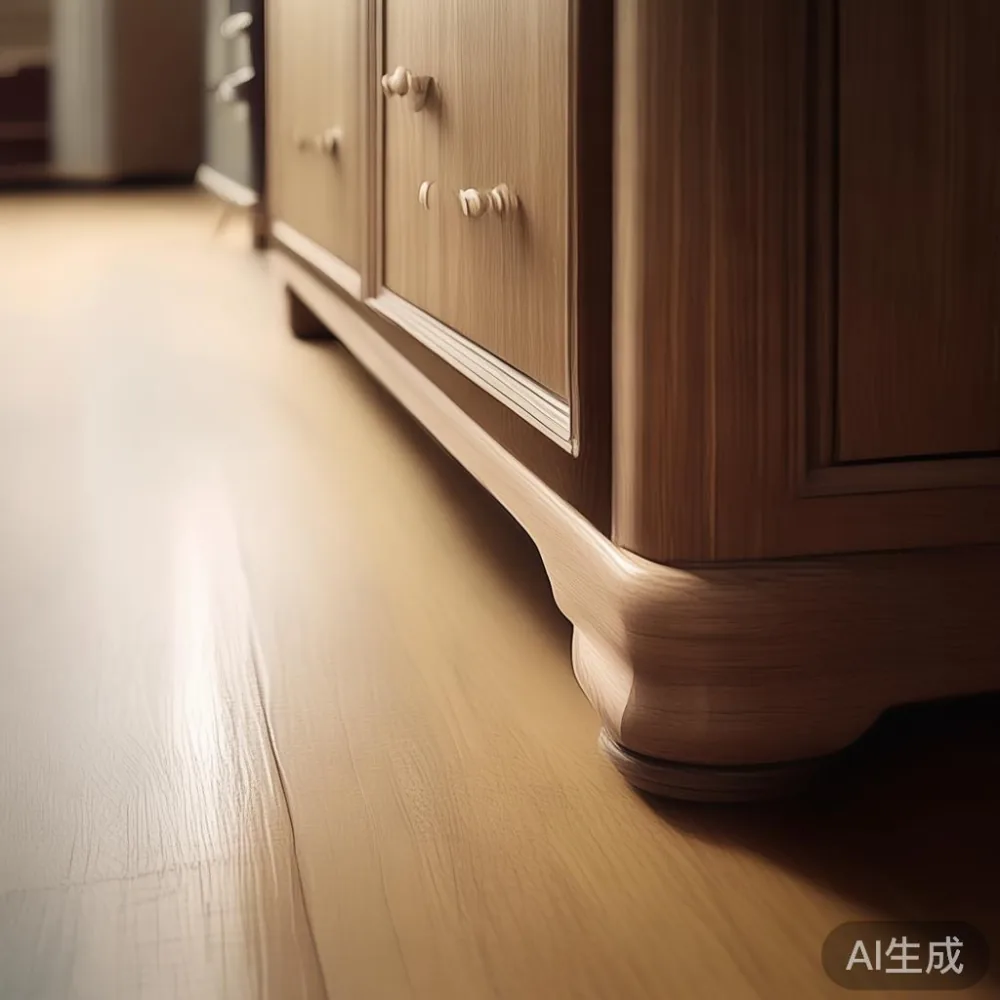
For MIDHILL, humidity management is part of furniture design rather than an afterthought. Solid wood is not sealed against moisture like glass or metal; its pore structure allows it to absorb and release water vapour. Good construction reduces the visible consequences, while sensible placement and care determine how long a piece remains stable.
Why Singapore Humidity Changes Solid Wood
Wood reaches equilibrium gradually as its moisture content follows the relative humidity around it. In an outdoor environment at 28°C and 80% relative humidity, many hardwoods sit around 16% to 20% moisture content. At 22°C and 50% humidity, the same timber may contract to approximately 10% to 13%. A change of several percentage points across a 60 cm panel can create measurable stress at joints, veneer edges, and door frames.

The risk is especially relevant in Singapore HDB flats and condos in Tampines, Bedok, and Punggol. A shoe cabinet may be installed beside the main door, near a balcony, or against a corridor wall where service shafts and air-conditioning vents create local condensation. It can also be compressed into a narrow foyer where the lift opens directly onto a common corridor. Singapore’s annual rainfall exceeds 2,200 mm, and the country’s warm sea air keeps humidity refined for much of the year.
Air movement matters as much as the monthly average. A cabinet receiving gentle ventilation dries more evenly than one trapped against a cool exterior wall. Direct air-conditioning outlets are also unsuitable because they can make one face of the timber contract faster than another. The objective is not to keep the shoe cabinet dry at all costs; it is to prevent abrupt and uneven changes.
What Does Humidity Do to a Shoe Cabinet?
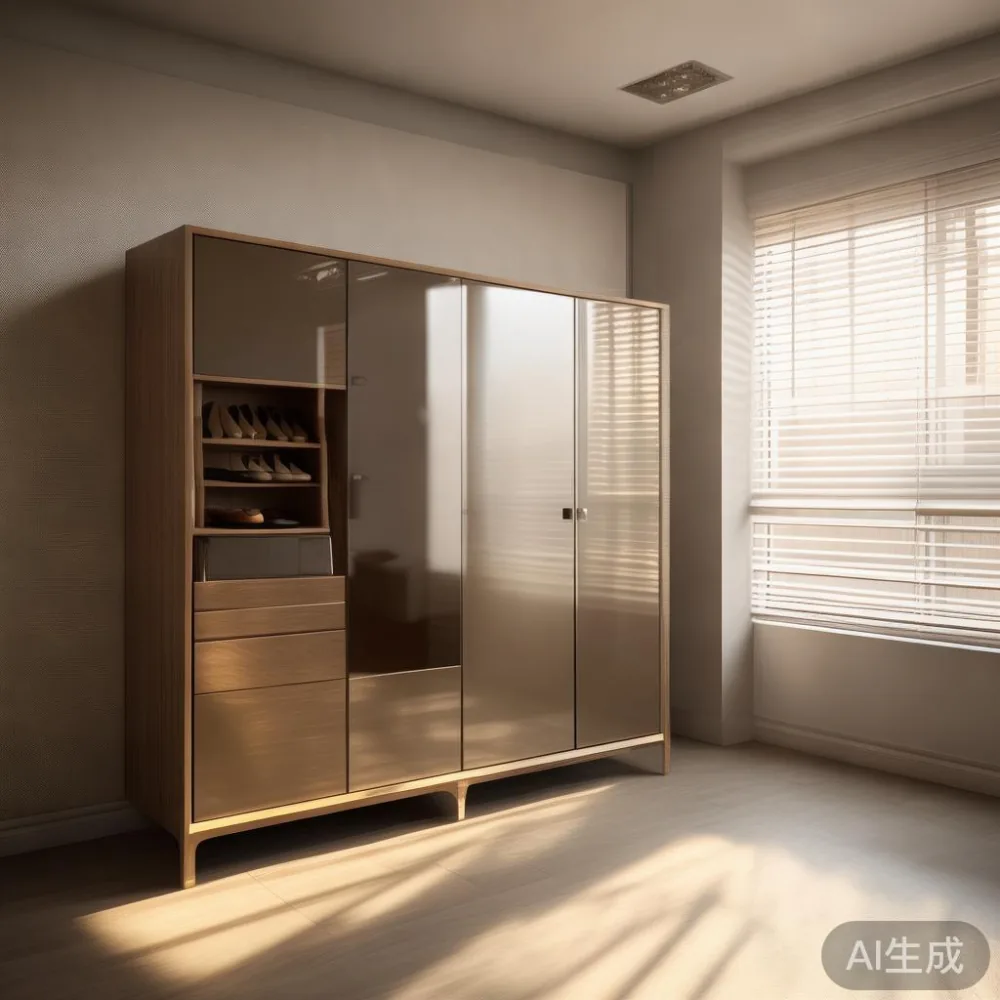
A well-built solid wood shoe cabinet can tolerate normal Singapore conditions. The more noticeable effects occur when untreated surfaces, inferior joinery, or unsuitable finishes are exposed for several years. The doors may feel sticky on humid evenings, the top may feel cool after rainfall, or drawer runners may tighten as the cabinet changes dimension.
Typical warning signs include a 1 mm to 2 mm gap appearing around a door, fine checks in a veneer, a bowed panel, or a hinge catching under repeated use. Black spotting around shoe storage areas may indicate mould rather than a wood defect. A damp leather sole left against the cabinet base can transfer moisture and dirt to the timber, so a ventilated shelf or washable liner is more useful than sealing every surface.
For a shoe cabinet measuring 90 cm wide, 35 cm deep, and 105 cm high, the internal volume is around 330 litres before shelves and dividers. That volume holds air, not a controlled climate. Opening the cabinet on a humid afternoon allows that air to exchange with the room, but adding a chemical dehumidifier may reduce moisture more quickly than is desirable for some solid wood panels.
Perforated rear panels, doors with a slight gap, and internal dividers spaced 3 mm to 5 mm apart support air circulation. Solid wood side panels should be finished on all exposed faces, including the underside and edges near the floor. Avoid installing the shoe cabinet where a laundry drying rack, shoe washing basin, or kitchen steam regularly reaches it.
Can a Shoe Cabinet Fit in a Narrow Singapore HDB Foyer?
Yes, but measurements should begin with the route rather than the empty wall. Standard HDB lift doors are often about 90 cm wide, while the clear width inside a typical lift car may range from 110 cm to 180 cm depending on the block and building generation. Common corridors can be only 120 cm to 150 cm wide. A boxed shoe cabinet measuring 80 cm by 35 cm by 100 cm may pass through a 90 cm lift opening, but its diagonal fit and turning space still need checking.
I tested this route last month with my colleague during a delivery in Bedok. We moved a solid wood shoe cabinet measuring 78 cm wide, 36 cm deep, and 96 cm tall from a van into a lift with an 88 cm clear doorway. The cabinet turned through the opening after we removed the doors, protected the corners, and used lifting straps rated for 100 kg. The assembled unit weighed 31 kg. It took 18 minutes, including 6 minutes of door removal and refitting.
For narrow Tampines and Punggol corridors, a modular shoe cabinet gives the installer more options. Separate carcasses can each be below 35 kg and below 70 cm wide. Angled side panels may also save floor area, although they reduce usable shelf depth. A full-height cabinet should have a stable base rather than rely on wall fixings alone; a 12 mm anti-tip bracket is appropriate for households with children.
Large homes may have more generous passages, but condo corridors and private lift lobbies still require protection. Measure the narrowest doorway, the lift door, corridor turns, and the final stair or landing. Add 5 cm of working clearance for hands and lifting straps. For staircases, a second person can reduce handling time and prevent knocks to the shoe cabinet.
Is Humidity the Cause of Every Warped Wood Panel?
Not every movement is caused by humidity. A bowed panel may reflect uneven seasoning, excessive loading, or a structural joint under pressure. A rubbed drawer may need sanding or hinge adjustment. A scratch through a protective finish needs a refinish rather than a moisture treatment. Diagnosing the cause prevents unnecessary replacement and protects the 10-year structural warranty.
Use a moisture meter on several faces of the same panel. Readings within roughly 2% are broadly consistent; larger differences can point to a leak, direct airflow, or one-sided exposure. Check beneath sinks and behind furniture, and look for swollen baseboards. In Singapore, a musty smell within 24 hours of wiping a surface often suggests standing moisture or mould.
Do not attempt to correct a swollen solid wood shoe cabinet by forcing its doors. Warm, humid air may gradually return the timber toward its previous shape. Apply even pressure only if the movement is minor, and never clamp wet timber tightly. If a panel remains distorted after 6 to 12 months of stable conditions, consult the maker before adding hardware.
How Should Singaporeans Care for Solid Wood?
Place furniture away from persistent dampness and abrupt airflow. Keep a shoe cabinet at least 15 cm from a curtain wall if condensation forms there, and 30 cm from an air-conditioning vent where possible. If the only practical position is beside the entrance, use a hygrometer and keep the cabinet’s rear ventilation path clear.
For routine cleaning, wipe with a slightly damp microfibre cloth and dry immediately. Use 5 mL of mild pH-neutral soap per 1 L of water for a more thorough clean. Avoid silicone, ammonia, and alcohol-heavy cleaners on oiled or lacquered finishes. During humid periods, wipe shoes and damp towels before placing them in the cabinet.
Seasonal maintenance should follow the cabinet’s condition rather than a fixed advertising slogan. Oiled surfaces may need attention every 12 to 24 months; lacquered surfaces may need inspection every 6 months. Keep humidity in the occupied room near 45% to 65% when the system can maintain it without direct blasts. That range supports human comfort while limiting rapid timber movement.
For larger pieces, the same principles apply. A solid wood sofa needs breathable upholstery covers and enough clearance for ventilation. A solid wood bed frame should have 10 cm to 15 cm of space beneath for inspection and cleaning. A solid wood dining table should remain away from an open balcony door during the wettest evening hours. A solid wood wardrobe needs rear ventilation if it sits against an exterior wall. A solid wood nightstand should not be placed directly over a service riser where dampness travels. Even a marble table can mark surrounding wood through transferred moisture, so use a mat and coasters.
Which Light-Luxury Style Suits Humid Singapore Interiors?
Light-luxury interiors benefit from restraint because pale finishes show water marks readily. French light luxury styling uses curved profiles, soft upholstery, and pale oak or ash tones that create visual lightness without making every surface glossy. American light luxury often pairs warm timber with clean lines and durable, low-sheen textiles. Post-modern light luxury can use slim proportions, integrated storage, and carefully balanced asymmetry.
For compact HDB rooms, the phrase Scandinavian for small living room describes a practical brief rather than a rigid visual formula. Light colours, a 60 cm to 70 cm shoe cabinet depth, raised legs, and limited visual clutter can make a foyer feel larger. A Mid-century modern coffee table should have enough clearance from damp exterior doors, and its timber legs should not rest on a continuously wet balcony surface.
Material descriptions deserve equal attention. A request for the best European light luxury bed for 2026 may focus on a sculpted headboard, but a Singapore buyer should also verify centre supports, slat spacing, and moisture-resistant joinery. French provincial for guest room styles can work in a Bedok flat when pale finishes and restrained ornament avoid making the room visually crowded. French provincial for dining room furniture should be paired with a dining table that can expand by 30 cm to 40 cm without warping under uneven loading.
Buyers searching for sale American furniture may compare designs online, yet local delivery and humidity performance matter more than a distant showroom photograph. Confirm whether the solid wood dining table, wardrobe, or nightstand is supplied with a finish suited to tropical conditions. When comparing a MIDHILL bed, check the slat system and centre support rather than relying on the style label.
What Delivery, Warranty, and Aftercare Should Buyers Check?
Singapore online furniture shoppers should confirm delivery timing, access requirements, assembly charges, and GST treatment before payment. A production lead time of 30 to 45 days is common for made-to-order solid wood pieces, with delivery commonly arranged within 7 to 14 days after production. Since GST applies at 9% in Singapore, a shoe cabinet priced at SGD 1,280 before GST becomes SGD 1,395.20 after GST. Shipping over US$350 is stated as free by MIDHILL, but Singapore buyers should still verify whether the threshold and currency conversion include GST and any remote-area charge.
Inspect the furniture at handover. Check door alignment over the full opening and closing cycle, look for finish marks, and confirm that shelves sit level. Record the delivery date and retain the invoice. The 10-year structural warranty covers qualifying structural failures, but accidental impacts, standing water, and unauthorised finish changes may fall outside it.
Returns are generally permitted within 14 days under the stated policy, subject to condition and eligibility. A customised shoe cabinet may be excluded if dimensions or finish have been changed specifically for the customer. Ask for the written terms rather than assuming that a used flat-pack product follows the same rules.
Lifetime refinishing is another reason to choose joinery that can be restored. In Singapore, that may mean addressing a faded oil finish after 5 years, repairing a scuffed corner, or renewing a drawer edge after a move. Refinishing should be planned when the room humidity is stable, because fresh coatings should not be applied to damp or swollen timber.
How Do You Keep Wood Stable in a Condo or HDB Flat?
Start with a hygrometer placed near the shoe cabinet for at least 7 days. Read it in the morning and evening, especially during rain. If the cabinet remains below 65% for long periods but the surrounding flat is dry, ventilation and moderate moisture may be more appropriate than aggressive dehumidification. If it remains above 80% for weeks, inspect for leaks and improve airflow.
Give the cabinet time to acclimatise after delivery. Solid wood may need 2 to 4 weeks to settle into the room’s average moisture level. Do not seal the furniture inside its packaging for months, and do not place it directly against a cold wall. Leave 3 cm to 5 cm behind it where space permits.
Finally, monitor movement as part of normal household care. Mark a point beside a door edge with pencil, then compare its position every 3 months. Small changes of less than 1 mm may be seasonal. Larger movement, mould, or a persistent draft requires investigation. With suitable construction, controlled exposure, and timely care, solid wood furniture can remain visually refined and structurally sound for decades in Singapore’s demanding climate.