What Actually Drives the Price of Solid Wood Furniture — A Foshan Factory Perspective
Walk into any Tampines HDB flat on a Saturday morning and you will see the same scene: a family debating whether the S$1,490 dining table on Carousell is "basically solid wood" or whether the S$3,200 set at the showroom in Suntec is worth the stretch. Most people cannot tell the two apart from a photograph. After fifteen years on a solid wood furniture production floor in Foshan, I can tell you the gap between them is real, measurable, and it has very little to do with the brand on the front of the showroom leaflet.
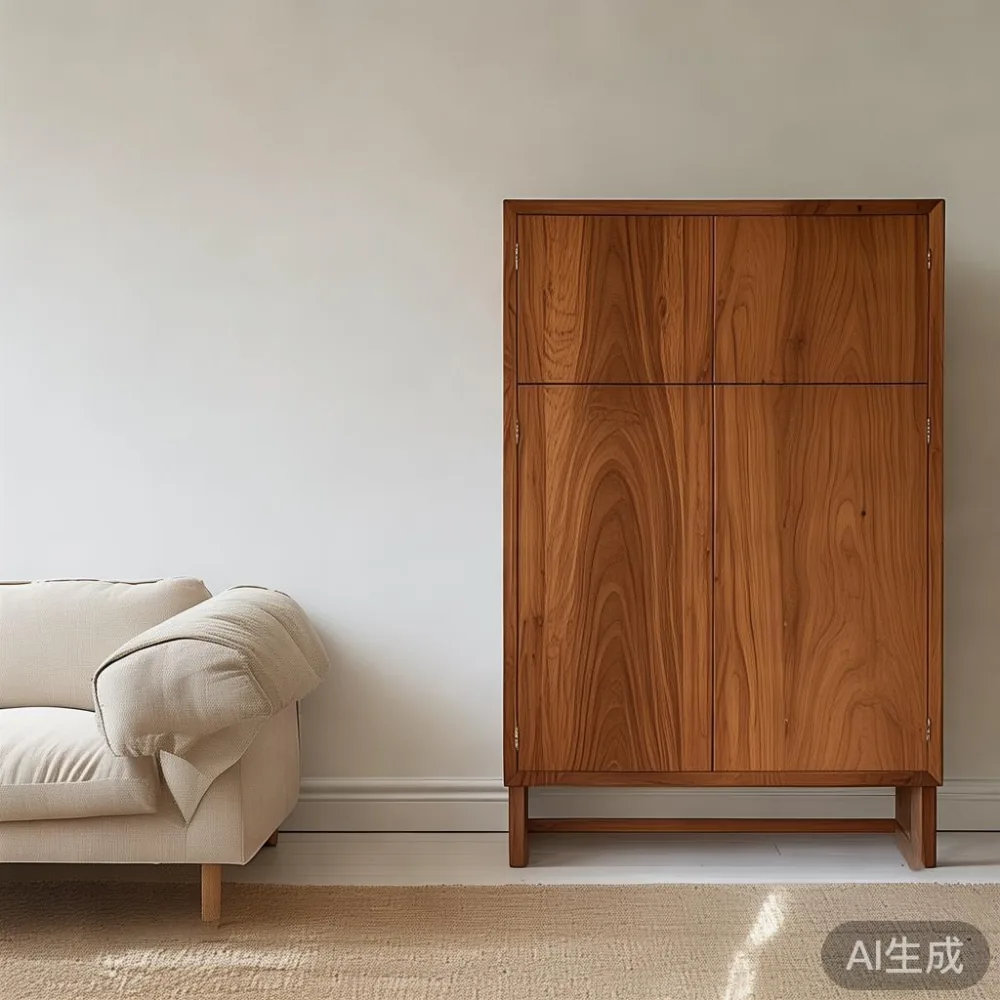
I am a furniture specialist working with MIDHILL, and I have walked through our joinery lines, drying kilns, and QC stations more times than I can count. What follows is the honest breakdown of where every Singapore dollar goes when you buy a genuine solid wood piece — and where it sometimes quietly disappears.
Is the wood really solid, and why does species change the bill by hundreds of dollars?
The single biggest factor is the species of timber, and it is the easiest place for less rigorous sellers to cut corners. A "solid wood" label only means the planks are not particleboard or MDF — it does not tell you whether you are looking at North American white oak (Quercus alba), imported ash, beech, rubberwood, or a fast-grown softwood that warps within a season.
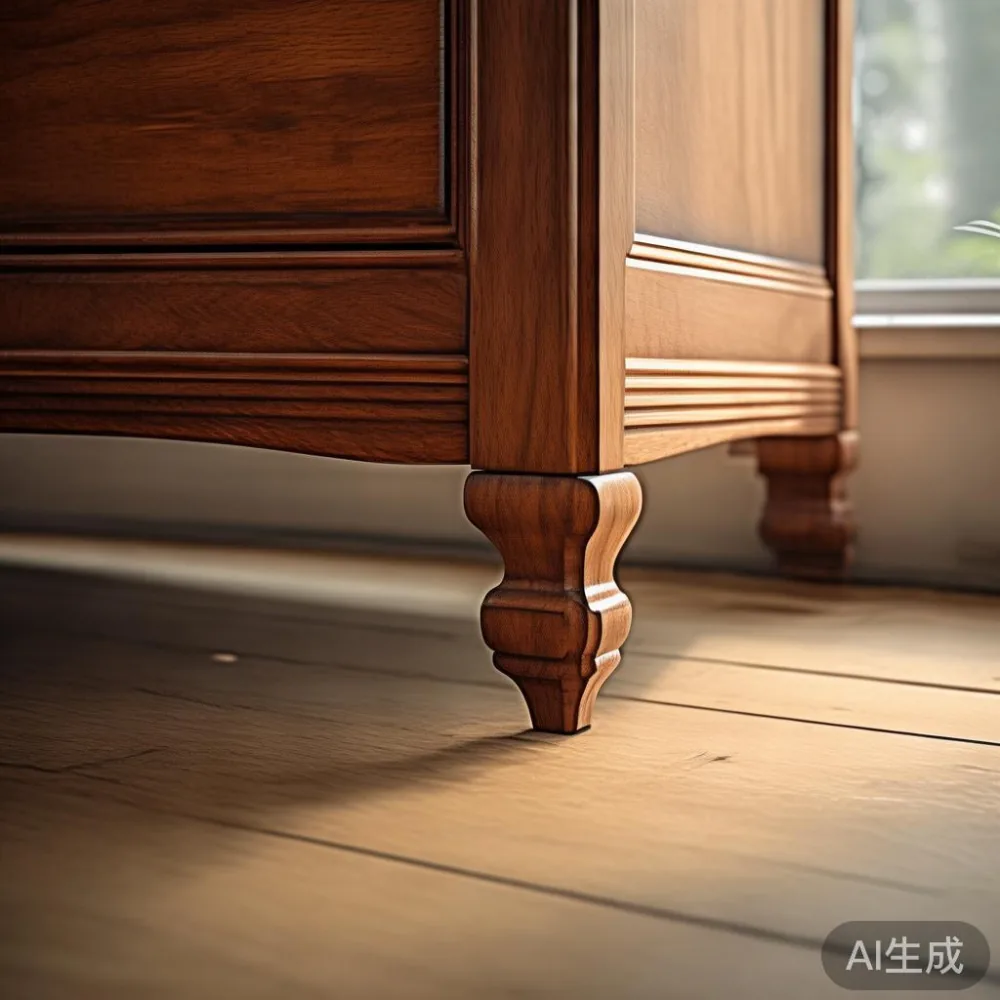
White oak for a 1.8 m dining table top, properly kiln-dried to 8–10% moisture content, currently lands in our Foshan yard at roughly RMB 9,500–12,000 per cubic metre. Walnut runs higher, often RMB 14,000–18,000. Rubberwood, which is the workhorse of budget flat-pack, can be as low as RMB 3,200 per cubic metre. Translate that to a 1.8 m × 0.9 m × 4 cm top: the oak slab carries about S$340 of raw material before a single CNC cut, the rubberwood about S$110. By the time you add the legs, the tenons, the T-bars, and the finishing oil, that gap widens to S$400–600 on the showroom ticket.
Last month I visited a Tampines customer who had bought a "solid oak" dining table from a local platform for S$890. The underside told the story: a 2 mm oak veneer over a rubberwood core. Perfectly legal labelling in many jurisdictions, useless in a HDB where the afternoon sun pours through west-facing windows and the AC cycles between 22°C and 26°C daily. A true 4 cm oak slab tolerates that. A veneered core does not.
How does moisture content actually affect what you pay?
Most Singapore buyers have never been shown a moisture meter. They should be. A properly kiln-dried board reads 8–10%. Anything above 12% and the furniture is moving on the way to your corridor lift.
Kilns are not cheap to run. Our 12-chamber setup in Foshan burns through approximately RMB 38,000 of electricity per month in winter alone, and a full cycle for 4 cm oak takes 28–35 days. Some factories skip this step and air-dry for 90 days, or worse, skip drying entirely and rely on the customer to absorb the shrinkage in their Punggol condo. A wardrobe that arrives 9 cm too wide because the planks were pressed at 18% moisture is a wardrobe that is being returned — and that return hits the price the next buyer pays.
This is one of the silent reasons a S$2,800 solid wood wardrobe from a manufacturer with controlled drying will outlast a S$1,400 import that "looks the same" in a lift lobby. The boards are doing less work after they leave the factory. They are stable. Joints stay tight. Drawer runners track true for the next decade.
What is the real difference between mortise-and-tenon, dowel, and biscuit joints?
Joints are where the engineering shows up. A solid wood bed frame joined with traditional mortise-and-tenon takes about 45 minutes longer per headboard than a dowel-and-glue assembly, and the operator has to be properly trained. Our senior joiners cost the factory RMB 220–280 per eight-hour shift; a junior on a dowel line runs RMB 130. Multiply that across a 200-piece batch and you are looking at RMB 25,000–40,000 in labour difference — roughly S$4,800–7,600 — which moves the wholesale price by about S$24–38 per unit.
Is a mortise-and-tenon joint S$38 better than a dowel? In a solid wood bed frame expected to live ten years in a HDB bedroom, yes. In a stool, honestly, probably not. This is why serious makers pick joint type by piece, not by marketing slogan. When you are weighing a solid wood bed frame against a similarly priced competitor, ask which joint they use at the rail-to-leg connection and the centre support. If the answer is vague, so is your warranty.
How much of the price is finish, and why does a French light luxury finish cost more?
This is the layer everyone underestimates. A piece can use excellent oak and still come out looking flat if the finishing line is lazy. The French light luxury finish — a soft wire-brushed surface, a tinted oil that lifts the grain, a low-sheen wax topcoat — needs seven to nine passes: sanding at 80, 120, 180, 240, brushing, two oil coats, a wax, and a final hand-buff. A factory chasing throughput will run four passes and call it "rustic." You can spot the difference from across a 3 m room.
Our finishing team in Foshan uses German Osmo oil and Italian Borma wax, both of which add roughly S$45–70 per dining table in material cost. The labour behind those nine passes adds another S$60–90. That is S$100–160 of price on a table you might be buying for S$2,100. It is also the difference between a surface your guests run their hand across and one they slide past. The same logic applies to marble table tops — a Carrara marble slab carries its own freight, fabrication, and reinforcement conversation, and I would not put a sub-15 mm marble on any base that does not have a full steel sub-frame.
Does light luxury sofa vs Nordic sofa really come down to frame and fill?
On a showroom floor in Bedok, the European light luxury sofa and the Nordic sofa can look within S$400 of each other. Take the cushions off and the gap widens. A European light luxury sofa typically uses a kiln-dried hardwood frame (often beech or ash), 8-way hand-tied springs or a Sinuous-no-sag system with 4 mm gauge, and down-wrapped high-resilience foam at 35 kg/m³. A Nordic-leaning sofa at a similar list price usually uses a softwood frame, lighter gauge springs, and foam at 28–30 kg/m³ wrapped in polyester batting.
If you have spent time in a Punggol condo with three young children, you already know what S$200 of foam density does for a five-year lifespan. The same logic holds when you look at European sofa vs Mid-century modern sofa: the Mid-century silhouette uses slimmer legs, exposed wood, and often a single bench cushion. Beautiful, but the cushion construction rules are different, and the frame geometry changes with the leg angle. Choosing between them is a style call, not a quality call — but the price difference is still real.
What does shipping and Singapore delivery actually add to the price tag?
Numbers nobody enjoys talking about. A 6-seater solid wood dining table set in oak, fully assembled, occupies about 1.9 cubic metres and weighs around 110 kg. Ocean freight from Foshan to Singapore Port currently runs RMB 280–340 per cubic metre for LCL, or about RMB 540 per cubic metre for a 20-foot FCL shared across roughly 28 cubic metres of usable volume. Customs, GST on the landed CIF value (9% as of 2025), port handling, and last-mile crane-truck delivery into a Tampines HDB on the 12th floor run another S$180–260 per order.
That crane-truck piece is the one customers forget. Lift doors in most HDB blocks are 900 mm wide and roughly 2,100 mm tall. A fully assembled 2 m wardrobe will not fit. A side-hung shoe cabinet in two flat-pack sections will. Factories that design for this constraint ship you a product you can actually carry into your corridor, and they price the engineered packaging into the unit — not bill you a S$180 "unboxing fee" on the driveway. This is also why the shoe cabinet category lives or dies on packaging design in Singapore: the cabinet that arrives in two carryable 28 kg cartons wins every time over the one that arrives in a single 65 kg crate.
For orders over US$350, MIDHILL absorbs the international freight leg entirely, which is why our landed SGD pricing in Singapore often undercuts local showrooms that are quietly sourcing from the same Foshan cluster we operate in. Free shipping helps, but it does not save a poorly built piece.
What should a Singapore buyer actually ask before paying S$2,000 or more for a solid wood piece?
Five short questions, in this order:
1. Wood species and country of origin — ask for a paperwork trail, not a sales pitch. 2. Moisture content at the time of packing, with a sample meter reading. 3. Joint type at the main stress point (headboard rail, table leg apron, wardrobe side-to-top). 4. Finish system — oil brand, number of coats, and whether the wax is food-safe on dining surfaces. 5. Warranty on structure and a refinement policy after year five. A ten-year structural warranty is only useful if someone answers the phone in year nine. Lifetime refinishing offered by makers like MIDHILL is the kind of after-care that turns a S$3,200 purchase into a 25-year piece of family furniture — and that is the math that matters.
How to style European light luxury bed in apartment settings without overcommitting?
If you are working out how to style European light luxury bed in apartment layouts under 90 sqm, the rule is restraint. Pick one statement headboard — usually upholstered in a warm beige linen or a pale boucle — and let it carry the room. Pair it with a low-profile nightstand in the same oak finish as the bed frame, a single marble table lamp for warm 2700K light, and either jute or a low-pile wool rug in oatmeal. Skip the matching six-piece suite. The European light luxury language reads through negative space, not through quantity. When you try to style how to style European light luxury bed in apartment rooms that small, two bedside tables and one bench are plenty.
Where does the Japanese for small living room approach fit alongside solid wood?
If you have browsed Japanese for small living room references on YouTube or in magazines, you have seen the same vocabulary: low lines, exposed joinery, natural light, almost no ornament. The good news is that the solid wood bed frame and the Japanese for small living room language are natural allies — both honour the material, both reject heavy hardware, both age visibly instead of wearing out. A Japandi silhouette (the blend of Japanese minimalism and Scandinavian warmth) on a 1.5 m platform bed in ash with a 4 cm headboard is one of the quiet wins you can make in a 4-room HDB without crowding it. Anyone searching for the best Japandi bed for 2026 should look first at frame height (under 35 cm off the floor), slat spacing (under 7 cm), and whether the timber was quartersawn (more stable across Singapore humidity swings).
Why does a solid wood dining table set cost what it costs, and what is fair?
If you are looking at a MIDHILL dining table set for six — six chairs plus a 1.8 m extending top — the landed price in Singapore for oak currently sits around S$2,450–2,900, depending on chair upholstery and whether you add a matching bench. That ticket absorbs kiln-dried white oak at 8–10% moisture, mortise-and-tenon aprons, a Sinuous-no-sag extension runner rated to 30,000 cycles, nine-pass French light luxury finishing, two-flat-pack shipping with full hoisting into your corridor, GST, and a ten-year structural warranty. The same set from a Tampines reseller running on consignment often clears S$4,200–4,800.
Is the factory-direct number fair? Walk through the breakdown: raw timber roughly S$340, drying allocation S$45, joinery labour S$120, finishing materials and labour S$155, hardware S$70, packaging S$35, freight and SG delivery S$220, GST S$140, warranty reserve S$60. That is about S$1,185 of hard cost in a S$2,600 product, leaving room for showroom ops, marketing, and a margin thin enough to defend. Buy below that floor and you are paying for shortcuts in one of those ten line items. Buy above it and you are paying for someone else's rent in Orchard.
One last note on the long game
Solid wood is one of the few categories where spending slightly more up front genuinely saves you money over a decade. A S$2,600 dining table refinished twice in twenty years costs about S$0.95 per use if you host weekly family meals. A S$1,200 flat-pack replaced three times in the same window costs S$5.40 per use and fills two skips. The numbers are not even close, and once you have lived with a properly dried oak plank in a Tampines flat, you stop reading the listings that do not name the species.