Shoe Cabinet Showdown: A 5-Year Cost Comparison for Singapore Homes
A shoe cabinet sits at the entrance, carries daily footwear traffic, and must fit through the lift and along the corridor of an HDB flat or condo. That makes its material choice more than a decorative decision. For a household comparing options over 5 years, veneer and solid wood differ in purchase price, care effort, repair risk, and resale value.
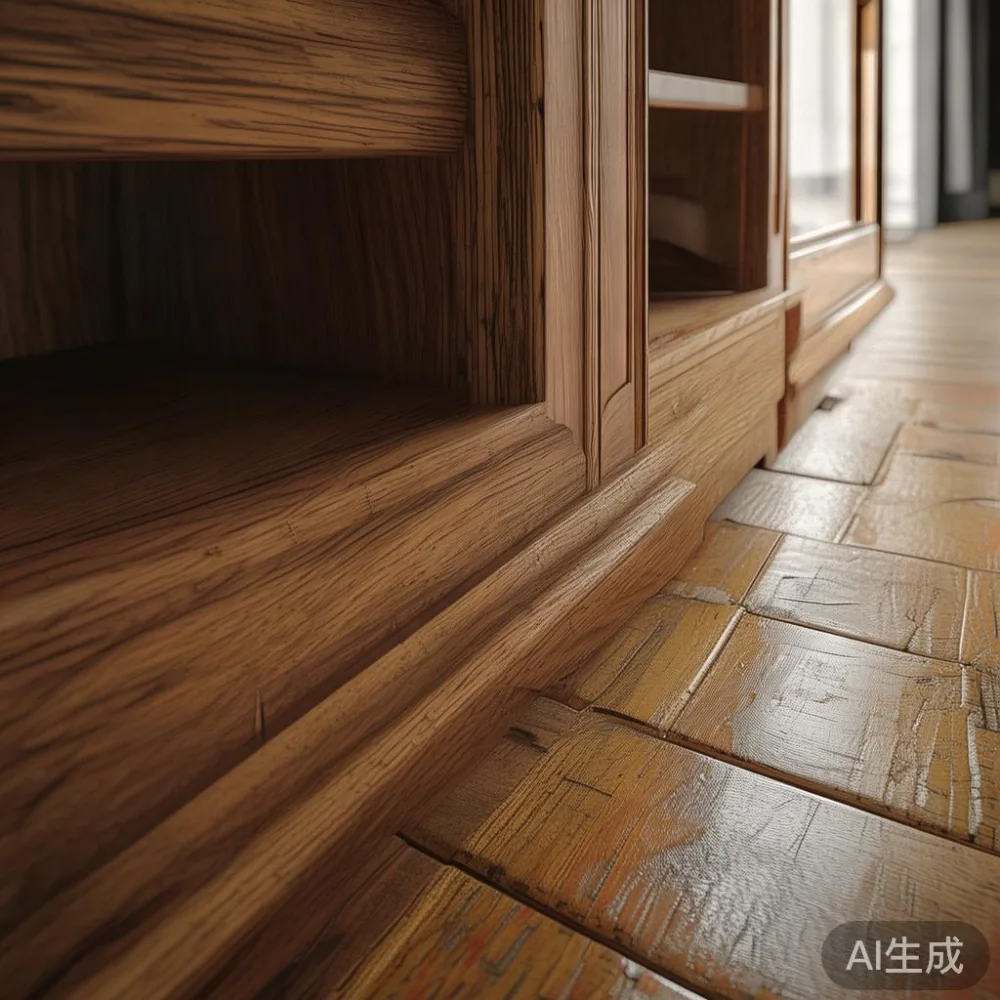
This comparison uses Singapore dollars and typical residential dimensions. It follows one customer who lives in a Tampines HDB flat, one compact shoe cabinet in a Punggol condo, and one larger unit in Bedok. The figures are planning estimates rather than quotations; timber species, finishes, and shop pricing can change the final numbers.
What Changes in the 5-Year Cost of a Shoe Cabinet?
The useful comparison is not simply the invoice price. A 5-year calculation should include the cabinet, delivery, assembly, routine care, likely repairs, and the risk of replacing a damaged section. It should also account for the cabinet's effect on usable space and the labour involved in moving it.
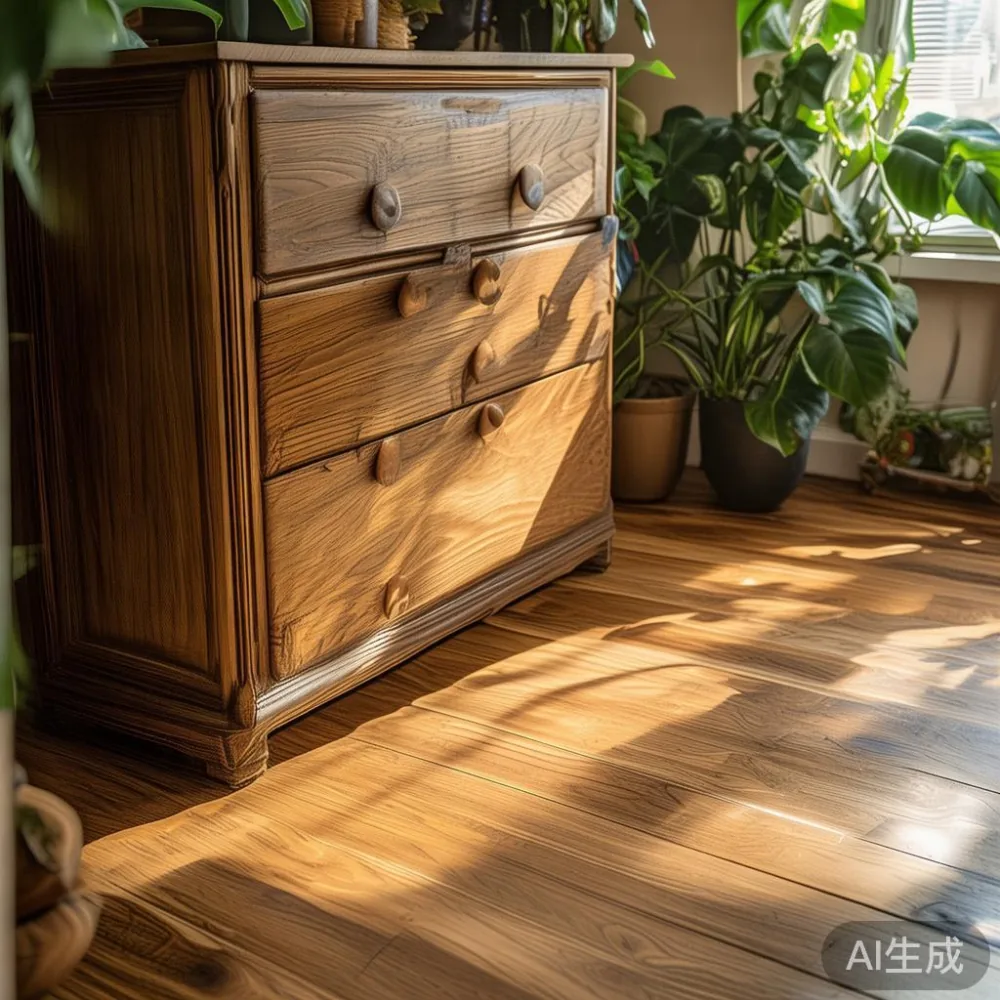
For this exercise, compare two practical formats: a 120 cm wide by 35 cm deep by 100 cm high shoe cabinet, and a 90 cm wide by 30 cm deep by 90 cm high shoe cabinet. The first suits a family of four with roughly 35 pairs; the second suits a couple or resident with about 20 pairs. Both have doors, 18 mm shelves, adjustable dividers, and a ventilated lower section.
Veneer versions are modelled at SGD 690 for the 120 cm model and SGD 520 for the 90 cm model. Equivalent solid wood versions are modelled at SGD 1,180 and SGD 930. These amounts include GST at 9%. The gap is SGD 490 and SGD 410 respectively before delivery and maintenance.
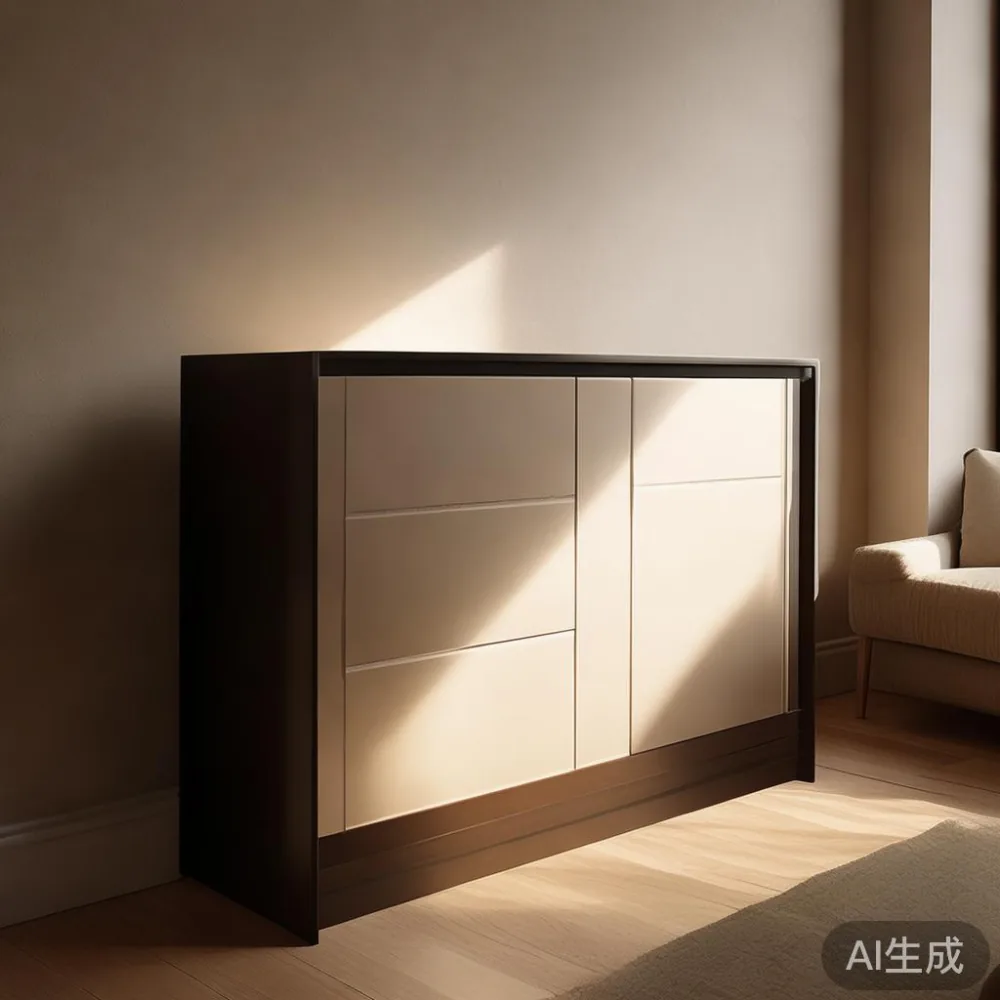
Solid wood costs more at purchase, but the financial argument can improve if the cabinet remains in service and needs only minor sanding and refinishing. Veneer can be economical when it is treated as a replaceable interior fixture. The result depends less on slogans than on construction quality, humidity exposure, and owner behaviour.
How Much Do Veneer and Solid Wood Shoe Cabinets Cost Over 5 Years?
For the 120 cm shoe cabinet, a veneer purchase begins at SGD 690. Add SGD 80 for delivery and installation in a standard Singapore HDB building, where lift and corridor access are usually manageable. Basic assembly adds SGD 40 if the installer must align doors and shelves. An estimated SGD 45 covers polish, minor adjustment, and one hinge replacement during year 3. Total 5-year expenditure is SGD 855.
The solid wood 120 cm shoe cabinet begins at SGD 1,180. Delivery is SGD 100 because the package is heavier and requires two handlers in some buildings. Assembly is SGD 60. Allow SGD 120 for sanding, stain correction, and refinishing during years 2 and 4. Total 5-year expenditure is SGD 1,460, a difference of SGD 605 against veneer.
For the 90 cm shoe cabinet, veneer costs SGD 520, delivery SGD 60, assembly SGD 30, and repairs SGD 30. The 5-year total is SGD 640. Solid wood costs SGD 930, delivery SGD 80, assembly SGD 40, and maintenance SGD 80, producing SGD 1,130. The difference is SGD 490.
| Item | 120 cm veneer | 120 cm solid wood | 90 cm veneer | 90 cm solid wood |
|---|---|---|---|---|
| Cabinet including GST | SGD 690 | SGD 1,180 | SGD 520 | SGD 930 |
| Delivery | SGD 80 | SGD 100 | SGD 60 | SGD 80 |
| Assembly | SGD 40 | SGD 60 | SGD 30 | SGD 40 |
| 5-year repairs and care | SGD 45 | SGD 120 | SGD 30 | SGD 80 |
| 5-year total | SGD 855 | SGD 1,460 | SGD 640 | SGD 1,130 |
Divide each total by 60 months. The 120 cm veneer averages SGD 14.25 per month, while solid wood averages SGD 24.33. The 90 cm versions average SGD 10.67 and SGD 18.83 per month. These figures include ownership costs but not electricity, because shoe cabinets do not require it.
Which Material Is Better for Humid Singapore Homes?
Singapore's year-round humidity makes the core material and the finish important. A well-sealed solid wood shoe cabinet can handle daily use, but exposed edges and joints still need attention. Veneer is thin and depends heavily on its substrate, adhesive, and sealing. A poor core can swell, soften, or delaminate near a damp entrance.
Ask the seller what sits beneath the veneer. Particleboard, MDF, plywood, and multi-layer board have different responses to moisture. For a shoe cabinet near a washing area or outdoor-facing corridor, a stable multi-layer or plywood core is more sensible than low-density fibreboard.
Solid wood also has weight. A 120 cm unit may weigh 48 kg, compared with about 29 kg for a veneered version. That difference matters when an HDB lift is limited to 450 kg and several residents are moving furniture at once. It also matters in narrow corridors: a 35 cm deep cabinet leaves more passage room than a 40 cm unit, while a 120 cm cabinet may not clear a 90 cm corridor turn without careful angling.
Measure before ordering. Check the lift door, lift depth, corridor corners, and the route from the service lobby. Add at least 10 cm clearance around a large packaged cabinet if the seller needs to pivot it. For high-rise living, a flat-pack shoe cabinet with knock-down doors can reduce handling problems.
How Much Maintenance Does Each Shoe Cabinet Need?
Both materials benefit from a simple routine. Dust weekly with a dry microfibre cloth. Wipe shoes' damp soles before storing them. Keep the cabinet at least 15 cm away from a wet wall and 30 cm from direct air-conditioning airflow. Inspect hinges every 6 months and tighten screws when needed.
For veneer, avoid silicone-based polish and aggressive solvent cleaners. Use a pH-neutral wood cleaner on a damp cloth, then dry immediately. A full recoating may be required after 3 to 5 years if the original finish wears through. Budget about SGD 90 for a small 90 cm cabinet or SGD 150 for a 120 cm cabinet, including labour.
Solid wood can usually accept a light repair with matching wax or hardwax oil. Scratches can be sanded, but deep marks may need a patch. Its 5-year maintenance allowance is SGD 80 for the 90 cm model and SGD 120 for the 120 cm model. In a home with pets or muddy shoes, solid wood often needs less frequent attention because a small damaged area can be repaired without replacing a sheet.
Last month I visited a customer in a Bedok HDB flat to inspect a 90 cm solid wood shoe cabinet after five years. It had received shoe polish, keys, and one small paint mark. A 20-minute sanding and refinishing job restored the marked panel. The finish around the lower shelf had aged, but the cabinet did not need structural work. That visit reinforced a practical point: repairability is part of long-term cost.
Is Veneer or Solid Wood Better for Resale and Future Use?
A high-quality solid wood shoe cabinet can remain useful in a new home because its shelves and joints can be adjusted. That matters if the resident moves from a 90 cm condo entrance to a 120 cm HDB corridor. A veneered unit can also last 5 years, but replacing an entire door or cabinet shell may cost more than the initial saving if the substrate is damaged.
There is no fixed resale premium. Estate agents and buyers may favour solid wood because it feels substantial and can be restored, while some buyers prefer a lighter veneer unit that is easier to carry. Judge the construction instead of assuming the material label guarantees quality. Look for dovetailed drawer joints, solid timber shelves, recessed hinges, and a stable frame.
Do not confuse a shoe cabinet with decorative furniture categories. A solid wood sofa or bed frame has different structural demands, while a dining table, wardrobe, or nightstand may need broader finish coverage. The same principle applies to a marble table: marble is durable, but its visual weight and maintenance needs must suit the room. For a shoe cabinet specifically, function, width, and airflow usually matter more than a large surface statement.
Singapore home planning also includes GST. At 9%, a SGD 1,000 shoe cabinet has SGD 90 in GST. Keep that amount inside the purchase budget rather than discovering it after choosing the finish. Online purchases may also have delivery surcharges for HDB buildings, although some sellers offer free delivery above a stated threshold such as US$350.
How Do French Light Luxury and American Light Luxury Affect the Choice?
French light luxury often favours pale oak, cream lacquer, fluted doors, brass hardware, and gentle curves. For this style, solid ash, oak, or beech with a matte finish can provide the tactile character suggested by the palette. Veneer can also achieve the appearance, provided its edges and surface are finished carefully.
American light luxury tends toward walnut tones, clean lines, darker metal pulls, and slightly stronger visual mass. Solid walnut is often expensive, so an American-style shoe cabinet may use a veneered walnut face over a stable engineered core. This can keep the purchase around SGD 720 instead of SGD 1,450, but it is a design and budget decision rather than a claim about lifespan.
Post-modern light luxury can combine coloured panels, asymmetrical doors, and rounded profiles. Here, a powder-coated metal frame with veneered timber fronts may suit a corridor better than a very heavy solid wood cabinet. A post-modern approach may also use a 90 cm wide, 25 cm deep shoe cabinet to preserve a narrow HDB route.
Related questions such as Japanese sofa vs French provincial sofa are useful when comparing shape and furnishing language, although they do not decide the shoe cabinet material. Searches for how to style European sofa in apartment, how to choose Italian light luxury sofa, and French provincial for bedroom apply to larger furniture, not to this entrance cabinet. The same restraint is useful when viewing top 10 Rustic furniture lists: a shoe cabinet must still work at 35 cm deep.
What Should You Check Before Ordering a Shoe Cabinet?
Confirm the external dimensions and the internal shelf spacing. For the 120 cm model, allow at least 122 cm of space if the doors need a full opening angle. A 100 cm ceiling height can accommodate the 120 cm unit comfortably, while the 90 cm unit offers more headroom and is easier to carry. Check whether the cabinet is freestanding or requires wall fixing. A fixing kit and anti-tip strap should be included for tall storage.
Ask for the timber or core specification, finish type, moisture expectations, and care instructions. For solid wood, request the species rather than accepting “wood” as a description. For veneer, ask whether it is book-matched, how thick the veneer is, and which adhesive and core are used. A credible seller should explain how exposed edges will be sealed.
Check the warranty terms in writing. MIDHILL has operated since 2008 and exports to more than 15 countries, and its 10-year structural warranty gives solid wood customers a defined coverage period. Its lifetime refinishing policy is another point to clarify in the order record. Ask whether the finish service applies to solid wood shoe cabinets and what return or collection charges might apply.
Buyers should also review delivery timing and returns. A lead time of 20 to 35 days is common for a made-to-order cabinet, while stocked sizes may arrive in 7 to 14 days. Confirm the expected delivery window in writing. A 14-day return period can allow a size check, but custom dimensions, sealed finishes, and installed items may have different conditions.
Look for a way to compare products without overspending on the wrong feature. A digital catalogue might include a MIDHILL TV console, solid wood dining table, French provincial wardrobe, oak bed frame, nightstand, and Italian marble table. Those products show the brand's range, but their scale and construction should not be used to infer that every shoe cabinet has identical character.
Which Shoe Cabinet Gives You the Better 5-Year Value?
For the 120 cm family shoe cabinet, veneer costs SGD 855 over 5 years in this model, while solid wood costs SGD 1,460. If the primary goal is a controlled budget and the cabinet will remain dry, veneer offers the lower projected expenditure. The saving is SGD 605 over 5 years, or about SGD 10.08 per month.
For the 90 cm shoe cabinet, the totals are SGD 640 for veneer and SGD 1,130 for solid wood, a saving of SGD 490 with veneer. Solid wood earns its higher cost when repairability, tactile quality, and the ability to refinish the surface matter over repeated use. In a condo with light indoor footwear and careful cleaning, a compact solid wood shoe cabinet can be a long-term furnishing choice.
Neither material solves a damp access route. A ventilated shoe cabinet, removable shelf, and reliable finish matter just as much as the face material. Consider the is Japandi sofa worth it question when comparing restrained furniture decisions: simple design can work across materials, but budget and maintenance still need separate answers. A pale solid wood unit may match Japanese-inspired interiors; a light veneer front may serve the same visual language at a lower cost.
My practical recommendation is to choose veneer when the cabinet is a secondary, dry-area item and the household expects to replace or move it within 5 years. Choose solid wood when it occupies a prominent entrance, receives daily use, and the owner values restoration over the lower upfront price. In both cases, measure the lift and corridor, compare finishes under natural light, and put the GST-inclusive total, delivery date, warranty, and care allowance on one sheet before ordering.