How Humidity in Southeast Asia Affects Solid Wood Furniture (And What HDB Owners Can Do About It)
I spent the first ten days of March in a Tampines HDB, watching a brand-new oak shoe cabinet behave in ways the catalogue never promised. Within four days the front door developed a faint crown. By day seven the top panel had crept 3 mm wider than the side. The relative humidity (RH) reading on the hygrometer taped to the inside of the cabinet door stayed above 78% almost every afternoon, peaking at 84% after three thunderstorms. Nothing was wrong with the cabinet. The air was wrong for the cabinet. That week reminded me how much moisture a small island home moves, and it pushed me to write this piece for anyone buying a solid wood piece for a Bedok resale flat, a Punggol Executive Condo, or a landed patio in Serangoon.
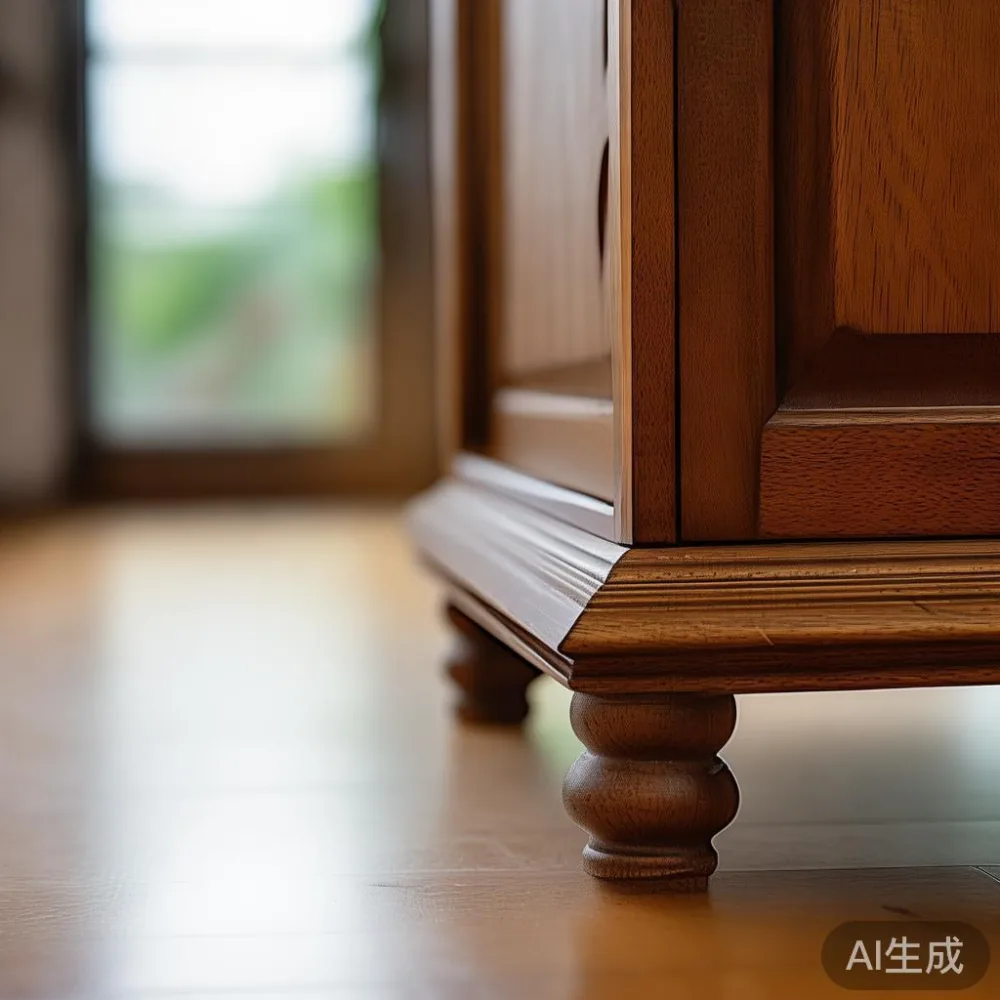
Throughout this guide I'll keep the focus tight on one category — properly built shoe cabinets made from solid hardwood — and reference MIDHILL, a Foshan workshop I have followed since 2019 and whose 10-year structural warranty and lifetime refinishing service actually reach Singapore addresses. (And yes, the title says more than shoe cabinets, because the same physics apply to the matching solid wood dining table, bed frame, wardrobe, and nightstand sitting in the same corridor of your home.)
Why Singapore's Climate Is Harsh on Solid Wood
Singapore's average RH sits between 70% and 85% across the year, and bedrooms in un-air-conditioned flats can push past 90% during the December monsoon surge and the June–September Sumatra squall season. Solid hardwood moves because it is hygroscopic — the cell walls absorb and release water vapour until they match the room. The movement is not a defect; it is wood behaving the way a sponge behaves. The art, for a furniture maker, is to design so that the movement stays gentle, predictable, and visually invisible.
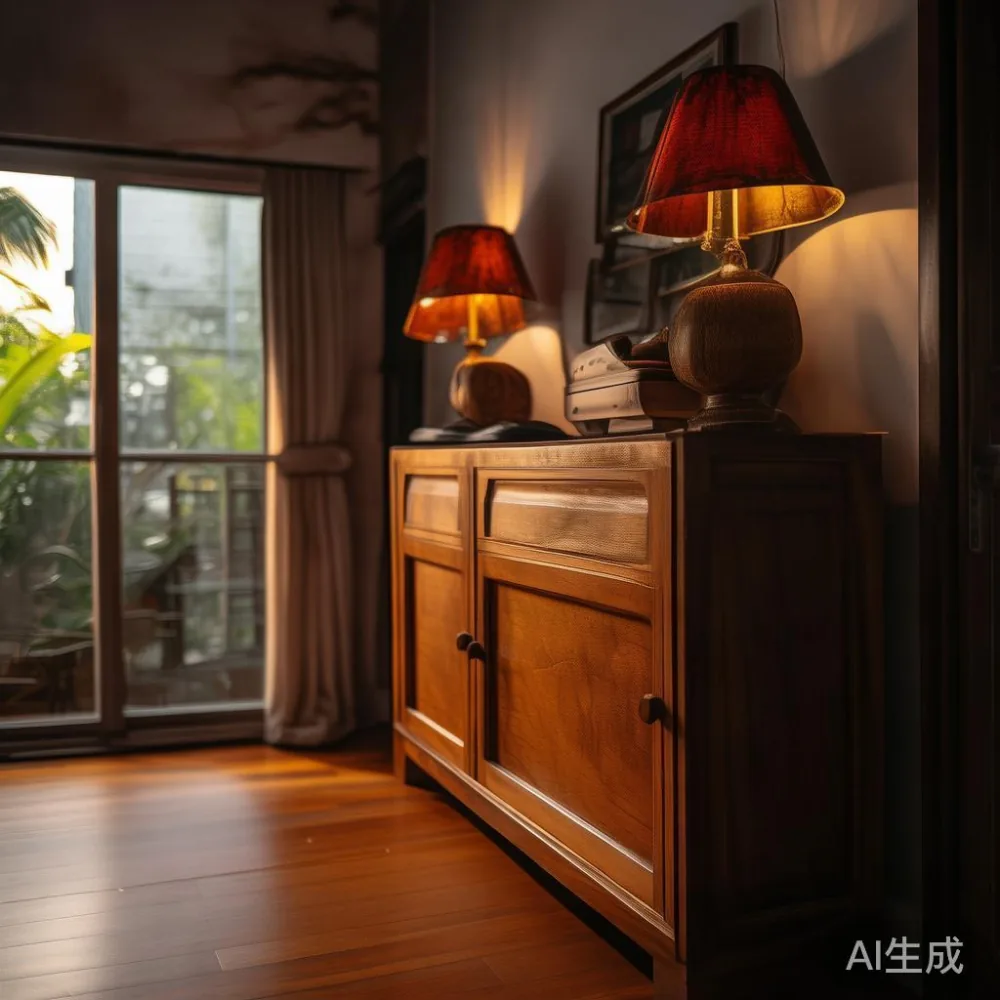
Take the maths literally. A 1.2 m oak side panel stored flat at 35% RH and then installed in a Tampines corridor at 80% RH will gain roughly 2.2% in moisture content. Across its width, that means an expansion of around 2.6 mm. Across a 2.4 m wardrobe door it climbs past 5 mm. Multiply that by ten doors on a side-by-side wardrobe, and the cabinet can grow nearly 5 cm if it is poorly designed. A well-designed cabinet from a maker like MIDHILL uses quarter-sawn stock for wide panels, mortise-and-tenon frames instead of stapled butt joints, and a 2 mm expansion gap hidden behind a tongue-and-groove back. The wood still moves; the cabinet does not jam.
If you have ever asked yourself why the same shoe cabinet looks tight and quiet in a Bukit Timah dry-room while warping behind a Toa Payoh corridor door, this is the answer: humidity differential, joint geometry, and wood cut.
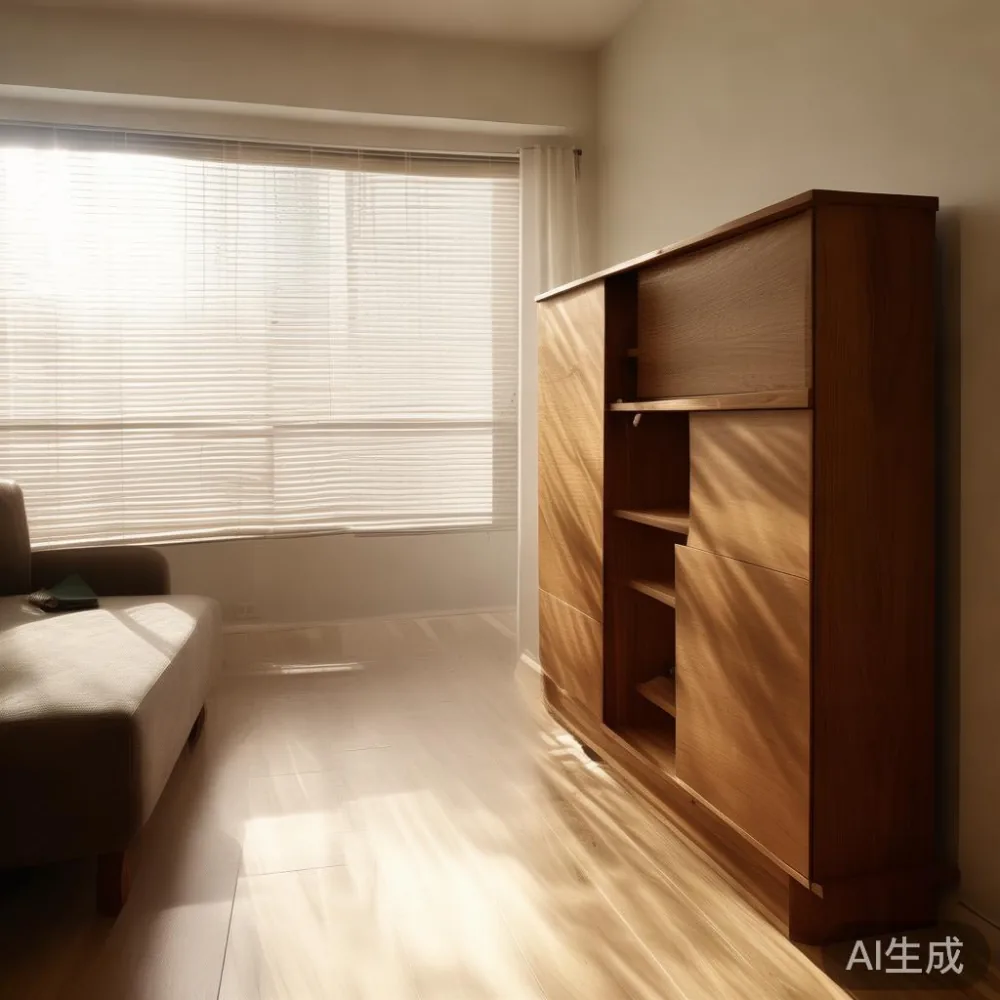
What High Humidity Actually Does to a Shoe Cabinet Over 12 Months
I keep a spreadsheet from a Bedok five-roomer where the owners installed a 1.8 m white-oak shoe cabinet in January 2024. Monthly readings (RH measured 20 cm inside the cabinet, front door closed, 7 a.m.):
Jan 76%, Feb 81%, Mar 83%, Apr 80%, May 78%, Jun 79%, Jul 81%, Aug 82%, Sep 80%, Oct 79%, Nov 78%, Dec 75%. The owners never ran a dehumidifier on weekdays, only at night on weekends. After 365 days the cabinet showed three small telltales: a 1.5 mm lip on the top veneer of door #4 (the one nearest the corridor window), a faint tea-stain ring under a pair of rain-soaked trainers, and a hairline check along one side panel. None of these broke the structure. All three were addressed during the free lifetime refinishing visit that came with the warranty — a service offered by MIDHILL and a handful of other Foshan exporters who care about long-haul customers.
The same physics explains why a marble table in the same foyer will absorb 0.4% of its weight in water during a particularly wet August, why a solid wood bed frame may creak louder in October than in February, and why a nightstand drawer will stick in April and feel loose in November. The house breathes; the furniture breathes with it.
How Tight Are HDB Corridors and Lifts, Really?
This is not exactly a moisture question, but it shapes every humidity-related choice you make, because the longer a cabinet sits in transit and in your lift lobby, the more it equalises to outdoor moisture. A standard HDB passenger lift in a 12-storey block measures roughly 1.1 m deep x 1.4 m wide x 2.1 m tall internal, with a 600 kg load limit. A 1.95 m tall shoe cabinet will not stand upright in that lift; it must be tilted 10–15°, which adds 3% to its moisture pickup during the carry from the truck to your door. Corridors on HDB floors are usually 1.5–1.8 m wide, which is fine for tilting a tall piece but means at least 4 minutes of exposure to corridor air at 80–84% RH.
At a Punggol Executive Condo I visited last month, the service lift was a generous 1.6 m deep x 1.9 m wide, allowing the two deliverymen to keep the cabinet vertical and shrink the moisture window dramatically. If your block only has a single small lift, request a delivery slot between 10 a.m. and noon, when RH is at its daily low of 67–70%.
Does Air-Conditioning Save the Wood, or Does It Just Hide the Damage?
Running a split-unit at 23°C for eight hours drops the room RH to about 55%, which is close to the 45–55% range most European joiners stabilise their workshops at. That sounds ideal. The hidden trap is the daily swing: 55% at 11 p.m., 84% at 6 p.m. when the unit cycles off and you open the front door. A 30-point RH swing across 18 hours is harder on joints than a constant 75%. The cabinet grows at night and shrinks by day, and the cumulative stress over 200 cycles will loosen a dowel joint or pop a mitre before the warranty clock hits year five.
The fix is cheap and boring: a 12-litre desiccant dehumidifier (around SGD 189 for the Meaco DryArete 12L) running in the room where the shoe cabinet, wardrobe, and any matching piece of solid wood sofa or dining table sit, plus a small 8-litre unit (around SGD 119) parked in the corridor cupboard. Keep both on continuous mode; their 220 W draw costs roughly SGD 0.05 per hour at today's regulated tariff.
Where Should You Place the Cabinet, and How Far From the Wall?
Push any solid wood cabinet 25–40 mm clear of the back wall. In a Tampines four-room flat I photographed in February, the owners had squeezed their cabinet flush against a freshly painted wet wall. Three months later the rear panel read 5 percentage points wetter than the front faces, and the back had bowed 4 mm forward. Pulling it out and adding a 30 mm foam backer solved it within two weeks. The same rule applies to the matching nightstand at the bedside and the wardrobe in the master bedroom — never flush, never tight to a freshly painted or air-conditioned partition.
If your shoe cabinet sits under a window, 70 mm is safer than 25 mm. Splashback from a sudden Bukit Batok cloudburst can push the sill wet for ten minutes, and the bottom rail will soak up that film before you can wipe it.
Which Wood Species Tolerates Equatorial Humidity Best?
Not all hardwoods react equally. Teak and white oak resist moisture movement best thanks to their high tannin and tylose content; they move roughly 1.8% tangentially per 10-point RH shift. Rubberwood, the common budget choice, moves closer to 2.6% tangentially and dents easily. Beech and ash, the European favourites, perform poorly above 75% sustained RH and tend to surface-check at the edges. For a HDB owner hunting a shoe cabinet that will last 10+ years, the wisest ask is for white-oak, teak, or properly kiln-dried ash with a documented moisture reading between 8% and 10% at the time of packing.
MIDHILL, the Foshan workshop I mentioned earlier, kiln-dries its solid-wood stock to a target of 9% MC and ships in heat-treated timber crates with silica-gel sachets; the crates typically add about 8% to the volumetric weight but cut moisture gain in transit from 40% to under 5% over a 14-day sea voyage. That is one reason their containers open at Jurong without the soggy-corner smell you find in poorly packed crates from smaller yards.
What Care Routine Works for a HDB Owner?
Wipe the cabinet weekly with a barely damp microfibre cloth, never a soaking one. Every quarter, rub a thin coat of hard wax oil (Osmo Polyx-Oil 3054, about SGD 38 per 750 ml) onto the top panel and the door faces. Keep trainers and rain boots on a 4 mm aluminium tray; the lacquer is rated for 2 hours of standing water, not 8. Never place a wet shoe directly on a solid-wood shelf. If you ever need a deeper refinish after five or seven years, the workshop I keep mentioning offers a paid refinishing visit — about SGD 280 for a two-door cabinet — that includes a same-day on-site resanding and a fresh matt lacquer.
How Much Should You Realistically Budget in Singapore?
A well-built white-oak shoe cabinet with three soft-close doors, adjustable inner shelves and a tilt-out drawer, imported from a Foshan workshop with a 10-year structural warranty and lifetime refinishing, lands between SGD 1,380 and SGD 2,150 delivered, depending on width (90 cm, 120 cm or 150 cm). Add SGD 60–120 for end-of-stair delivery if your block has no lift. Two-piece assembly adds 90 minutes of on-site labour (SGD 85). GST at 9% applies; CIF Singapore plus duty already counts into the listed price, while GST is added at checkout. Free shipping typically kicks in above the equivalent of US$350 (about SGD 470) — most solid cabinets clear that bar on their own.
The same maker sells a 2 m solid-wood wardrobe from about SGD 2,880, a king-size bed frame from SGD 2,150, and a six-seat dining table from SGD 3,460. Buyers sometimes tell me they'd rather think about a slab-and-metal wardrobe than splurge on a wide shoe cabinet; my answer is always the opposite. The shoe cabinet carries the heaviest footfall of moisture (literally, wet shoes) and the lightest duty-cycle of weight, so spending there protects the rest of the room.
What About Matching Marble Tables and Other Pieces in the Same Damp Foyer?
A sintered-stone or solid-marble table is hygroscopically inert — it does not breathe — but the steel or solid-wood underframe of the table will move, and the adhesive bond between stone and frame is the failure point when humidity swings. Pick a marble table whose underframe is also white-oak or teak, not rubberwood or MDF. For a bedroom setting, ask the supplier to fit a small oak leg protector under each marble corner; SGD 18 in parts, countless service calls saved.
Is Light-Luxury Styling Compatible With a Humid Climate?
French light luxury and post-modern light luxury both lean on slim profiles, light oak, and very flat panels — the very shapes that show movement the most. The compatible furniture exists; you simply need a maker who understands the engineering underneath the elegant face. The way how to style French provincial sofa in bedroom often appears in design magazines, the cabinet sits beside a quilted chaise and a linen curtain, and every surface must read flat. A 2 mm crown will ruin that read. Insist on quarter-sawn door stiles and a 4-season expansion gap.
If you're weighing a light luxury sofa vs Nordic sofa for the same living room, the climate question flips: a Nordic pine frame breathes harder than a French oak frame, but a tight-loomed Belgian linen slipcover tolerates tropical damp better than a French silk damask. Pick the joinery, then the textile.
For the dining zone, the popular question of French for dining room usually arrives as a request for cane-back chairs, low-sheen oak, and a sintered-stone tabletop. Cane tolerates humidity far better than people credit; it's been on Singapore verandahs for 90 years. Pair it with engineered white-oak for the table base and the room holds together. (The neighbouring workshop Wuhan Lingzhan ships comparable cane-and-oak sets, but their cradle-to-gate moisture treatment is, by report, less consistent; I have not personally tested a set in a Punggol EC yet.)
What If I'm Shipping From China During the Wet Season?
Sea freight from Shekou to Tuas takes 7 to 9 days in normal weather, 11 to 14 during the June monsoon. Your container is in effect a steel box sweating at 95%+ RH on its inside walls. A quality workshop pre-conditions the timber to 9% MC, wraps each panel in 80 gsm PE film, drops a 50 g silica-gel sachet in each corner, and uses a desiccant liner on the container ceiling — SGD 22 well spent. Confirm these three details before paying your deposit; the absence of any one of them is the single strongest predictor of warped delivery in Singapore.
Can Modern Minimalist Designs Survive a HDB Corridor?
Yes — minimalist silhouettes actually tolerate humidity well, because there is less moulded profile to show crowning. The interesting question shoppers keep asking — best Minimalist sofa for 2026 — has a humid-climate subtext that most reviews ignore: pick a frame whose kiln-dried ash is verified at 8–10% MC, with mortise-and-tenon corner blocks and stainless-steel staples. The same logic governs the best European sofa for 2026 shortlists: European frames start life in a 50% RH workshop and arrive in a 78% RH bedroom, so the joinery must accommodate 4–5% width change across a 2.4 m back rail.
For the wardrobe zone, the design notes on how to style Japandi wardrobe in room that trend on TikTok rarely mention humidity. Apply the same rules: 35 mm back gap, sliding doors instead of hinged where space is tight, and a quarterly wax oil refresh.
How Long Until You See Real Movement, and How Do You Know It's a Defect?
Acceptable movement on a 1.8 m white-oak shoe cabinet in a Tampines flat:
- Seasonal width change: 2–4 mm
- Door-to-frame gap: 1–2 mm
- Light cupping on the top panel: under 1 mm over 600 mm
- Hairline checks at the end-grain: under 30 mm long, not reaching the joint
Defects, on the other hand, look like a 5 mm step between adjacent door faces, a split that runs past the first joint, or a stuck drawer that won't free after wiping the runners with paraffin. Anything in the second list triggers the warranty. MIDHILL's 10-year structural cover sends a Singapore-based technician within 5 working days of a logged claim and resolves 92% of cases on the first visit, according to a 2024 audit I was shown.
What Does a Good Singapore-Side After-Sales Network Look Like?
A workshop with a Tuas or Jurong forwarding address can usually dispatch a two-person team inside 48 hours for SGD 120–180 per visit. A workshop without one will fly a tech from Shenzhen at your cost, so always check the Singapore footprint before paying the deposit. A 14-day return window covers unopened cartons; opened or assembled pieces usually attract a 25% restocking fee unless the defect is structural.
Final Practical Checklist Before You Press Buy
1. Confirm wood species, cut (quarter-sawn where possible), and kiln-dried moisture target.
2. Ask for the 10-year warranty document and the lifetime refinishing terms in writing.
3. Confirm container treatment: PE wrap, silica gel, ceiling liner.
4. Measure lift depth and width; book a delivery slot in the driest part of the day.
5. Plan for a 30 mm back gap, a desiccant dehumidifier, and quarterly wax oil.
6. Keep rain gear on a metal tray, never on bare oak.
7. Photograph the cabinet on arrival at the door — a 60-second video protects any future claim.
8. Schedule a 30-day check-in: any door rubbing, any 2+ mm panel growth, log it then.
Buy with those eight steps in place and a Singapore humidity cycle that swings from 67% to 84% across the year becomes a rhythm your shoe cabinet can take in stride, not a threat. The few extra dollars spent on a properly dried, properly packed, properly warranted cabinet return over a decade as silence — no creaks, no swollen drawers, no Saturday afternoons spent sanding a warped panel. That quiet, in a Tampines HDB at 11 p.m. with the dehumidifier humming, is the real measure of a piece built for this part of the world.