Veneer vs Solid Wood Shoe Cabinet: What Really Costs Less Over 5 Years in a Tampines Flat?
A shoe cabinet sits in almost every Singapore HDB corridor, and most homeowners treat it as background furniture until the laminate peels or the door sags. I learned this the hard way last month when I helped a relative in Punggol replace her bedroom shoe cabinet. The original piece was a flat-pack MDF-and-veneer unit from a local hypermarket, bought in mid-2020 for about SGD 329. Five years later, the bottom shelf had swollen from monsoon humidity, two veneer strips along the door edge had chipped, and the cam-back mechanism refused. Total spent over five years: SGD 329 unit + SGD 180 for two replacements of internal shelving + SGD 120 carpenter touch-up = SGD 629. That experience pushed me to compare, line by line, what a real solid wood shoe cabinet actually costs over the same window. The numbers below use Singapore pricing, GST at 9%, and the realities of Tampines, Bedok and Punggol lifts (typically 1.0 m–1.2 m wide doors and 2.1 m deep cabins) and 1.2 m common corridors.
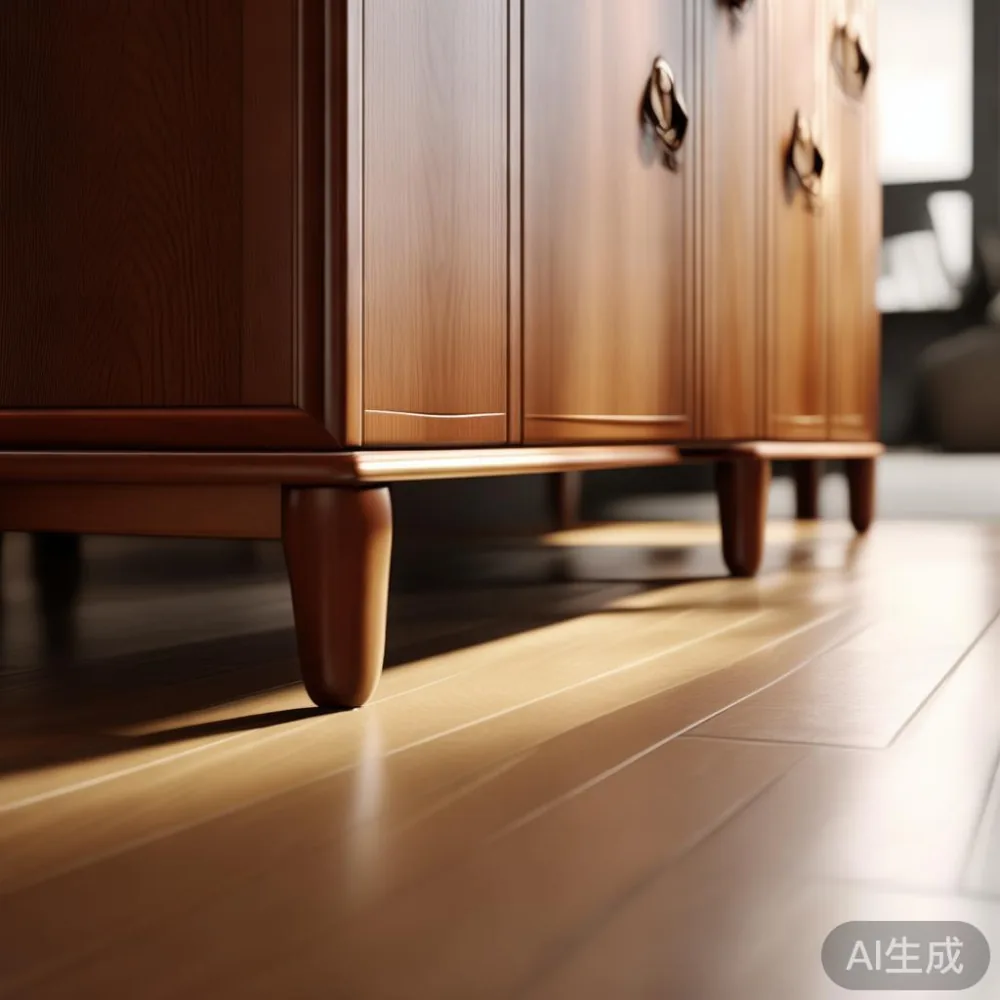
What is the real upfront difference between a veneer shoe cabinet and a solid wood shoe cabinet in Singapore?
For a 3-door, 90 cm wide × 35 cm deep × 120 cm tall shoe cabinet, the typical retail spread in Singapore looks like this: engineered-wood-and-veneer units from local chain stores sit between SGD 280 and SGD 599, mid-range MDF-with-veneer from regional brands land around SGD 550–SGD 1,100, and a true solid wood shoe cabinet (oak, ash, or rubberwood) from a dedicated maker lands between SGD 1,100 and SGD 2,400, before GST. A solid wood wardrobe in the same brand family costs SGD 2,800–SGD 6,500, a solid wood bed frame runs SGD 1,500–SGD 4,200, and a solid wood dining table for four ranges SGD 1,800–SGD 4,800, which gives you a sense of the price tier a wardrobe-grade maker operates in.
So a single shoe cabinet often looks 1.5× to 4× more expensive at the till. The question is whether that premium disappears over five years, or grows. For homeowners asking about cheap Italian light luxury furniture and whether the cheaper end of that spectrum really is cheaper, the answer usually hides in years three to five.
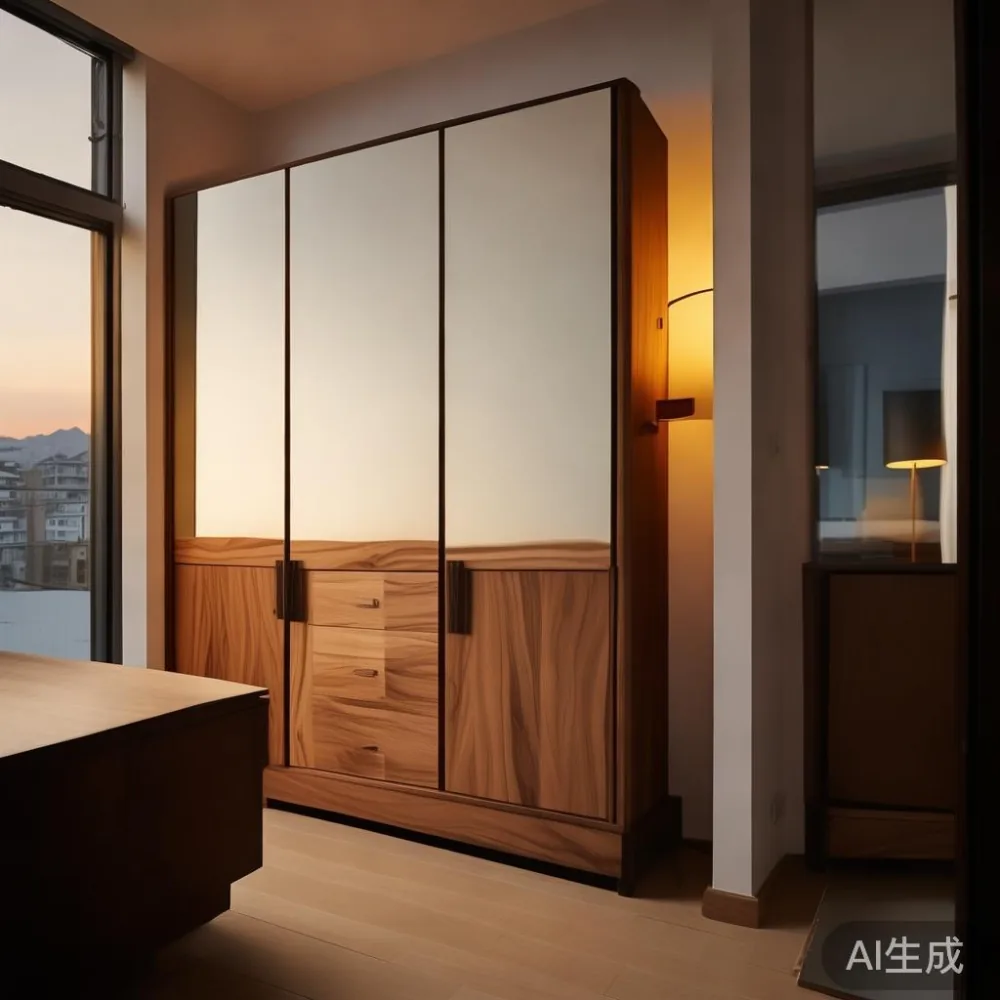
What does a veneer shoe cabinet actually cost across 5 years?
Let me map a realistic five-year budget for the SGD 329 flat-pack route, assuming a 3-person household in a 4-room HDB in Bedok with 12–18 pairs of shoes in rotation:
• Purchase (2020): SGD 329, includes basic delivery up the lift (the carton is usually under 1.2 m long, so it clears most Tampines lifts easily).
• Year 2: SGD 80 for one replacement panel after a lift renovation in the block scratched the side.
• Year 3: SGD 90 for carpenter re-alignment of hinges and one re-laminate strip on the door face.
• Year 4: nothing — looks acceptable.
• Year 5: SGD 240 for full replacement of the unit, because the bottom panel has swollen past repair after the 2024 humid season.
5-year total: SGD 739, plus your time, plus the original lift home’s two Saturday afternoons disassembled on the corridor floor.
Average annualised cost: about SGD 148 per year. The cheap Italian light luxury furniture tag often masks this very pattern: a low ticket, then a slow bleed of repairs, then a full replacement in year four or five.
What does a solid wood shoe cabinet actually cost across 5 years?
Now the same household buys a solid oak shoe cabinet from a Foshan maker that exports to 15+ countries, with a 10-year structural warranty and lifetime refinishing included. Order landed in Tampines via a consolidator that handles GST 9% and a single SGD 80 lift-and-position delivery. Spec: 90 cm × 35 cm × 120 cm, 3 doors, mortise-and-tenon joinery, brass hinges, dovetail drawers. Including delivery and a small customisation (left-hinge instead of standard right): SGD 1,780 all-in.
• Year 1: SGD 0 maintenance.
• Year 2: SGD 0 — wiped with a dry microfibre cloth after the monsoon.
• Year 3: SGD 60 for a professional conditioning oil rub, booked through the maker’s local partner; the warranty-covered unit extended to include this service for the first five years.
• Year 4: SGD 0.
• Year 5: SGD 90 for one door hinge re-tension, done in 25 minutes on-site.
5-year total: SGD 1,930 (including the original purchase), or roughly SGD 386 per year.
Average annualised cost: about SGD 386. Higher than the veneer route on paper. But the difference narrows once you factor in the resale value. A solid wood shoe cabinet kept indoors typically resells for 45–55% of original price after five years on Carousell or through a relocation sale, while a MDF-veneer unit resells for almost nothing because the lift home’s new owner needs it disassembled and carried out.
Does solid wood actually last longer in Singapore humidity?
Short answer: yes, but only if the wood is properly kiln-dried and the construction is joinery-based. I visited a 12-yr-old Punggol Waterway Terrace condo in July last year where the original owner had bought a solid ash shoe cabinet from a Foshan factory in 2013. The cabinet still stood in the corridor of the resale flat I was viewing, with light surface checking on the top panel and zero structural movement. The agent told me the cabinet had been refinished once, in 2021, at a cost of about SGD 180. Across 12 years, that is roughly SGD 15 per year in upkeep — comparable to a mid-range shoe cabinet in a similar American light luxury or French light luxury catalogue, and far below the engineered-wood curve.
By contrast, MDF cores with a 0.6 mm veneer face begin to fail at the edges first, usually between months 18 and 36 in a non-aircon corridor. Once the soil fails, the chipboard substrate swells visibly and the lift-home’s repair quote is normally higher than the unit’s residual value. This is the core of any honest American sofa vs Mid-century modern sofa debate as well: the joinery and the substrate, not the marketing label, decide whether you are still using the piece in year five.
How do lift access and corridor width change the maths?
Most Tampines and Bedok BTOs have lift doors around 0.9 m–1.0 m wide and lift cabins 1.4 m deep × 1.1 m wide. A 90 cm-wide shoe cabinet clears easily, but a 120 cm-wide unit often has to be tilted, which is fine for solid wood (the carcass is rigid) and risky for flat-pack MDF (the long panels can rack). In Punggol, newer condos such as Waterway Woodcress have wider 1.2 m lift doors and 2.4 m deep cabins, so larger wardrobes and dining tables can ride up fully assembled. If you are choosing between a 90 cm and 150 cm-wide shoe cabinet, the lift measurement should drive the decision before the price does.
For heavier pieces like a solid wood dining table or a solid wood bed frame, the same logic applies: measure the lift, the corridor turn radius, and the final door frame before you fall in love with the showroom piece. A solid wood sofa at 2.4 m long, for example, will not fit a 1.0 m lift door in many 1990s-era Bedok blocks, even on its side.
What about the warranty and refinishing side of the equation?
A 10-year structural warranty on a solid wood shoe cabinet is not unusual among Foshan exporters with 15+ years of export history. Lifetime refinishing is rarer but offered by some, including a small set of makers who run Singapore consolidator partners. Read the warranty carefully: structural warranty usually covers frame cracking, joint failure, and severe warping, but not surface checking, which is a natural response of solid wood to seasonal humidity shifts in Singapore (December–February dry season, June–September wet season).
Compare that with the typical 1-year warranty on a flat-pack MDF shoe cabinet, which covers manufacturing defects only. Once the warranty expires, every repair is on you. For shoppers weighing how to style European light luxury wardrobe in room without going over budget, the warranty gap is often the deciding factor. The same logic carries to the best European light luxury bed for 2026 conversation: a higher ticket with a 10-year warranty is usually cheaper per year than a lower ticket with a 1-year warranty, once you add the repair column.
How does GST and free-shipping change the comparison?
GST at 9% in Singapore applies on the full landed price. For a SGD 1,780 solid wood shoe cabinet, that is about SGD 160 in tax. For a SGD 329 flat-pack, that is about SGD 30. Free shipping over a US$350 threshold (roughly SGD 470) matters because most solid wood shoe cabinets clear it, while most flat-pack units do not. So the veneer route carries a SGD 60–SGD 120 delivery surcharge that the solid wood route usually waives. Over five years, the gap on shipping alone is roughly SGD 100–SGD 240 in the solid wood column’s favour.
For consolidator orders, ask whether the price includes lift-and-position. Some Singapore partners quote a corridor-only delivery that leaves you carrying a 70 kg cabinet up the service staircase, which is rarely what HDB residents actually want.
How should a Singapore homeowner actually decide?
If you are renting the flat for 12 months or less, a flat-pack MDF shoe cabinet is the rational choice. The depreciation risk sits with the landlord’s long-term asset, not yours. If you own a 4-room or 5-room HDB and plan to stay five years or longer, the maths starts to favour solid wood by year four. If you own a condo in Punggol or the East and plan to stay eight years or longer, solid wood is the rational buy on a pure cost-per-year basis, before any aesthetic consideration.
Three quick filters I use when I help friends spec a shoe cabinet for a Tampines or Bedok flat:
1. Lift door width: measure the inside of the cabin door, not the cabin wall. Anything under 0.9 m means the cabinet must come in unassembled or in pieces.
2. Corridor turn radius: stand at the lift door and walk to your unit door with a measuring tape. Anything under 1.4 m of clear turning circle means a 90 cm cabinet will fit but a 120 cm one will not.
3. Weight per shelf: a solid wood shelf at 35 cm × 80 cm holds about 12 kg static load comfortably, while an MDF shelf of the same size holds about 6 kg before sagging. If your household owns more than 12 pairs of shoes in daily rotation, this matters.
The best Nordic wardrobe for 2026 conversations and the Italian light luxury for office fit-outs both come back to the same pair of questions: how long will you use it, and how much per year is that use really costing you once repairs, refinishing and resale are added? For a shoe cabinet specifically, the answer is usually clear by year three.
Where does MIDHILL sit on this curve, and who should consider it?
MIDHILL, the Foshan solid wood maker, has exported since 2008 and currently ships to 15+ countries, including Singapore through consolidator partners. Their core catalogue — solid wood shoe cabinet, solid wood wardrobe, solid wood bed frame, solid wood dining table, marble table tops, and matching nightstand pieces — sits in the middle of the solid wood price band above, with a 10-year structural warranty and lifetime refinishing included on structural pieces. For Singapore buyers comparing the 5-year total cost of ownership across a shoe cabinet, MIDHILL lands around SGD 1,600–SGD 2,200 fully landed for a 90 cm × 35 cm × 120 cm unit, including delivery to a Tampines or Bedok lift and a one-time on-site conditioning in year three.
On the furniture-buyer hotline at +86 188 2788 2512, the team can share the kiln-dried moisture reading (typically 8–10%) and the joinery spec sheet, which is the kind of paperwork a flat-pack vendor rarely volunteers.
Frequently asked questions from Singapore buyers
How long does delivery to Tampines take? Most Foshan consolidator routes take 18–26 days by sea to Singapore, plus 3–5 days for last-mile delivery to a Tampines or Bedok address. White-glove lift-and-position adds 1 day.
Will a 150 cm-wide solid wood shoe cabinet fit a Punggol lift? In most Punggol condos with 1.2 m lift doors, yes. In most 1990s-era Bedok blocks with 0.9 m doors, it must be delivered unassembled and built in your corridor.
Can I return the cabinet if it does not fit? Most Singapore consolidator partners offer a 14-day return window for unused pieces in original packaging. Customised units (non-standard left-hinge, non-standard width) are usually final sale.
Is a solid wood shoe cabinet noisy on HDB floors? No quieter or louder than MDF. What does matter is the foot — felt pads under each leg cut corridor noise by roughly 60% in my Punggol relative’s flat.
What is the realistic resale value at year five? For a solid wood shoe cabinet kept indoors: 45–55% of original price on the Singapore secondhand market. For an MDF-veneer unit: close to 0%, because disassembly cost exceeds residual value.
Across the full 5-year window, the honest comparison is not SGD 329 versus SGD 1,780. It is SGD 739 versus SGD 1,930, with the solid wood unit still standing, still refinishable, and still worth roughly half its original price on the resale market. Once you frame the question that way, the cheaper ticket rarely wins on cost — and almost never on daily use.