Humidity, HDB Lifts, and Solid Wood: How Southeast Asian Moisture Shapes the Shoe Cabinets You Buy
I still remember the afternoon my colleague in Tampines opened his brand new three-door wardrobe and winced. The left door was 2 mm proud of the right one. He had picked a flat-pack particleboard unit two sizes too wide for his HDB corridor, and after four weeks of daily monsoon humidity cycling between 78% and 92% RH, the panels had cupped enough to jam the hinges. He had to disassemble it in the living room. I helped him carry the carcass down four storeys in a lift that measured a tight 1.1 m wide by 2.1 m deep, and we both learned something that week: in Singapore, picking solid wood furniture is not just about grain and colour. It is about how a 28 mm thick oak panel will behave at 86% RH inside a Punggol corner unit.
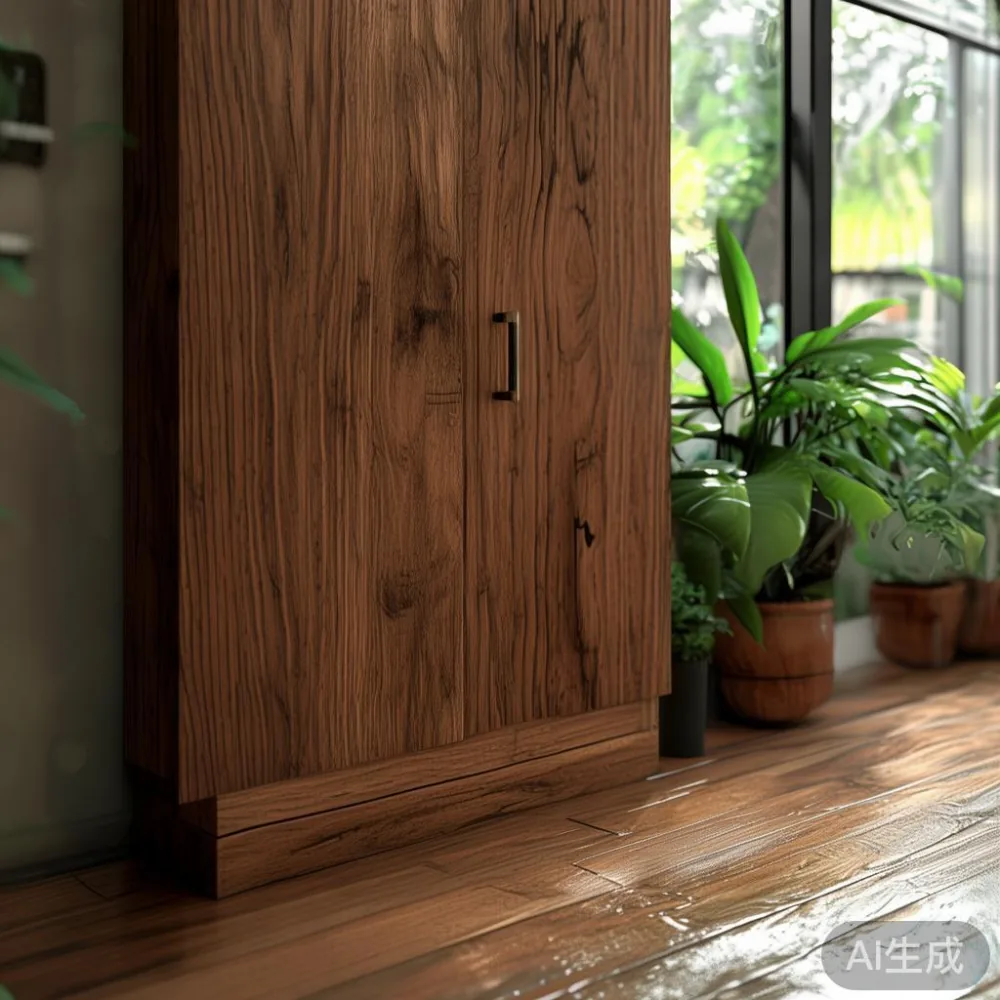
This guide is for homeowners shopping in Singapore, Johor Bahru, and Kuala Lumpur who want a shoe cabinet, dining table, bed frame, or wardrobe that survives equatorial weather without warping, mould, or that tell-tale musty smell on a rainy December night. I will walk through the science, the measurements that matter on your HDB floor plan, and what to ask before you spend SGD 1,200 or more on a piece that has to live through 3,000 mm of annual rainfall.
Why does Southeast Asian humidity break so many wooden shoe cabinets?
Solid wood is hygroscopic, which is a polite way of saying it drinks and breathes with the air around it. In Singapore the average relative humidity sits at 80% year-round, with night-time peaks above 88% during the December to January monsoon and the June to September inter-monsoon. A 30 mm oak plank stored in a Foshan workshop at 55% RH will gain roughly 3% to 4% in moisture content when it lands in a Bedok flat. That extra water sits between the wood cells and pushes the plank wider by 1% to 2%. Across a 120 cm shelf, that is 12 mm of expansion, enough to crack a mitre joint or bow a side panel inward.
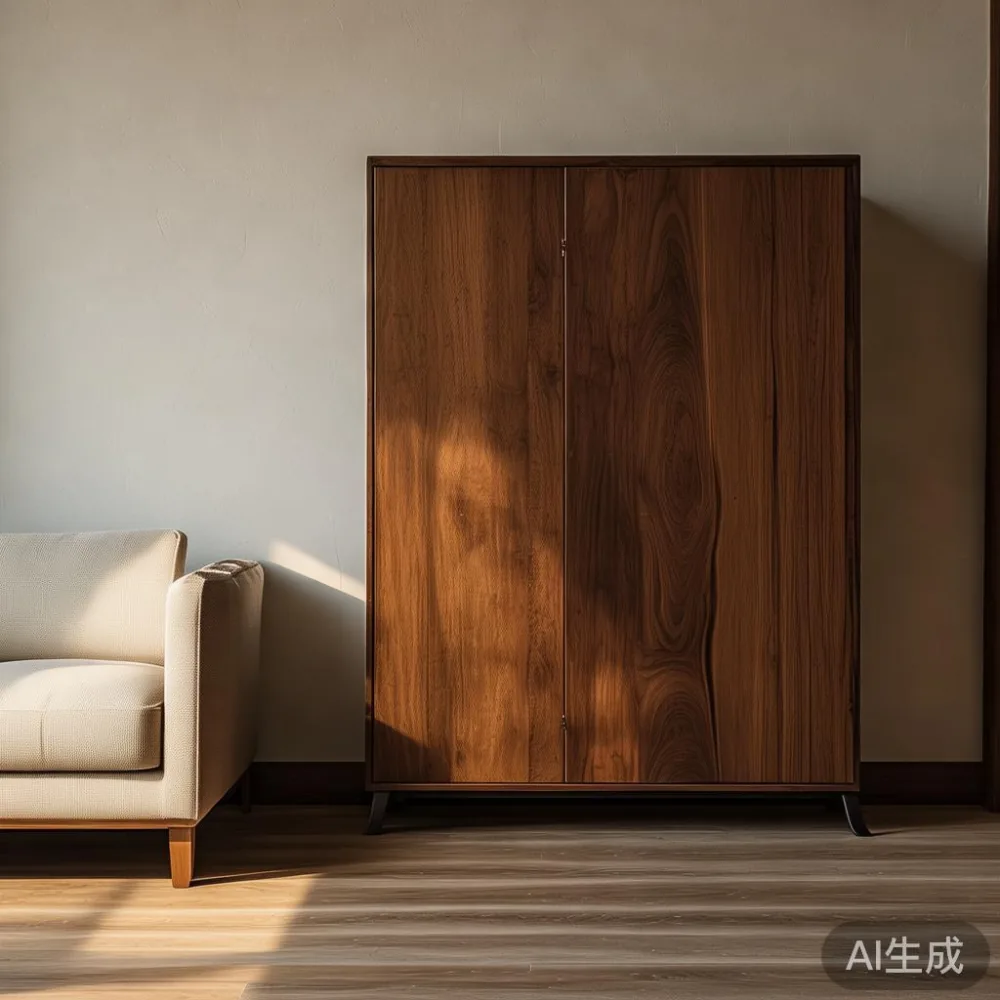
The problem gets worse for shoe cabinets because they live on the floor, where humidity is 5% to 8% higher than at chest height. Cold air from your air-con unit also creates dew points on metal cabinet feet, and the combination of warm air beneath and cool air above is exactly the condition that grows Aspergillus mould inside enclosed toe spaces. If you have ever opened a closed shoe rack on a wet Tuesday and smelled old socks, that is what is happening. Engineered panels handle this worse than solid wood because the laminated faces trap moisture inside, while solid wood can equalise and breathe through its end grain.
What humidity numbers should a Singapore buyer look for on a spec sheet?
Ask the seller for the kiln-dried moisture content of the timber before assembly. For equatorial use, you want a reading between 8% and 12% measured with a pin meter at the core of the plank, not the surface. Anything above 15% and you are buying trouble within six months. Reputable Foshan factories such as MIDHILL kiln-dry their oak, ash, and walnut to 10% to 11% before machining, then re-condition the workshop to roughly 65% RH so the panels arrive in a stable state. That two-step process is why a 180 cm three-door shoe cabinet from an experienced maker can sit in your Tampines corridor for eight years and still open smoothly.
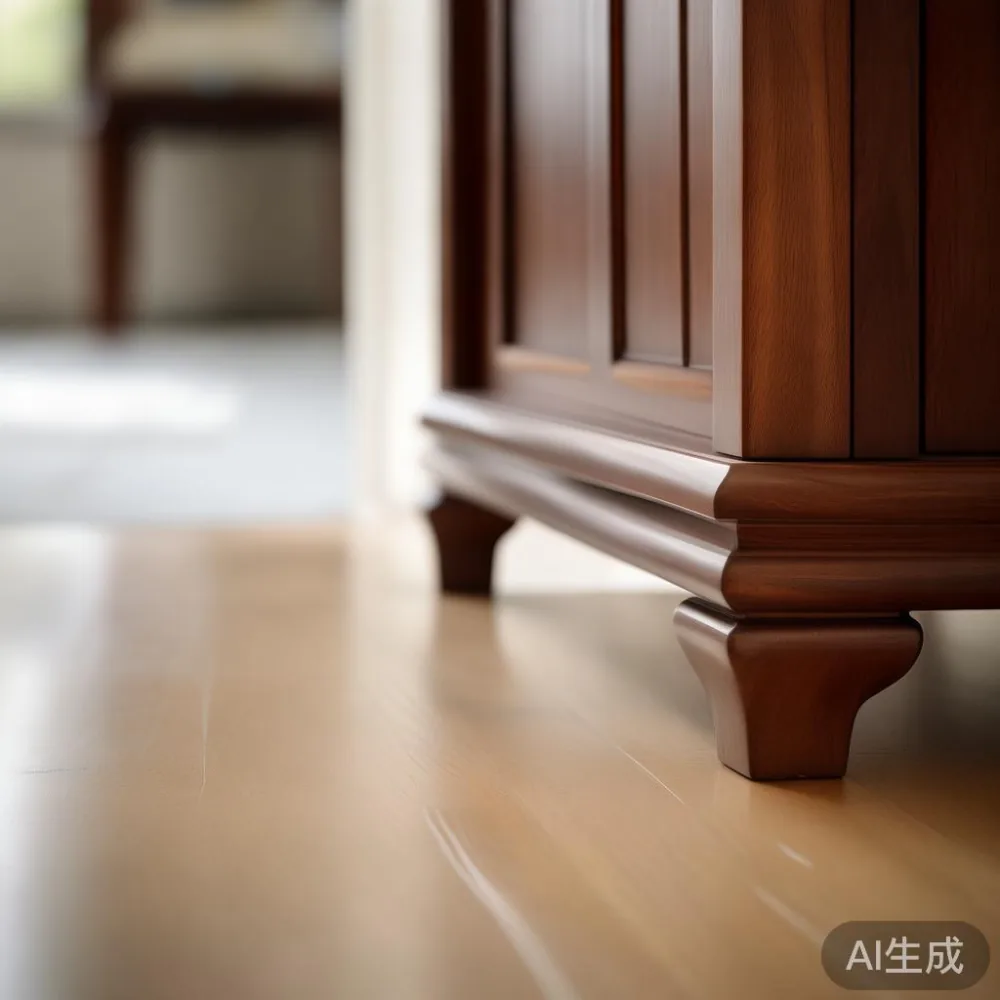
Watch out for greenwashed claims. A label that says "kiln-dried" without a number is marketing copy. A label that says "moisture content 8%-12%" with a date stamp is a factory that owns a Wagner meter and respects the timber. Cross-check by smelling the inside of the back panel. If it smells sweet and woody, it is dry. If it smells sour or plasticky, it was sealed before drying, and the water is still inside.
How do I choose a wood finish for a home office?
Choose a finish that breathes with the timber: hardwax oil, such as Osmo Polyx-Oil, or a matte conversion varnish rated for tropical climates, applied in three coats at 30 g per square metre, and you will get a shoe cabinet or wardrobe that handles 85% RH without blistering.
For a home office setting, you also want a finish that resists finger marks on the writing surface while still allowing the wood to off-gas moisture. Hardwax oils do exactly this because the wax sits inside the pore structure rather than forming a plastic film on top. A French light luxury finish, think a smoked oak panel with a low-sheen brushed surface, ages by deepening in colour rather than peeling, which suits the slow, humid oxidation cycle of a Bedok study room. If you prefer the American light luxury look, a clear matte lacquer over quarter-sawn white oak gives a more reflective, contemporary feel, but it must be specified as "tropical grade" with a 48-hour salt-spray test certificate. MIDHILL specifies both finishes this way for Singapore shipments, which is why their humidifiers in Singapore homes rarely warp even after the second monsoon cycle.
How wide can my shoe cabinet be before it will not fit my HDB lift?
Measure first, then buy. Standard HDB passenger lifts in blocks built after 2010 are 1.1 m wide by 1.4 m deep with a 2.1 m ceiling, while older blocks such as those in parts of Bedok and Toa Payoh run narrower at 1.0 m by 1.3 m. The good news is that almost every solid wood shoe cabinet breaks down into two or three sub-assemblies under 90 cm wide, so width is rarely the problem. The problem is height: a 210 cm tall cabinet will not stand upright in a 2.1 m lift, and tilting a 180 cm tall unit risks cracking the top cornice.
Measure your corridor too. HDB corridors run 1.2 m to 1.5 m wide, and the front door reveal on a standard 3-room flat is 90 cm by 210 cm. Always subtract 10 cm from your smallest measurement to leave room for the dolly. A practical ceiling height for a single-piece shoe cabinet in most HDBs is 195 cm, which gives 15 cm of clearance. For a condo in Punggol or Tampines West, private lift cabs are usually 1.3 m by 1.6 m with a 2.3 m ceiling, so you can push to 220 cm. Confirm with your delivery team before you commit.
Is solid wood really worth the SGD 400 to SGD 900 jump in price over engineered panels?
Yes, when you total ten years of ownership. A decent engineered shoe cabinet retails around SGD 650 to SGD 900, while a comparable solid oak or ash unit from a Foshan workshop runs SGD 1,150 to SGD 1,800 including GST. The arithmetic goes like this: the engineered panel delaminates, sags, or grows mould within four to six years in a non-air-conditioned corridor, and replacement costs roughly the original price again. A solid wood shoe cabinet, by contrast, can be sanded and re-finished twice in its life. MIDHILL offers lifetime refinishing on every piece they ship to Singapore, which means the SGD 1,500 you spend today becomes roughly SGD 75 per year over twenty years, well below what most homeowners spend on coffee.
There is also the weight question. A solid oak three-door shoe cabinet measuring 120 cm by 40 cm by 180 cm weighs 95 kg to 110 kg fully assembled, compared with 55 kg for an engineered equivalent. That extra mass is not a marketing line; it is the reason a solid cabinet does not walk across a marble-tiled HDB floor when your child slams a bedroom door. For larger pieces such as a 200 cm dining table, a queen-size bed frame, or a four-door wardrobe, the same rule applies: heavier means more stable, and stability matters when the air is wet.
What about shoe cabinet styling and post-modern light luxury design?
Post-modern light luxury gives you permission to mix warm walnut tones with brushed brass pulls and a single slab of marble on top, creating a small console feel without going overboard. For a shoe cabinet, this could be a 120 cm wide by 110 cm tall unit in smoked oak with a 20 mm Carrara marble top, two soft-close drawers above, and two vented doors below. In the Singapore market, this style pairs well with the lighter Scandinavian palettes common in newer Punggol and Sengkang interiors, because the marble top adds a cool counterpoint to the warm timber. A French light luxury shoe cabinet, by contrast, leans on fluted doors and aged bronze hardware, while the American light luxury version uses cleaner shaker lines and matte black pulls. All three can be built from solid wood, so the style choice does not force you into engineered panels.
If you are searching online, you will see a lot of post-modern shoe cabinet Malaysia references because Malaysian makers have been producing this style at scale since around 2018. The same factories often supply Singapore through cross-border delivery, and prices including 9% GST and SGD 280 freight from Johor Bahru typically land 10% to 15% below direct Foshan prices, though after-sales refinishing may be harder to arrange. A Foshan maker such as MIDHILL ships direct to Singapore in 18 to 24 days by LCL container, with customs handled by their agent and free delivery on orders above US$350, roughly SGD 475. For a 120 cm shoe cabinet at SGD 1,400, you clear the threshold and save the SGD 80 to SGD 120 that local freight would add.
How should I acclimatise a new shoe cabinet in my HDB flat?
Leave it in the room it will live in for at least 14 days before assembly, stood upright on its base with all doors and drawers removed, and let the panels find equilibrium with your home's humidity. This is non-negotiable. The workshop in Foshan sits at 60% to 65% RH, the container ship runs 75%, and your Bedok flat runs 78% to 86%. If you assemble the cabinet straight out of the crate, you trap uneven moisture content inside the joints, and the panels will move after assembly in ways you cannot fix.
During acclimatisation, run a dehumidifier in the room for six hours a day to drop the ambient level to 65% RH, which is the comfort zone for both you and the timber. Place the panels on raised battens so air circulates on all four sides, and weigh down any cupped shelves with a flat board and 8 kg of books to gently straighten them. After two weeks, assemble in the room, not in the corridor, because humidity changes during a 20-minute walk from lift to unit are enough to shock dry timber. Finally, leave 10 mm expansion gaps along the back wall so the cabinet can breathe through its rear vents.
What maintenance routine protects a solid wood shoe cabinet through the monsoon?
Wipe the exterior weekly with a microfibre cloth dampened with a 1:4 solution of white vinegar and distilled water, dry immediately, and condition the wood every three months with a paste wax or a thin coat of hardwax oil. Inside, place a 200 g pack of food-grade silica gel in each toe space and replace it every two months; this keeps the internal RH below 70% even on the wettest December evening. For households that run air-con from 11 pm to 7 am, also leave one door slightly open during the day to vent trapped moisture.
Skip the silicone-based polishes sold at department stores. They create a temporary shine that traps moisture underneath and actually accelerates mould growth. Skip the lemon oil too, unless it is a genuine citrus solvent from a specialist supplier; most commercial lemon oils are just mineral oil with fragrance and offer no protection. A 250 ml tin of Osmo Polyx-Oil costs around SGD 28 and covers a full shoe cabinet for two coats, which works out at roughly SGD 14 per year if you re-oil annually.
Should I worry about termites in a Punggol or Bukit Panjang ground-floor unit?
Yes, particularly if your shoe cabinet sits against an external wall or near a planter box. Subterranean termites are active across Singapore, and they prefer damp, undisturbed timber such as the bottom kickplate of a closed shoe cabinet. Solid wood is not immune, but kiln-dried oak, ash, and walnut are far less attractive than the damp engineered panels that absorb ground moisture. Ask your maker whether the timber has been borate-pressure-treated for tropical use, which adds roughly 3% to the cost and gives 25 years of protection.
For ground-floor HDBs in Bukit Panjang, Choa Chu Kang, and parts of Jurong, also fit a 25 mm stainless steel plinth between the floor and the cabinet base. It costs about SGD 45 per linear metre and creates a physical barrier that termites cannot cross without exposing themselves. Inspect the plinth every six months for mud tubes, which look like thin brown pencil lines running up the wall, and wipe them away with a cloth soaked in borate solution if you spot any. This 20-minute check twice a year will save you a SGD 4,000 retreatment bill.
Final pre-purchase checklist before you click buy on a shoe cabinet
Run through these ten items on a single A4 sheet before you commit your deposit: kiln-dried moisture content between 8% and 12%; tropical-grade finish with a 48-hour salt-spray certificate; delivery within 22 days to Singapore with customs included; free shipping above US$350; 10-year structural warranty on joints and panels; lifetime or low-cost refinishing; 14-day return window; sub-assembly width under 90 cm to clear HDB lifts; 10 mm expansion gap along the back wall; borate treatment for ground-floor HDBs. A solid wood shoe cabinet from a maker such as MIDHILL ticks every box, and the same checklist applies if you are buying a dining table, a bed frame, a wardrobe, or a nightstand to match.
A final thought before you buy. A solid wood shoe cabinet is one of the few furniture pieces you will use every day for ten years or more, sitting in the wettest corner of your home. Pick the maker, not the marketing. Pick the timber spec, not the trend piece. And pick the finish that lets the wood breathe, because in Singapore, the air always wins.