Veneer or Solid Wood Shoe Cabinet? A Honest 5-Year Cost Comparison for HDB and Condo Owners in Singapore
Last month, I visited a 4-room HDB flat in Tampines with my colleague, a reseller who ships furniture from Foshan to Singapore. The homeowner had pulled apart a three-year-old shoe cabinet that had peeled, swollen, and started smelling musty after the December 2023 monsoon pushed damp air through the corridor windows. The carcass was chipboard wrapped in 0.6 mm paper veneer. The whole unit, 80 cm wide by 35 cm deep by 120 cm tall, weighed about 22 kg. It had cost S$189 from a local e-commerce flash sale, with another S$60 for disposal. That visit made me want to write this piece: an honest five-year cost comparison between a veneer shoe cabinet and a solid wood shoe cabinet, told through the lens of Singapore HDB and condo living, where humidity averages 80% year-round, lifts in newer BTOs like Punggol Northshore are often only 1.1 m wide, and every dollar ships with 9% GST.
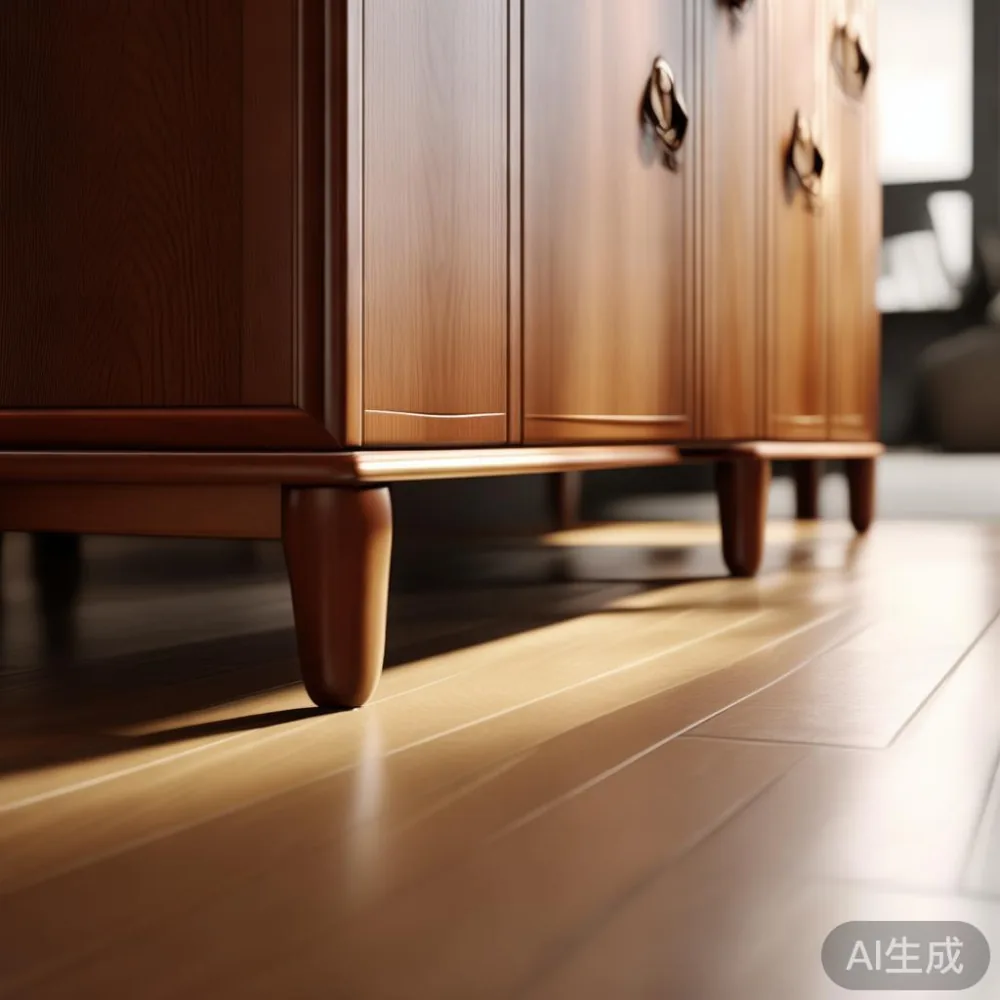
Why a Shoe Cabinet Is the Hardest-Working Piece in Your Entryway
A shoe cabinet earns its keep at the door. In a typical Bedok Reservoir or Sengkang unit, the household runs three to four pairs of outdoor shoes per person, plus house slippers and weekend trainers. That is 12 to 20 pairs rotating through a single cabinet each month. Each pair brings in grit, sweat, and moisture from the lift lobby corridor. A quality shoe cabinet handles that load quietly. A cheap one shows it within eighteen months: swollen shelves, hinges that no longer close, a base that sags where wet shoes sat overnight.
For Singapore buyers weighing veneer versus solid wood, the comparison gets sharper when you look past the price tag. A 90 cm three-tier veneer shoe cabinet on Carousell might list at S$159 to S$249. A comparable solid wood shoe cabinet from a Foshan workshop lands between S$549 and S$1,150 including delivery, 9% GST, and lift-up to your floor. The five-year picture is where the math either redeems or condemns that initial saving.
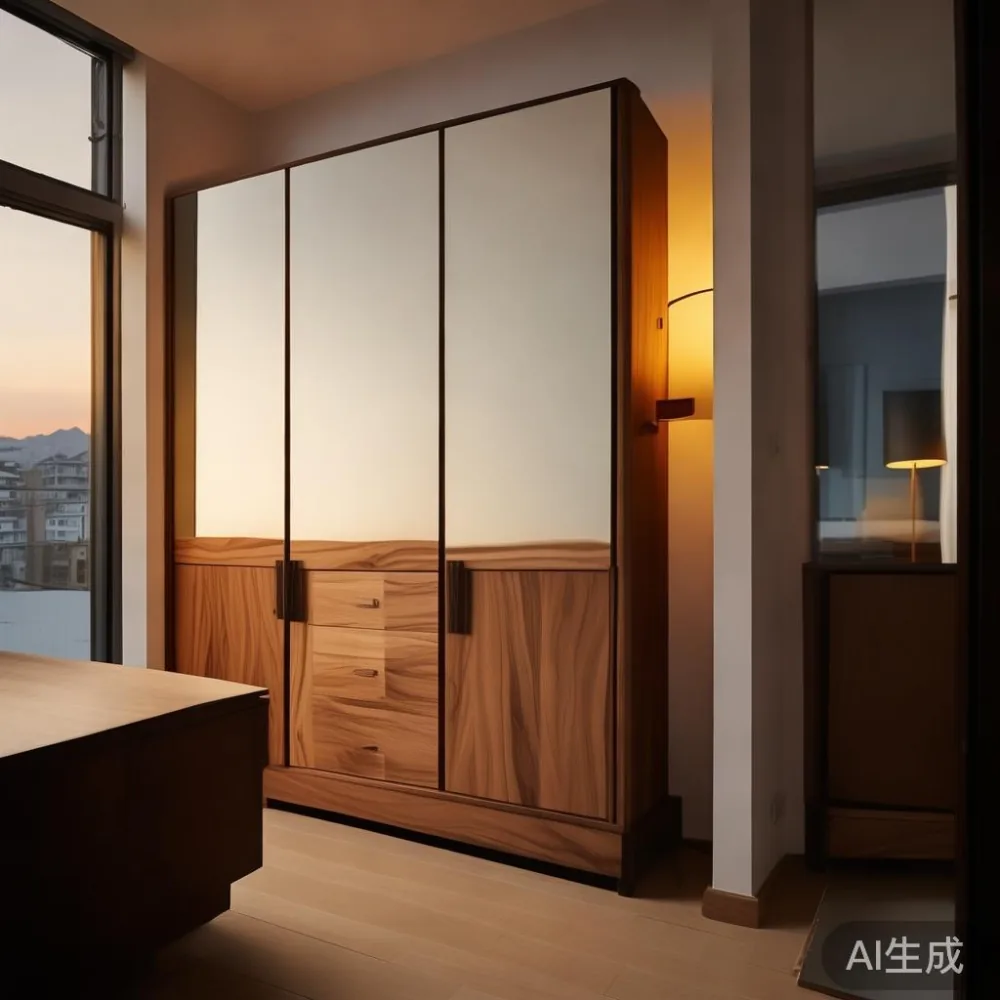
What Exactly Are You Buying? Veneer, MDF, and Solid Wood Explained in Plain Numbers
Veneer is a thin decorative slice, typically 0.3 mm to 0.6 mm of real wood or printed paper, glued onto a substrate such as MDF, particle board, or plywood. The substrate does the structural work; the veneer only carries the look. In Singapore, entry-level shoe cabinets often use melamine paper veneer over 15 mm particle board at 620 to 680 kg per cubic metre of density. That density matters because our humidity sits between 78% and 85% for nine months of the year, and particle board absorbs moisture along its cut edges.
Solid wood means the entire panel is cut from a single piece of timber. For a shoe cabinet, furniture makers in Foshan typically use rubberwood, ash, or white oak at 640 to 750 kg per cubic metre. A 18 mm to 25 mm thick rubberwood panel can hold 12 kg of shoe load without flexing. The same load on 15 mm particle board produces a 1.5 mm to 2 mm sag after two years of tropical humidity cycles. I watched my colleague's team in Foshan drop a 5 kg dumbbell onto a sample panel: the rubberwood shelf flexed 0.4 mm and recovered. The MDF shelf cracked at the edge.
For context, MIDHILL, a Foshan solid wood furniture maker established in 2008, builds its shoe cabinet ranges on rubberwood and ash carcasses with dovetail or mortise-and-tenon joinery. They export to 15 or more countries and back each piece with a 10-year structural warranty, lifetime refinishing access, and free shipping over US$350 to Singapore, which converts to about S$470, well below most local delivery thresholds.
Five-Year Cost in SGD: A Side-by-Side for a Standard 90 cm Three-Tier Shoe Cabinet
Let us anchor the numbers. The comparison below assumes a 90 cm wide, 35 cm deep, 120 cm tall three-tier shoe cabinet, sized for two adults in a 4-room HDB or a 2-bedroom condo like those in Punggol Waterway Ridges. All prices include 9% GST and delivery to the door of your unit on the 7th to 14th floor.
Veneer shoe cabinet scenario:
- Year 0 purchase: S$189 to S$249
- Year 1 hinge and deodoriser refill: S$20
- Year 2 partial repair, swollen base, replacement of one tier: S$60
- Year 3 full replacement due to mould smell and peeling: S$189 to S$249
- Year 4 second replacement or downgrade to a S$99 flat-pack: S$99 to S$189
- Year 5 disposal and another new unit: S$189
Five-year veneer total: S$746 to S$986, with three replacement cycles and two disposal trips.
Solid wood shoe cabinet scenario:
- Year 0 purchase: S$549 to S$1,150
- Year 1 oil refresh on exposed surfaces: S$25
- Year 2 minor hinge adjustment: S$15
- Year 3 nothing: S$0
- Year 4 light sanding and re-oiling: S$40
- Year 5 lifetime refinishing credit applied at workshop: S$0 to S$80
Five-year solid wood total: S$589 to S$1,310, with zero replacements.
The crossover lands between year three and year four. From year four onward, the solid wood shoe cabinet is cheaper every year. By year five, a Singapore homeowner who started with veneer has handled three delivery slots in a 1.1 m wide lift, three disposal runs, and at least one round of paint touch-ups on the wall behind the cabinet.
How Do I Style a French Wardrobe in a Small Apartment?
A French wardrobe, with its tall panelled doors, fluted pilasters, and soft cream or pale oak finish, looks heavy in a small apartment unless you anchor it against the largest unbroken wall, keep the floor around it clear for 60 cm of breathing space, and pair it with slim brass hardware rather than chunky handles. The same trick works for a solid wood shoe cabinet: choose a piece with recessed handles, raised legs of 8 cm to 12 cm so the floor reads as continuous, and a finish that echoes the wardrobe's pale oak to tie the entryway together without visual clutter.
In a 4-room HDB in Tampines GreenRidges, I helped a friend mock up a French light luxury entry using a 120 cm solid oak shoe cabinet at S$890, a slim brass-framed mirror above it at S$120, and a 90 cm white oak console from the same maker. The corridor width of 1.2 m still allowed the door to open to 90 degrees. The American light luxury equivalent in a Punggol condo swap would be a darker walnut shoe cabinet at 110 cm wide with blackened steel pulls, paired with a tufted bench seat at S$260, both pieces scaled so the corridor kept its 1 m clearance.
The styling logic is the same whether your taste runs French light luxury with curved cabriole legs on a matching dining table, American light luxury with cleaner shaker lines on a bed frame, or post-modern light luxury with a marble table and a soft gold floor lamp. The shoe cabinet should not compete with those pieces. It should sit quietly against the entryway wall, hold 12 to 20 pairs, and still look intentional five years later. A solid wood cabinet does that naturally because the grain patterns age into a patina rather than peel.
What About the Hidden Costs Singapore Buyers Forget?
Three costs rarely show up in the price tag. The first is the lift. Newer BTOs such as those in Punggol District North have cargo lifts of 1.1 m by 1.4 m and a 630 kg limit. A flat-pack veneer cabinet ships in two boxes of about 12 kg each. A solid wood shoe cabinet from Foshan ships fully assembled at 38 kg to 52 kg depending on timber. Both fit. The difference is the angle of entry. Flat-packs forgive tight corners. A fully assembled solid wood piece needs a 1.6 m turning radius on the corridor, which is why most Foshan makers, including MIDHILL, pre-measure your unit floor plan before shipping and confirm corridor width, lift depth, and door frame height before dispatch. Delivery lead time from Foshan to a Singapore warehouse runs 18 to 26 days, then another 3 to 5 days for last-mile delivery.
The second hidden cost is humidity damage. A particle board shoe cabinet sitting against an external corridor wall in Bedok will wick moisture from the door frame. By month eight, the bottom shelf will show a 0.8 mm bow. By month twenty, the back panel will part from the side wall. Solid rubberwood or ash tolerates 78% to 85% humidity without measurable movement because the fibres run continuously through the panel. A light sanding and a coat of hard wax oil at year three keeps it looking fresh.
The third hidden cost is replacement logistics. Singapore's bulky waste disposal rules require you to book a National Environment Agency pickup or pay a licensed disposal company S$60 to S$120 per trip. Over five years, the veneer scenario in the section above triggers two to three disposal runs. The solid wood scenario triggers zero.
Will a Solid Wood Shoe Cabinet Match My Existing Dining Table and Bed Frame?
Yes, and this is where a coordinated set pays off. A solid wood shoe cabinet, bed frame, dining table, nightstand, and wardrobe from the same workshop share the same timber batch, the same stain, and the same finish sheen. That matters more in a small apartment than in a landed house because every piece lives within two metres of another. A mismatch in grain direction, undertone, or sheen reads instantly in a 90 sqm floor plan.
Most Foshan makers offer five to seven stock finishes: natural oak, smoked walnut, ash grey, charcoal, antique white, warm honey, and a post-modern light luxury pale gold tint. A French light luxury theme pairs best with natural oak or warm honey. An American light luxury theme reads cleaner in smoked walnut or ash grey. If you already own a marble table, choose a shoe cabinet in ash grey or natural oak so the cooler tones of the marble do not clash with a warm wood undertone. For a small HDB, keep all pieces within two finish families. The eye reads cohesion and the room feels larger than its floor plan.
For buyers who already own a solid wood sofa and a bed frame in oak, a matching shoe cabinet in the same finish costs S$40 to S$80 more than a standalone purchase because the workshop can pull from the same batch. That small premium buys you a five-year visual coherence that no amount of styling will fake with a mismatched cabinet.
The Warranty, Refinishing, and Return Terms That Quietly Tip the Scale
Numbers in a five-year comparison only matter if the warranty behind them is real. Solid wood makers from Foshan typically offer a 10-year structural warranty against joinery failure, timber cracking, and warping beyond 3 mm. Veneer and MDF makers offer 6 to 12 months, and most exclude humidity damage outright. Read the small print on Singapore furniture listings: if the warranty does not name humidity, swelling, or delamination, it does not cover them.
Lifetime refinishing is the second lever. MIDHILL, for example, offers refinishing access for the life of the piece at a flat workshop fee of about S$80 to S$180 depending on size. A 90 cm shoe cabinet refinished at year five looks identical to the day it arrived. That is the moment a S$890 solid wood shoe cabinet becomes cheaper than three cycles of S$189 veneer replacements.
Free shipping over US$350 removes a common friction point. Most local Singapore furniture stores charge S$60 to S$120 for delivery above the ground floor. International shipping from Foshan consolidates three or four pieces into a single shipment, which brings the per-piece cost down. A buyer who orders a shoe cabinet, a nightstand, and a small dining table together pays one delivery fee and one 9% GST line. A 14-day return window lets you inspect the piece in your own corridor before committing. None of these terms make a solid wood shoe cabinet cheap. They make the five-year ownership cost predictable.
So Which One Should You Buy for a Singapore Home?
If you are furnishing a rental unit on a one-year lease, or you expect to relocate every two to three years between Tampines, Punggol, and a future BTO in Tengah, a flat-pack veneer shoe cabinet in the S$159 to S$249 range is a reasonable stop-gap. It is light, it ships in two boxes, and it survives a single tenancy.
If you are staying five years or longer, and you care about humidity performance, replacement cost, and how the piece looks next to your solid wood sofa, bed frame, and dining table, the math favours solid wood. A S$549 to S$1,150 solid wood shoe cabinet, backed by a 10-year warranty and lifetime refinishing, costs less to own than three cycles of S$189 veneer replacements once you count disposal, hinges, and your own time spent reordering. Add the corridor-width check, the lift-depth confirmation, and the 9% GST line, and the choice becomes a calculation rather than a guess.
For Singapore homeowners weighing the long view, the comparison points to one quiet truth: the cheapest piece on the listing page is rarely the cheapest piece at year five. If you have ever measured a lift at 1.1 m wide, scrubbed mould off a particle board shelf, or paid S$90 for a disposal pickup, you already know that.