Shoe Cabinet Singapore: What Actually Works in a HDB or Condo?
Why do most shoe cabinets fail in Singapore within three years?
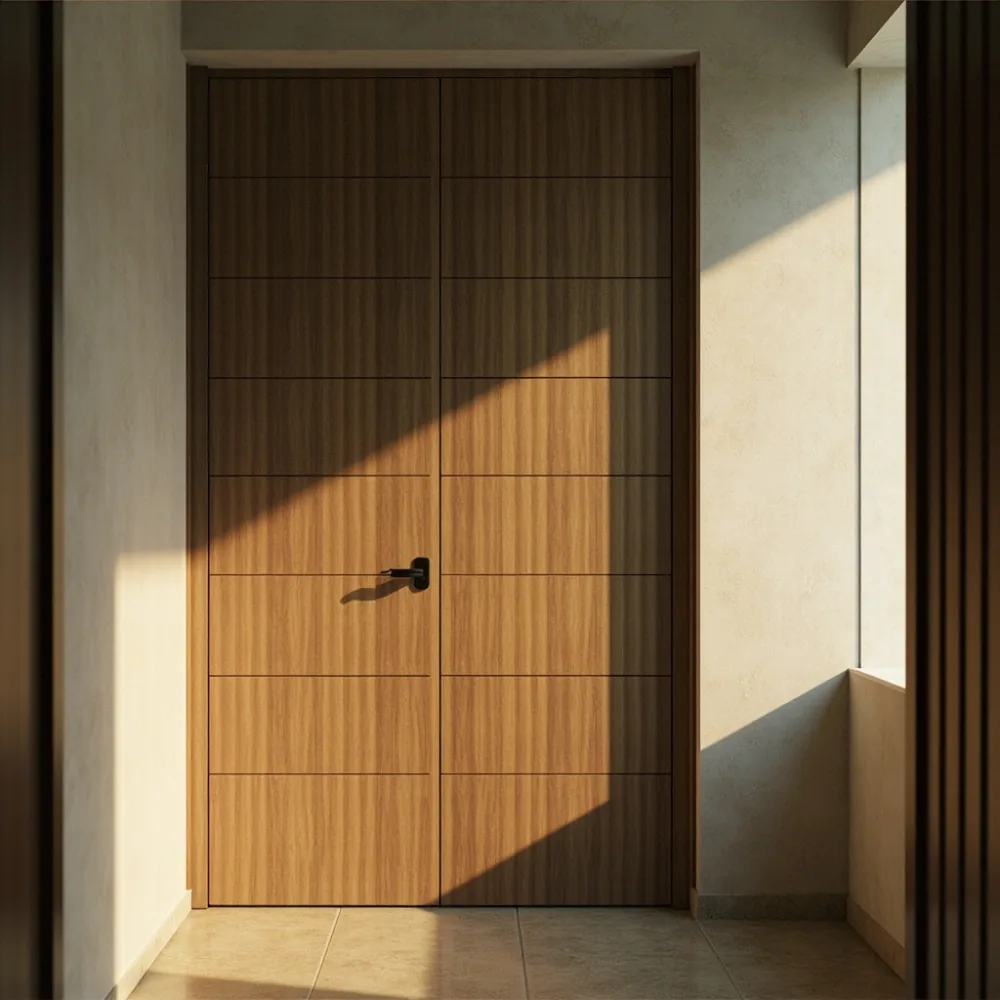
Humidity is the quiet killer
Particleboard hates our weather
Cheap hinges are the first to go
I learned this the hard way when my first shoe cabinet, a flat-pack from a Geylang warehouse, started sagging at the joints by month fourteen. The shelves were particleboard with a paper foil that bubbled along the back edge where it sat against the wall. Moisture wicks up from the HDB floor, condenses under those panels, and the whole structure loses shape.
Three things fail first in our climate: the hinges, the backing board, and any laminated surface that isn’t fully sealed. If a cabinet uses 3mm hardboard as a back panel, expect it to bow. If the hinges are unmarked thin steel, they corrode within two wet seasons.
- Solid wood furniture, even engineered pieces with a real hardwood outer ply, resists swelling far better than raw particleboard.
- Back panels should be at least 9mm thick and ideally the same material as the sides.
- Soft-close hinges with a brand name (Blum, Häfele, DTC) last 5-10x longer than no-name clips.
What size shoe cabinet actually fits a HDB entrance?
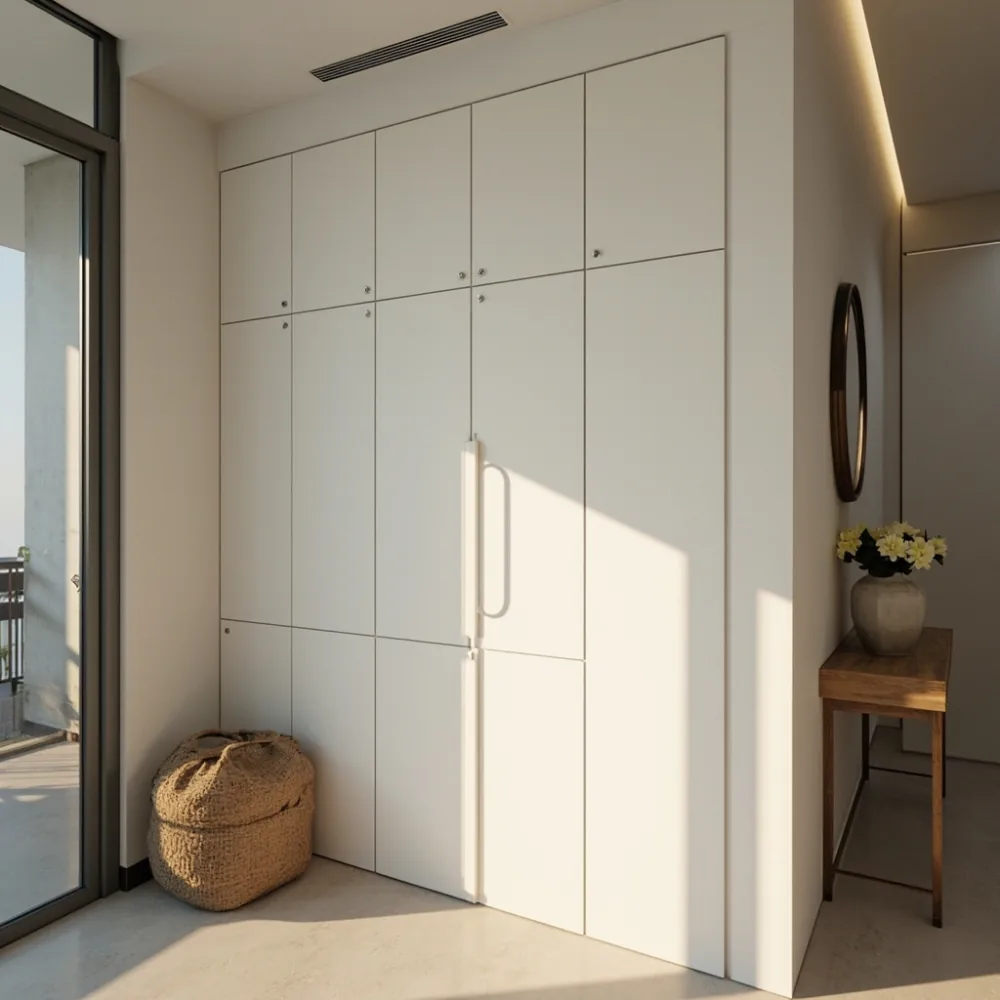
Measure the recess, not the wall
Depth is the real constraint
Width and height rules of thumb
Most HDB doors in Singapore open into a small foyer or sit right next to a corridor wall. The shoe cabinet has to clear the door swing, the DB box, and usually a light switch. Before browsing, take a tape measure to your entrance and write down three numbers.
| HDB/condo layout | Max safe cabinet depth | Width range | Height sweet spot |
|---|---|---|---|
| 3-room HDB (~65 sqm) | 22 cm | 60-90 cm | 100-120 cm |
| 4-room HDB (~90 sqm) | 28 cm | 80-120 cm | 110-140 cm |
| 5-room HDB (~110 sqm) | 32 cm | 100-160 cm | 120-160 cm |
| Condo (District 9/10 typical) | 35 cm | 100-180 cm | 120-170 cm |
Depth matters more than people realise. A 35 cm cabinet holds men’s running shoes comfortably; a 22 cm unit only fits flats and sandals, and men’s size 43 trainers will bulge at the heel. I size up one level from the chart for chunky winter boots, even though we rarely wear them — guests do.
Tilted shelves vs flat shelves — which is more practical?
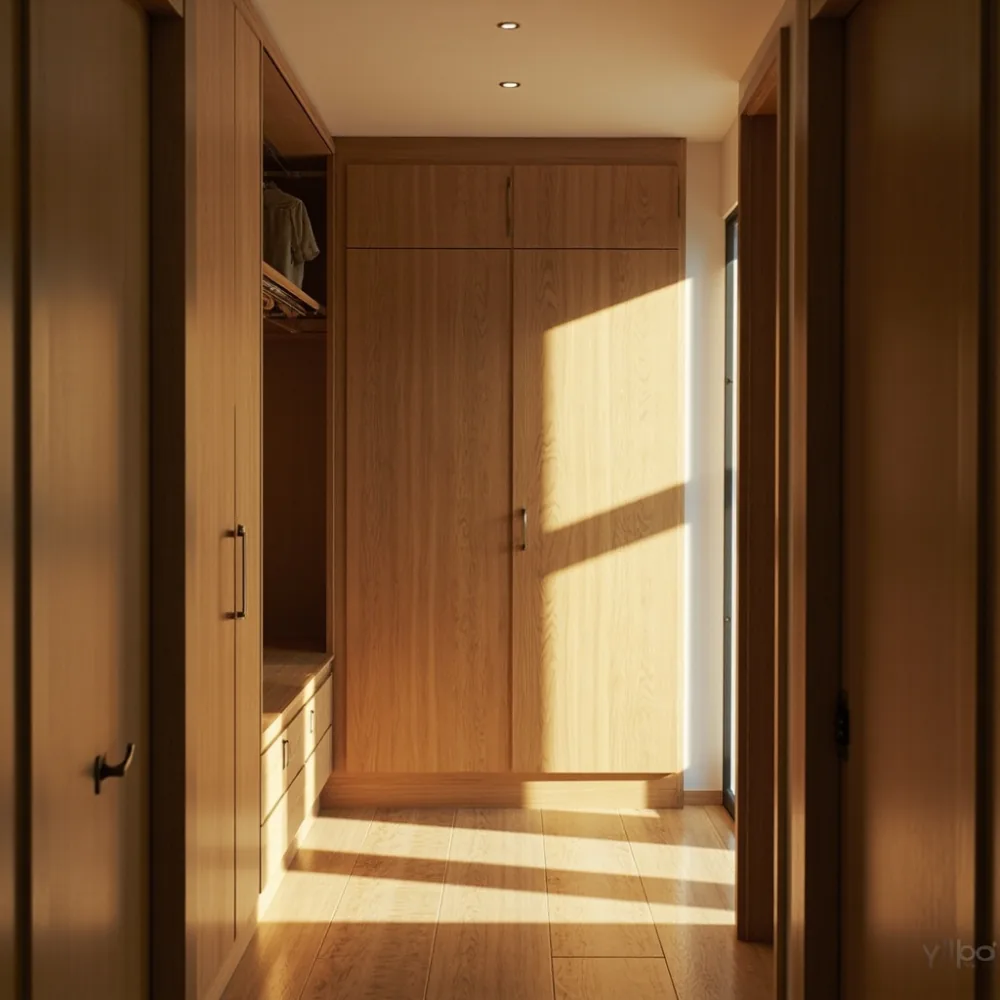
Tilted pros and cons
Flat shelf logic
The hybrid solution
Tilted, or “drop-front,” doors let you pull a shoe forward without opening the whole cabinet. They look sleek in showrooms, and they save door clearance in tight HDB passages. The catch: each shelf can only hold one row of shoes, so capacity drops by roughly 40% versus the same cabinet with flat shelves.
Flat shelves, hinged on the side, give you two rows per shelf if your shoes are under 12 cm high, which most adult shoes are. You lose the quick-glance feature, but you double the capacity — critical if you share the cabinet with two other adults.
- Choose tilt-front when the cabinet is your main entry shelf and you only store flats and sandals.
- Choose flat shelves for families of three or more, or if you keep trainers, heels, and loafers together.
- A hybrid — two tilt-front compartments on top, flat shelves below — is the best compromise and is what custom furniture makers offer most often.
Which wood actually survives Singapore humidity?
Solid hardwood options
Engineered choices that work
Woods to avoid
Solid wood furniture made from rubberwood or teak handles our humidity well once sealed. Rubberwood is the workhorse: dense, affordable, and stable indoors. Teak is the premium pick — high oil content means it shrugs off moisture — but expect to pay 2-3x more. Both need at least two coats of a moisture-cure polyurethane on any exposed end-grain.
MDF with a melamine laminate is fine for the body of the cabinet if the edges are PVC-banded and the back is sealed. Just don’t put MDF next to a bathroom door or a kitchen entrance where steam hits it daily.
- Good: rubberwood, teak, ash, oak (kiln-dried).
- Good (engineered): birch ply with hardwood veneer — strong, light, dimensionally stable.
- Avoid: untreated pine, raw MDF, paper-laminate over particleboard — they swell within 18 months in a non-aircon corridor.
How much should I actually spend on a decent shoe cabinet in Singapore?
Price brackets explained
What you pay for
Delivery and assembly notes
p>SGD 300-700 covers most flat-pack and entry-tier assembled cabinets. They look fine on day one, use thin particleboard, and rely on cam-lock fittings. Fine for a rental you’ll leave in two years; painful in your own place.
SGD 800-1,800 is the mid-band where solid wood furniture and plywood cabinets live. Brands in this bracket give you branded hinges, proper back panels, and 3-5 year structural warranties. This is the value band I recommend for most buyers who plan to stay five or more years.
SGD 2,000-4,500 gets you custom furniture — sized precisely to your HDB recess, real hardwood throughout, and finishes matched to existing built-ins. A Foshan-based maker I’ve come across, MIDHILL, works in this range; they’ve shipped to Singapore since 2008 and back their frames with a 10-year structural warranty, which is rare in the category.
Add 10-15% on top of any price for delivery (usually SGD 80-180 to most HDB estates) and assembly (SGD 60-200 depending on the number of cabinets and lift access). Walk-up blocks on the 7th floor with no service lift will push assembly toward the upper end.
How do I fit a shoe cabinet into a HDB corridor without blocking the fire escape path?
The 1.2 metre rule
Tall vs low profiles
Built-in vs freestanding
SCDF guidelines in Singapore require a clear escape path of at least 1.2 metres in common corridors, but inside your door the fire rule still applies: never block your exit with furniture that weighs more than you can shove aside in a panic. Practically, that means keep the cabinet under 60 kg if it’s freestanding, and bolt any tall unit to the wall.
A low profile cabinet, around 80-100 cm tall, fits under most HDB window sills and doesn’t dominate a 1.2 m wide foyer. Tall cabinets up to 160 cm work in condo entries where the corridor is wider, but they need anti-tip straps — most come in the box, and most people skip them. Don’t skip them.
- Freestanding: easiest to move when you renovate, but takes more floor depth.
- Built-in: custom furniture built between two walls, gives the most capacity per cm², but locks you in.
- Wall-mounted: keeps the floor clear, limits weight to around 30 kg loaded — good for slippers only.
What features actually matter and which are marketing fluff?
Features worth paying for
Features to ignore
The ventilation question
Ventilation holes are worth paying for. A shoe cabinet without any airflow becomes a small perfume bomb after a wet Monday — monsoon season in Singapore will teach you this within a week. Look for holes on the back panel or under each shelf, ideally 10-20 mm diameter.
Soft-close doors are worth a small premium because slamming accelerates hinge wear. Velvet-lined shoe shelves are not — expensive and the liner traps more smell than it absorbs.
- Worth paying for: branded soft-close hinges, real wood drawers if any, ventilation, anti-tip straps.
- Skip: built-in LED strip lights (you have a downlight already), rotating racks (mechanical failure in 2-3 years), mirrored fronts unless you genuinely need one.
How long does delivery and assembly take if I order today?
Local stock timelines
Custom timelines
What to ask before paying
Ready-made cabinets from local stockists like FortyTwo or Commune typically deliver within 7-14 working days, faster if you live in the East and the warehouse is nearby. Assembly is usually scheduled the same day or the next.
Custom-built cabinets imported from mainland China usually take 45-75 days from order to delivery, plus another 2-4 weeks if there are queue delays around Chinese New Year (often 4-6 weeks effective delay from late January to mid-March). Sea shipping from Foshan or Guangzhou to Singapore takes 8-12 days door-to-door once dispatched.
- Ask for the dispatch date in writing, not the “estimated delivery” range.
- Confirm who pays customs duty: most CIF quotes to Singapore are duty-free on furniture under SST thresholds, but verify with the seller.
- Ask for the hinge and runner brand by name — any seller who can’t tell you this is probably using white-label hardware.
Can I build a shoe cabinet into a wider entryway makeover?
Combining with a console
Sliding door alternative
Bench + cabinet combo
If your foyer allows, the shoe cabinet pairs naturally with a small console above or beside it, and possibly a bench in between for the daily shoe-on, shoe-off ritual. The cabinet stays 28-32 cm deep; the console goes 35-45 cm deep so the bench can tuck under. This is the entry setup I keep recommending to friends renovating resale HDBs in places like Toa Payoh and Bedok.
Sliding doors instead of hinged doors are worth considering only if your corridor width is below 90 cm. A 120 cm wide sliding-door shoe cabinet fits the same shoes as a 90 cm wide hinged-door model and doesn’t require swing clearance. The trade-off: sliding tracks need cleaning twice a year and the rollers wear out in 4-6 years.
For durable furniture that lasts the full renovation cycle (7-10 years for most HDB owners), invest in the cabinet frame first, then add softer decorative elements around it. That order of priorities is what separates a hallway that ages well from one you re-do by year five.
Frequently asked questions
What is the best shoe cabinet material for Singapore humidity?
Kiln-dried solid wood furniture — especially rubberwood or teak — handles Singapore humidity best when sealed with polyurethane on all edges. MDF with PVC-banded edges is fine for the cabinet body, but avoid raw particleboard or paper-laminate panels in any cabinet that sits near a non-aircon corridor.
How wide should a shoe cabinet be for a family of four?
Plan for 100-140 cm of width with flat shelves to fit roughly 24-32 pairs. Tilt-front doors cut capacity by about 40%, so a tilt-front family cabinet needs 160-200 cm of width for the same number of shoes.
Do custom shoe cabinets from China ship to HDB blocks?
Yes — most Foshan and Guangzhou factories ship to Singapore regularly. Sea freight takes 45-75 days total including customs and local delivery. Confirm with the seller that the cabinet breaks down flat enough to fit a standard HDB lift (usually 1.0 m door x 2.1 m deep, 1.5 m wide cabin).
Questions about specifications, fabric or delivery? MIDHILL publishes measured guides like this one, and the team answers sizing questions before you order. See the full collection or contact the team.