How to Choose the Right-Size Shoe Cabinet for a Singapore HDB Living Room
Shoe storage can make a compact Singapore living room feel orderly, but choosing the wrong cabinet is frustrating. A unit that looks generous in a showroom may crowd the sofa, block the television, or leave a narrow walking route between the entrance and kitchen. For HDB flats in Tampines, Bedok, and Punggol—and for equally space-conscious condos—the practical answer depends on measurements, not guesswork.
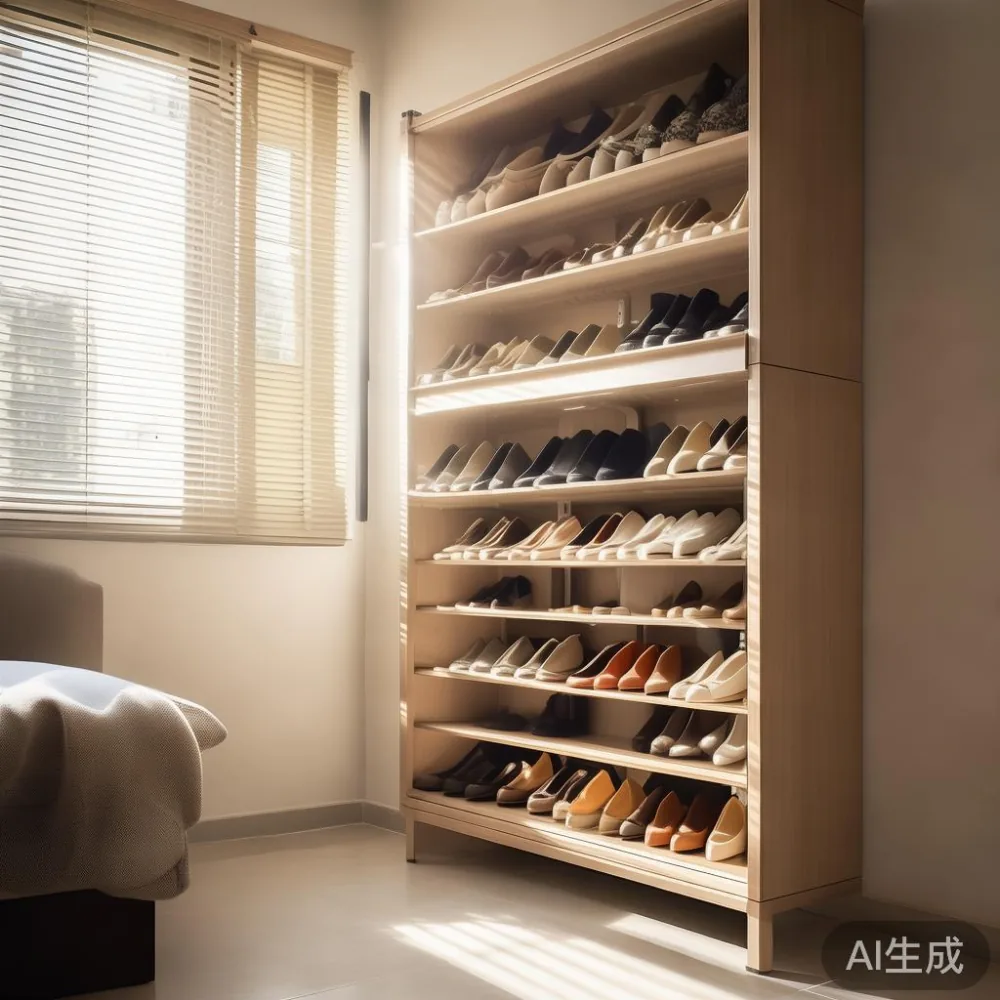
This guide uses a room width of 300 cm, a common living-room width in a larger HDB flat, to work through several shoe cabinet sizes. The figures remain useful for a 240 cm room by reducing the cabinet width, reducing the side clearance, and preserving a clear route of at least 80 cm. MIDHILL builds solid-wood storage with a 10-year structural warranty, and its sizing advice begins with the room rather than the product catalogue.
What size shoe cabinet fits a Singapore HDB living room?
For a typical 300 cm-wide living room, a shoe cabinet measuring 120–150 cm wide is usually the easiest fit. It offers useful capacity while leaving 150–180 cm of remaining width for the sofa, television console, side table, or occasional chair. A 90 cm-wide model suits a 240 cm room more comfortably, while an 180 cm cabinet demands careful placement and is better suited to a room wider than 330 cm or to a long entrance wall.
Height matters just as much. A cabinet between 100 cm and 120 cm tall feels substantial without competing with windows, framed pictures, or a wall-mounted television. For very narrow rooms, a low cabinet under 90 cm can preserve sightlines, although closed storage for taller boots becomes difficult. A depth of 30–35 cm fits standard pairs of shoes, while 40 cm is useful for drawers, boot storage, or a charging point.
Do not measure only the cabinet. Note the skirting board, usually 8–12 cm high, sockets, television cables, air-conditioning vents, and the door swing. Leave at least 5 cm between the shoe cabinet and a wall if ventilation is needed, or 2–3 cm for flush positioning against a skirting-compatible rear panel.
How much space should remain beside the shoe cabinet?
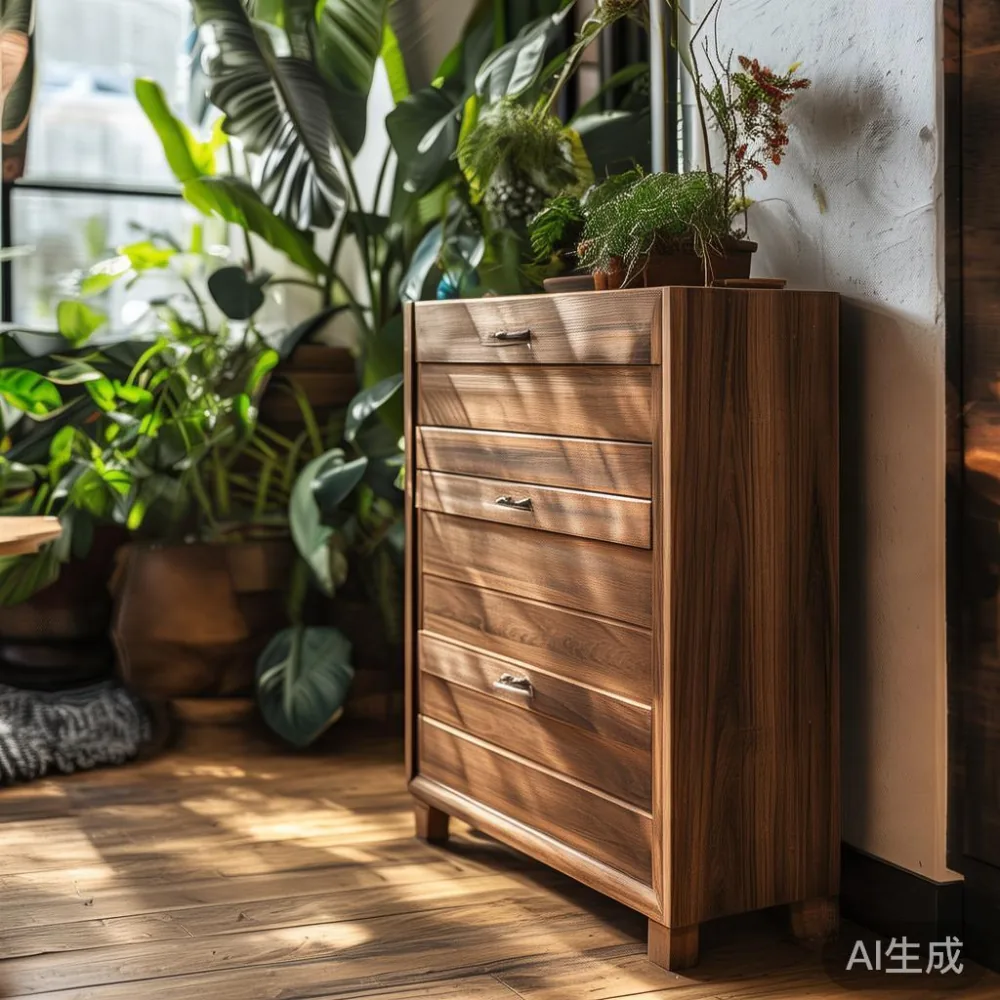
A useful rule is to keep one primary walking route at least 80 cm wide. With a 150 cm cabinet centred in a 300 cm room, the nominal space on either side is 75 cm. That sounds adequate, but the cabinet depth and sofa depth reduce the usable route. Place the cabinet against the longest uninterrupted wall and align its front edge with the sofa rather than pushing it into the room.
At the entrance, allow 90–110 cm of clear width for shoes, bags, and delivery parcels. In a lift lobby or common corridor, household moves must also comply with the building’s rules. A cabinet packaged at 165 × 46 × 28 cm may fit a standard HDB lift car, but the box, turning radius, and trolley still need checking. The carton must fit through the apartment door, usually 80–90 cm, without forcing the cabinet through sideways.
For a visual example, imagine a 140 cm cabinet against a 300 cm wall. It leaves 160 cm of wall length. A 180 cm sofa can sit on the opposite side if the cabinet ends before the sofa’s front line, but the combined footprint may still make the room feel divided. Compact legs on the sofa and a shallow 30 cm cabinet help maintain a clear 85 cm route. This is where a solid wood sofa, bed frame, dining table, wardrobe, nightstand, or marble table should be considered only for its dimensions; the shoe cabinet must not make those larger pieces appear cramped.
Which shoe cabinet shape works best in an HDB flat?
A low, horizontal shoe cabinet is the most adaptable choice for Singapore interiors. Width supports capacity, while a height of 85–100 cm keeps the room open. Flip-down fronts suit daily use because shoes remain visible, and drawers are convenient for accessories. Slatted or ventilated fronts help moisture escape in Singapore’s humid climate, where indoor relative humidity commonly reaches 70–80%.
A tall cabinet can provide more storage, but only if the room has enough length and the wall has no window or service panel. In a compact HDB living room, a 160–180 cm-tall unit may dominate the entrance and reduce daylight. If vertical storage is necessary, choose a narrow 60–80 cm cabinet and keep its total depth near 30 cm.
French light luxury works well in this context through pale oak, warm walnut, restrained brass hardware, and gentle curves. Post-modern light luxury can add a sculptural cabinet with softened corners, but avoid too many decorative profiles in a small room. Japandi for dining room styling often appears in a neighbouring dining area; its clean lines can continue into the living room through a shoe cabinet with simple timber grain, closed storage, and minimal handles.
Searching for for sale French provincial furniture may lead toward ornate detailing, yet a shoe cabinet in an HDB flat needs visual restraint. For comparison, an american sofa set design with deep cushions and a broad profile requires more floor area, while a light luxury sofa vs Nordic sofa comparison often favours the narrower Nordic silhouette. If the sofa is 220–240 cm wide, keep the shoe cabinet at 120 cm or less.
How many pairs should the cabinet hold?
Estimate capacity from the usable shelf area rather than the advertised number of pairs. A 120 cm cabinet with four internal shelf sections may hold roughly 24–36 pairs of daily shoes, depending on shoe length and spacing. Allow 18–22 cm for adult shoes measured from heel to toe, 16–20 cm for many women’s pairs, and 25–28 cm for bulky sneakers or boots. Stacking shelves can increase count but reduce accessibility.
For a family of four in a Tampines flat, a 120–150 cm cabinet with four to six shelf levels is a practical starting point. A 90 cm model may suit two people with 18–24 pairs. If the family owns more than 50 pairs, use two 60–80 cm cabinets placed along separate walls instead of one oversized unit. This avoids a congested entrance and distributes weight more evenly.
Load matters. A 120 cm solid-wood shoe cabinet may weigh 45–65 kg, while a wide engineered-wood version may weigh 30–45 kg. Check the product specification, assembly method, and floor protection. MIDHILL’s solid-wood construction is backed by a 10-year structural warranty, and its lifetime refinishing service can restore surface scratches and colour changes over the cabinet’s working life.
How do you measure a cabinet for delivery through HDB corridors?
Measure the full route, not just the lift. Record the lift car width and depth, the opening width, corridor turns, and the apartment door. Many older lift cars have an internal door width around 70–90 cm, while compact service lifts may accept only a 60 cm-wide load. A carton narrower than 65 cm gives the delivery crew more room to pivot, but a 45 cm-deep cabinet should still be considered heavy and awkward.
Add the cabinet’s assembled or flat-pack dimensions to your notes. MIDHILL furniture can require assembly, so follow the packing instructions and use the supplied hardware. Protect the floor with cardboard sheets at least 2 mm thick, and reserve a clear staging area of about 2 × 2 m near the entrance. Do not block the fire door or refuse area. Building management may require a booking for large deliveries, typically arranged 1–3 days ahead.
Standard production and delivery commonly take 7–14 business days after order confirmation, while made-to-order pieces may take 4–8 weeks. Transport times vary by address and building access. Free delivery applies to qualifying orders over US$350, and the 14-day return policy should be checked against the product terms before purchase. Prices shown in Singapore dollars include GST when displayed as tax-inclusive, so compare the final payable amount rather than the pre-GST figure.
Can a narrow shoe cabinet still look refined?
Yes. Proportion is more important than decoration. A cabinet with a 120 cm width, 34 cm depth, and 95 cm height can look deliberate against a 220 cm sofa. Keep the front edge aligned with the sofa, repeat one timber tone in a side table or nightstand, and leave at least 15 cm between freestanding pieces. A slim 30 cm wall shelf above the cabinet can extend storage without increasing floor congestion.
Materials affect the result. Solid oak or walnut gives a warmer impression than glossy laminate, and a lightly grained finish can show fewer dust marks. Marble table styling beside the cabinet may create a luxurious focal point, but a marble surface should remain a supporting detail rather than compete with the storage. A solid wood dining table in the adjoining area can carry the same tone through the home.
For clients comparing catalogues, the phrase under 2000 Japanese furniture may attract attention, though many Japanese-inspired storage pieces use a restrained rectangular shape suited to compact flats. Under 2000 Industrial furniture is less suitable when the room has sharp metal frames, dark tones, and visual clutter. A warm timber shoe cabinet can soften that contrast. For households seeking a decorative route, under 2000 Japanese furniture and for sale French provincial furniture are broad search phrases, not substitutes for checking dimensions, timber species, drawer travel, and moisture resistance.
What did I see when checking a real HDB installation?
Last month I visited a colleague’s four-room HDB flat in Bedok to check a shoe cabinet delivered from Foshan Lingzhan through MIDHILL. The living room measured approximately 310 × 340 cm, with an 80 cm doorway and a lift opening the delivery team described as about 75 cm. The selected cabinet was 130 cm wide, 35 cm deep, and 96 cm tall, with a packaged width of 136 cm and a weight of 52 kg.
The carton was too wide for the simplest orientation, so the crew turned it through the corridor at a controlled angle and protected the lower carton corners with cardboard. Assembly took about 35 minutes with two people. Once positioned beside the entrance, the cabinet left a clear 92 cm passage to the kitchen and visually reduced the apparent width of the room by less than expected. The resident later added a 40 cm-wide nightstand; together they occupied 170 cm of the entrance wall.
This visit confirmed why full-route measurement matters. The cabinet itself fitted, yet the packaging required more care than the catalogue photograph implied. It also showed that a 130 cm unit can feel proportionate in a 310 cm-wide room, provided it does not sit opposite the main sofa opening. The colleague appreciated the warmer solid-wood finish and used felt pads beneath the legs to protect the vinyl floor.
What final measurements should you record before ordering?
Record seven numbers: room width, available wall length, maximum cabinet depth, door width, lift-car opening, lift-car depth, and the widest turning point. Add the intended shoe count, the tallest pair of boots, and whether you need electrical charging. Then choose a shoe cabinet with at least 5 cm of side breathing room where possible and maintain an 80–90 cm circulation route.
For a 300 cm-wide room, a 120–150 cm shoe cabinet is a sensible range. For a 240 cm room, 90–120 cm offers more freedom. Keep depth near 30–35 cm for ordinary shoes, use ventilated or enclosed storage appropriate to humid conditions, and select a finish that matches the sofa rather than trying to make every furniture category identical. A solid wood sofa, bed frame, dining table, wardrobe, nightstand, or marble table may share material cues, but their footprints should be planned around the cabinet.
Once the measurements are confirmed, check the quoted price in SGD, GST treatment, delivery lead time, assembly needs, return terms, and warranty. MIDHILL has exported to more than 15 countries since 2008, and a purchase should come with clear documentation for timber, dimensions, finish, care, and structural coverage. The right size is not simply the largest cabinet that fits; it is the one that leaves the room comfortable after the shoes, parcels, vacuum cleaner, and daily movement have all been accounted for.