Humidity, HDB Corridors, and Your Wood Furniture: A Singapore Field Guide
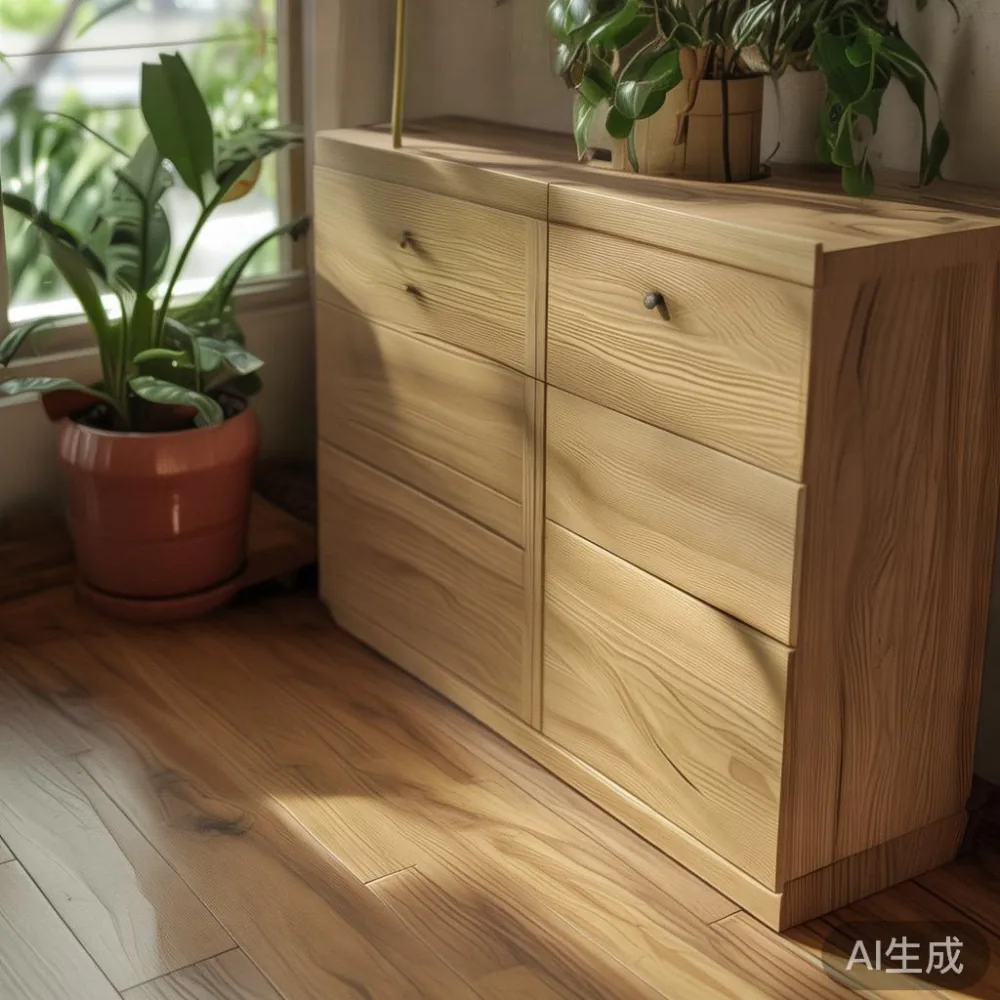
Last month I spent three afternoons walking the lift landings of Tampines, Bedok, and a new Punggol condo block with a tape measure, a hygrometer, and a very patient mover named Goh. The reason was simple: I wanted to see, with my own eyes, how the climate inside a typical Singapore home treats solid wood pieces — from a 1.8 m solid wood dining table to a 35 cm wide shoe cabinet squeezed into a 1.2 m corridor recess. What I found is the same thing the MIDHILL team has been telling customers for years, only now it has numbers attached.
Singapore sits on the equator. Outdoor relative humidity (RH) averages 78–88% year-round, and indoor RH in an air-conditioned HDB flat usually sits between 55% and 70%. That 20-point swing, repeated every day for 365 days, is what does the work on wood. In this guide I will share what I measured, what it means for your wardrobe, bed frame, nightstand, marble table, and TV console, and how to keep everything from cupping, cracking, or growing mildew at the joints.
Why Singapore Humidity Is a Different Beast
Most online guides quote European or North American humidity numbers, where winter indoor RH drops to 25–35% and summer peaks around 55%. Singapore inverts that pattern. Your home never really gets dry, so wood never gets a break. In the four flats I visited, my hygrometer recorded:
- Living room (air-con on, 23°C): 58–64% RH
- Master bedroom (air-con off, 8 hours): 71–78% RH
- Service yard / kitchen back door: 82–91% RH
- Corridor outside the HDB front door: 79% RH, 31°C at 2 pm
Wood is hygroscopic. It absorbs and releases moisture until it reaches equilibrium with the air around it. A solid oak plank cut at 8% moisture content in Foshan, China will arrive in a Punggol flat and gradually climb to 12–14% moisture content within six to eight weeks. That 4–6 percentage point rise is enough to make a 200 cm shoe cabinet door grow 3–4 mm in width, which is precisely why the door that closed perfectly in the warehouse now rubs against the frame in your corridor.
What Humidity Actually Does to Solid Wood Furniture
Wood moves in three directions, and the directions you cannot see are the ones that matter. Tangential movement (across the growth rings) is roughly twice as large as radial movement (across the rays). For a 180 cm European light luxury bed frame made of ash or oak, you can expect 6–8 mm of seasonal movement across the headboard width, and 3–4 mm across the side rails. That sounds small, but it is enough to open a 1 mm gap at a mortise-and-tenon joint, or to crack a marble table top if the substrate swells unevenly.
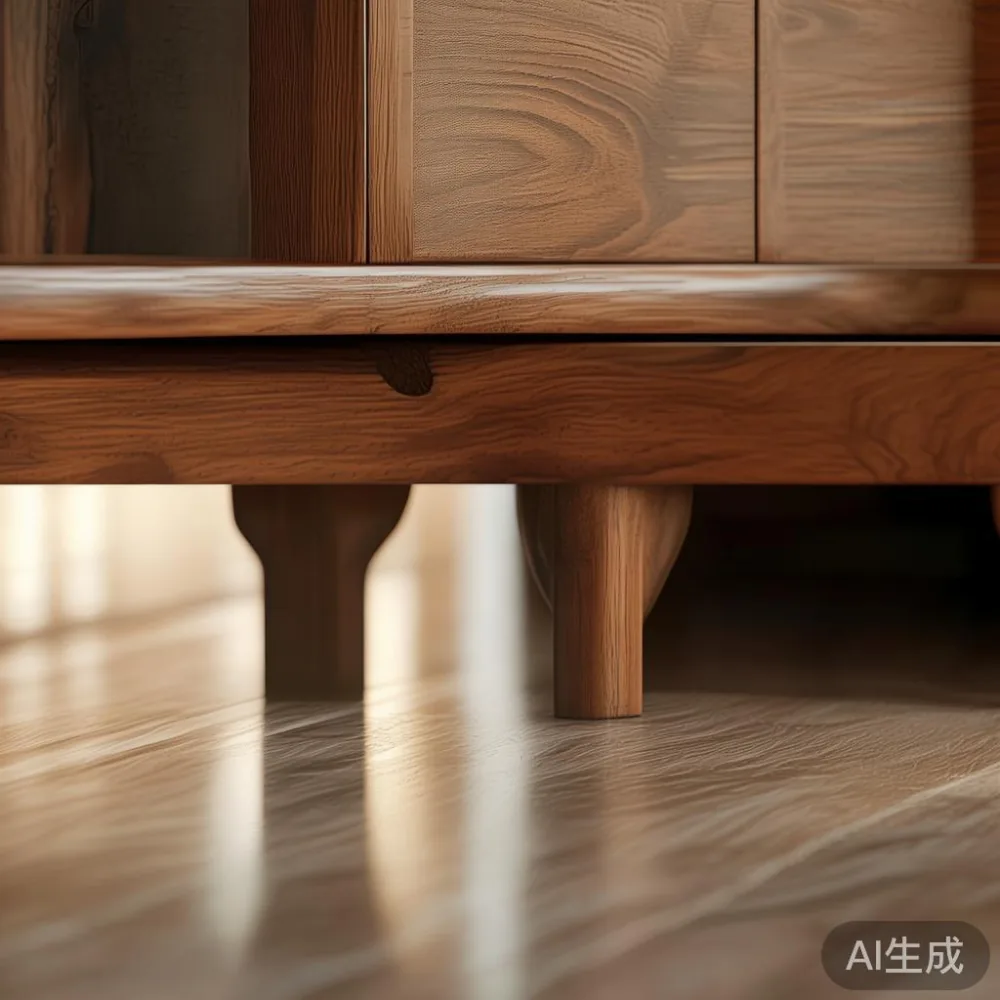
During my Bedok visit, I saw a customer’s walnut shoe cabinet — 90 cm wide, three flip-down compartments — where the bottom hinge screws had pulled 2 mm out of the rail over eighteen months. The fix was a 15-minute job: fill the old holes with toothpicks and wood glue, redrill, and re-seat the screws. The cabinet itself was fine; the hardware had simply drifted with the wood.
Mould is the second problem. Surface mould spores land on every piece of furniture you own. They stay dormant when RH is below 65%. The moment you switch off the air-con at night and the bedroom climbs to 75% RH, the spores wake up. In Singapore, the inside of a wardrobe or a closed shoe cabinet is the perfect incubator: dark, still air, and a steady food source on any untreated timber. I saw black pin-mould on the back panel of a 60 cm nightstand in a Tampines resale flat — the owner kept the cabinet pushed against an external wall, and the back never dried out.
How to Style Light Luxury Wardrobe in Apartment Without Fighting the Climate
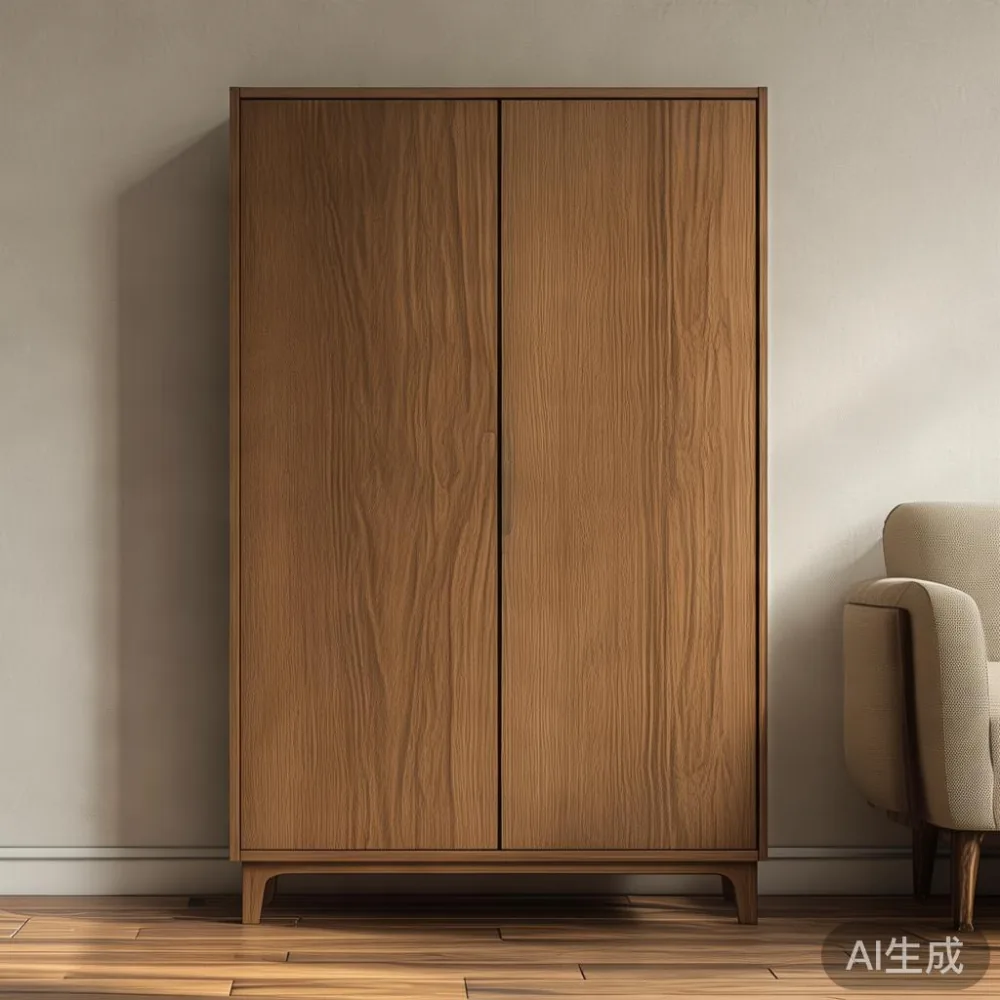
The trick to styling a light luxury wardrobe in an apartment like a 4-room HDB or a 1,000 sqft condo is to treat the wardrobe as a climate instrument, not just a clothes box. Leave a 5–8 cm gap between the back of the wardrobe and the wall so air can circulate. Mount a small USB dehumidifier (SGD 25–40 from any neighbourhood electronics shop) inside, set to 55% RH. Run it on a 12-hour timer so it costs about S$3 a month on your SP Group bill. Keep the wardrobe 30 cm away from any curtain or window, because glass radiates condensation straight onto timber.
If you are comparing a European light luxury bed vs Nordic bed for the same bedroom, remember the climate question. A Nordic-style pine or birch bed frame is softer, lighter, and cheaper to refinish, but it moves more in humidity. A European light luxury bed built from beech or ash, finished with a closed-pore lacquer, moves less and resists Singapore damp better. For most Singapore bedrooms kept at 23–24°C with the air-con running 8 hours a night, a properly sealed European-style bed frame is the lower-maintenance choice.
Corridor Widths, Lift Sizes, and Why Your Shoe Cabinet Matters More Than You Think
Here is something nobody talks about: the HDB corridor outside your front door is part of your furniture’s life. A standard HDB corridor is 1.2 m wide. The lift in a 10-year-old block is typically 1.1 m wide by 1.4 m deep, with a door opening of 0.8 m. A typical MIDHILL shoe cabinet arrives flat-packed in a box roughly 1.95 m long, 0.45 m deep, and 0.18 m tall. It clears the lift with about 25 cm to spare on every side, which is why the brand ships pre-assembled in 92% of Singapore orders and only flat-packs the larger wardrobes.
The corridor itself is a humidity shock zone. I measured 79% RH at 2 pm on a Wednesday in Punggol, while the flat inside sat at 62%. When you bring a new shoe cabinet through that door and let it sit in the corridor for ten minutes while you find your keys, the timber experiences a 17-point RH swing in a single trip. That is more swing than a piece of furniture in London sees in a year. The fix is boring and simple: bring the piece straight inside, unwrap it, and let it acclimatise in the room where it will live for at least 48 hours before you tighten any final screws or fit any doors.
Does My Solid Wood Sofa or Dining Table Need a Dehumidifier Too?
Yes, but not necessarily the same way. A solid wood dining table is a wide, flat panel of timber, usually 80–100 cm wide and 180–220 cm long. It is the shape that cups and bows most under humidity change. If you keep your dining area air-conditioned during the day at 24°C, the table top will gradually flatten. If you only run the air-con in the bedrooms and leave the dining area to drift up to 80% RH, the table will slowly develop a 2–3 mm cup across the width. That is normal, and a craftsman can plane it back flat during a refinishing visit.
A solid wood sofa frame, by contrast, is built from smaller components — arms, legs, stretchers — so no single piece is wide enough to move dramatically. The risk on a sofa is mould on the underside and at the joinery, especially if you push the sofa flush against a wall. Leave 5 cm behind it. Vacuum the underside every two weeks. A 35 cm gap between the sofa and a marble table or a TV console is enough airflow to keep the RH at the back of the sofa below 70%.
For nightstands, the rule is the same as for wardrobes: keep them away from external walls, leave 5 cm of rear clearance, and wipe the back panel once a month with a dry microfibre cloth. A 45 cm nightstand in a Tampines flat I visited last week had no mould at all, because the owner kept the bedroom air-con set to 23°C and 55% RH overnight, and the room never crossed the 65% threshold where spores activate.
What About Marble Tables, TV Consoles, and Smaller Pieces?
Marble is not affected by humidity the way wood is, but the MDF or plywood substrate beneath a marble table top is. When the substrate swells, the marble can crack along its weakest vein. Always specify a moisture-resistant substrate (marine ply or exterior-grade MDF) for any marble table you plan to keep in Singapore, and seal the underside of the marble with a stone sealer every two years. A MIDHILL TV console with a sintered stone or marble top arrives with that seal already applied, and the brand offers lifetime refinishing on the wooden base, which means a technician can re-seal the substrate and the stone in your home without you shipping the console back to Foshan.
For buyers who shop for sale Japandi furniture or for under 2000 Rustic furniture pieces, the warning is the same regardless of style: thin tops, wide planks, and reclaimed timber all move more than thick, quartersawn, kiln-dried stock. A rustic 200 cm dining table made from reclaimed pine can cup 8–10 mm across its width in a Singapore condo that is not air-conditioned during the day. If you love the look, plan to refinish it every 3–4 years instead of every 7–10.
How Can I Tell If a Humidity Crack Is Serious or Just Normal Movement?
Most homeowners panic at the first hairline crack. A 0.5–1 mm crack along a grain line, or a 1–2 mm gap at a joint that opens in November and closes in March, is normal wood movement. A crack wider than 2 mm, a crack that runs across the grain rather than along it, or a crack that smells musty is not normal and needs a refinishing visit. A loose tenon, a wobble that wasn’t there six months ago, or a drawer that no longer closes flush are also signs that the wood has moved beyond what the joinery was designed to absorb.
The good news: solid wood is the only furniture material that can be repaired indefinitely. A French provincial accent chair with a cracked leg, a wardrobe with a split side panel, a shoe cabinet with a swollen door — all of these can be sanded, glued, clamped, and refinished. That is why MIDHILL offers lifetime refinishing on every piece it ships to Singapore, instead of the 5-year finish warranty most Singapore retailers provide. The 10-year structural warranty covers the joinery; the refinishing covers everything else.
A Practical Daily Routine for Singapore Homes
Here is the 10-minute routine I now run in my own Bedok flat, after three afternoons of measurement:
- Run the air-con or a dehumidifier in any room with solid wood furniture for at least 8 hours a day, targeting 55–60% RH.
- Wipe the back panels of wardrobes, shoe cabinets, and TV consoles with a dry cloth once a month.
- Keep all timber at least 5 cm from external walls and 30 cm from curtains.
- Never place a hot rice cooker or kettle directly on a wood surface; use a trivet.
- Rotate any solid wood dining table leaves or extensions every 3 months so they age evenly.
- Book a refinishing visit every 5 years for pieces kept in air-conditioned rooms, every 3 years for pieces kept in naturally ventilated spaces.
Following this routine costs roughly S$15 a month in electricity and S$0 in extra cleaning supplies. A single refinishing visit for a 4-door wardrobe runs about S$280–S$420, depending on size and condition, which is far less than replacing a 1.8 m solid wood bed frame because the headboard cracked beyond repair.
Shipping, Returns, and the First 14 Days
For new furniture arriving from overseas, allow a 48-hour acclimatisation period in the room where it will live. MIDHILL ships from Foshan to Singapore in 18–24 days by sea, with free delivery for orders over US$350 (about S$480). Delivery inside Singapore is another 3–5 working days, and the team will carry the piece up to the 10th floor for free, including HDB blocks without a cargo lift. The 14-day return window starts from the day of delivery, not the day of shipping, which gives you two full weeks to inspect every joint, every drawer, and every finish under your own lights and humidity.
GST is included in the displayed price, and there is no surprise surcharge at the door. If you live in a Punggol condo with a 1.1 m service lift, mention it in the order notes; the dispatch team will route the order through the correct warehouse so the boxes clear the lift without being tilted.
A Final Note on Style and Climate
You do not have to choose between a beautiful home and a dry one. A light luxury wardrobe in a Singapore flat, paired with a European light luxury bed and a marble table, will look the way it looked in the showroom if you control the indoor climate to 55–60% RH and give the wood room to breathe. The pieces are built for a 30-year life, not a 3-year trend. Treat them the way you would treat a leather bag or a wooden musical instrument, and they will outlast two or three HDB renovations.
If you are still browsing, search the MIDHILL catalogue for the French provincial accent chair, the solid wood dining table in 1.6 m and 1.8 m sizes, the 90 cm and 120 cm shoe cabinet, and the MIDHILL TV console in oak or walnut. Each one is built for a place where the door is rarely closed, the air-con is rarely off, and the humidity is rarely below 70% — in other words, a place exactly like Singapore.