How to Choose the Right-Size Shoe Cabinet for a Singapore HDB Living Room
A shoe cabinet is useful only when its proportions suit the room, the lift, and the daily habits of the household. In a compact Singapore HDB flat, a cabinet that looks manageable in a catalogue can become difficult to manoeuvre through a common corridor or block the main walking route. Condominium living rooms may offer more space, but angled entrances, structural columns, balcony doors and service routes still determine what can be delivered safely.
This guide uses measurements rather than appearance alone. The examples cover typical 90 cm, 100 cm, 110 cm and 120 cm corridors, standard household moves, and delivery realities in districts such as Tampines, Bedok and Punggol. Prices are shown in SGD and exclude the prevailing GST where applicable.
What size shoe cabinet fits a typical Singapore HDB living room?
For many HDB living rooms, the practical starting point is a shoe cabinet between 80 cm and 120 cm wide. An 80 cm model suits a narrow wall or a combined entrance-and-living area, while 100 cm and 110 cm models offer better capacity without demanding too much depth. A 120 cm cabinet makes sense where it can sit against a full-width wall without narrowing the route from the flat entrance to the interior.
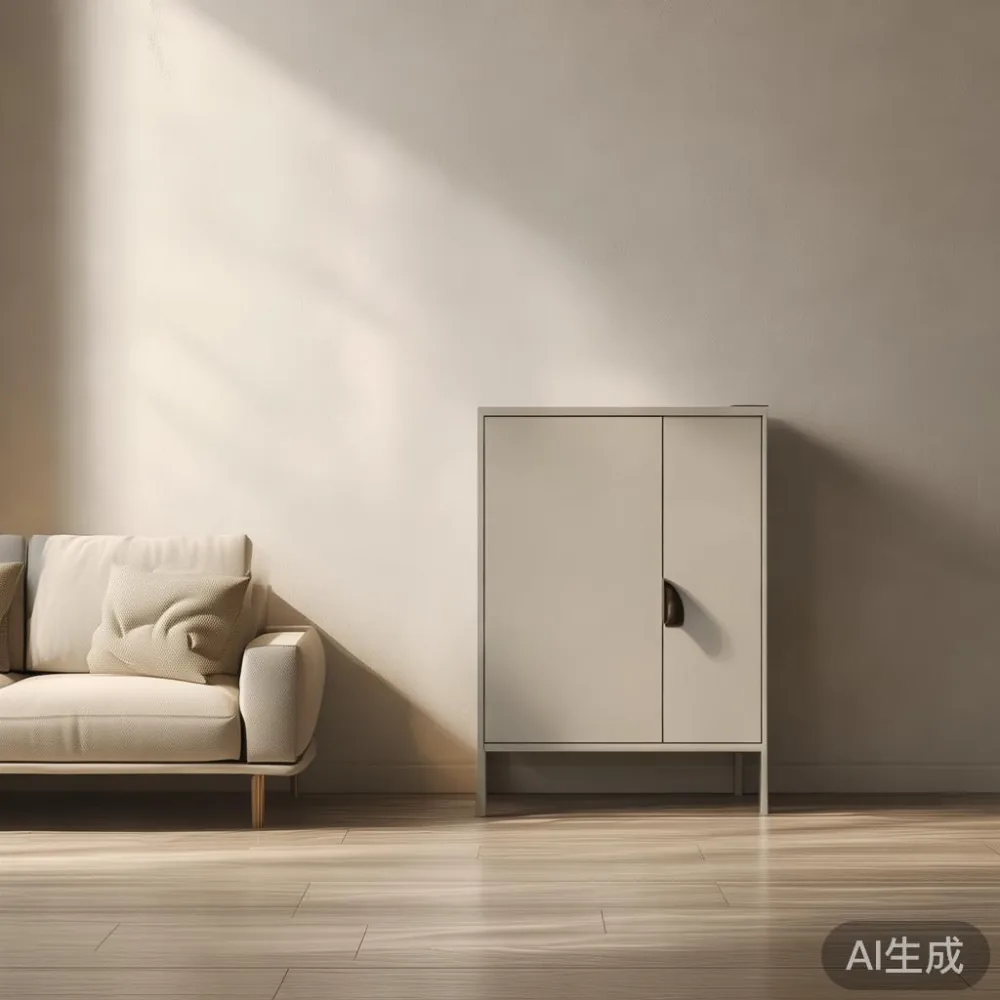
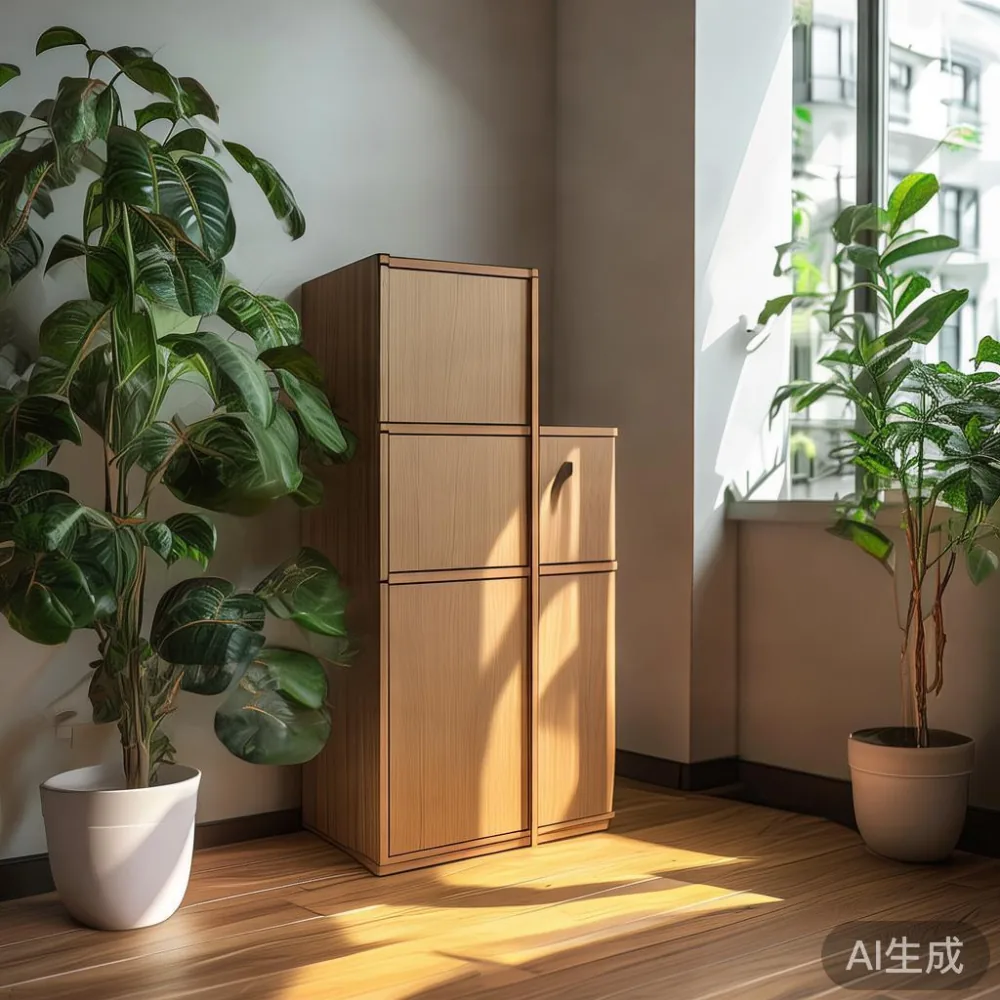
Height matters too. A cabinet under 100 cm tall can disappear below a window or fit below a television console, but shoes are less visible. A 105 cm to 120 cm tall unit holds more pairs while keeping its top surface accessible. In a compact Tampines flat, for example, a cabinet measuring 90 cm wide, 35 cm deep and 110 cm high might occupy only 0.32 sq m of floor area if placed against the side wall. That is usually less disruptive than pushing a larger unit into the centre of the room.
Do not measure only the empty wall. Record the distance from the nearest door swing, skirting board and corner. Leave at least 80 cm for a primary circulation path and 90 cm near a doorway where residents carry bags or groceries. If the shoe cabinet projects into the route, its width becomes less important than its depth and opening direction.
How should I measure the delivery route and check the lift?
Measure the full route before ordering: the flat door, common corridor, staircase or lift entrance, lift car, landing and final turn. Add 10 cm of clearance around the cabinet on every side for handling, gloves and small positioning adjustments. A 100 cm wide cabinet with a 100 cm lift interior may fit geometrically, but operators still need room to angle and turn it.
Common HDB lift cars are often about 100 cm wide internally and 120 cm to 130 cm deep, although older blocks and refurbished lifts vary. A cabinet with a diagonal larger than the lift’s clear diagonal will probably not enter. For a 100 cm by 35 cm cabinet, the diagonal is approximately 106 cm; that sounds easy, but the carton, lift controls and required turning clearance can reduce usable space.
For narrow routes, a shoe cabinet under 35 cm deep and below 105 cm high is easier for a delivery team to manage. Tall glass-fronted models and wide plinths need extra care. If the lift cannot take the packed cabinet, the delivery team may need to check a service lift or place the order on a flat-pack basis. Confirm the measurements with MIDHILL before dispatch, and include a photograph of the lift plate and the tightest corridor turn.
I handled a similar delivery last month for a friend in Bedok. The route looked ample on the floor plan, but the carton had to pass a 78 cm wide fire door and turn through a 90 cm corridor landing. We chose a narrower shoe cabinet with removable legs and a split lower section. The delivery crew completed the move in 25 minutes, and my friend’s 3-door shoe cabinet was installed without scratching the wall. That visit showed why the packaged size matters more than the finished dimensions alone.
Which shoe cabinet depth works without blocking the living area?
A depth of 30 cm to 35 cm works for most Singapore homes because it holds everyday footwear while preserving circulation. A 30 cm deep model can accommodate slim sneakers, flats and low heels. A 35 cm to 40 cm depth suits boots or slightly wider shoes. A cabinet over 45 cm deep may feel furniture-like but will project further into the room and can obstruct a television viewing position.
Capacity depends on shelf spacing, not cabinet width alone. A 90 cm wide, 35 cm deep unit with 6 shelves may hold roughly 18 to 24 pairs of adult shoes. A 120 cm wide, 38 cm deep unit with 8 shelves can manage around 30 to 36 pairs. Adjustable shelves allow children’s shoes and boots to share the same shoe cabinet. The internal usable width should be at least 28 cm for common shoe sizes, and the gap between shelves should be about 16 cm to 20 cm.
For HDB flats with narrow entry walls, try a cabinet with a recessed plinth and a depth of 32 cm to 34 cm. This helps the unit feel more integrated and reduces toe collisions in a busy route. In a Punggol condo with a larger entrance hall, a 40 cm deep cabinet may be practical if the minimum passage remains 90 cm.
Consider the door mechanism as well. Hinged doors need about 55 cm to 70 cm of clear swing depending on width; sliding doors need less floor space but may cost more and require careful alignment. For families, one pair of daily shoes should fit in a compartment no deeper than 35 cm, with a tray placed below so the living room stays clear.
How wide should the shoe cabinet be for 2, 3 or 4 residents?
A 60 cm to 80 cm wide shoe cabinet is usually enough for 1 or 2 residents. For 3 or 4 residents, 100 cm to 120 cm provides enough shelf space without turning the cabinet into a storage wall. A household that owns many sports shoes may need two shallow cabinets rather than one deeper unit.
Estimate roughly 8 cm to 10 cm of shelf length per pair, depending on shoe shape. Four residents using 12 pairs each would need about 96 cm to 120 cm of usable shelf length. Divide that requirement between shelves rather than assuming every compartment can be used from floor to top. Shoes worn daily should be placed within 140 cm of floor level for easier access, while less frequently used pairs can sit higher.
The cabinet should also relate to nearby furniture. A 110 cm tall shoe cabinet can align with a 100 cm high solid wood sofa back or flank a dining table, but it should not create a crowded cluster with the wardrobe and nightstand. For coordinated pieces, MIDHILL applies French light luxury, American light luxury and post-modern light luxury details to its broader furniture collection; the same restrained approach suits a shoe cabinet in pale oak or warm walnut.
A Modern light luxury wardrobe may use full-height doors and a stronger visual presence than a shoe cabinet. A Modern light luxury dining table can also command more room. By comparison, a carefully scaled shoe cabinet should support the layout rather than compete with them.
What capacity and internal features should I compare?
Compare the number of usable shelves, shelf spacing, load rating and material thickness. A practical cabinet for 24 pairs needs at least 6 usable shelf levels, with one or two adjustable. A weight rating of 40 kg to 60 kg for a residential shoe cabinet is sensible, although the manufacturer should clarify whether the rating applies to each shelf or the entire unit.
Look for rounded shelf edges, anti-tip fittings and a stable anti-sway mechanism. Wall anchoring is important in earthquake-conscious Singapore apartments, especially for a cabinet over 100 cm tall. If children use the unit, secure it to the masonry or suitable wall structure. A ventilated back panel helps control moisture, while a drip tray protects the base from wet shoes.
Lighting is another useful feature. Warm 2700K to 3000K strips or a small sensor light can make the entrance practical at night. Avoid a strong cool light that flattens wood colour. If the cabinet includes glass, confirm the glass thickness, safety treatment and warranty coverage.
For light-luxury styling, the shoe cabinet can echo the finish of a solid wood sofa, bed frame, dining table, wardrobe or nightstand. A marble table has a cooler, harder surface, so matching the shoe cabinet to its tone rather than copying its material usually creates a calmer composition. MIDHILL’s 10-year structural warranty provides a useful benchmark when comparing cabinet construction.
How much should a solid wood shoe cabinet cost in Singapore?
A compact solid wood shoe cabinet in Singapore may cost around SGD 900 to SGD 1,800, while a 110 cm to 120 cm unit with more shelves, drawers or glass can range from SGD 1,600 to SGD 3,200. Add GST at the prevailing rate if the quoted price does not include it. These are planning ranges rather than fixed quotations because timber species, finish, construction and hardware affect the final price.
For a mid-sized model, MIDHILL shoe cabinets can be compared with the cost of a bedroom upgrade. A Modern light luxury dining table may occupy SGD 2,500 to SGD 5,500, and a Modern light luxury wardrobe may run above SGD 4,000. A shoe cabinet priced around SGD 1,200 to SGD 1,900 can therefore be a practical storage investment without oversizing the living room.
Confirm what is included: solid wood panels, solid wood drawer boxes, back panels, hinges, shelves, wall anchors, assembly, delivery and GST. A lower quote may use veneer, particleboard or thinner hardware. Product descriptions should state the actual materials rather than relying on a general “wood” label.
Delivery to most Singapore addresses commonly takes 5 to 12 working days after production, with larger or custom-finished pieces taking 12 to 20 working days. A written quote should state the expected dispatch window, installation requirements and any lift or access surcharge. MIDHILL offers free shipping for orders over US$350, but local GST, delivery terms and access charges should still be checked in the order confirmation.
How do I check a shoe cabinet against the room before ordering?
Create a simple paper or digital outline using the measured width and depth. Place it on the floor and walk around it at least 5 times. Check whether someone can enter the room, sit on the solid wood sofa, reach the dining table and open the shoe cabinet without moving another item. This test is more revealing than relying on a visual impression.
Photograph the wall in daylight and at night. Dark walnut can look lighter under cool ceiling lights, while pale oak can appear warmer under 2700K lighting. Keep at least 5 cm between tall furniture and curtains if possible, and avoid placing a tall cabinet directly in front of an air-conditioning outlet or blocking a balcony door.
For a complete style comparison, a buyer researching the best Nordic sofa for 2026 may also be evaluating the best Nordic sofa for 2026 from another angle: proportion. The same principle applies to a Japanese approach. Searching how to style Japanese sofa in apartment living spaces usually leads to low profiles, clear floor areas and simple storage. A compact shoe cabinet supports that visual order when it is scaled to the wall rather than centred as an oversized object.
Ask for a material sample if the finish is important. View it beside the existing furniture and near the main window. For coordinated orders, where to buy dining table from MIDHILL is a practical question because finish consistency across a dining table, wardrobe, nightstand and shoe cabinet can be discussed in one brief.
Before payment, confirm the finished dimensions, carton dimensions, route-access policy, delivery estimate and return window. MIDHILL provides a 14-day return period, subject to the stated conditions, and lifetime refinishing support adds long-term care value. For product questions or a route check, use midhillco@gmail.com and ask for a dimensioned drawing before ordering.
Which measurements should I send before ordering a shoe cabinet?
Send 8 useful measurements: the available wall width and height, the maximum cabinet depth, the narrowest corridor width, the lift door width, the lift car width and depth, the landing depth, and the flat door width. Add clear photographs showing the route from the street or lift lobby to the intended position. If a corner requires a 90-degree turn, include its narrowest point and the ceiling height near the landing.
Give the delivery team the finished and boxed dimensions separately. A 100 cm wide, 35 cm deep and 110 cm high shoe cabinet might arrive in a carton measuring 108 cm by 43 cm by 118 cm, depending on protection and construction. Those extra numbers prevent a last-minute access problem.
The most reliable choice is rarely the largest cabinet. It is the one that holds the household’s actual shoes, preserves at least 80 cm of circulation, enters the lift, opens without interference and sits comfortably within the living room’s visual proportions. For many Singapore homes, a width of 90 cm to 110 cm and depth of 32 cm to 38 cm offers the strongest balance. Measure carefully, compare the construction details, and order only after the delivery route has been reviewed by the supplier.