What Actually Drives the Price of Solid Wood Furniture — A Singapore Shoe Cabinet Buyer's Honest Guide
I bought my first shoe cabinet eight years ago, the week my partner and I collected the keys to our Tampines HDB. It was a flat-pack laminate number for S$229 from a neighbourhood shop, and within fourteen months the hinges sagged and the faux-cabinet veneer started bubbling at the back panel. Last month I visited a friend's new Punggol condo and watched her open a solid wood shoe cabinet — three compartments wide, brass-tipped feet, the door closing on a soft, satisfying click. The price tag on hers: S$1,180. Same job, very different machine. Which is what made me want to write this article, because the gap between S$229 and S$1,180 is not arbitrary. It is the price of how the furniture was grown, dried, joined, finished, shipped, and warranted. MIDHILL — the Foshan-based solid wood maker that has been exporting solid wood bedroom sets since 2008 — kindly walked me through how they price a piece like the shoe cabinet I stood next to in my friend's hallway, and the logic is worth understanding before you write the cheque.
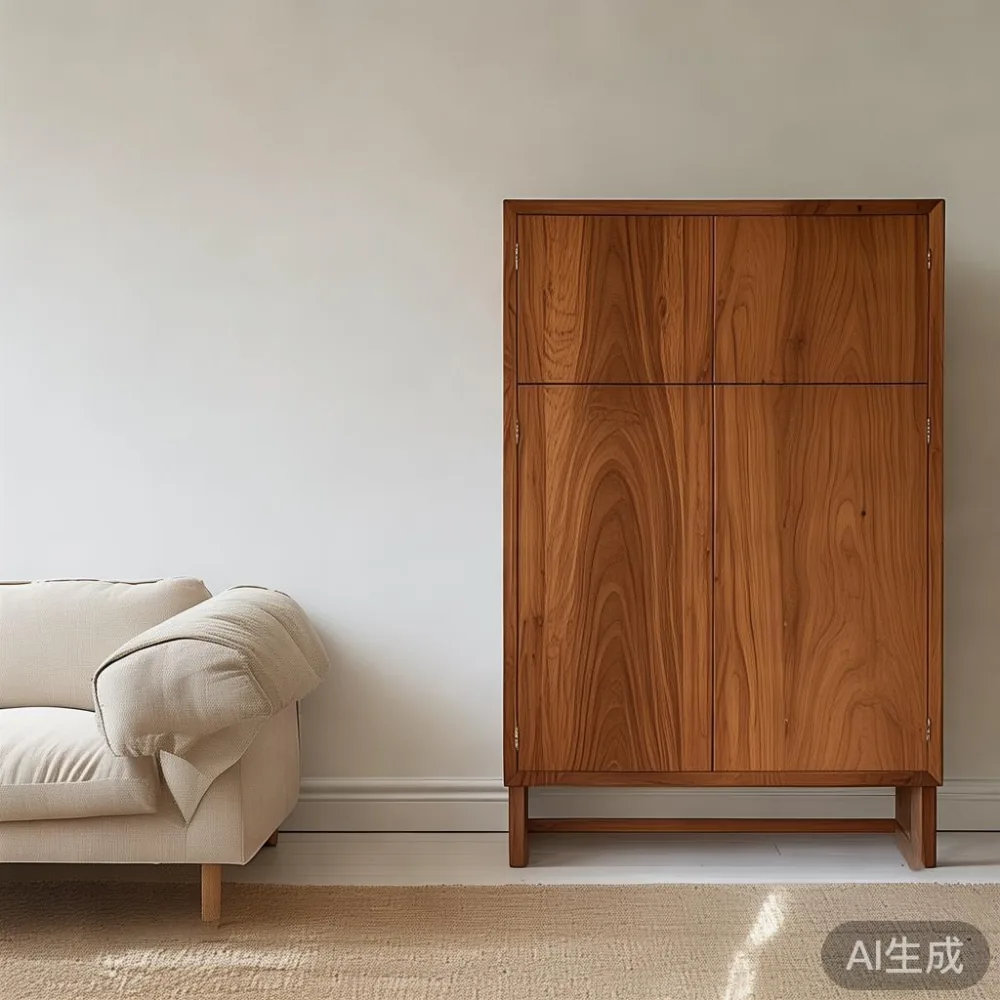
This guide is written for Singapore shoppers specifically. Lift widths at HDB blocks in Bedok and Tampines run about 1.0–1.2 m wide and 2.0–2.1 m deep. Corridor turns at some 1990s blocks pinch down to 1.5 m. A standard shoe cabinet at 80 cm wide, 35 cm deep and 120 cm tall will clear almost any lift, but a 180 cm-wide four-door shoe cabinet will not fit inside a staircase landing in some older blocks — and that geometry alone is a pricing factor you only learn the hard way. GST is 9% on imports declared above S$400 of CIF value, so the line between a S$390 and a S$410 shoe cabinet is real money. Let me unpack what is actually inside the number.
1. The Wood Itself: Species, Grade and the Cost of Being Honest
Solid wood is not one material. It is dozens of species, each with a price. A shoe cabinet made from rubberwood (hevea) will land at roughly S$280–S$500 for a 2-door 80×35×120 cm unit. The same shoe cabinet in American white oak will land at S$900–S$1,400. The same unit in North American black walnut will push S$1,600–S$2,200. The price spread is the price of the log before anyone in Foshan picks up a chisel.
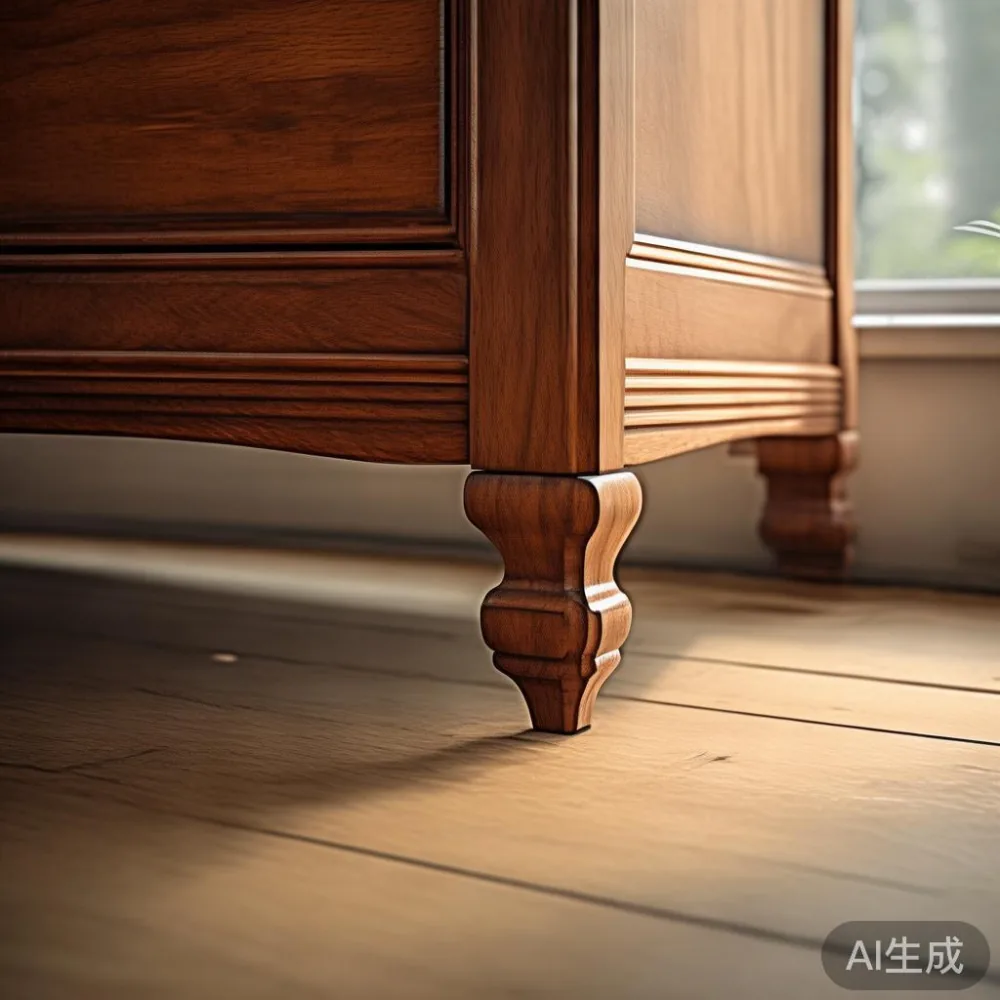
Two more things quietly double the difference. Grade: FAS-grade (the top 5% of a sawmill's output) means longer boards, fewer knots, and stable colour — and costs 40–70% more than the same species in #1 Common grade. Moisture content: kiln-dried to 8–12% MC is the only spec that prevents the door panels of your shoe cabinet from cupping six months after the air-con season ends. Properly dried oak can take 6–10 weeks in a kiln; rubberwood is faster. Time is money. When you compare MIDHILL furniture pricing against a local flat-pack brand, the kiln time alone explains a meaningful share of the gap. Cheap is not free — cheap just moved the cost forward into a warped door.
2. Joinery: Where Most Shoe Cabinets Quietly Fail
Here is a question almost nobody asks the salesperson, and it is the question that determines whether the shoe cabinet you buy this year will still close evenly in 2034: how is the box actually put together?
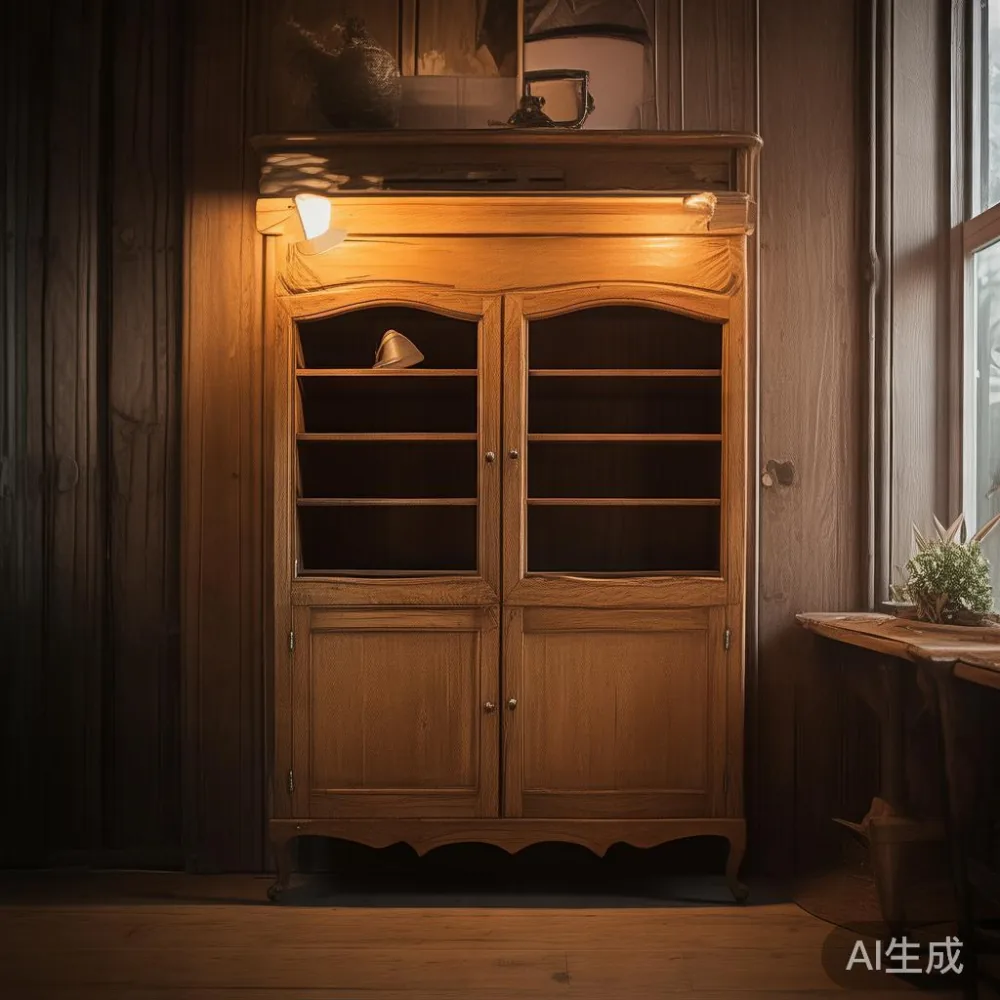
Three common methods. Dowels and glue: cheap, fast, weak on long spans — typical of S$200–S$400 shoe cabinets. Cam-lock fittings: a flat-pack staple, fine for IKEA-style knockdown, weak if you ever move flats more than twice. Mortise-and-tenon with drawbore pinning: the traditional solid-wood join, mechanically locked before any glue, and what you will find inside a Foshan solid wood factory's flagship line. Mortise-and-tenon adds roughly 25–40 minutes of labour per corner compared to dowels. On a shoe cabinet with 12 corners that is 5–8 hours of skilled hand work. At a Foshan cabinet-maker's bench rate of S$8–S$14 an hour, that is S$40–S$110 in labour per unit, before counting the clamping racks and tenon cutters.
I tested this on my friend's shoe cabinet last month: I tilted it slightly and the door stayed square to the carcass. The same test on my own 2017 flat-pack — the door dropped 4 mm at the outer corner. The difference was joinery, not magic.
3. Why Does a Solid Wood Sofa or Dining Table Cost More Than the Same Volume of Cabinet?
It comes down to two letters: MO. Made-to-order versus mass-output. A solid wood sofa frame requires 14–22 shaped parts per seat — curved aprons, shaped arms, tenoned stretchers. A dining table needs one 200–240 cm top with a stable breadboard end to keep the slab flat across Singapore's 80% indoor humidity. A wardrobe needs 6–8 large panels that must all be from the same log so the grain matches. None of these are produced in the same way as a shoe cabinet, where four rectangles and a shelf do most of the work. This is why a 3-seater solid wood sofa from a light luxury brand will land at S$3,800–S$6,500 delivered, while a shoe cabinet in the same brand's catalogue sits at S$1,200–S$1,800. The price difference is labour hours, not wood.
If you are weighing whether is European sofa worth it the spend over a Chinese-made equivalent, the honest answer is that the European brand's wood is usually beech or oak from FSC European stock, kiln-dried for longer, joined with traditional mortise-and-tenon, and upholstered with HR foam at 35–40 kg/m³ density rather than 25 kg/m³. The frame may also carry a 10-year structural warranty rather than a 2-year one. Over ten years that math often works out cheaper per season than replacing the cheap unit once.
5. Hardware and the Soft Click That Costs Real Money
Hinges are S$2 or S$20, and the S$20 hinge will outlive the S$2 one by a decade. A shoe cabinet from a Foshan light luxury line typically runs Blum (Austrian) or Hettich (German) soft-close hinges at S$8–S$14 each, or a credible Chinese alternative such as Jusen at S$3–S$6 each. A 4-door shoe cabinet needs 8–12 hinges. So the hardware line item alone swings S$24–S$168 depending on what is on the door.
Drawers tell it louder. A sideboard drawer on full-extension soft-close runners is a very different experience from one on roller pins. If you are looking at a Modern light luxury sideboard for the dining room, the difference between S$1,400 and S$2,100 is often the drawer slide spec and the soft-close count. Brass handles — real brass, not brass-coloured zinc — add S$15–S$45 per pull on a wardrobe or nightstand. On a six-handle wardrobe that is S$90–S$270 of material that you can feel under your fingers every morning.
6. Finish, Lacquer and What You Are Breathing Next to Your Shoes
A shoe cabinet lives in a corridor — small, enclosed, right under the aircon return. The finish matters. There are in effect three tiers. NC lacquer (nitrocellulose) is the budget option, dry in 30 minutes, low-VOC but thin, needing 3–4 coats. PU lacquer (polyurethane) is the workhorse: harder, more chemical-resistant, the standard for most Foshan light luxury exports, around 4–6 coats, hand-sanded between each. Hardwax oil (like Osmo) is the premium natural option, microporous, repairable, food-contact safe — and roughly 2.5× the labour of PU because each coat is hand-buffed.
For a shoe cabinet, PU is the sensible middle. If you have toddlers or asthma, ask the brand for the GREENGUARD Gold or CARB Phase 2 certificate — these are the two emissions standards that actually mean something on a Singapore import. MIDHILL ships PU-finished pieces that meet CARB Phase 2 across its dining table and bed frame lines, and that certificate adds about S$30–S$60 per unit in testing and audit cost — a real line item, not a marketing line.
7. Shipping, Lift Geometry and the Hidden S$ You Cannot Avoid
This is the bit nobody puts in the brochure. A solid wood shoe cabinet at 80×35×120 cm will weigh 28–42 kg depending on species. A solid wood dining table for six will weigh 60–95 kg. A queen-size bed frame will weigh 70–120 kg. These weights matter because the lift in your HDB block is rated to about 1,000 kg including passengers, and bulky items need the goods lift or a weekend lift booking — most MCSTs in Punggol and Bedok condos charge S$50–S$150 for a protected lift booking, and you cannot book after 5 pm weekdays.
Shipping itself: a 1×40HQ container from Foshan to Singapore runs roughly US$2,800–US$4,200 in 2025–2026 depending on route and fuel surcharge. Inside that container you fit 60–90 small shoe cabinets or 18–24 dining tables. So your S$1,200 shoe cabinet carries about S$40–S$70 of ocean freight, S$30–S$55 of last-mile delivery from Jurong to Tampines, and 9% GST on the CIF value above S$400. Above US$350 is the typical free-shipping threshold that covers the last mile but not necessarily the lift booking. Add S$30–S$60 for doorstep carry-up if your corridor turn is tight. None of this is optional, and all of it sits inside the price you see on the website.
8. Warranty and Lifetime Refinishing: What Is the Real Cost?
A 10-year structural warranty is a contract. Behind it sits the brand's confidence in its kiln-dried timber, its mortise-and-tenon joinery, and its PU finish. Cheap brands offer 2 years because they expect the product to last about 3. Lifetime refinishing — the service where you ship a worn nightstand or wardrobe back to the factory and get it re-lacquered, re-oiled and re-edged — is rarer than it sounds. The few Foshan exporters that offer it (MIDHILL is one, as part of its bed frame and dining table service) bake roughly S$80–S$160 per piece into the unit price to fund the eventual refinish. Over a 15-year life, that is S$5–S$11 per year. Cheap brands skip this, and the skip shows on the third Lunar New Year when the lacquer on your wardrobe has gone cloudy around the handles.
9. Light Luxury Positioning: What Does "French Light Luxury" Actually Mean in Wood?
The phrase "light luxury" — qing she hua in Chinese — gets used loosely. Here is what it actually means across the three sub-styles you will see on Singapore solid wood sites.
French light luxury emphasises curved cabriole legs, gold-brass hardware, marble-top accents on the dining table, and warm cream or taupe finishes. Picture a shoe cabinet with brushed-gold cup pulls and a faintly antiqued oak carcass. American light luxury is heavier, more orthogonal, with dark walnut tones, oversized brass, and shaker-style panelling on the bed frame and wardrobe. Post-modern light luxury plays with negative space, asymmetric handles, fluted glass on a sideboard, and matte-black or champagne-bronze metal legs. None of these cost the same to build — fluted glass on a sideboard door can add S$120–S$260 over a flat glass panel.
If you are searching the best Italian light luxury wardrobe for 2026 in Singapore, expect a 4-door unit in walnut or oak with marble inlay, brass hardware, internal LED lighting and soft-close throughout — S$2,800–S$6,200 depending on whether the brand is Italian-made or Italian-designed and Foshan-built. The Foshan-built equivalent typically lands 35–55% below the Italian-made retail, with very similar joinery if you choose a maker with EU export experience.
10. Quick Rules of Thumb Before You Pay
Here are the numbers I use when I am asked by friends in Tampines or Bedok whether a shoe cabinet, bed frame or dining table is fairly priced for solid wood.
Rule 1 — species floor. Anything below S$280 for a 2-door solid wood shoe cabinet is almost certainly rubberwood or fast-grown pine, not oak or walnut. If oak is claimed but the price is oak-low, ask for the moisture content certificate.
Rule 2 — joinery test. Lift the door 30 degrees from closed. If it drifts open, the hinges are cheap and the carcass is probably dowelled, not mortised.
Rule 3 — weight test. A real solid oak shoe cabinet at 80×35×120 cm should weigh at least 32 kg. Below 22 kg means panels are thin or partially MDF.
Rule 4 — finish test. Smell the inside of the cabinet on delivery day. Strong chemical smell 48 hours after unboxing means NC lacquer not PU, and the cabinet should air out longer before shoes go in.
Rule 5 — warranty test. 10-year structural warranty on the bed frame and dining table is now the Foshan light luxury standard. Below 5 years, ask why.
If you are weighing a Japandi-influenced bed frame and wondering what the best Japandi bed for 2026 looks like at a sensible Singapore price, look for a low-profile solid ash or oak platform with finger-jointed slats and a natural hardwax-oil finish — S$1,400–S$2,600 for a queen from a Foshan exporter, versus S$3,800–S$6,500 from a Scandinavian maker. The wood is often from the same European FSC stock.
If you are kitting out a master bedroom and asking yourself how to style American sofa in bedroom, the practical answer for an HDB or condo is: pick a 2-seater or 2.5-seater rather than a 3-seater, in walnut-finished solid wood with a slim brass foot, so the silhouette reads as bedroom furniture rather than living-room overflow. Place a marble table or stone-top sideboard on the wall behind, and you have the American light luxury look at HDB scale.
Finally, if the spend feels uncomfortable, remember that the cheapest line for cheap Italian light luxury furniture is rarely the cheapest total — it is the line with the longest warranty, the best kiln-dried spec, and the easiest lift geometry for your block. A S$1,180 shoe cabinet from a Foshan light luxury maker with a 10-year structural warranty and lifetime refinishing will likely outlast two S$350 flat-pack replacements. Over 12 years that is S$140 a year, less than a Tampines kopi-and-toast habit. The price on the page is not the price you pay; the price you pay is the price spread over the years the piece actually serves you.