Warm Minimal, Real Spaces: How a Solid Wood Shoe Cabinet Sets the Tone for Your Singapore Home
I spent the first Saturday of last month at a 92 sqm BTO in Punggol with a client who had just taken possession of her keys. The corridor outside her door measured 1.2 m wide, the lift opening 0.9 m, and her living room window faced a west sun that turned the laminate floors amber by 4 pm. She handed me a Pinterest collage labelled "warm minimal" and asked, point blank, "Where do I start?" — and the honest answer was her shoe cabinet, because every guest, every GrabFood rider, and every family member who comes over will see it within the first 8 seconds of entering. That single piece anchors the temperature of the entire home. Get the wood tone, height, and grain direction right on it, and the bed frame, dining table, nightstand, and wardrobe all fall quietly into place.
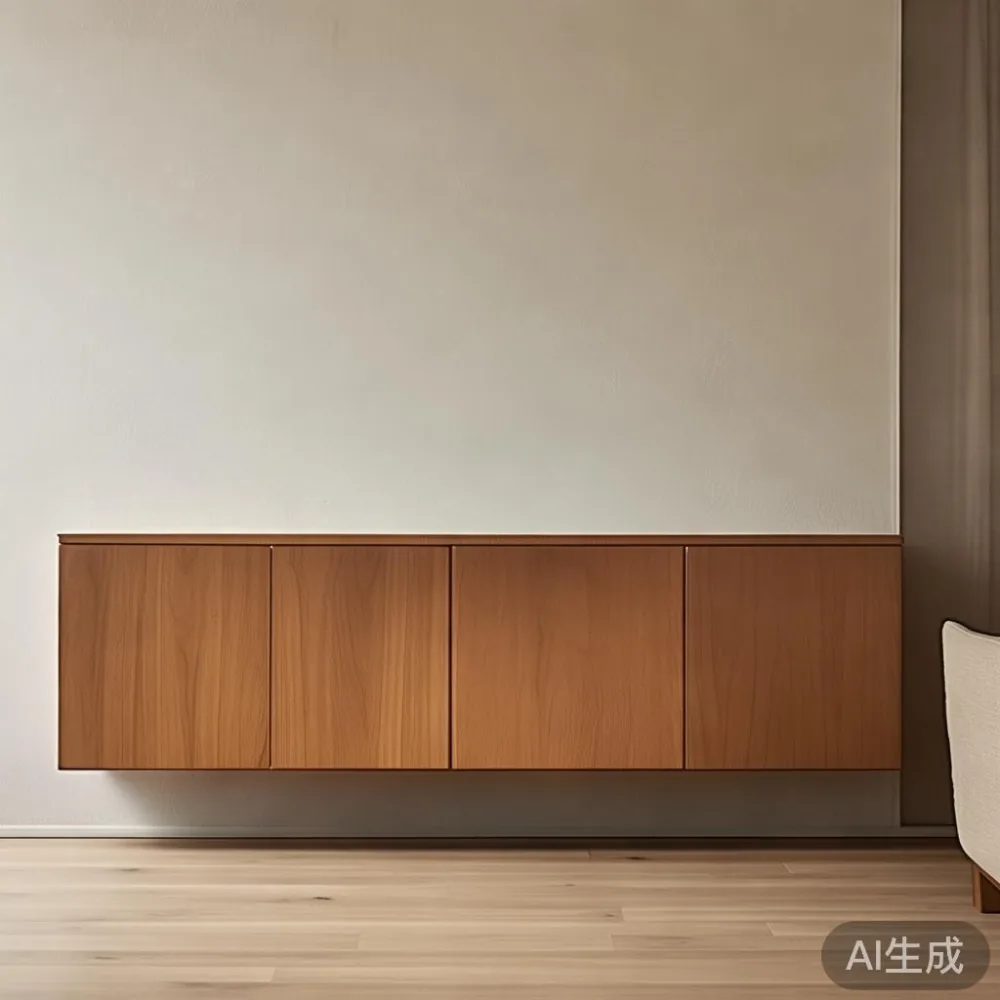
This guide is built for Singapore homes — Tampines 4-room flats with 2.7 m ceilings, Bedok resale condos with 1.1 m corridor turns, and Punggol units where every centimetre of depth matters. I will use prices in SGD, dimensions in cm and mm, and I will reference pieces a Foshan solid wood maker like MIDHILL actually builds: shoe cabinets, modular wardrobes for kids rooms, dining tables, bed frames, nightstands, and marble tables. The same principles apply across all of them, and once you understand the shoe cabinet decision, the rest is selection, not struggle.
What does "warm minimal" actually look like in a Singapore HDB?
Warm minimal is post-modern light luxury at a quieter volume than the high-gloss marble-and-gold rooms you see in show flats. Think fewer objects, more texture. The palette runs on cream walls (Benjamin Moore OC-17 or Dulux 30YY 71/092), a warm white ceiling, and one wood species — usually white oak, ash, or light walnut — repeated across two or three pieces rather than scattered as small accents. Hardware is brushed brass or matte black, never shiny chrome. Surfaces you can touch (console tops, dining table edges, the felt-lined drawer inside a solid wood nightstand) carry the warmth; everything else stays quiet.
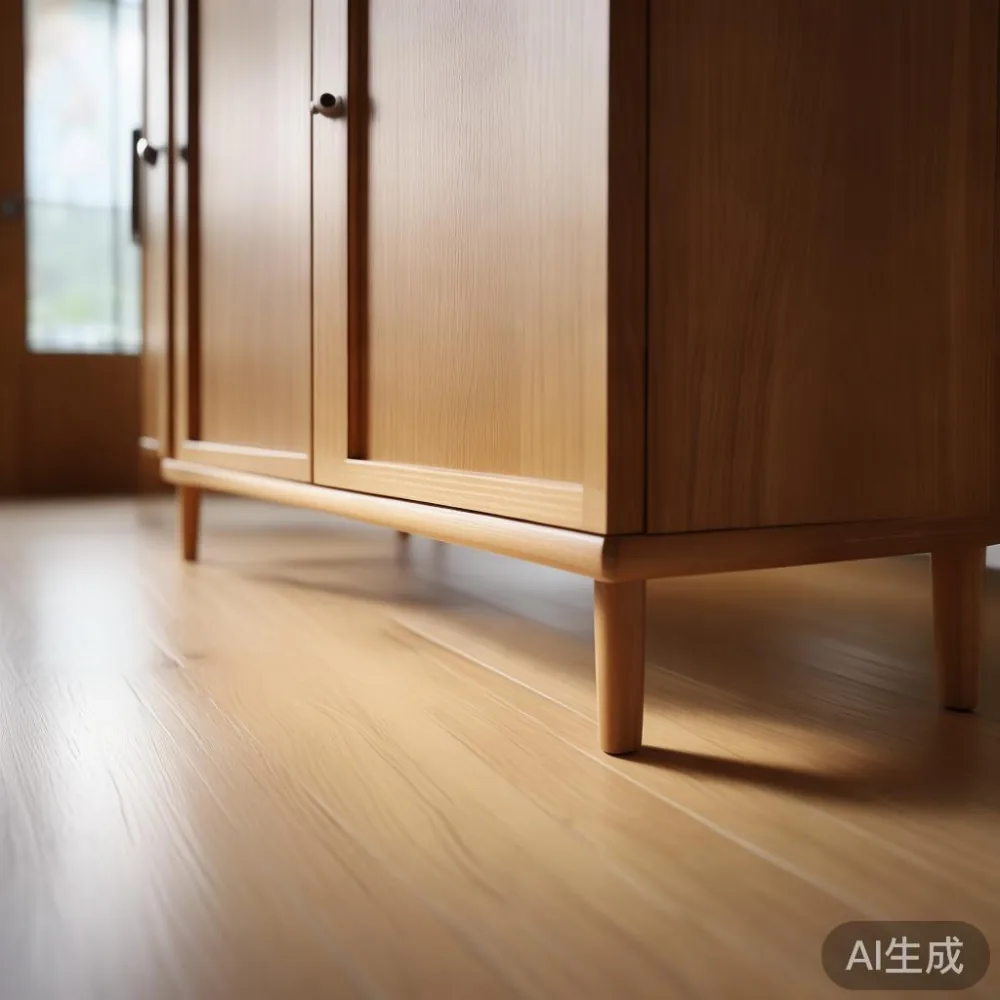
In a 92 sqm Punggol flat, that translates to roughly 4 to 6 wood pieces total: one shoe cabinet by the entry, one 160 cm dining table, one king-size bed frame, two nightstands, and one wardrobe — possibly a modular wardrobe for kids room if the second bedroom is shared. Adding a marble table as an entry console or side table can lift the warmth into something closer to French light luxury, but only if the veining stays soft (Crema Marfil or Carrara, not Calacatta gold). Anything heavier and the room tips into full luxury; anything lighter and you have drifted back into plain Scandi.
Where can I buy a dining table in Singapore?
You can buy a dining table in Singapore directly from Foshan manufacturers like MIDHILL, whose solid wood dining tables ship from China to your door for roughly SGD 2,400 to SGD 4,800 for a 6-seater white oak or ash table, including free shipping over US$350, 14-day returns, and a 10-year structural warranty on the frame. Ordering direct usually costs 30% less than paying the showroom markup at a local furniture mall, and you can ask for exact slab dimensions and grain photos before payment.
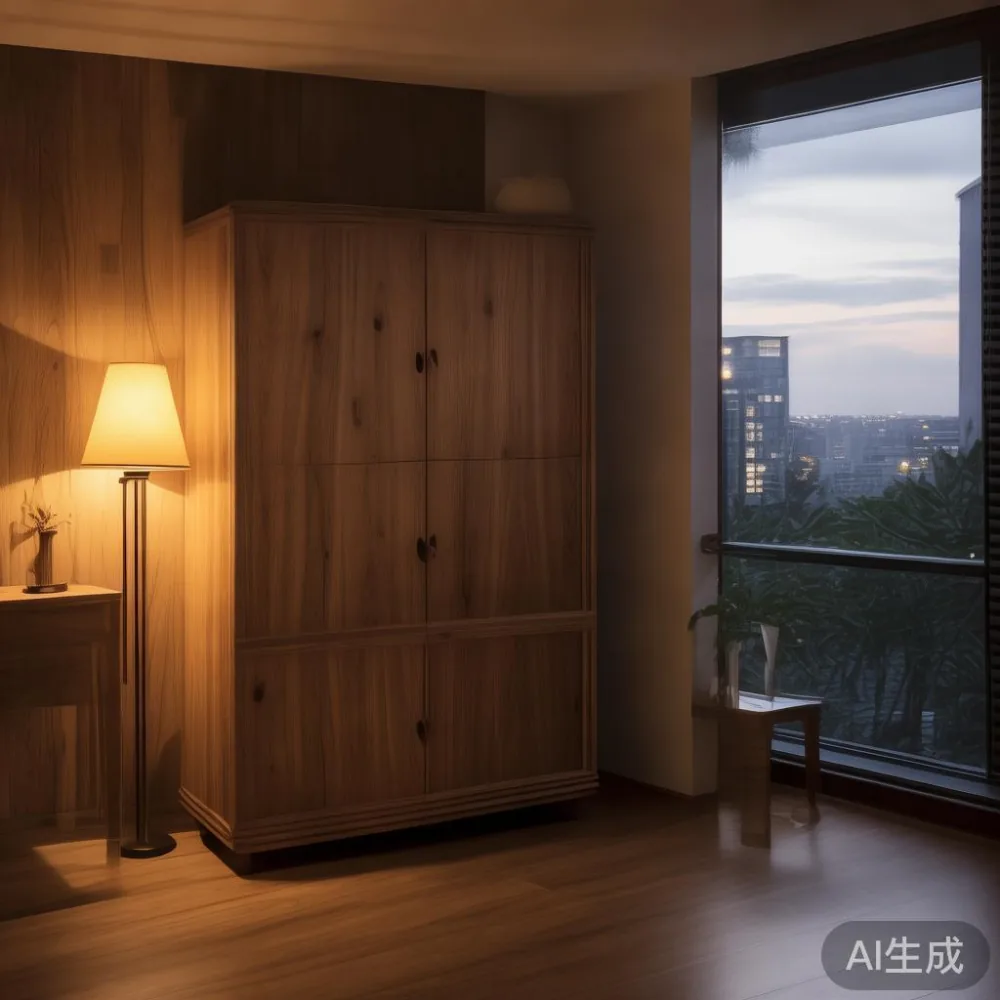
If you prefer to touch before you buy, hit these three local channels first: Hoover Furniture at Balestier (good for solid wood mid-range), Cellini at IMM (better for designer pieces, Italian light luxury finishes), and Scanteak at The Centrepoint as a baseline for solid teak or ash dining tables. Budget roughly SGD 1,800 to SGD 3,500 for a 4-6 seater, SGD 3,500 to SGD 6,500 for 6-8 seater. For warm-minimal homes, skip the extension rails unless you host weekly — a fixed 160 cm x 80 cm solid wood dining table seats six comfortably and keeps the silhouette clean. Always measure your lift opening (usually 0.9 m wide x 2.1 m high) and your corridor turn radius (down to 1.1 m in some Bedok blocks) before ordering anything longer than 1.9 m, or the delivery crew will refuse the route on the day.
How do you choose a shoe cabinet that sets the right tone?
Start with three numbers: depth under 35 cm, height between 110 cm and 135 cm, and width that matches your entry wall between 80 cm and 120 cm. The depth limit is non-negotiable for Singapore corridors — anything deeper and the cabinet blocks the swing of a 0.9 m entry door or crowds a 1.2 m HDB walkway. A 110 cm tall shoe cabinet with two flaps and a slim drawer is the sweet spot: it stores 18 to 24 pairs (Adidas Sambas count as one pair, knee-high boots as two), it leaves a 15 cm gap above for a tray or framed print, and it does not visually compete with a wall-mounted TV in the adjacent living room.
Material is where warm minimal lives or dies. Solid ash with a clear matte oil finish reads warmest under the 4000K LED downlights most Singapore electricians default to. White oak with a wire-brushed surface reads calmer, slightly more American light luxury, and forgives the dust that Punggol and Bedok accumulate on windy days. Avoid MDF with a wood-grain print — the edges telegraph at the corners within a year, and the tonal warmth you bought becomes a lie. A genuine solid wood shoe cabinet from a workshop like MIDHILL weighs 35 kg to 55 kg depending on size, which tells you the timber is real (kiln-dried ash at 8% moisture sits around 680 kg per cubic metre). Real weight on the delivery dolly is your first quality test.
For ventilation, insist on back-panel slits or rear cable routing holes. Singapore humidity sits between 70% and 85% RH nine months a year, and a sealed MDF box will sweat. Solid wood breathes; MDF hides the mould until you open a drawer in year two and regret everything.
How should the shoe cabinet relate to the rest of the home?
Repeat the wood, do not match it. Open any interior magazine and the rule is the same: pick one primary wood (ash for the shoe cabinet, say, 8 mm straight-grain), then introduce a secondary wood 1 to 2 tones darker (walnut dining table or walnut bed frame) and a third surface in a completely different material — a marble table or a brushed-brass lamp. A solid wood nightstand in oak next to a walnut bed frame creates layering without clutter; matching every piece exactly to the same stain kills the warmth and flattens the room.
Practical pairing for a warm-minimal HDB: Entry: ash shoe cabinet, 110 cm tall, with a 12 mm Crema Marfil marble tray on top for keys. Dining: white oak 160 cm dining table with black powder-coated steel legs (the metal keeps it grounded under the ceiling fan). Bedroom: walnut bed frame with two ash nightstands — the contrast does the heavy lifting. Kids room: a modular wardrobe for kids room in ash, 200 cm tall x 180 cm wide, with adjustable internal shelving so it grows from toddler years through teenage years. Living room: a low marble table (80 cm x 80 cm, Crema Marfil top, ash base) instead of a glass coffee table, which traps fingerprints and reads cold.
You can order this whole set in one consolidated shipment from a Foshan workshop, which keeps GST calculation simple — 9% on the import value, with a customs broker fee of roughly SGD 80 to SGD 150 for the entry. Shipping from Foshan to a Singapore forwarder takes 12 to 18 days by sea, then 3 to 5 days for last-mile delivery including lift-up and placement. Ask the supplier to photograph the load before the container closes; a habit I picked up after a damaged tabletop two years ago.
What dimensions actually fit a Tampines, Bedok, or Punggol home?
Measure twice, order once, then measure again. Singapore flats share more constraints than people realise. Standard HDB corridor widths are 1.2 m to 1.5 m; older Bedok blocks drop to 1.05 m near the lift lobby. Lift openings are typically 0.9 m wide x 2.1 m high, with a diagonal clearance of about 2.3 m — fine for a 1.8 m wardrobe laid flat, tricky for a 2.2 m wardrobe standing up. Most modular wardrobe systems arrive flat-packed to fit through a 0.9 m opening, then bolt together in the bedroom, which is why I push clients toward that format for any piece over 180 cm tall.
For the entry shoe cabinet, leave at least 90 cm of walking path behind the open door flap. A two-flap unit at 35 cm depth needs the full 90 cm to swing flat without hitting a person standing on the doormat. For dining tables, keep 70 cm between the table edge and the nearest wall on every side — anything tighter and your grandmother cannot squeeze past with a hot wok. For bed frames, allow 60 cm of walking space on each long side and 80 cm at the foot so a king-size 180 cm x 200 cm bed frame still lets two adults pass. Nightstands should top out at 60 cm height so they sit 2 cm to 5 cm below the mattress top — that ratio feels intentional, not afterthought.
How do you keep warm minimal from looking too empty?
Texture, not objects. A warm minimal room with five pieces and a linen runner reads fuller than a cluttered room with twenty pieces. The trick is layering four textures per zone: something woven (a jute rug, 200 cm x 300 cm, costs SGD 95 to SGD 220), something matte (the painted wall), something polished but soft (the honed marble table top, not the polished mirror finish), and something reflective but small (a brushed-brass handle on the wardrobe). Repeat that recipe in the entry with a woven tray, a matte wall, the marble table top, and a slim brass key hook.
Lighting matters more than furniture count in a warm minimal home. Skip the 6000K cool-white downlights entirely; they read clinical and make ash look grey. Run 3000K warm-white for ambient, 3500K neutral-white over work zones like the dining table, and add one 2700K table lamp on the nightstand to drop the colour temperature further as the evening cools. A single 12W LED strip hidden behind the shoe cabinet creates a soft floor wash that turns the entry into the kind of room people walk into and sigh.
How long does delivery take and what about warranty?
Sea freight from a Foshan manufacturer to Singapore takes 12 to 18 days, plus 3 to 5 days for customs clearance and last-mile delivery. Air freight is faster at 5 to 7 days but adds roughly 18% to 25% to the shipping cost, which is why most buyers default to sea unless the piece is a gift or a new-home must-have for week one. Once your shoe cabinet, dining table, bed frame, or modular wardrobe for kids room arrives, the supplier should provide a 10-year structural warranty on joinery and a lifetime refinishing service — sanding and re-oiling at cost, not free, but at a fair SGD 180 to SGD 320 per piece. That kind of aftercare is the real reason to buy solid wood over veneer.
A practical checklist before you click pay: confirm the exact dimensions including back-panel thickness, request a grain photo of the actual slab (not a stock image), confirm the lift-up service includes a second trip if the first attempt fails (some Bedok lifts only hold 8 people), and ask for a copy of the warranty in English with the supplier letterhead. A reputable workshop — MIDHILL being one example — will answer all four within 24 hours. If they cannot, the unit price that looked 10% cheaper will cost 30% more by the time you replace a cracked top in month eleven.
What is the actual cost in SGD after GST and shipping?
Budget honestly, in three layers. Product cost from a Foshan workshop for a warm-minimal starter set: ash shoe cabinet SGD 880 to SGD 1,400, white oak 160 cm dining table SGD 2,400 to SGD 3,800, walnut king bed frame SGD 1,900 to SGD 3,200, two ash nightstands SGD 480 to SGD 720, modular wardrobe for kids room in ash SGD 2,200 to SGD 3,600. Add a marble table if budget allows: SGD 980 to SGD 1,600 for an 80 cm Crema Marfil top on an ash base. Totals for the full set: roughly SGD 8,800 to SGD 14,300.
Shipping + GST layer: consolidated sea freight from Foshan to Singapore on a 2 CBM shipment runs SGD 480 to SGD 720, customs broker SGD 80 to SGD 150, GST 9% on (product + shipping + insurance), and lift-up delivery inside the unit SGD 60 to SGD 180 depending on floor. Add 5% to 8% contingency for unforeseen re-delivery if you miss the booking. Installation + accessories layer: wall-anchoring the wardrobe SGD 80 to SGD 150 by a handyman, drawer organisers SGD 40 to SGD 120, felt pads SGD 12, and a refresher coat of Osmo Polyx oil in year three at roughly SGD 45 for the bottle.
Final all-in landed range for a warm-minimal five-piece set in a Punggol or Bedok HDB: SGD 10,500 to SGD 17,200, GST and shipping included. That is roughly 35% to 45% below the equivalent look at a Singapore showroom, and you own solid wood pieces that will outlive two leases and three renovations.
What mistakes should you avoid when matching solid wood pieces?
Three traps, in order of how often I see them. One: matching the stain exactly across shoe cabinet, dining table, and bed frame — the room reads flat and catalogue-like. Step the tone by 10% to 20% instead. Two: buying MDF with a "wood-look" foil because it was SGD 200 cheaper — within a year the corners chip, the foil peels near the floor-level humidity, and you replace the piece anyway. Solid wood pays back the difference in the first refurb. Three: ignoring grain direction. A shoe cabinet with vertical grain next to a dining table with horizontal grain creates a quiet visual rhythm; matching the direction everywhere kills it.
Two smaller ones worth flagging: do not skip the felt pads under a heavy ash shoe cabinet (it scratches the vinyl floor within a week), and do not push the cabinet flush against an external wall in a Bedok corner unit — leave a 2 cm gap so air moves behind it and the back panel does not trap moisture. Both are free fixes that protect the piece for the next decade.
If you remember nothing else from this guide, remember the entry door moment. The shoe cabinet, the doorframe, and the first 1.2 m of corridor set the temperature for the entire visit. Build that trio in solid ash with a matte oil finish, anchor it to a marble table tray and a single warm-white downlight, and every later decision — the walnut bed frame, the oak dining table, the brushed-brass nightstand pull, the modular wardrobe for kids room that grows with your family — becomes a softer, warmer, calmer echo of the choice you already made.