Warm Minimal, Real Wood: A Singapore Guide to Matching Solid Wood Furniture Without Losing the Cosy
The first time I walked into a newly TOP-ed four-room HDB flat in Punggol with my colleague, a freelance interior stylist, she stood in the empty living room for a full minute and said, "The hard part is showing people that warm minimal does not mean cold." The walls were bare off-white, the floor was a standard 60 by 60 cm homogeneous tile, and the only fixed joinery was a plain shoe cabinet at the entry. We had a tape measure, a 1.5 m spirit level, and a growing list of solid wood pieces from a Foshan workshop to position. That afternoon taught me more about matching furniture to a warm minimal interior than three years of reading Pinterest boards.
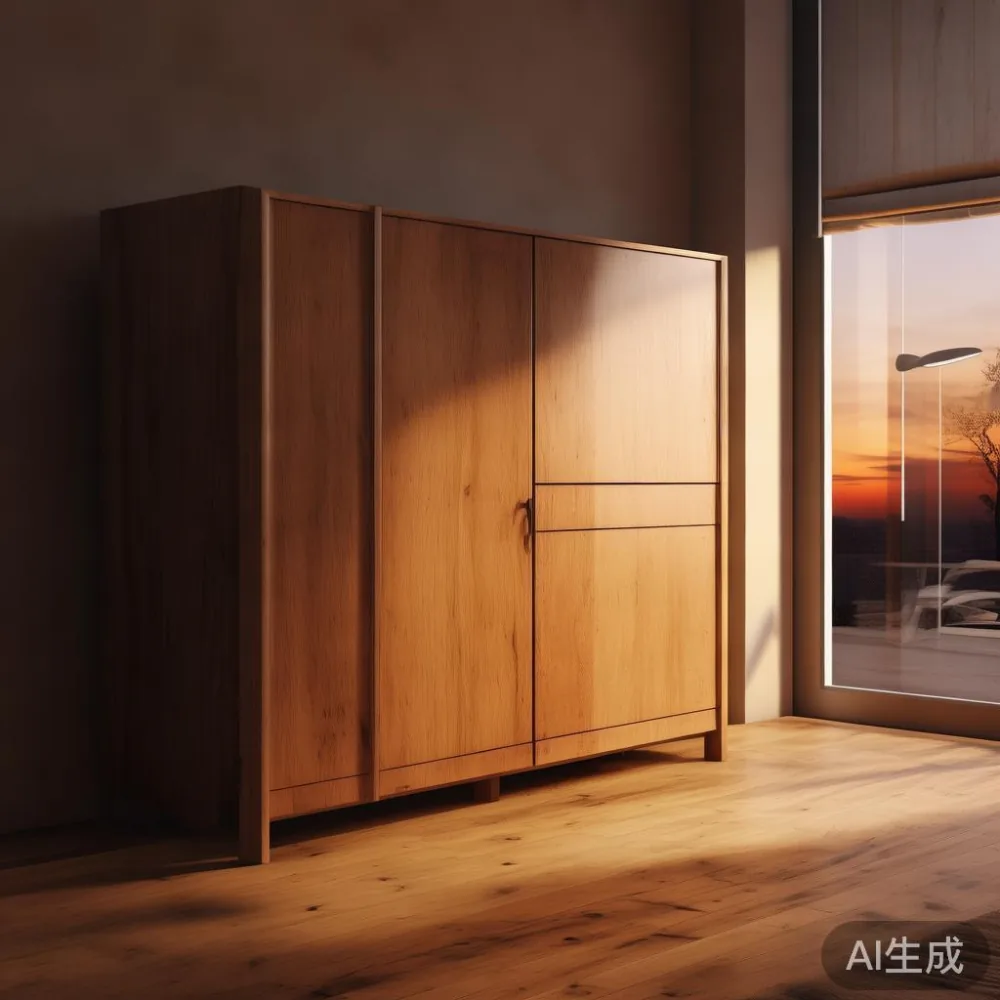
Warm minimal, in plain English, is a calm base of off-white, putty, sand, and taupe layered with one or two warm timbers and very little metal or glass. In Singapore HDB flats and condos from Tampines to Bedok, the tricky part is that the rooms are not large. A typical four-room Type 5 measures roughly 91 to 103 sqm, the kitchen is often 9 to 11 sqm, and the master bedroom sits around 13 to 15 sqm. Lift openings are about 0.9 m wide by 2.1 m tall, and most corridor bends around 1.2 m. Anything over 1.8 m long or 0.85 m wide must be checked at the door, and that single detail quietly decides half your furniture list.
Why solid wood is the quiet hero of a warm minimal room
Minimal looks fail in Singapore for one reason above all: the materials look flat. Laminate cabinets, MDF wardrobe shutters, and printed melamine dining tables are dimensionally stable in air-con, but under our 80 to 90 percent humidity they swell slightly at the joints, the printed grain repeats every 60 cm, and the edge bands yellow after two monsoons. Solid wood furniture, by definition, uses real planks throughout the load-bearing structure, not just a veneer over particleboard. A 1.8 m solid wood dining table in white oak or ash, a solid wood bed frame in walnut, and a solid wood wardrobe in warm grey oak all read as honest, warm, and slightly tactile, which is exactly what a warm minimal interior needs to avoid feeling clinical.
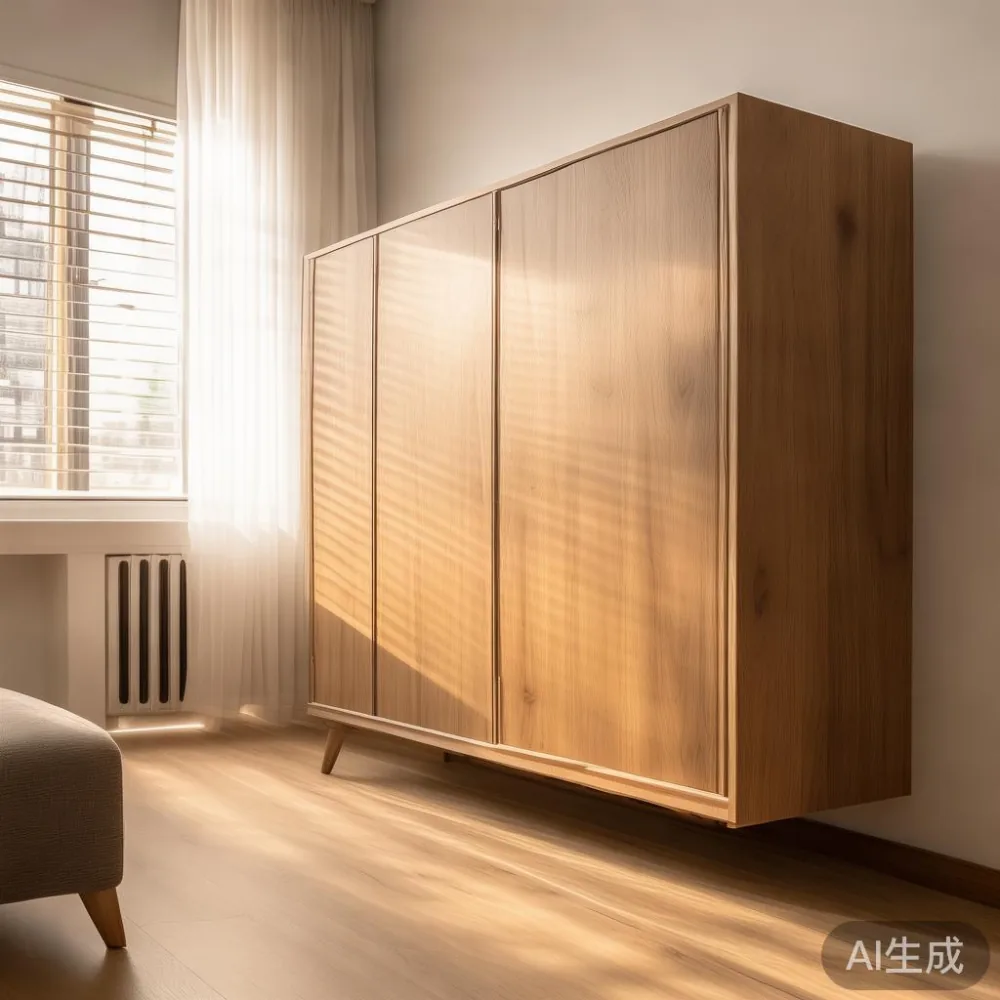
There is a useful rule of thumb my stylist friend uses: if you cannot see grain variation at one metre, it is not solid wood. Good factories, including the Foshan-based MIDHILL workshop that has been making solid wood pieces since 2008, kiln-dry their boards to 8 to 10 percent moisture content before assembly, which is critical for export to our 27 to 32 degree, 70 to 90 percent humidity climate. A solid wood sofa frame, for example, is built from 3 to 5 cm thick hardwood rails, then joined with mortise and tenon or dowel, and only after that is it upholstered in fabric or top-grain leather. The frame is what gives the piece its 15 to 20 year working life; the upholstery is what you refresh.
Shoe cabinet, wardrobe, and the entry zone: starting where clutter actually starts
Every warm minimal project I have seen in a Singapore HDB begins at the entry door, because the entry is where shoes, bags, and GrabFood deliveries pile up by 7 p.m. The HDB-provided shoe cabinet is usually 30 to 45 cm deep and 80 to 120 cm tall, which is too small for a household of four. A replacement solid wood shoe cabinet in the 35 to 40 cm deep, 120 to 180 cm tall, and 80 to 120 cm wide range gives you four to six tilting racks holding 18 to 30 pairs, plus a soft-close hinge rated for 100,000 cycles. Pair it with a 15 to 20 cm open shelf on top for car keys, a tray, and a small plant.
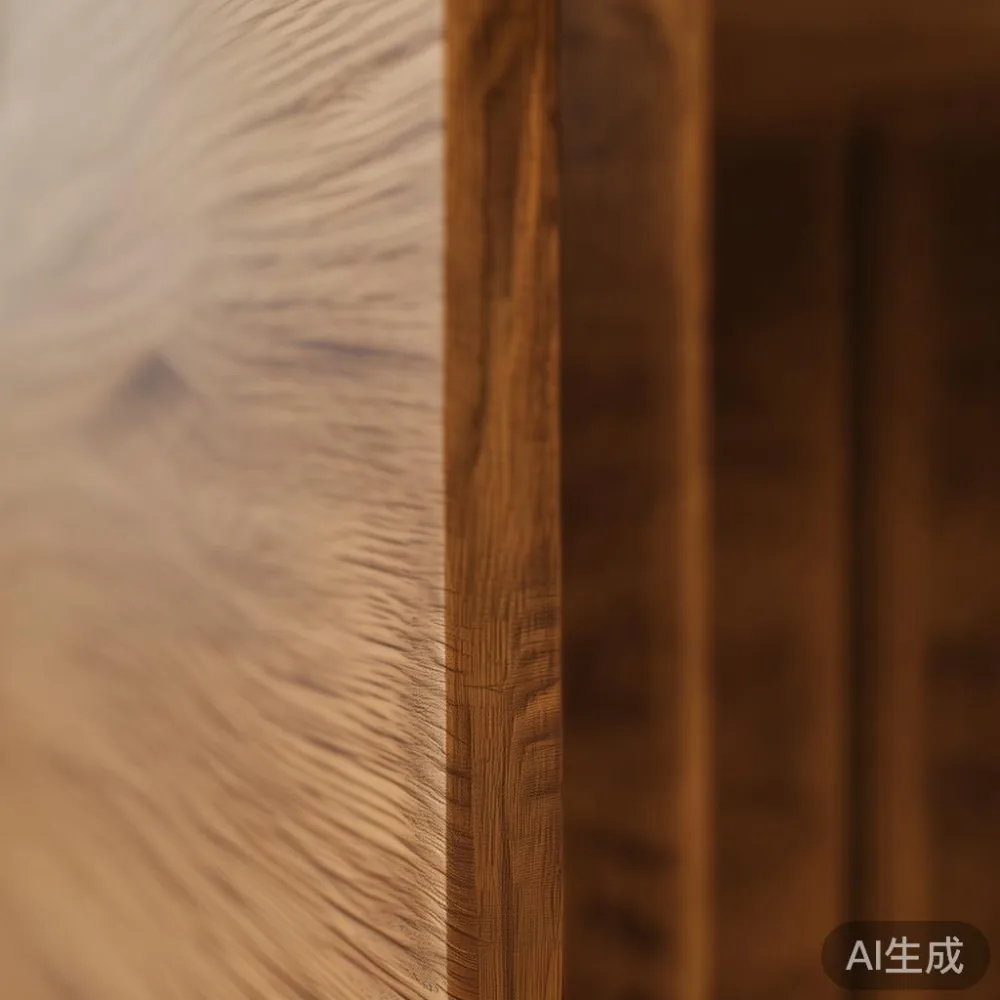
The same warm-oak tone should then travel into the living-dining area as your wardrobe and dining table, so the eye reads one material story. A 200 cm tall, 180 cm wide, 60 cm deep three-door solid wood wardrobe in the same finish, with 2 cm shaker-style frames and recessed handles, reads as built-in joinery even though it is freestanding, and it leaves room for a 240 cm HDB doorway to open fully. Budget roughly S$1,650 to S$2,400 for a shoe cabinet in this spec, S$2,400 to S$3,200 for the wardrobe, and S$350 to S$520 for shipping if the order clears the S$350 free-shipping threshold from the Foshan workshop I mentioned earlier.
Is French provincial sofa furniture worth it?
Yes, a French provincial-style sofa is worth it for warm minimal Singapore interiors if you choose a slim 88 to 92 cm deep silhouette, a low 82 to 86 cm back, and a neutral linen-blend fabric in stone or oatmeal rather than the usual ornate cream. The reason it pays to connect French provincial lines with a minimal palette is that the silhouette carries the romance and the room carries the calm, so neither one fights the other. Look for a solid wood sofa frame in beech or ash, sinuous spring or pocket-spring seating at 50 to 55 kg/m³ foam density, and removable, washable covers, because in our humidity an unwashable sofa is a four-year sofa.
Price-wise, a 220 to 240 cm three-seater French provincial sofa in good build sits between S$2,200 and S$4,800 locally for mid-tier, and S$1,800 to S$3,200 if you import direct from a Foshan light luxury workshop on a 30 to 45 day sea freight plus 9 percent GST. The American light luxury version swaps the carved leg for a tapered 12 cm wooden leg and a single seat cushion; the post-modern light luxury version goes further with a 200 cm length and a low 70 cm track-arm profile that suits a 3.2 m HDB living wall. All three read as warm minimal when you keep the fabric, the wall paint, and the floor within a 20 percent value range on the same warm tone.
Bed frame, nightstand, and the master bedroom: where warm minimal actually lets you sleep
The master bedroom is where warm minimal pays you back in sleep. Last month I visited a three-bedder in Bedok where the owners had replaced their MDF bed with a 180 by 200 cm solid wood bed frame in white oak, two 50 by 40 by 45 cm solid wood nightstands with soft-close drawers, and a 6 by 6 mm thin marble table on top of a slim wooden console for the TV. The room, painted in a single coat of Jotaport White over a putty-toned feature wall, felt 30 percent larger than the same room with a dark veneer bed, because the timber reflected the warm 2700K downlights without competing with them.
For HDB ceiling heights of 2.4 to 2.7 m, keep the bed frame headboard between 95 and 105 cm so the eye reads two-thirds wall, one-third furniture. Slats should be 5 to 7 cm wide, spaced 4 to 5 cm apart, and supported by a central beam, which is what carries the 10-year structural warranty. A solid wood bed frame in this spec retails between S$1,300 and S$2,800 in Singapore; imported direct it lands around S$950 to S$2,100 including 9 percent GST and a 35 to 50 day door-to-door delivery. Skip the storage hydraulic if your ceiling is under 2.5 m; the 30 cm of lift eats more space than it saves in a 13 sqm room.
The nightstand deserves more thought than it usually gets. A single soft-close drawer plus an open shelf holds a 13-inch laptop, a phone charger, and a book, and the 45 cm height lines up with the mattress top so the bedside lamp sits at reading level. In a warm minimal room, choose the same timber as the bed frame and skip the metal pull, because warm minimal is read through touch as much as sight. A pair runs S$480 to S$780 locally, S$320 to S$560 imported, and most light luxury suppliers will ship them with the bed in one consolidated carton for S$60 to S$110 less than two separate orders.
Dining table, marble table, and the open-plan living-dining trap
The biggest warm minimal mistake I see in Tampines and Punggol condos is putting a dark, heavy dining table under a 60 cm drop pendant and calling the room minimal. Minimal is about negative space. A 160 to 180 cm solid wood dining table for four to six, in white oak or ash, with a 4 to 5 cm thick top and a 7 to 8 cm apron, leaves at least 90 cm on every side for chairs to pull out, which is the 90 cm rule every HDB open-plan needs.
If you want a marble table for the daily-use zone, choose a sintered stone or cultured marble top at 12 to 15 mm thick on a solid wood base, not a 25 mm natural marble slab. A 140 by 80 cm sintered stone top on an ash base resists our soy-sauce-and-chilli-padi reality, costs 40 to 60 percent less than natural marble, and weighs 22 to 28 kg rather than 65 to 80 kg, which matters when your lift allowance is 680 to 850 kg and your movers charge S$120 to S$180 per floor above the third. A full 6-seater solid wood dining table with chairs runs S$2,100 to S$3,800 locally; imported light luxury versions, including the L-shape master bed for dining room configurations some buyers ask about for studio flex spaces, sit at S$1,400 to S$2,600 before GST.
Lighting ties the dining zone to the living zone. One 40 to 50 cm rattan or linen-shade pendant at 150 cm drop, dimmable from 2700K to 3000K, replaces two downlights and saves S$180 to S$260 on electrician fees during the HDB reno. Keep the colour temperature within 200K across the whole flat; mixed 4000K kitchen downlights with 2700K living pendants are the fastest way to make a warm minimal interior feel like a clinic.
How do you keep warm minimal looking warm, not beige, in a small HDB flat?
You keep it warm by limiting the palette to three warm tones plus one texture contrast, and you keep it minimal by leaving 30 to 40 percent of every wall empty. The three tones are usually a putty or greige wall at NCS S1500-N or S2000-Y20R, a single timber tone in white oak or ash at 8 to 10 percent moisture, and a single upholstery tone in stone, oatmeal, or clay. The texture contrast is the only place you spend extra: a boucle armchair, a ribbed glass lamp, or a thin marble table on a timber console. Once you add a second texture, stop; warm minimal is a one-texture room, not a material library.
Two practical checks keep the discipline honest. First, photograph the room at 7 p.m. with the air-con off and the curtains drawn; if the photo looks yellow-grey, you are on track, and if it reads green-grey, your undertone has drifted cool. Second, walk through the flat with a 1 m length of the timber sample shod you ordered from the supplier; if the grain looks orange under your downlights, change the bulb to 2700K and re-check. Both checks cost less than S$20 and save the S$1,500 to S$3,500 mistake of a wrongly toned dining table.
Delivery, warranty, and the boring maths that decides the project
Order lead time for solid wood pieces shipped from Foshan to Singapore runs 30 to 50 days door-to-door, including 14 to 20 days sea freight from Yantian or Shekou, 3 to 5 days for Singapore Customs clearance, and 2 to 4 days for last-mile delivery. Add 9 percent GST on the CIF value, plus a S$40 to S$90 inspection fee per consignment for the more reputable suppliers. Most light luxury workshops offer a 10-year structural warranty on frames, a 2-year warranty on soft furnishings, and lifetime refinishing on timber pieces, which means a S$180 to S$260 sanding-and-oil-refresh every 6 to 8 years is all you need to keep a 2009 bed frame looking 2024.
Returns are 14 days on unused pieces in original packing, which is important because a built-but-never-used solid wood dining table has a 25 to 35 percent restocking fee in Singapore if you change your mind. Free shipping is normally triggered above US$350, which is roughly S$480, so a shoe cabinet and a pair of nightstands usually clear the threshold in one order rather than two. Ask for the factory video of your specific batch, including the moisture meter reading and the corner-joint close-up, before you wire the deposit; any workshop that refuses the video is the wrong workshop.
Warm minimal Singapore interiors are not about buying less, they are about buying better and placing each piece with the same care a cabinet maker places a dovetail. The off-white wall, the 8 to 10 percent moisture timber, the 2700K bulb, the 90 cm circulation gap, and the single texture contrast will carry 90 percent of the look. The shoe cabinet at the entry, the solid wood wardrobe along the corridor, the solid wood bed frame in the master, the marble table on the console, and the solid wood dining table under the rattan pendant will carry the other 10 percent, and they will carry it for the next 15 to 20 years if the joints are real and the moisture is right.