Humidity in Southeast Asia and Your Solid Wood Shoe Cabinet: What Every Tampines and Bedok Homeowner Should Know
I still remember the morning I walked into a 12th-floor Punggol HDB and found a teak shoe cabinet that had cupped so badly across its middle shelf that a pair of sandals simply rocked back and forth on the curve. The owners had bought it from a regional e-commerce platform six months earlier. The wood had moved; the drawers no longer closed. That was the day I started paying real attention to how humidity in Southeast Asia affects wood furniture, especially the piece that sits right at your entry door and takes the worst beating: the shoe cabinet.
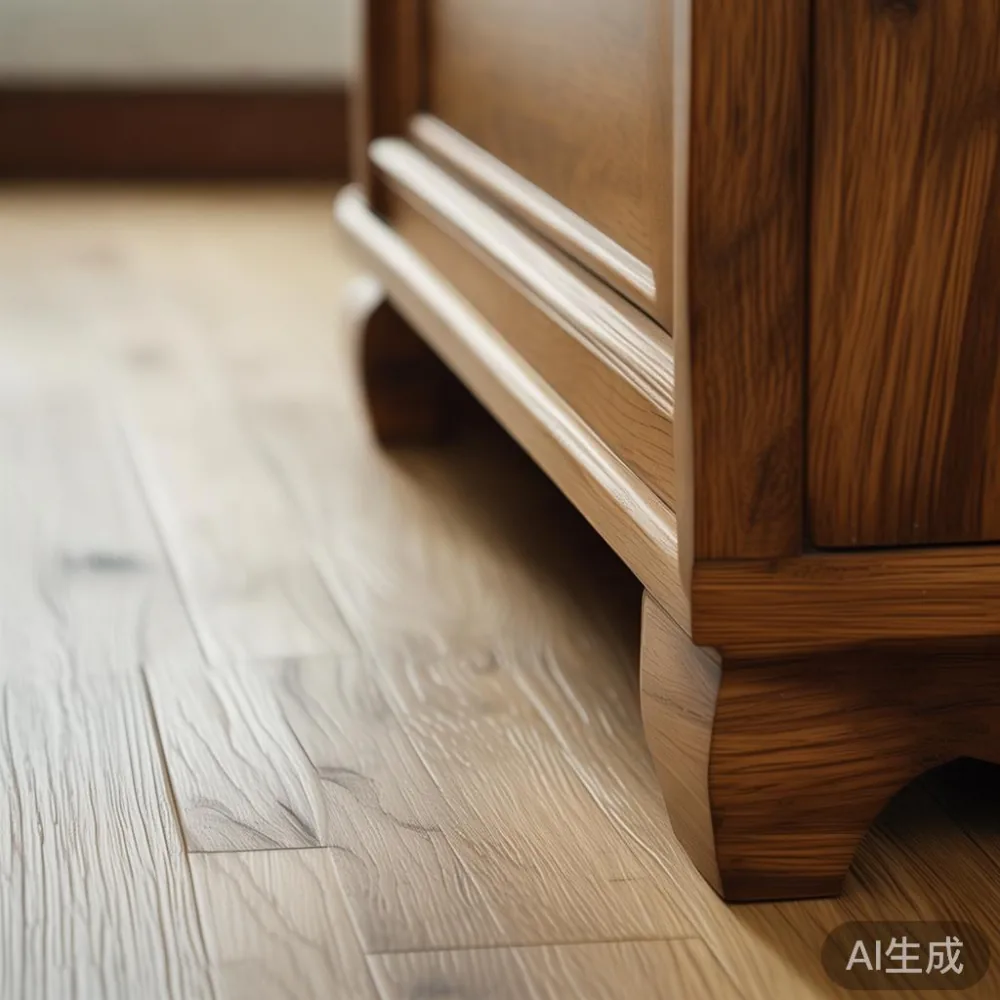
Singapore is a wonderful test chamber. We sit roughly one degree north of the equator. Relative humidity in Tampines and Bedok climbs past 85% between April and October, and outdoor corridors in newer HDB blocks like those in Punggol can sit at 95% on a still, rainy afternoon. Add the blast of wet shoes, umbrellas, and shopping bags, and the entrance of a typical 4-room HDB becomes a small sauna. A shoe cabinet here has to cope with conditions a Guangdong or Ohio factory floor never sees.
This guide is for the homeowner who has just moved into a 990 sq ft resale flat in Bedok, the renovator who is choosing between a 35 cm and a 45 cm deep model for a Tampines corridor, and the condo resident in Punggol who wants the same French light luxury look the Instagram pages show, without the warping. It is written from the workshop floor at MIDHILL, a Foshan-based maker that has shipped solid wood furniture to more than fifteen countries since 2008.
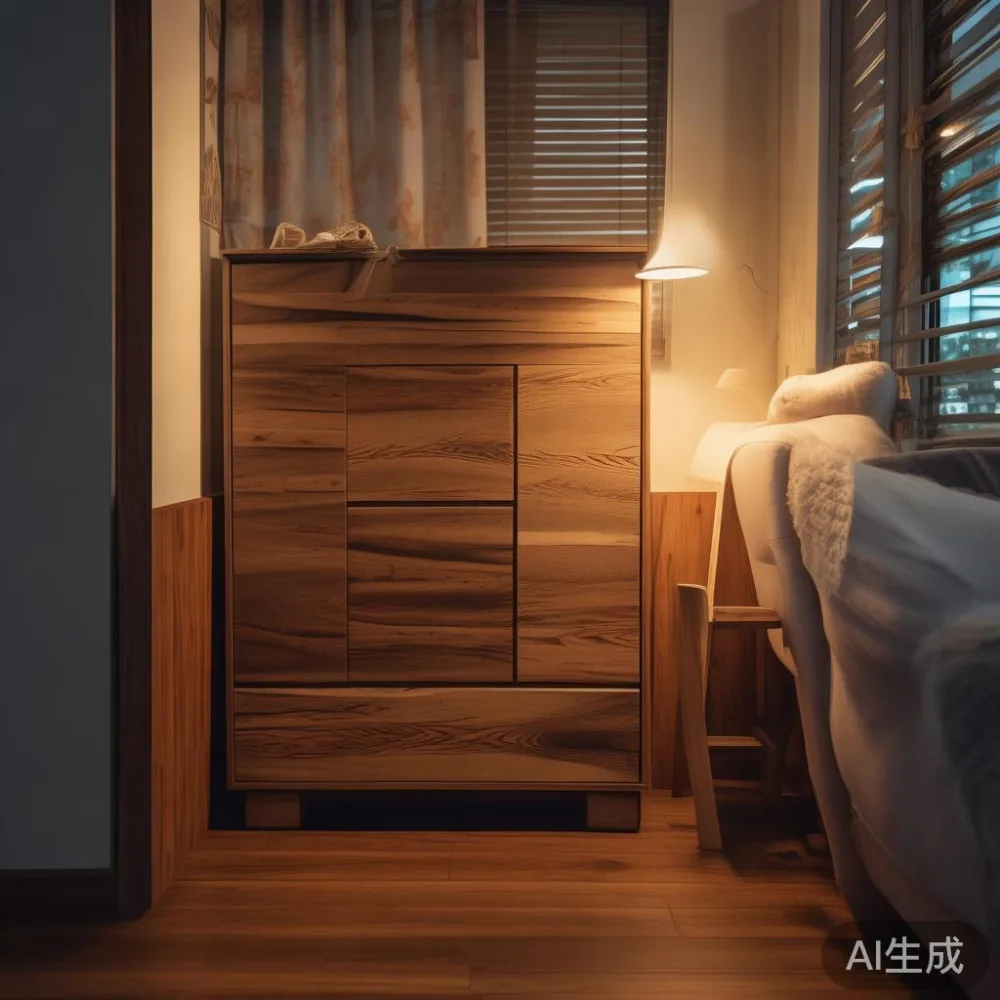
Why Singapore's humidity attacks shoe cabinets differently from sofas and dining tables
A solid wood sofa sits in a living room with air-conditioning set to 23 to 25 degrees Celsius. A bed frame lives in a bedroom with a ceiling fan. A dining table usually has a wide air gap above it. A shoe cabinet, by contrast, lives in the most humid room of the home: the entry vestibule. It is pressed against a wall that often lacks cavity insulation in older HDB blocks. Its back panel faces a corridor that may be cooler than the apartment interior. Its front is repeatedly splashed with moisture from dripping soles. Its drawers open and close twenty times a day, exchanging dry indoor air for wet outdoor air.
Because of that, shoe cabinets show seasonal movement faster than any other casegood in the house. A 1.8 m tall wardrobe in air-conditioned bedroom air might move 2 to 3 mm across a year. A shoe cabinet of similar height can move 4 to 6 mm at the same construction thickness, simply because the microclimate at the entry is harsher.
The numbers behind the swelling: what actually happens to wood at 85% RH
Wood is hygroscopic. It gains and loses moisture until it reaches equilibrium with the surrounding air. At 85% relative humidity, common tropical hardwoods such as Hevea, rubberwood, and kiln-dried oak reach a moisture content of roughly 18 to 20%. Singapore indoor air during the wet months sits between 28% and 32% moisture content for unprotected pieces near the door.
When moisture content climbs from 12% to 20%, a 90 cm wide panel expands roughly 4 to 7 mm across the grain. A 35 cm deep side panel grows 1.5 to 2.5 mm. The result is a shoe cabinet whose doors no longer align, whose drawers bind in their runners, and whose shelves cup toward the wet face. If the cabinet was assembled with tight glue joints and no allowance for movement, joints crack. If it was assembled with too much slack, doors rack and shelves wobble.
What a well-built Southeast-Asia-ready shoe cabinet looks like
From a decade of shipping to Singapore, Malaysia, and Indonesia, the patterns are clear. A shoe cabinet that survives Tampines without drama shares six construction traits:
1. Kiln-dried stock at 10 to 12% moisture content. Anything wetter arrives and immediately absorbs moisture in the corridor. Anything drier, below 8%, will soak up humidity aggressively in the first three months and then stabilize.
2. Quarter-sawn or rift-sawn faces on the door panels. These cut orientations move roughly half as much across the panel as plain-sawn stock. Hevea doors at MIDHILL are rift-sawn for this reason.
3. Floating panels in the sides and back. The panel sits in a groove with 2 to 3 mm of expansion room on each side. The frame moves; the panel breathes.
4. Stainless steel or brass-plated hardware. Standard steel drawer runners rust within a year in a Bedok entry. Hardware must be 304-grade or equivalent.
5. A factory finish of at least two coats of catalyzed varnish or hardwax oil. Wax alone is not enough at 85% RH. The finish slows moisture exchange by roughly 60%.
6. Adjustable leveling feet. HDB floors are flat to within 5 mm across a 3 m span, but not always. Feet let the owner re-level after a season of movement.
A 120 cm wide, 110 cm tall, 35 cm deep three-tier shoe cabinet in solid Hevea with the above specifications lands in Singapore at roughly SGD 780 to SGD 1,050 including GST, landed through a regional distributor. The same piece from a particleboard flat-pack brand costs SGD 220 to SGD 350 but typically fails in eighteen to thirty months in a corridor position.
How do I choose a marble top for a balcony?
Pick a marble slab that is at least 18 mm thick, factory-sealed on all six sides with a penetrating sealer, and supported on a fully closed substrate such as plywood or solid wood battens spaced no more than 30 cm apart, because balcony humidity and direct afternoon sun will bow any thinner stone within a single wet season in Tampines or Punggol.
That single answer covers most balcony situations, but the full reasoning matters. A balcony in a Singapore condo gets direct afternoon sun on roughly sixty percent of its surface for two to four hours a day. Surface temperatures climb past 55 degrees Celsius on a clear February afternoon. When a thunderstorm hits, that 55-degree stone is suddenly hit with 28-degree rain, and the thermal shock travels straight down into the substrate. If the substrate is hollow-backed MDF, the marble cracks from the back within one wet season. If the substrate is sealed plywood or solid Hevea battens, the marble holds for fifteen to twenty years.
For a balcony shelf under 60 cm wide, a 16 mm thick marble slab with a sealed back is acceptable. For anything wider, go to 18 mm or 20 mm. Avoid travertine outdoors because the pits trap moisture and turn green. Carrara and Calacatta perform well if sealed every eighteen months. Emperador dark brown is forgiving because it hides staining. Light grey Pietra Grey is the worst choice for a balcony because every drop of rainwater leaves a visible ring that has to be buffed out.
Pairing a marble balcony top with a small solid wood nightstand on the same balcony is fine if the nightstand is in solid teak or Chengal and finished with marine-grade oil; avoid pairing with particleboard pieces because the underside of the marble traps condensation against the panel and destroys it.
Field notes from a recent MIDHILL delivery in Tampines
Last month I accompanied one of our logistics partners on a Friday morning delivery to a 4-room HDB in Tampines North. The lift opening was measured at 1.05 m wide and 2.1 m deep, which is standard for newer blocks built after 2014. The shoe cabinet was 118 cm tall, 90 cm wide, and 38 cm deep, packed flat in a 22 kg carton. With the protective carton, the package weighed 26 kg, easily handled by one man on a sack trolley through the 1.2 m wide corridor.
The customer, a teacher in her forties, had ordered a French light luxury model in a chalky white finish with brushed brass handles. She told me the previous flat-pack shoe cabinet from a local e-commerce seller had lasted two wet seasons before the back panel blew out from moisture trapped against the HDB wall. Our installation team spent fifteen minutes leveling the piece with the adjustable feet, pulled it 25 mm off the back wall for airflow, and left her with a small tin of touch-up wax and a care card.
She had also ordered a matching solid wood nightstand for the master bedroom, a slim wardrobe extension for the corridor, and a three-seater French provincial corner sofa in boucle for the living room, the same order we ship regularly to landed properties in Bukit Timah and to high-floor units in Punggol. The sofa, finished in a post-modern light luxury palette of off-white and pale taupe, left our Foshan floor on a Wednesday and reached her Tampines door twelve days later, including a four-day buffer at our Jurong consolidation warehouse. GST was itemised at 9 percent on the invoice.
The lift and corridor problem: will your new shoe cabinet actually fit?
Singapore HDB lift openings are 1.05 m wide on post-2014 blocks and 0.9 m on older blocks. Corridors in newer blocks such as those in Punggol are 1.2 m wide. Condo service lifts range from 1.1 m to 1.5 m wide. A fully assembled 120 cm wide shoe cabinet will not fit through a 0.9 m opening, and assembling it inside the home is impractical because the working space near the entry is usually under 1.5 m deep.
The practical answer: order a flat-pack shoe cabinet that arrives in cartons no larger than 110 cm long, 45 cm wide, and 25 cm deep, weighing under 30 kg per carton. A two-person carry through a 1.2 m corridor is then possible without tilting or dragging. This is one reason MIDHILL ships most of its larger casegoods, including wardrobes up to 220 cm tall, flat-packed with a 14-step assembly guide.
If you want a fully assembled shoe cabinet, the safe dimensions for a 1.05 m lift are 100 cm wide, 38 cm deep, 100 cm tall on the diagonal. Anything larger needs to be tipped onto a dolly, which is awkward but possible with two men.
Care habits that add ten years to a shoe cabinet in Singapore
Wood is forgiving if the owner works with it rather than against it. These six habits are what I tell every Singapore customer during the post-delivery WhatsApp follow-up.
Pull the cabinet 25 mm off the back wall. Air circulation behind the piece is the single most effective humidity control. A cabinet pinned against a wall traps moisture and encourages mould on the back panel, the one face the owner never sees until the smell arrives.
Run a small dehumidifier in the entry vestibule during the wet months. A 12 L per day compressor unit costs SGD 180 to SGD 280 at a Tampines electronics fair and pulls the entry RH down to roughly 60%, which is the sweet spot for solid wood. The electricity cost is about SGD 4 to SGD 6 per month at the current tariff.
Wipe wet soles at the doormat, not at the cabinet. The shelf life of a shoe cabinet doubles when the owner stops walking wet shoes straight onto the bottom shelf. A 60 cm by 40 cm microfibre mat at SGD 18 absorbs 80% of the water before it reaches the wood.
Refinish every three to four years. MIDHILL offers lifetime refinishing on every piece we ship. Most Singapore customers send the cabinet back once every four years for a fresh coat of catalyzed varnish. The cost is SGD 120 to SGD 180 per piece including two-way shipping within Singapore, which works out to SGD 3 per month over four years.
Avoid placing the cabinet under a window that gets afternoon sun. Direct sun on a chalky white finish yellows the surface and drives moisture out faster than it can be replaced, leading to surface checking.
Open the cabinet doors once a week for ten minutes. This sounds odd, but it equalises the moisture content between the inside and outside of the cabinet, preventing the cupped-shelf problem I saw in that Punggol flat.
Frequently asked questions from Singapore homeowners
Is solid wood really necessary, or will engineered wood survive? Engineered wood with a sealed vinyl wrap can survive five to seven years in a corridor if the wrap stays intact. The first scratch or peel, usually on a corner near the floor, lets moisture in and the panel blows out within a season. Solid wood costs more upfront but is repairable. A scratched solid wood panel can be sanded and refinished; a scratched vinyl wrap cannot.
What about Hevea versus oak versus teak? Hevea (rubberwood) is the workhorse of Southeast Asian furniture and the most affordable of the three at SGD 600 to SGD 900 for a 120 cm shoe cabinet. Teak is the most stable and naturally oily, which resists humidity, but lands at SGD 1,800 to SGD 2,400 for the same dimensions. Oak sits between the two and takes a painted French light luxury finish very cleanly.
Can I install a shoe cabinet inside an air-con corridor? Yes, and it is the best position in the home. The stable 23 to 25 degree air-conditioned environment keeps the cabinet at a constant 10 to 12% moisture content year-round, which is the factory target.
How long does delivery take to Singapore? From Foshan, door-to-door shipping to a Tampines or Bedok HDB is fourteen to eighteen days, including consolidation at our Jurong warehouse and final-mile delivery via a Singapore logistics partner. Condo deliveries to Punggol and Bukit Timah take the same window. Free shipping applies to orders over US$350, which works out to roughly SGD 470 at the current exchange rate.
What happens if my cabinet arrives with a problem? MIDHILL offers a fourteen-day return window on every Singapore order and a ten-year structural warranty. A door that racked during shipping is replaced free of charge. A finish flaw is touched up by our local partner within five working days. The combination of a structural warranty and a lifetime refinishing promise is why so many of our repeat customers in Singapore are renovating their second or third property with us.
A short checklist before you click buy
Measure the lift opening. Measure the corridor width. Measure the entry space. Subtract 25 mm from the back wall allowance. Confirm the carton weight is under 30 kg per box. Confirm the wood species, the moisture content spec, and the finish type in writing. Confirm the warranty covers structural movement, not just manufacturing defects. Confirm the refinishing offer is lifetime, not a one-time gesture. Confirm the GST line item on the invoice. Confirm the delivery window in days, not weeks. If nine out of ten answers are clear and the tenth is hand-wavy, look elsewhere.
A shoe cabinet is the smallest major piece of furniture in most Singapore homes, but it is the one that faces the harshest microclimate. Build the rest of the home around a solid wood bed frame, a solid wood dining table, a French light luxury wardrobe, and a three-seater French provincial corner sofa in the living room, and the entry will quietly do its job for the next twenty years, through every monsoon season the equator sends your way.