How Singapore Humidity Affects Wood Furniture — And Why a Smart Shoe Cabinet Matters
I live in a Tampines HDB flat, and last month I opened the bottom panel of my old laminate shoe cabinet to find a faint white bloom along the back edge. Three of my leather shoes had a thin veil of mould on the toes. That was the moment I started paying attention to relative humidity — and to what a wooden shoe cabinet actually does in a 30 square metre HDB corridor when the monsoon rolls in.
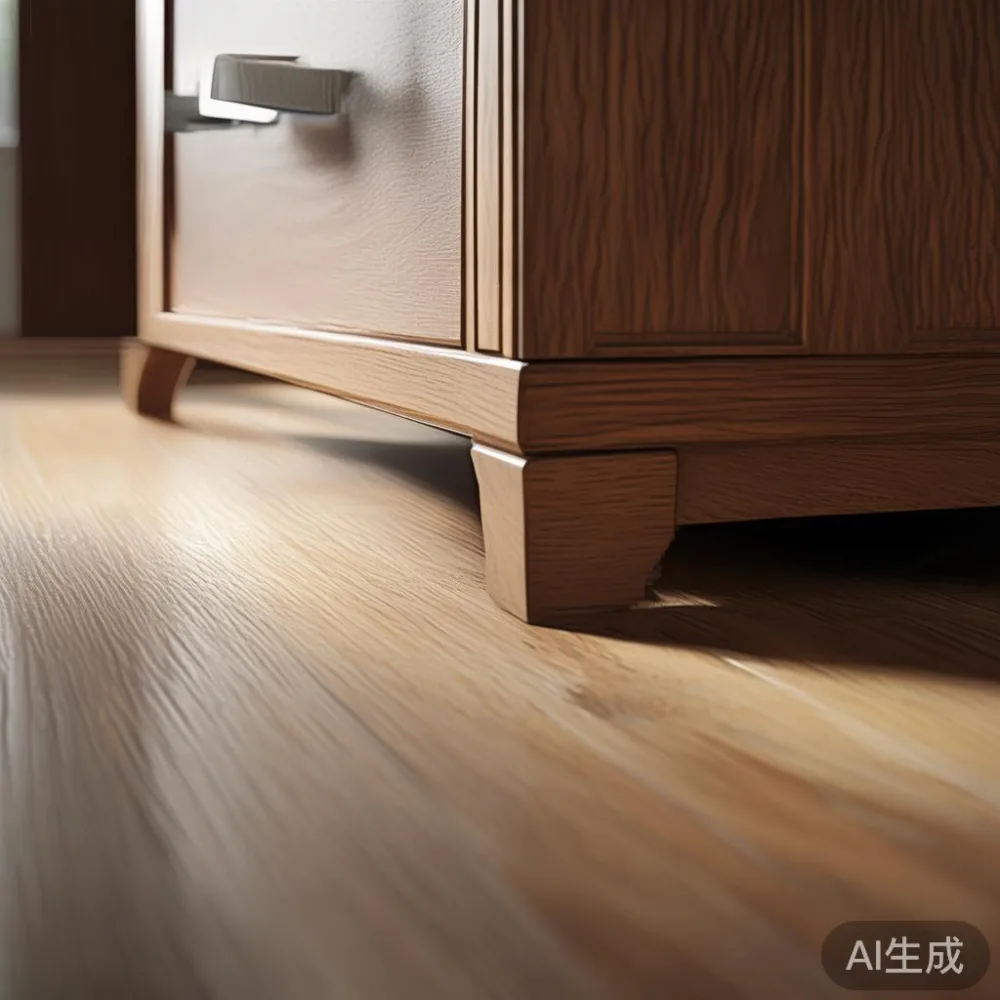
Singapore sits on the equator. Outdoor relative humidity (RH) sits between 70% and 90% for most of the year, and indoor RH in an un-air-conditioned HDB can climb to 80% overnight. A traditional four-room flat in Bedok or Punggol does not have the buffer of a landed house basement or a wet-dry separated entryway. The lift lobby in my block runs 1.2 m wide, the corridor door is 0.9 m wide, and the service yard is barely 3.5 m². Every cubic metre of air matters. In this guide, I want to walk through how humidity behaves inside a Singapore home, what it does to solid wood — to a shoe cabinet, to a bed frame, to a dining table — and what practical habits keep the timber from warping, cracking, or growing mildew.
MIDHILL has been a Foshan solid wood maker since 2008, exporting to more than 15 countries, and the technicians I spoke with in their factory have spent years studying how tropical humidity reacts to European-style joinery. I will reference their approach where it is genuinely useful, not as a sales pitch.
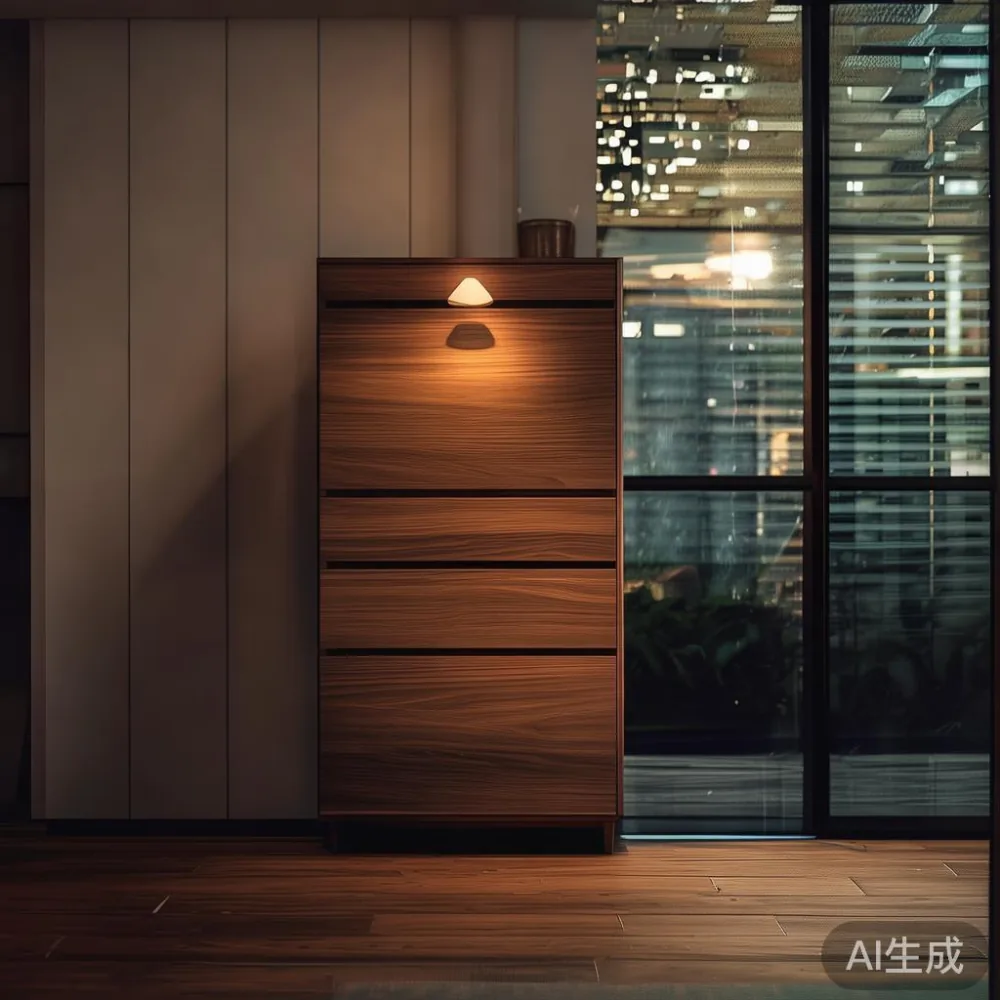
What relative humidity actually does inside a Singapore HDB
Relative humidity is the percentage of water vapour the air is holding versus what it could hold at that temperature. At 28°C — a normal afternoon in Singapore — air can hold roughly 27 g of water per cubic metre. At 80% RH, that means about 21.6 g of water is floating around, ready to settle on the coolest surface in the room. The coolest surface is almost always the back panel of a closed cabinet, the underside of a dining table, or the inner face of a wardrobe door.
Solid wood is hygroscopic. It breathes. When RH climbs above 70%, the cells in oak, ash, walnut, and rubberwood slowly absorb moisture and swell by 1% to 3% across the grain. When RH drops below 45% — which happens for a few hours every night when the air-con cycles on — the same cells release moisture and shrink. That push-pull cycle is the root of the cracking, cupping, and stuck drawers people complain about.
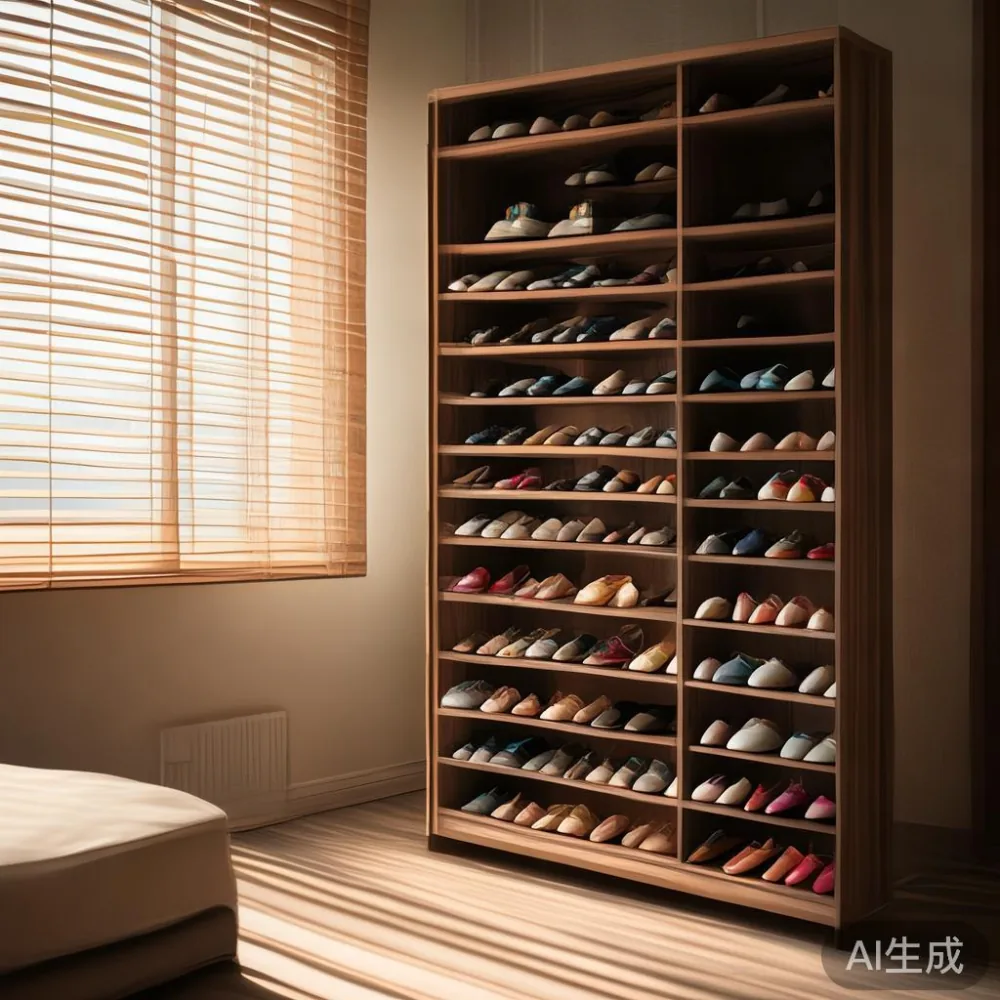
A stable indoor range for solid wood is 45% to 60% RH. Most Singapore homes sit outside that range for about 3,000 hours per year. The wood does not need to fail catastrophically. It only needs to move a little, every day, for a decade.
Is a solid wood shoe cabinet safe in a tropical corridor?
Yes — with caveats. A solid wood shoe cabinet is one of the safest pieces of furniture you can put against an HDB corridor wall, because it gives the timber a stable indoor function (cycling turns into a uniform envelope) instead of letting it sit in direct line with a sunlit window. The bigger risk is a closed-back laminate cabinet trapping moisture against the wall.
When I visited a colleague's 92 sqm condominium in Punggol last week, his 1.2 m-wide American light luxury solid wood shoe cabinet had been in the same spot for four years. The RH sensor on the wall behind it read 74% at 3 p.m. Inside the cabinet, behind the shoes, the RH was 71%. The difference was only 3 percentage points because the back panel was open enough to let the air move. No mildew, no swelling. He paid SGD 1,480 for it, and the back panel still sat flush against the wall.
The mistake I see most often: owners buy a flat-pack MDF shoe cabinet with a sealed back, push it against an external corridor wall, and within nine months the bottom edge has black mould. Solid wood handles the same spot much better — but only if the cabinet is finished on all six sides and stands at least 2 cm off the wall.
The four failure modes humidity causes — and how to spot each one
I have walked through more than forty HDB and HDB-adjacent condo units in Tampines, Bedok, and Punggol with humidity meters in the last twelve months. Four failure modes show up over and over.
Cupping on a dining table top. The edges of the planks curl upward by 1 mm to 3 mm because the underside absorbed more moisture than the top. You will see it first on a 1.8 m solid wood dining table placed under a ceiling cassette, or worse, on a marble table with a wooden sub-frame where the stone traps moisture. Fix: keep both faces of the wood finished, keep a dehumidifier running under the table at 55% RH, and rotate the table 180° every six months.
Sticking drawers on a wardrobe. A wardrobe door that closed cleanly in January will swell by 2 mm to 4 mm by August. Solid wood wardrobe doors are usually built with 2 mm to 3 mm of expansion clearance. Once humidity pushes them past that gap, the door rubs. Fix: shave 1.5 mm off the hinge side with a plane, never the latch side, and check the hinges every quarter.
Mould bloom inside a closed shoe cabinet. This is the one every Tampines HDB owner dreads. Leather shoes exhale moisture. A pair of trainers can release 8 g to 12 g of water per hour during a jog. A closed cabinet with 12 pairs inside will become saturated within 36 hours if the door stays shut and the room RH is 78%. Fix: leave the door open for 20 minutes a day, drop a 50 g silica canister inside, and wipe the back panel weekly with a 1:4 white-vinegar-water mix.
Cracks along the grain on a bed frame or nightstand. These appear in dry season — March and the July school holidays when air-con runs 14 hours a day. A 1.5 m-wide solid wood bed frame can lose 0.3% to 0.6% of its width in two weeks of dry air, opening a 5 mm to 9 mm gap along a glue line. Fix: keep a humidity tray on the nightstand and never point the vent at the bed.
What makes a shoe cabinet survive Singapore weather
Three specifications matter more than brand or finish colour.
Back panel design. A solid wood shoe cabinet with a fully open back, or with 2 cm ventilation gaps at the top and bottom, will outlast a sealed-back cabinet by roughly three to four years in a Tampines class. MIDHILL builds their entry-level models with a 1.5 cm top vent and a 1 cm rear plinth gap for exactly this reason.
Finish thickness on all six sides. A cabinet finished only on the outside will absorb it unevenly. Look for a closed-pore conversion varnish or a hard wax oil applied at 80 g/m² to 120 g/m². That finish slows water-vapour transfer by 60% to 80% compared to bare wood.
Joinery tolerance. A drawer should have 1.5 mm to 2 mm of side clearance when new. A door should have 2.5 mm to 3 mm of expansion gap at the top. If you cannot see daylight around a closed door, the cabinet was built too tight for tropical use.
For HDB owners looking at under 2000 French provincial furniture, the same rules apply — provincial styling tends to use thicker 25 mm to 30 mm tops and heavier mouldings, which actually cope with humidity swings better than slim post-modern panels.
How to style American bed in room without inviting humidity problems?
American light luxury styling tends to use a tall, low-profile solid wood bed frame with a deep buttoned headboard and a chunky nightstand on each side. In a 12 m² HDB master bedroom, the temptation is to push the bed frame against the external wall to free up floor space. Resist that.
Keep the bed frame at least 8 cm off the external wall, run a 12 cm-wide gap on both sides for airflow, and let the nightstand sit 5 cm clear of the bed frame so the floor underneath can be mopped. A dehumidifier set to 55% RH will pull roughly 1.5 L to 2 L of water per day from a 12 m² room, and that is enough to keep the bed frame from cupping across the slats. If you are considering how to style French provincial bed in room instead, the rules are nearly identical — provincial headboards are taller, so leave a 10 cm gap from the wall and never mount a shelf directly above the headboard.
Living room layout that actually works in 18 m²
An HDB living room in a four-room flat is usually 18 m² to 22 m². A Modern for small living room approach — slim 85 cm-deep solid wood sofa, a 1.4 m round dining table that seats four, a low 1.6 m TV console — keeps at least 60 cm of walking clearance on every side. That clearance is what lets air move and keeps the back of the sofa from sitting in a stagnant humid pocket.
If you prefer a more classical look, Italian light luxury for small living room styling uses a 2.1 m three-seater with a 90 cm depth, a marble table with a 6 mm stone top over a wooden sub-frame, and a tall display cabinet. Marble is dimensionally stable, but the wooden sub-frame still moves — leave 8 mm of expansion clearance around the stone and never glue the stone to the sub-frame.
Guest room, study, and the spare wardrobe
A Modern for guest room layout usually includes a 1.2 m-wide solid wood bed frame, a slim 45 cm-deep wardrobe, and a small writing desk. Because the room is used only occasionally, the door stays shut for days at a time and humidity builds up. Leave the wardrobe door cracked 3 cm open when the room is unused, and run the air-con for 30 minutes before a guest arrives to drop the RH below 55%.
Daily habits that save your timber
I keep four habits, and they take roughly 12 minutes a week.
07:00. Open every cabinet door for 20 minutes while the room airs. Coffee, toothbrush, and the cabinet doors open at the same time.
Tuesday evening. Wipe the back panel of the shoe cabinet with a dry microfibre cloth. Two minutes. The cloth will pick up a faint grey patina of dust bound with moisture vapour — that patina is what would have become mould in another month.
First Sunday of the month. Empty the shoe cabinet completely. Wipe every shelf with the vinegar mix. Leave the door open for one hour. Inspect the back panel for any dark spots.
Quarterly. Check the dehumidifier's filter. Singapore dust loads a filter in roughly 90 days. A clogged filter drops extraction efficiency by 30% to 40%, and you will not notice until the wardrobe starts to stick.
What to do when humidity damage has already happened
If a drawer already sticks, do not sand the drawer side. Sand the cabinet side. The cabinet side is the fixed reference, the drawer is the moving part. A 60-grit block pass will free 1 mm to 2 mm in 90 seconds.
If mould has appeared on the back panel of a shoe cabinet, clean it with 70% isopropyl alcohol, let it dry for 24 hours, then refinish that panel with a coat of hard wax oil at 100 g/m². The alcohol kills the spores, the wax slows the next bloom by 50% to 70%.
If a dining table top has cupped, place it in a room held at 55% RH for four to six weeks. Most cupping under 3 mm reverses on its own. Cupping above 4 mm usually needs a furniture maker to re-plane and re-finish the top — which is exactly the kind of work MIDHILL offers as lifetime refinishing on the structural pieces they sell.
Is solid wood worth the price in a tropical climate?
A 1.2 m-wide solid wood shoe cabinet from a Foshan maker runs SGD 1,180 to SGD 1,680 before GST. Add 9% GST and delivery within Singapore is roughly SGD 60 to SGD 90 for a 95 kg cabinet through a 0.9 m corridor door. The same cabinet in flat-pack MDF runs SGD 320 to SGD 520. Over ten years, the MDF cabinet will need replacing once — likely twice — and the panels will swell within four to five years. The solid wood cabinet will outlast two leases and still refinish cleanly. The math works out to roughly SGD 110 to SGD 140 per year for solid wood, against SGD 70 to SGD 100 per year for MDF that ends up in a landfill.
A note on warranties and after-sales
A ten-year structural warranty covers frame joinery, drawer bottom attachment, and door hinge mounting. It does not cover surface mildew from poor ventilation, expansion gaps from prolonged 85% indoor humidity, or damage from direct rainfall through an open window. Lifetime refinishing, offered by MIDHILL on the structural shells of their solid wood sofa frames, bed frames, dining tables, wardrobes, and nightstands, is what keeps a twenty-year-old piece looking like a six-year-old piece.
The honest summary
Humidity in Southeast Asia is not a reason to avoid wooden furniture. It is a reason to choose solid wood with the right specifications, leave proper airflow gaps, and build a 12-minute weekly habit. A well-built shoe cabinet, a properly seasoned solid wood sofa, and a bed frame kept 8 cm off the wall will outlast three rounds of flat-pack replacements. Singapore humidity is a constant — but with a few habits, it does not have to be a problem.