Shoe Cabinet Singapore: Styling a Small Apartment Without Making It Feel Crowded
I spent the second weekend of last month at a friend's 4-room HDB flat in Tampines, helping her unpack after a move from a Punggol condo. Her problem was not a lack of furniture. She had inherited a solid wood bed frame, a dining table that seats six, and two wardrobes she did not need. Her problem was that every wall already had something leaning against it, and the corridor between her kitchen and living room measured only 92 cm wide, which is narrower than the lift door in many new blocks. We spent three hours removing pieces, and the flat got larger. That experience is the entire thesis of this guide: a shoe cabinet, a nightstand, a small marble table, and the right sofa go further than a fully furnished one.
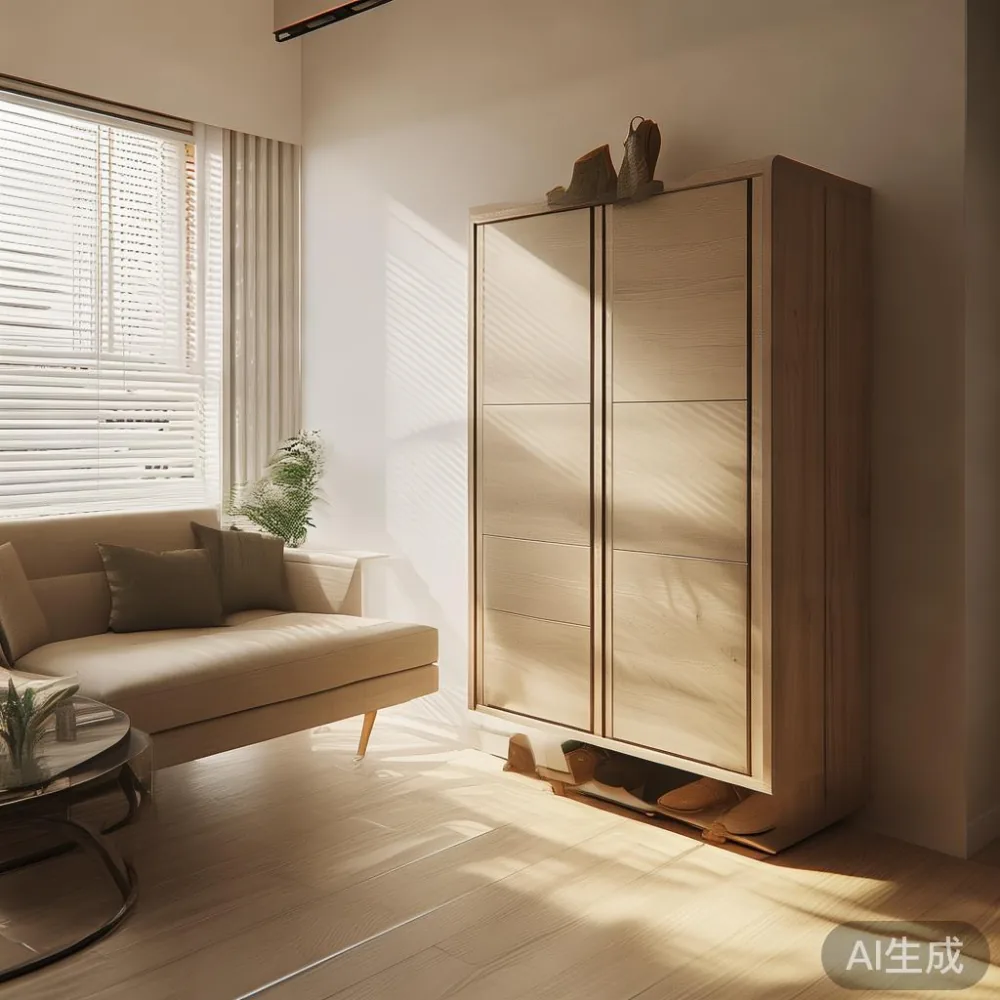
Why small HDB flats feel crowded even when they are not full
Most Singapore HDB flats in the BTO resale market sit between 65 and 95 sqm. A 4-room flat in Bedok that I visited had 78 sqm of floor space but felt like a closet because the owners had placed a 240 cm dining table in a 320 cm room. The issue is never size. It is proportion. A solid wood dining table that seats six takes up the same visual weight as a wall, even when you only ever use two chairs.
The lift in her Tampines block is rated 630 kg, which means anything larger than a 2.4 m piece of furniture will not go up without disassembly. The corridor outside her unit is 1.2 m wide, so even a fully assembled solid wood wardrobe can be a problem if it is wider than 110 cm. Most buyers never check these numbers before clicking checkout on a 3-metre wardrobe. We measured first, then chose furniture that could move through every pinch point, including the corner at the top of the stair landing, which in her block was a tight 1.55 m radius.
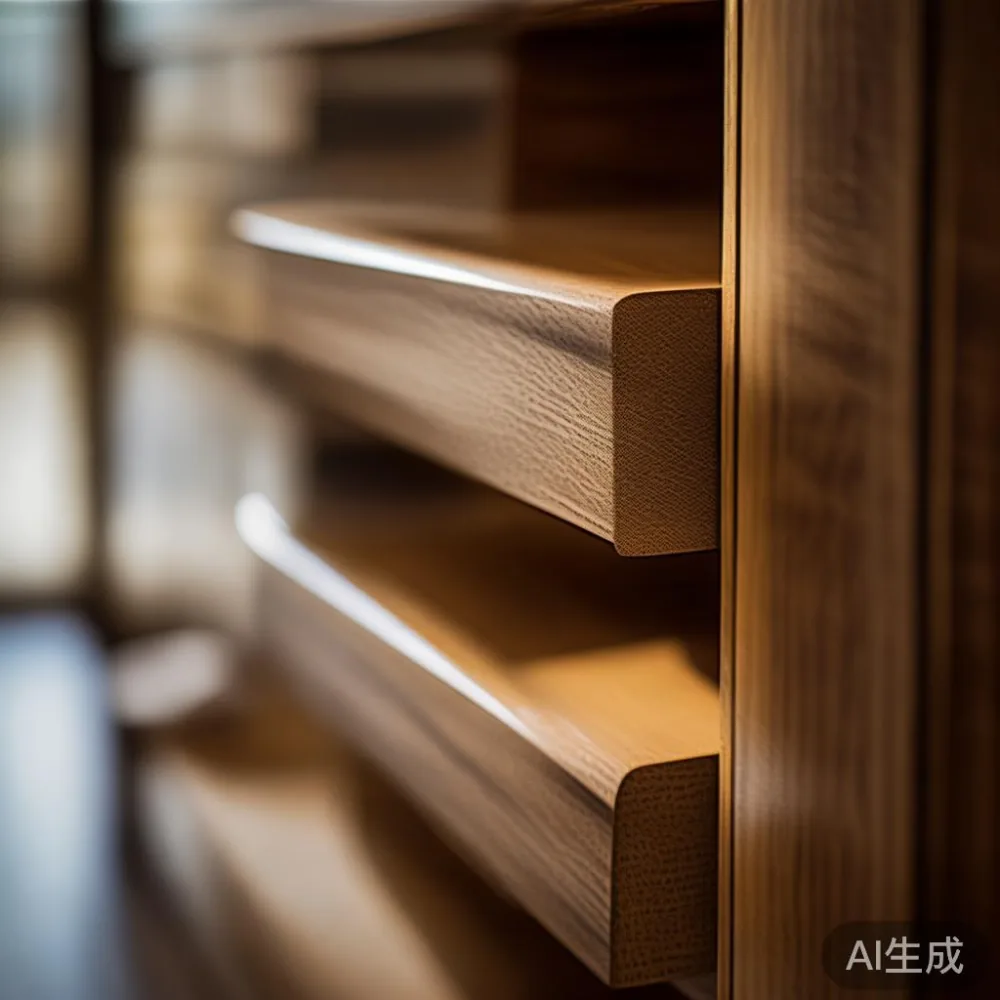
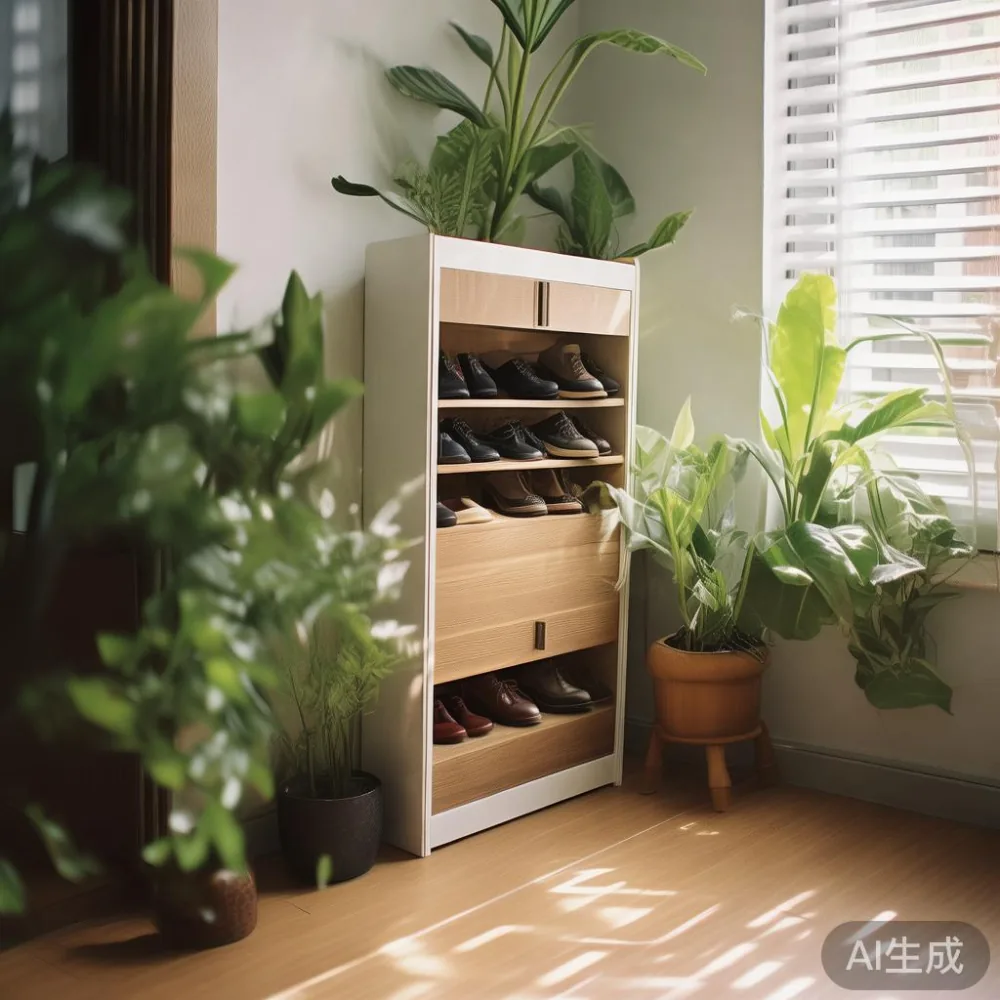
The single largest source of clutter in any Singapore home is shoes. A household of four running, gym, work, and house shoes can easily hold 60 pairs. Drop them by the door and the entrance dies. A proper shoe cabinet, sized to the wall and not to a wish list, fixes more than the entry. It removes the visual noise that makes the rest of the home feel smaller.
What does "light luxury" actually mean for a 4-room HDB?
Light luxury is not gold trim and chandeliers. In the post-modern light luxury reading, it is a quiet, restrained look built from materials that age well: solid wood with visible grain, marble with grey veining, brushed brass hardware, and linen or bouclé upholstery. The room reads as expensive because the joinery is honest, not because the price tag is loud.
For a small flat, this matters because light luxury furniture tends to be lower and slimmer than heavy classical pieces. A solid wood bed frame with a low headboard, around 95 cm tall instead of 120 cm, leaves the wall visible above it, and visible wall equals perceived ceiling height. A nightstand with a 45 cm depth instead of 55 cm gives you walking room past the bed, which in a 3.2 m x 3.6 m master bedroom is the difference between two people bumping hips and a room that breathes.
Marble tables work in light luxury flats because they are small and reflective. A 90 cm round marble table in the corner bounces light and holds a tray. It does not announce itself. Compared to a glass coffee table that shows everything on it, or a dark wood console that eats light, marble earns its 8 kg of weight.
Is Mid-century modern corner sofa furniture worth it?
Yes, for most small HDB living rooms, a mid-century modern corner sofa is worth it because it solves three problems at once: seating for four, a defined living zone without walls, and storage under the chaise if you pick a lift-up version. The mid-century line, tapered oak legs, low arms, and a 85 to 90 cm seat depth, also lifts visually off the floor, which makes the room feel taller than a chunky modern L-shape that sits flat on the ground.
In her Tampines flat, we replaced a 2-seat 2.6 m straight sofa with a 235 cm x 165 cm corner sofa. The shorter length gave back 25 cm of walkway between the sofa and the TV console. The corner orientation turned the L of the living room into a clear seating zone, which let us drop a small round marble coffee table, 75 cm diameter, in the middle without blocking the path to the corridor.
The honest trade-off is fabric. Light bouclé looks beautiful and reads as light luxury, but in a Singapore home with no helper luggage and daily use, it shows stains within months. For my own home, I picked a performance weave in a sand tone and rotate the seat cushions every quarter. The 5-year warranty on the frame was the deciding factor, since solid wood sofa frames outlast fabric by a decade.
The shoe cabinet is the single most powerful piece in a small flat
Three reasons. First, shoes are the most numerous object in a Singapore home. Second, they sit at the threshold, which is the first and last thing you see. Third, a shoe cabinet with closed doors removes visual chaos immediately. An open rack with 30 pairs of sneakers is, visually, a wall of noise. The same 30 pairs behind two tambour doors disappear.
Sizing a shoe cabinet to a small HDB is mostly a constraint problem. Standard adult shoes need 30 cm of width if stored flat, or 15 cm if stored on a slight angle. A 90 cm wide, 35 cm deep, 120 cm tall cabinet holds roughly 18 to 24 pairs depending on the angle. That covers a couple comfortably. A 120 cm wide version holds 30 pairs and is the right pick for a family of four.
For HDB entrances that are narrow, anything deeper than 40 cm blocks the door swing. A 35 cm deep shoe cabinet leaves room for a door to open to 90 degrees, which most fire codes require anyway. The height should not exceed 130 cm if the ceiling is 2.6 m, otherwise the cabinet breaks the wall line and the room shrinks above it.
Solid wood beats MDF for shoe cabinets because shoes are wet. Singapore's humidity runs between 70 and 90 percent for most of the year. MDF swells. Solid wood breathes. A well-ventilated solid wood shoe cabinet with rear vents and a slight gap at the back keeps moisture moving out.
Concrete layout plan for a 4-room HDB (78 sqm example)
Living room, roughly 3.6 m x 3.2 m. Place a 235 cm corner sofa against the longer wall, with the chaise on the side nearest the window. A 150 cm x 35 cm TV console on the opposite wall. A 75 cm round marble table centered, with at least 45 cm of walking room on every side. One small accent chair, no more. Total seating: 5. Total floor footprint of furniture: under 4 sqm.
Dining zone. A 140 cm x 80 cm solid wood dining table that seats four normally and extends to six. Pair it with chairs that have a 50 cm seat depth instead of 55 cm. Hang a 90 cm pendant 70 cm above the table, not higher, to anchor the zone vertically. Skip a sideboard if the kitchen is open. If closed, a 120 cm low buffet at 80 cm tall holds tableware and acts as a serving surface.
Master bedroom. Bed 180 cm x 200 cm with a solid wood bed frame. Two nightstands at 45 cm deep, 45 cm wide, 55 cm tall. The wardrobe runs the 240 cm wall at 60 cm deep if you have it, or 55 cm if the room is tight. Above the bed, leave 60 cm of clear wall before any art. The eye needs to rest.
Entry. A 120 cm wide shoe cabinet against the wall next to the gate, 35 cm deep, 110 cm tall. Above it, a 120 cm x 30 cm floating shelf for keys, sunglasses, and a small tray. A single wall hook per person, not a row of five. A round mirror, 60 cm diameter, centered on the opposite wall to bounce the entry light back into the corridor.
One piece I have seen work in three different Bedok flats: a Scandinavian solid wood garage storage unit converted into a hallway bench. It is 120 cm wide, 38 cm deep, 45 cm tall, holds two baskets underneath, and gives visitors a place to sit while removing shoes. The bench doubles as overflow shoe cabinet for guest slippers and delivery runners.
What I would actually buy for a new Tampines BTO
If I were moving into a fresh 5-room BTO in Tampines West tomorrow, my furniture list would be tight. A solid wood bed frame with underbed drawers, two 45 cm nightstands, a 140 cm solid wood dining table that extends, four chairs, a 235 cm corner sofa, a 75 cm marble table, a 240 cm wardrobe, a 120 cm shoe cabinet, and the hallway bench. Ten pieces. No more than 14, including lighting and mirrors. Anything beyond that becomes a problem.
Budget in SGD. A solid wood bed frame runs S$1,400 to S$2,800 depending on the wood. A 140 cm dining table in solid oak sits between S$1,200 and S$2,500. A corner sofa with a solid wood frame and performance fabric is S$2,400 to S$4,800. A marble side table is S$450 to S$1,100. A solid wood shoe cabinet from a Foshan maker like MIDHILL, which has shipped to Singapore since 2008, lands around S$650 to S$1,400 for a 120 cm unit. A matching wardrobe in the same wood runs S$1,800 to S$3,500. Add the bench at S$350 to S$600.
Total furniture budget: roughly S$9,000 to S$15,500 for a 5-room BTO. Delivery for orders above S$350 is free, which matters when you are shipping ten pieces from a factory floor in Foshan. Lead time is 30 to 45 days for made-to-order, with sea freight to Singapore adding another 14 to 21 days. Order everything in one shipment to save on freight.
GST at 9 percent applies to the landed cost. CIF value plus duty. For furniture, duty is zero under most HS codes, but GST still applies. Budget an extra 9 percent on top of the invoice.
What if you already own too much furniture?
The Tampines friend and I followed a simple rule. Anything she had not touched in 12 months left the flat. That removed two armchairs, a side table, and a tall bookshelf that blocked a wall socket. After the removal, we re-measured every room with a tape and a phone. Anything taller than 130 cm needed to sit against a wall. Anything deeper than 60 cm needed a clear corridor of 90 cm on one side.
If a piece is solid wood and structurally sound, refinishing it costs a fraction of buying new. Lifetime refinishing, offered by makers such as MIDHILL on qualifying solid wood pieces, lets you sand and re-oil a tired dining table for a tenth of the replacement cost. A 10-year structural warranty on bed frames and wardrobes means a hairline crack in a joint is covered. These are quiet advantages that show up after year three, when MDF pieces are already warping at the corners.
For the pieces you cannot keep, the Singapore second-hand market is healthy. Carousell and the flea market at Sungei Road take solid wood furniture quickly if you photograph it well and price 40 percent below retail. A solid wood dining table that cost S$2,200 new will move at S$800 to S$1,000 within a fortnight.
Maintenance that keeps a small flat from drifting back into clutter
A shoe cabinet has one rule. If it is full, do not buy more shoes until you have removed four. A 120 cm shoe cabinet holds 30 pairs, which is enough for two adults and a child. If you have 40 pairs, the cabinet is telling you something.
A marble table needs a wipe-down once a week with a neutral pH cleaner. Anything acidic, lemon juice, vinegar, will etch the surface. A coaster under every drink is non-negotiable.
A solid wood bed frame wants a check on the slats once a year. Tighten the bolts, oil a dry joint. The nightstand will tell you when the drawer runners need replacing by the sound it makes: a grind instead of a glide. Replace them at year five. New runners cost S$20 to S$40 per drawer and take twenty minutes.
A dining table in solid oak will dent if you drop a knife on it. The dent is character. Do not try to steam it out with an iron unless you are prepared to refinish the surface. Light luxury is forgiving, but it is not magic.
FAQ: shoe cabinets and small HDB layouts
How wide should a shoe cabinet be for a couple? A 100 to 120 cm wide unit holds 24 to 30 pairs, enough for two adults without overflow. Anything narrower than 90 cm becomes a single-person cabinet.
Should a shoe cabinet be solid wood or MDF? Solid wood, because Singapore humidity runs 70 to 90 percent for most of the year and MDF swells at the joints. A solid wood unit with rear vents lasts 15 years or more.
Can a shoe cabinet fit a vacuum, broom, and umbrella? Yes, if you allocate the bottom shelf. A 120 cm wide, 35 cm deep, 110 cm tall cabinet has a bottom 25 cm clearance that fits a cordless stick vacuum and two long-handled tools standing upright.
What height keeps the entry from feeling cramped? Anything under 130 cm leaves the wall above the cabinet visible. Visible wall above a cabinet is what makes an entry feel open. A floor-to-ceiling cabinet looks grand in a shop but heavy at home.
Do I need a bench in the entry? Only if you wear lace-ups. A bench saves two minutes a morning and protects the shoe cabinet from being leaned on. A 120 cm bench at 45 cm tall, in oak, is enough.
Where should the shoe cabinet sit if the entrance has no wall? A shallow 25 cm deep cabinet fits behind the gate if the gate opens outward. If the gate opens inward, the cabinet moves to the side wall, no deeper than 35 cm, otherwise the gate cannot open.
How do I stop my cousin having 30 pairs of sneakers from taking over the entry? Two habits. A numbered quota on the cabinet and a quarterly donation. Anything past the quota lives in a storage unit, not at home.
Are there any pieces worth splurging on in a small flat? The bed frame and the wardrobe, because you use them daily and they carry weight. The shoe cabinet and nightstand, because they anchor the entry and the bedside. Skip the accent chair and the ottoman; they look great in a magazine and gather laundry in real life.
A small HDB in Tampines or Punggol is not a problem to solve. It is a set of measurements to respect. Once the lift is 630 kg, the corridor is 1.2 m, the ceiling is 2.6 m, and the door swing is 90 degrees, the furniture chooses itself. Pick pieces that fit those numbers, that breathe at the edges, and that get older without falling apart. The flat will reward you with space you did not know you had.