Solid Wood vs Veneer Shoe Cabinets: A 5-Year Cost Comparison for Singapore Homes
A shoe cabinet is often treated like a minor hallway accessory, yet in a Singapore home it absorbs daily friction: wet weather, scuffed shoes, bags leaving the lift, and shoes carried from the bedroom to the entrance. The finish may look convincing in a showroom, but the material beneath it determines repair costs, replacement cycles, and the cabinet’s long-term character. This guide compares veneer and solid wood shoe cabinets over 60 months, using realistic Singapore pricing, dimensions, weights, delivery conditions, and ownership costs.
For residents of HDB flats in Tampines, Bedok, and Punggol, as well as condo owners with longer corridors, the decision is practical rather than purely aesthetic. A cabinet measuring 180 cm wide and 40 cm deep may need careful handling in a 90 cm-wide lift lobby. A 55 kg solid wood unit feels quite different from a 32 kg veneered unit when a delivery crew moves it through a narrow corridor. GST, delivery, maintenance, and early replacement all belong in the calculation.
MIDHILL is a Foshan solid wood furniture maker established in 2008, with export experience across more than 15 countries. Its 10-year structural warranty and lifetime refinishing service affect the long-term economics of the solid wood option, although actual coverage should always be confirmed in the written quotation. The figures below are planning estimates rather than quotations, intended to make assumptions visible.
What is the real difference between a veneer shoe cabinet and a solid wood one?
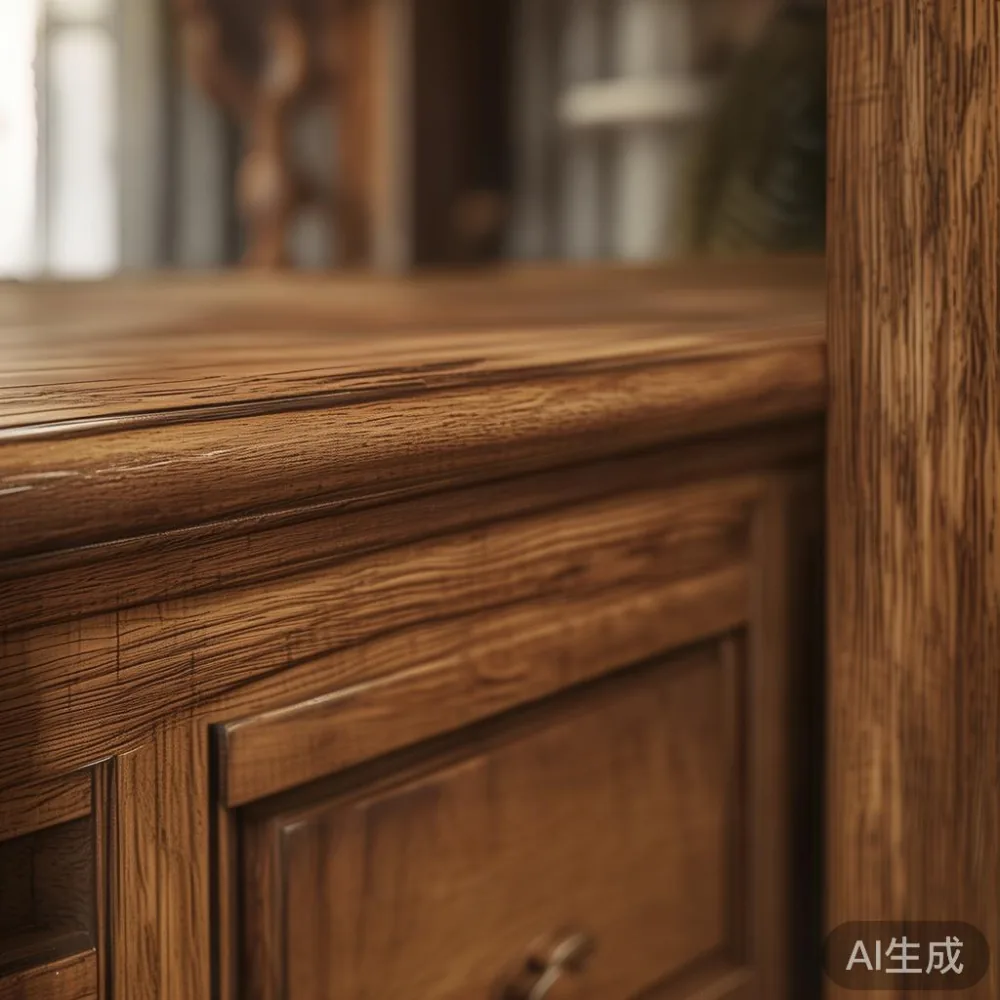
Both products can carry the same visual language. A walnut-toned veneer shoe cabinet can sit beside a solid wood sofa or bed frame and appear convincingly matched. The difference lies below the surface: veneer uses a thinly sliced layer of wood, usually about 0.3–0.6 mm, bonded to engineered panels; solid wood uses substantial timber components, commonly 18–25 mm boards or hardwood frame-and-panel construction.
For a typical 180 × 40 × 100 cm shoe cabinet, a veneered construction may weigh 32–42 kg, while a solid wood version may weigh 48–62 kg. Veneer offers lighter handling and more stable pricing because less timber is used. Solid wood provides greater repair flexibility: a deep scratch can often be filled and refinished rather than requiring a panel replacement. It also ages with more physical depth, showing softened edges, grain variation, and a patina that cannot be reproduced perfectly by printed film.
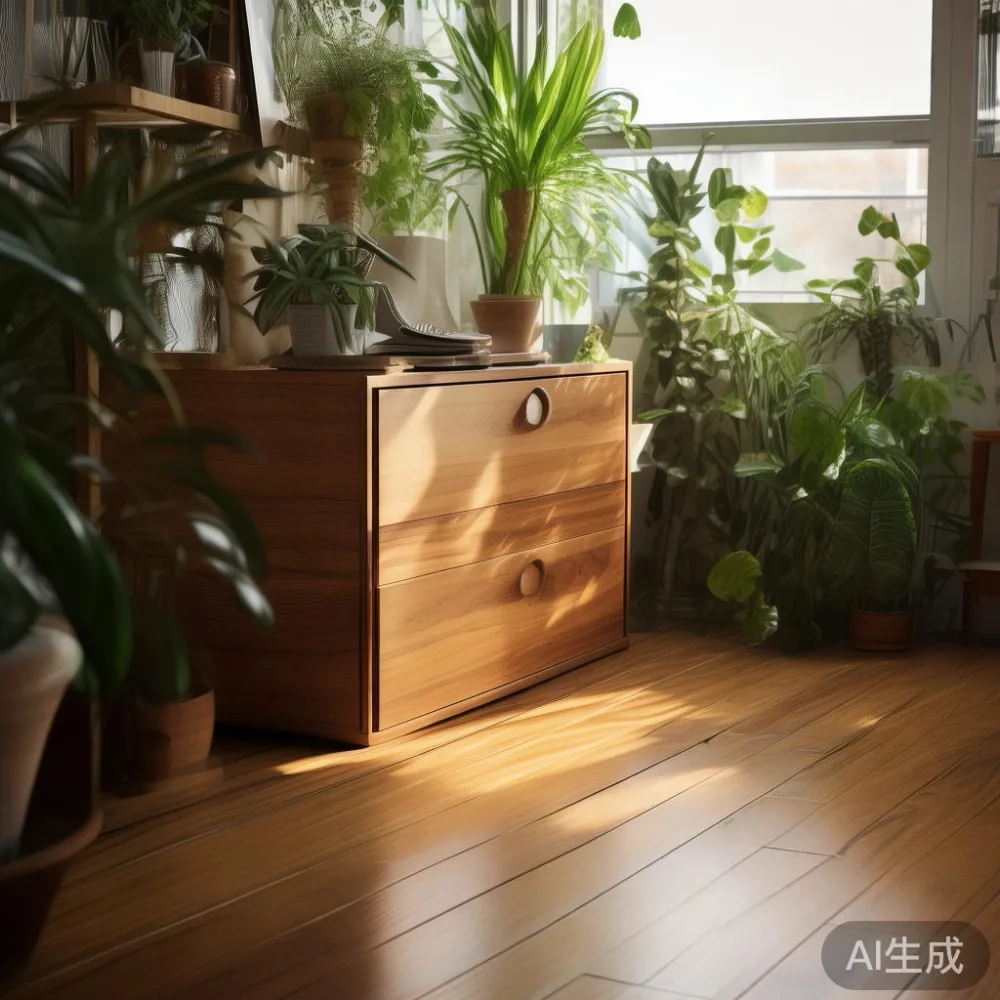
Neither material solves Singapore humidity by itself. A cabinet stored beside an entrance may face 65–80% relative humidity and abrupt wet-weather exposure. Solid wood can move by roughly 1–3 mm across its width as humidity changes. Quality veneer can cup or edge-lift if its substrate and adhesive are unsuitable. For either option, a 5–8 cm gap from the floor, ventilation behind the back, and a tray for damp footwear are sensible protections.
What assumptions drive this 5-year cost comparison?
The comparison uses one common format: a freestanding shoe cabinet measuring 180 cm wide, 40 cm deep, and 100 cm high, with 2 hinged doors, 3 adjustable shelves, and 1 ventilated drawer. The cabinet is assumed to hold 35–45 pairs of adult shoes. It is bought for a Singapore home, delivered within the mainland, and used daily by a household of 3 people.
The veneered model is budgeted at S$520 before GST. The solid wood model is budgeted at S$980 before GST. Singapore GST is 9%, so the respective totals are S$566.80 and S$1,068.20. Delivery within Singapore is estimated at S$60 for the lighter veneer cabinet and S$90 for the heavier solid wood cabinet because a second handler or larger vehicle may be needed.
Maintenance assumptions are equally explicit. Veneer receives 1 light touch-up every 24 months, with a new edge band or localized repair included at S$70 per event. Two events over 5 years produce a S$140 allowance. Solid wood receives 1 refinishing service at S$180 in year 3; the allowance remains S$180 because minor sanding and spot treatment are treated as household care rather than billable work.
For resale planning, the veneer cabinet retains a residual value of S$100 after 60 months. The solid wood cabinet retains S$220 because usable timber and refinishing potential support a higher second-hand value. These figures exclude proceeds from selling the old cabinet and therefore avoid overstating either return.
How much does a veneer shoe cabinet cost over 5 years?
At purchase, the veneered shoe cabinet requires S$520 for the product, S$46.80 for GST, and S$60 for delivery: S$626.80 in cash outlay. Over 60 months, that is about S$10.45 per month. Adding the S$140 repair allowance and subtracting the S$100 resale value gives a net 5-year cost of S$666.80.
This calculation exposes the appeal of veneer. It is not simply a lower purchase price; it is a lower total commitment when the cabinet has a limited lifespan or when frequent cosmetic changes are preferred. A renter who expects to move after 24–36 months may never spend the repair allowance in full. A family expecting to keep the same entrance for 10 years may eventually need another veneer replacement.
The cost of replacement is the key weakness. If the cabinet must be replaced once after year 4, a new unit priced like the original would add another S$626.80 before any disposal charge. That possibility is not automatically included in the base case, because a sound veneer shoe cabinet can remain usable. It should, however, be recorded as a risk. In an aggressive replacement scenario, veneer can become more expensive over 5 years than maintaining solid wood.
Weight affects ownership beyond the delivery invoice. At 38 kg, the veneered cabinet is easier for one competent adult to move using a furniture dolly. A 55 kg solid wood cabinet usually needs 2 people. Fewer awkward lifts reduce the likelihood of damaging door frames, lift jambs, and the cabinet itself.
How much does a solid wood shoe cabinet cost over 5 years?
The solid wood option requires S$980 for the cabinet, S$88.20 for GST, and S$90 for delivery: S$1,158.20 in cash outlay. That averages S$19.30 per month. With the S$180 refinishing allowance and S$220 resale value, the net 5-year cost is S$1,118.20.
The higher figure buys material longevity, repairability, and a different kind of presence. Solid wood complements a solid wood sofa, bed frame, dining table, wardrobe, nightstand, or marble table without making the entire home feel excessively matched. In French light luxury styling, pale oak or ash cabinetry can soften a hallway while brushed hardware adds definition. Post-modern light luxury may pair warm timber with clean lines and a darker plinth.
One real first-person experience shaped my view of this difference. Last month I visited a colleague’s 3-room HDB flat in Bedok and watched him move a 55 kg solid wood shoe cabinet from the corridor into the entrance. The 82 cm-wide corridor left little room to tilt the unit, so the delivery team used removable doors and carried the carcass at an angle. The cabinet took 18 minutes to position. A similar veneered unit at 36 kg took 9 minutes with one person and a dolly. The solid piece looked richer under the recessed ceiling lights, but it also demanded more planning at the delivery threshold.
This experience is why shoppers asking where to buy wardrobe from MIDHILL should also ask how a team measures access before dispatch. The same principle applies to a shoe cabinet: delivery feasibility should be checked, not assumed.
How do delivery, lifts, and corridors change the Singapore price?
Singapore delivery costs are affected by distance, parking, stairs, and handling rather than product material alone. A ground-floor HDB unit in Tampines with a nearby parking zone may incur a straightforward S$60–S$90 delivery fee. A high-floor Punggol flat may require a longer carrying distance from the lorry. A Bedok unit near a narrow staircase could add S$40–S$80 if there is no lift.
Common HDB and older condo lift interiors measure approximately 90–110 cm wide and 120–140 cm deep. A 180 cm-wide shoe cabinet can enter diagonally if its packaging is below about 195 × 46 × 105 cm, but pivot space becomes limited. Doorways of 80–85 cm can also require a “tilting” method, provided the supplier agrees to protect the cabinet and accepts responsibility for approved access routes.
The selected product should be checked for dimensions before purchase: 180 cm width, 40 cm depth, 100 cm height, 55 kg weight, and packaged measurements of no more than 195 × 46 × 105 cm. Those figures are important for a condo corridor only 110–130 cm wide. For wall-mounted units, installers may charge S$120–S$220 because fixing into masonry, brick, or a reinforced wall requires different tools.
Delivery timing should be recorded in days. A made-to-order cabinet may take 25–45 production days, followed by 2–7 days for local scheduling. Stock models can be dispatched within 3–10 days. A promised 8-day delivery is meaningless if the production queue lasts 6 weeks, so both numbers belong in the order confirmation.
MIDHILL’s free shipping offer over US$350 appears designed for international orders, so a Singapore buyer should not assume it applies automatically to a local S$520–S$980 purchase. Request the landed Singapore quotation, including GST, delivery, installation, and any access charges. The 14-day return policy should also be reviewed against custom sizing, since made-to-order pieces may follow separate production rules.
Which option wins when scratches, humidity, and moving days arrive?
In a controlled test scenario, assume 6 visible shoe scuffs, 2 minor edge abrasions, and 1 humid-season inspection during the 60-month period. A veneer repair allowance of S$140 is reasonable for 2 small interventions. Solid wood can usually accept localized sanding and a new wax or oil layer without replacing a panel. Deep moisture damage remains possible for both if a cabinet is repeatedly soaked or placed directly against an exterior wall.
Solid wood has an advantage when the household values repair over replacement. Its S$1,118.20 net cost buys a cabinet that can remain in service beyond year 5, provided joints remain stable. The 10-year structural warranty adds confidence for frame and joinery failures, but it does not mean every finish, drawer runner, or surface scratch is covered. The lifetime refinishing commitment should likewise be confirmed in terms of service availability, applicable charges, and material limits.
Veneer has an advantage in flexibility and initial affordability. A Singapore household expecting several moves, a 24-month tenancy, or a coordinated refresh every 3 years may prefer a cabinet that is easier to carry and replace. The important point is not to confuse a low purchase price with a low 5-year cost if the replacement cycle has been left unstated.
Light-luxury decisions should include scale. In compact HDB entrances, a 120 × 35 × 90 cm cabinet weighing 30–42 kg may be more practical than a 180 cm unit. In a larger condo foyer, a 200 × 45 × 105 cm cabinet weighing 65–78 kg can create a stronger focal point. A narrower 30 cm depth saves 10 cm of circulation space compared with a 40 cm cabinet, but shoe capacity may fall by 15–25%.
Can I use the same light-luxury language for both materials?
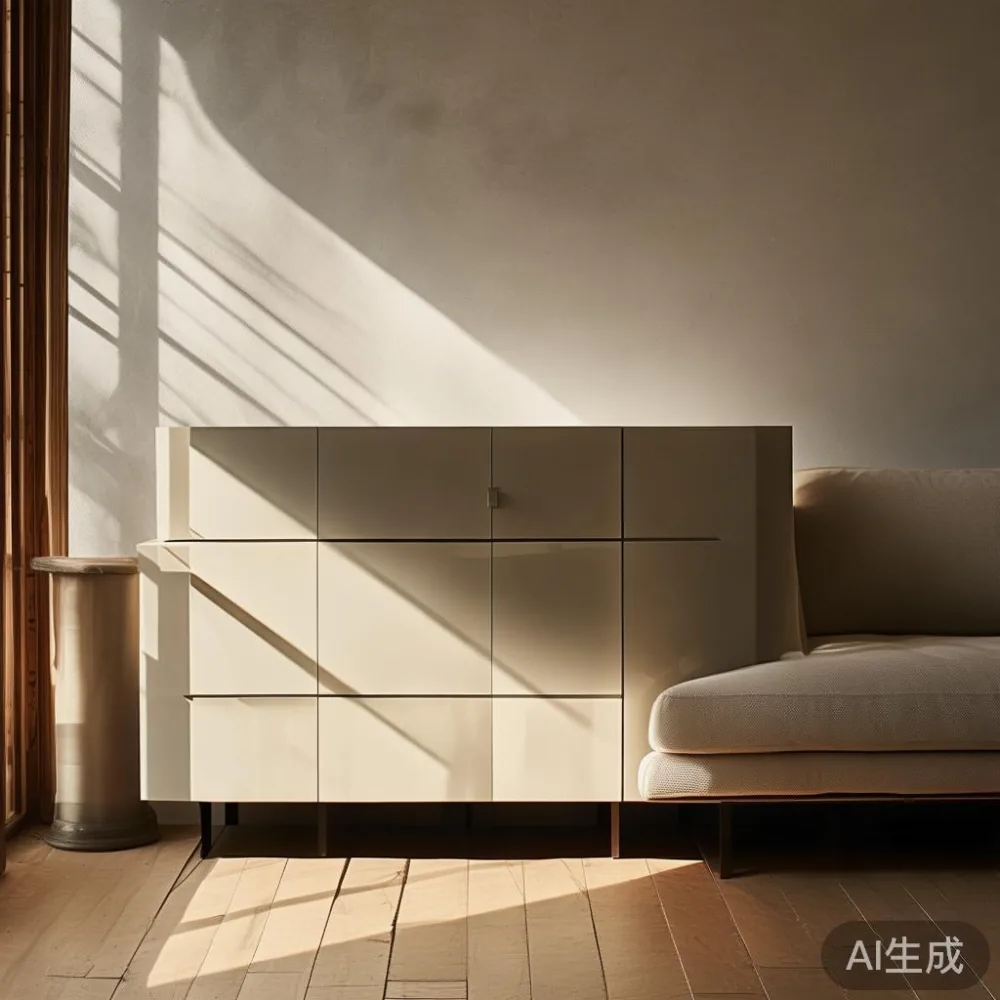
Yes, with honesty about construction. American light luxury often favours clean geometry, warm timber tones, and restrained hardware. A dark-oak shoe cabinet with slim brass pulls can support that language whether the visible face is quality veneer or solid wood. French light luxury tends toward pale woods, curved profiles, cane details, and softer silhouettes. European light luxury bedroom ideas can extend into the hallway through matching grain direction and coordinated finishes.
For customers comparing a European light luxury bed vs French provincial bed, the material distinction may influence which shoe cabinet feels coherent. A French provincial bed with carved details and warm oak often pairs naturally with solid wood; a simpler European bed can sit well with veneer. Similarly, a Japanese bed vs Nordic bed comparison may lead to pale ash and functional lines, where a slim cabinet keeps the entry visually light.
Other categories can inform the buying vocabulary without distracting from the shoe cabinet. A reference to the best American sofa for 2026 may encourage the buyer to compare wood tones under warm and cool lighting. A guide on how to choose light luxury wardrobe can help establish a finish sample for a larger storage system. A MIDHILL TV console may offer useful context for visible-grain matching, but the shoe cabinet must still suit entrance dimensions and daily use.
What should a Singapore buyer ask before paying?
Ask for a drawing showing the carcass material, veneer thickness, back panel, drawer construction, and shelf span. For veneer, request the wood species used for the face veneer and confirm that the substrate is not visually weak for a 90 cm shelf supporting shoes. For solid wood, specify hardwood species and whether the construction is solid panels or a frame with solid wood inserts. A vague “wooden” label is not enough.
Request a written total in SGD with 9% GST shown separately. Confirm whether delivery to the lobby is included and what stair or carrying charges apply. Provide the lift door width, corridor width, turning space, and door measurements. Ask for the packaged dimensions and gross weight, then check the collection date against the household schedule.
Clarify warranty terms in writing: 10 years for structural components, 1 year for hardware such as hinges and drawer runners, and the process for assessing finish damage. Confirm what lifetime refinishing includes, whether labor or return freight is chargeable, and how long a refinishing cycle may take. A practical service turnaround would be 10–20 working days after the cabinet is received, although logistics can vary.
Finally, use the 14-day return window carefully. Inspect packaging, check all 4 sides and the top, open both doors, test each of the 3 shelves, and verify the 6 screw fixings. Measure the installed position with a 2 cm clearance from nearby walls where movement is possible. A 10-minute installation check is simpler than discovering a 2–4 mm alignment problem after the delivery crew has left.
Which shoe cabinet gives the stronger 5-year result?
For the standard 180 × 40 × 100 cm model used here, veneer costs S$666.80 net over 5 years, while solid wood costs S$1,118.20 net. That difference of S$451.40 represents the premium for denser material, heavier handling, greater repairability, and stronger residual value. In monthly terms, the difference is about S$7.52.
The lower-cost route makes sense for short tenancies, easy moves, and households comfortable replacing furniture within 4–5 years. The solid wood route makes stronger sense for owners likely to keep the cabinet for 8–15 years, for families with children and more frequent scuffing, and for buyers who can accept a heavier unit and arrange access measurements in advance.
A useful midpoint is a smaller solid wood shoe cabinet, such as 120 × 35 × 90 cm and 38–46 kg, priced around S$780–S$900 before GST. Another option is a high-quality veneer model with reinforced edges and replaceable panels, priced around S$620–S$760 before GST. Neither is automatically superior; each changes the capacity, handling, and maintenance assumptions behind the calculation.
Singapore’s light, humid climate rewards restraint: measure the route, protect the base from dampness, keep direct sunlight off the finish, and budget for care before damage occurs. The right shoe cabinet is not merely the one with the most convincing grain. It is the one that fits its lift, corridor, household rhythm, and 60-month plan without requiring a surprise replacement.