Veneer vs Solid Wood Shoe Cabinet: The Real 5-Year Cost for HDB, Condo and Walk-Up Owners in Singapore
I still remember the afternoon last month when I visited a resale 4-room HDB flat in Tampines with my colleague, who was helping his mother replace a 12-year-old shoe cabinet. The old unit had MDF doors that had peeled into papery ribbons along the bottom edge, the air inside smelling faintly of mildew. The new one he was looking at sat across two price tiers in the same shop: a S$349 melamine-veneer cabinet and a S$789 solid oak shoe cabinet of the same size. He turned to me and asked the question every Singaporean shopper quietly asks: over five years, which one actually saves more money?
That question is the spine of this guide. We will run a real cost model, line by line, for both options inside a typical Singapore home — a 980 sqft BTO in Punggol, a 1,050 sqft walk-up resale in Bedok, a 1,400 sqft condo in Tampines North. We will look at what humidity, lift access and HDB corridor widths do to each material over 60 months. We will also cover a question readers send in often — including the one about caring for a side table in humid weather, because the same rules that protect solid wood furniture in your living room also protect a shoe cabinet at your door. By the end, you will have a number, not a slogan.
The two contenders, in plain English
Veneer here means a thin layer (usually 0.6 mm to 2 mm) of real wood bonded onto an MDF or particleboard core, finished with melamine or lacquer. It is what most sub-S$500 shoe cabinet products in Singapore are made from, and it is also what many branded entry-level furniture pieces use.
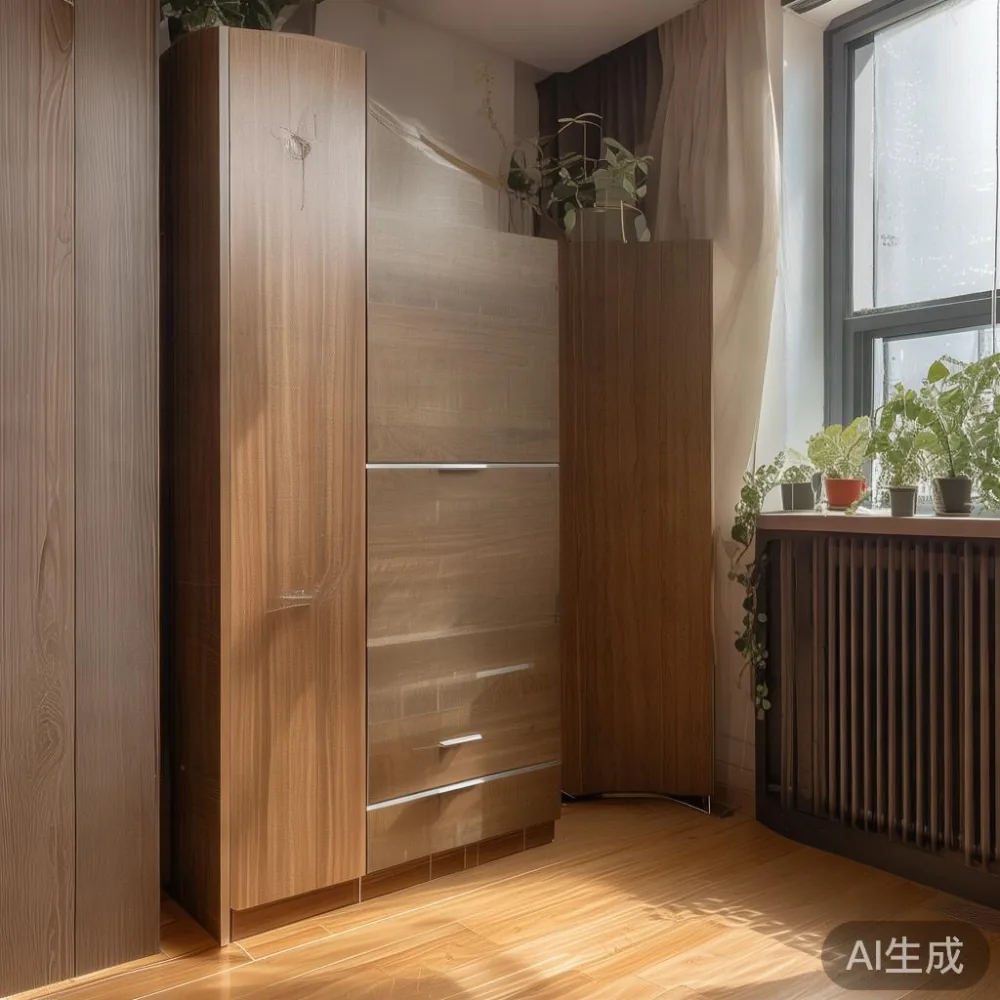
Solid wood means the panels, shelves, doors and legs are cut from single pieces of timber — oak, ash, walnut, rubberwood — kiln-dried and joined. The same construction approach MIDHILL has used in its Foshan workshop since 2008, where the team has shipped solid wood sofa frames, bed frames, dining tables, wardrobes, nightstands and marble-top accent tables to more than fifteen markets.
The price gap between the two is the easy part to measure. What is harder to measure is what each one costs in year three and year five, when lift landings are muggy, when a kid kicks the door, and when a contractor's quotation to "just replace" arrives.
The 5-year cost model, in SGD
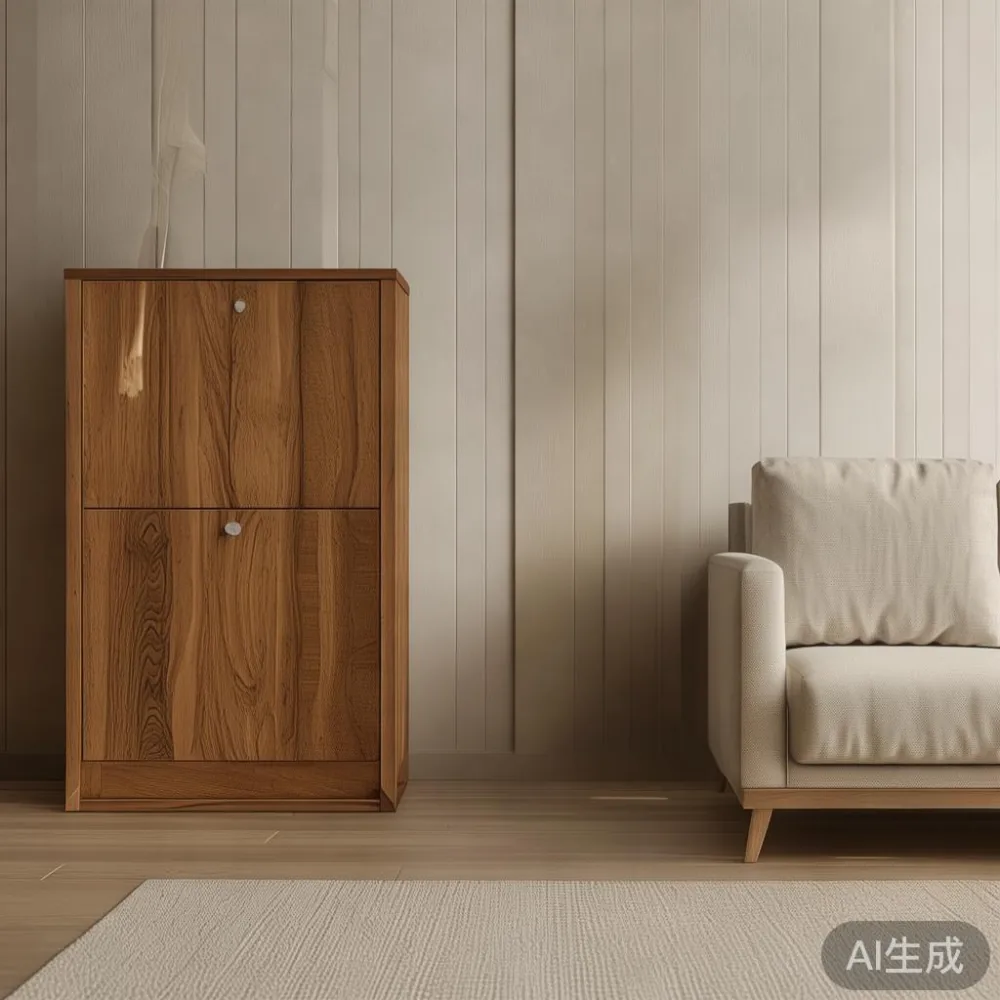
Let us run the math for a standard 4-tier, 2-door shoe cabinet at roughly 80 cm wide x 35 cm deep x 120 cm tall, the size that fits 12 to 16 pairs of shoes in a typical HDB entryway.
Veneer shoe cabinet (entry-level retail). Unit price S$349. Delivery S$25 to S$40 (Singapore logistics, ground floor, no lift booking needed for a 28 kg carton). Installation S$0 if flat-pack, S$80 if the shop assembles. Year 1 total: roughly S$395. Expected useful life before visible failure: 3 to 5 years. End-of-life use (replace at year 5): another S$349 to S$450. Add minor repairs along the way — a S$40 hinge swap, a S$60 edge-banding touch-up at year 3 — and the 5-year outlay lands around S$850.
Solid wood shoe cabinet (MIDHILL-grade, FSC-certified oak). Unit price around S$789 to S$950 for the same 80x35x120 cm footprint, weight roughly 32 kg to 38 kg. MIDHILL covers free shipping on orders above US$350 (about S$470), so most Singapore orders qualify and you skip the S$25 to S$40 delivery line. Installation is roughly S$80. Year 1 total: S$870 to S$1,030. Year 5: the same cabinet is still in use. Lifetime refinishing offered by MIDHILL runs about S$120 to S$180 per service, which you might book once in five years if a toddler scuffs the door panel. Five-year total: S$990 to S$1,210.
Per year, the veneer option is S$170 and the solid wood option is S$200 to S$240. The gap narrows quickly once you add even one mid-cycle replacement of the cheaper unit, and it flips negative for veneer the moment you need a second one. With Singapore's 9% GST, both totals are about 9% higher than the figures above, so an S$850 veneer scenario is really S$927 at register.
What Singapore humidity does to each material
Singapore sits at roughly 1° north of the equator. Indoor relative humidity runs 65% to 85% most of the year, peaking during the December to February monsoon and the June to September southwest season. AC keeps living rooms at 50% to 60%, but HDB corridors, lift lobbies and the immediate entrance of a flat are often 75% to 90%. That is exactly where a shoe cabinet lives.
Veneer behaves like a sticker. The decorative layer and the substrate expand at different rates. After about 30 months you see bubbling on door edges, hairline cracks at corners, and white "ghosting" along joints where moisture has crept under the melamine. Particleboard cores also absorb ambient moisture, swelling 2% to 4% in volume, which throws doors out of square. Hinges then sag, doors no longer self-close, and the cabinet starts looking tired well before it is structurally finished.
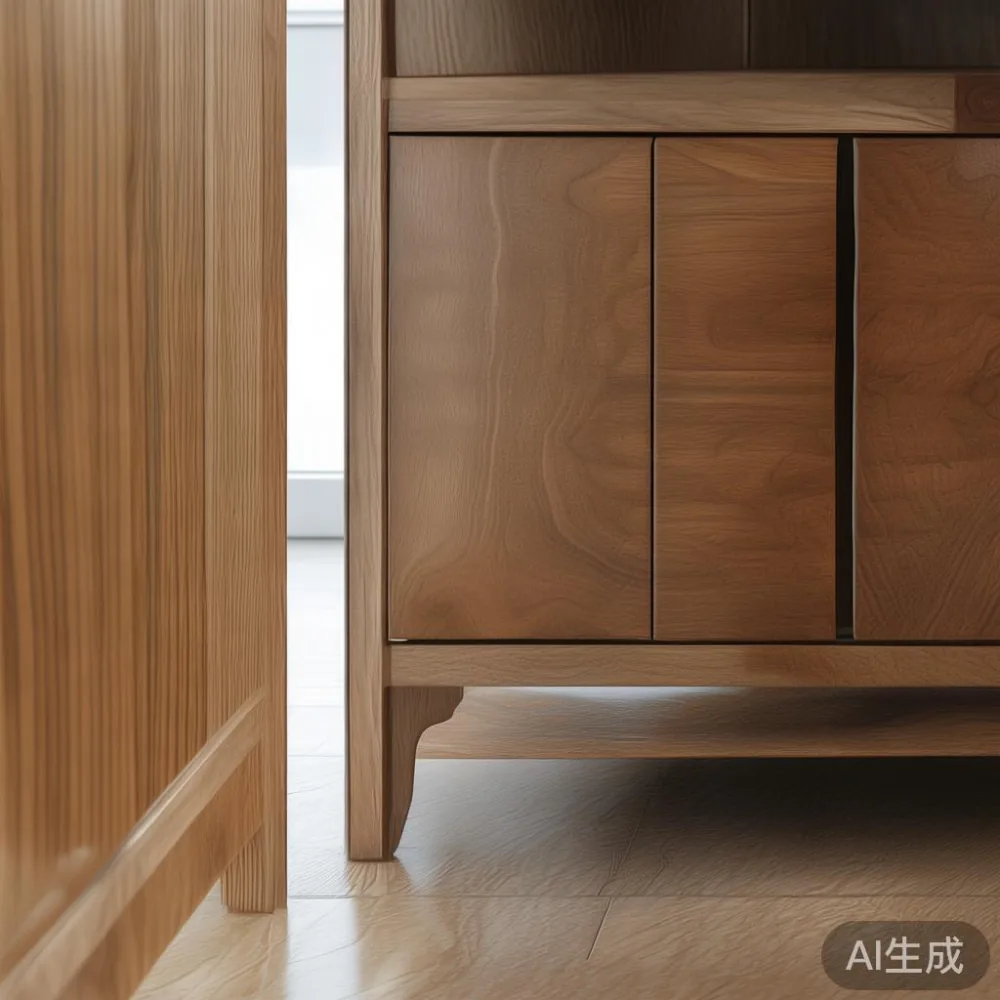
Solid wood behaves like a solid object. Properly kiln-dried oak or ash at 8% to 10% moisture content moves with the seasons, but it moves as one piece. A small crack at a joint in February is normal and cosmetic. A 3-ton press, mortise-and-tenon joinery and a quality lacquer system keep the geometry intact. A friend in Punggol who bought a solid oak shoe cabinet from MIDHILL in 2019 told me his only concession to humidity is a 30 cm space behind the unit, so air can move.
This is also why the same care rules apply to a side table sitting next to your sofa. If you have ever typed how to choose furniture for small apartments into a search bar, you already know the answer starts with material stability under humidity, not with the look on day one.
How do I care for a side table in humid weather?
Wipe the surface weekly with a barely damp microfibre cloth, dry it immediately, keep the room between 50% and 65% relative humidity with a dehumidifier or AC, and never place the table flush against an external wall where moisture migrates through plaster.
That single line covers about 80% of what a side table — or a shoe cabinet, or a marble table, or a nightstand — actually needs in this climate. The longer version is also simple. Avoid direct sunlight within 1.5 m of a window that faces west. Rotate any object on the surface so the same spot is not always wet. Use felt pads under vases and coasters under cups, because ring marks on solid wood sand out cleanly but on veneer they sand through the layer. And once a year, run a beeswax or hard-wax oil conditioning on horizontal surfaces. The same routine works for your bed frame headboard panel and for dining table tops, which is why workshops like MIDHILL ship a small tin of conditioning wax with their larger pieces.
HDB, condo and walk-up logistics
Singapore buildings have physical limits that change the math. A standard HDB lift car measures roughly 1.2 m wide x 1.5 m deep x 2.1 m tall, with a door opening of about 0.9 m. Corridors are 1.2 m to 1.5 m wide. A flat-pack veneer shoe cabinet arrives in a 28 kg box at roughly 90 x 40 x 20 cm, easy to handle on a trolley. A solid wood shoe cabinet, fully assembled, can be 35 to 42 kg at 85 x 40 x 125 cm — it fits the lift diagonally with about 10 cm to spare and needs two people to carry through the door.
For walk-up resale flats in Bedok and Geylang, the building has no lift. A 35 kg flat-pack box becomes a 35 kg box carried up two or three flights. A fully built 40 kg cabinet becomes a planning exercise. This is one quiet reason some buyers pick the lighter flat-pack option — not because it is cheaper, but because it physically fits the building. If you go solid, ask your supplier to deliver in two half-assembled modules of around 22 kg each, then bolt them together in the entryway. MIDHILL offers this configuration on most of its shoe cabinet line for Singapore orders, and it is worth requesting.
Condos in Tampines North and Punggol usually have wider service lifts (1.6 m x 2.0 m) and booking systems, so a fully built solid wood cabinet rides up with no problem. The 5-year cost picture in a condo is the cleanest, because damage from delivery is lower and the air is more climate-controlled at the entrance.
The hidden costs people forget to count
Three costs rarely appear in a comparison chart but always appear in real life. Disposal. When the veneer cabinet fails at year four, you need to send the MDF carcass to the junkyard or arrange a bulk waste pickup. In Singapore that is about S$40 to S$80 per trip. Warranty. Most veneer furniture has a 6-month or 1-year warranty covering hardware only. MIDHILL's 10-year structural warranty on solid wood sofa frames, bed frames and wardrobes also extends to its shoe cabinet, because the workshop uses the same joinery across categories. That warranty has real dollar value — call it S$120 of expected repair costs over five years, even if you never claim it. Resale value. A 5-year-old solid wood piece in good condition sells for 40% to 55% of original price on Carousell. A 5-year-old MDF piece has resale value of zero, because nobody wants to ship a 30 kg swollen box.
There is also the noise and dust of replacement. Replacing a shoe cabinet once in five years means 30 minutes of dismantling, a screwdriver's worth of swearing, and a chunk of your weekend. Replacing it once is fine. Replacing it twice in five years — which is what happens when veneer fails early — is the actual cost no one puts on a price tag.
Light luxury positioning and what it changes
"Light luxury" has become a catch-all in Singapore furniture marketing, but it has at least three readable strains. French light luxury uses walnut, brass-tipped legs, and curved silhouettes — think a marble table with a slim apron and cabriole legs, or a shoe cabinet with bevelled glass panels. American light luxury is heavier, straight-lined, and leans on oak with black hardware. Post-modern light luxury plays with proportion: oversized handles, asymmetric shelving, slim 1.8 cm thick doors on a chunky 4 cm body. Each one of these styles is built around solid wood because veneer cannot hold the crisp reveals, the through-tenons, the mitered edges that define the look.
If you are choosing a shoe cabinet to sit under a post-modern light luxury mirror, the answer is already made for you — the cabinet has to be solid to keep that 4 mm shadow gap looking sharp five years later. A veneer door will bell out and close that gap within 24 months.
Which one should you buy?
Buy the veneer shoe cabinet if your flat is a 2- to 3-year rental while you wait for your BTO, your budget is genuinely under S$300 all-in, and you do not mind replacing the unit once before you leave. It is a perfectly honest product for that job.
Buy the solid wood shoe cabinet if you own the flat, you plan to stay at least five years, your entrance area sees daily AC-off humidity, and you want the same piece to outlast your next renovation. The per-year cost is higher, but the per-year stress is lower, the warranty is real, and the look holds. The 14-day return window that MIDHILL offers means you can also test the fit in your entryway, your corridor and your lift before you commit.
Whichever way you go, measure your lift car, measure your front door, measure the gap under your existing ceiling fan, and decide with a number, not a mood board.
Quick reference: 5-year cost comparison
Veneer shoe cabinet, entry-level: unit S$349, delivery S$30, GST included for 9%, repairs S$100, mid-cycle replacement S$399, disposal S$60. Five-year total about S$938, or S$15.60 per month.
Solid wood shoe cabinet, MIDHILL-grade oak: unit S$870, delivery free above US$350, GST included for 9%, refinishing S$150 once at year 4, no replacement, warranty included. Five-year total about S$1,110, or S$18.50 per month.
Per-month gap: about S$2.90. That is the price of a kopitiam toast set. The question to ask yourself is whether you would rather pay that S$2.90 every month and never think about your shoe cabinet again, or save it and think about hinges, swollen doors and disposal for the next five years.