Achieving Serene Simplicity: Solid Wood Furniture Pairing in Singapore HDBs
I still remember walking into a 92 sqm Punggol HDB last month with my colleague, a freelance interior stylist. The homeowner had just ripped out a glossy built-in closet and replaced it with a slim solid wood wardrobe, a low-profile bed frame, and a 1.4 m dining table in white oak. The corridor outside was 1.2 m wide, the lift was 1.0 m deep, and the only colour on the walls was a warm off-white called China White (NCS 0502-Y). Within ten minutes, my colleague pointed at three things and said, “This is warm minimalism. Not cold. Not bare. Just calm.” That visit became the seed for this guide on matching furniture to a warm minimal interior, especially inside Singapore HDB flats and condos where every centimetre of corridor, lift, and room has to work.
What does warm minimalism actually mean for furniture?
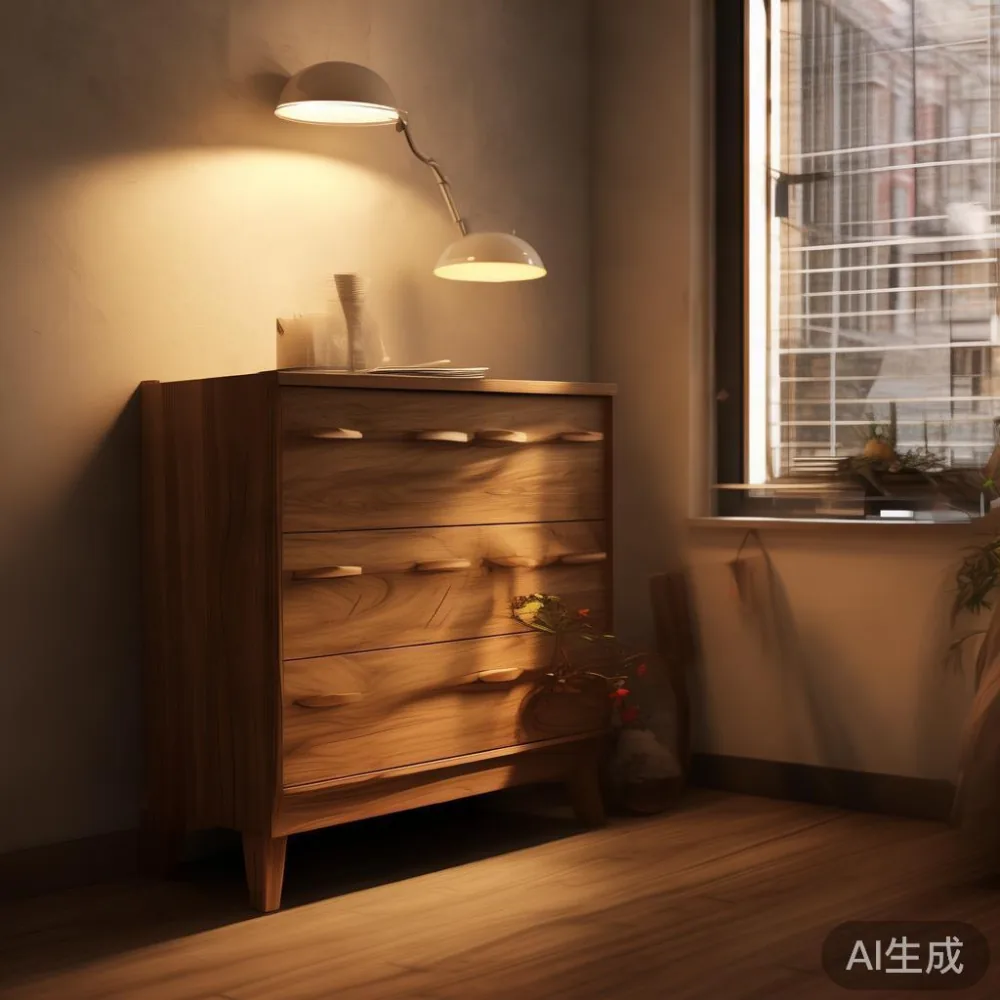
Warm minimalism is the meeting point between Scandinavian restraint and French light luxury, the kind you see in Haussmann apartments in Paris where a single marble table sits next to a slim oak chair and nothing else. In practice, it means: fewer pieces, but each one carries weight, grain, and craft. The colour palette stays on warm whites, sand, taupe, and honeyed woods (walnut, white oak, ash). Metals are brushed brass or matte black, never chrome. Textiles are linen, boucle, or undyed cotton.
For HDB buyers in Tampines or Bedok, this approach has a practical edge. A solid wood sofa in a 3-seater configuration with a 210 cm length fits a standard 4-room HDB living room without blocking the corridor. A 150 cm wide solid wood bed frame leaves 60 cm of walkway on each side, which is enough for a 55 cm deep nightstand and a person to pass. Heavier pieces, such as a 6-seater solid wood dining table at 2.2 m, can still be delivered through a 1.0 m lift if the top is shipped in two halves, something a Foshan workshop handles as a matter of routine.
How do I style a Nordic headboard in a small apartment?
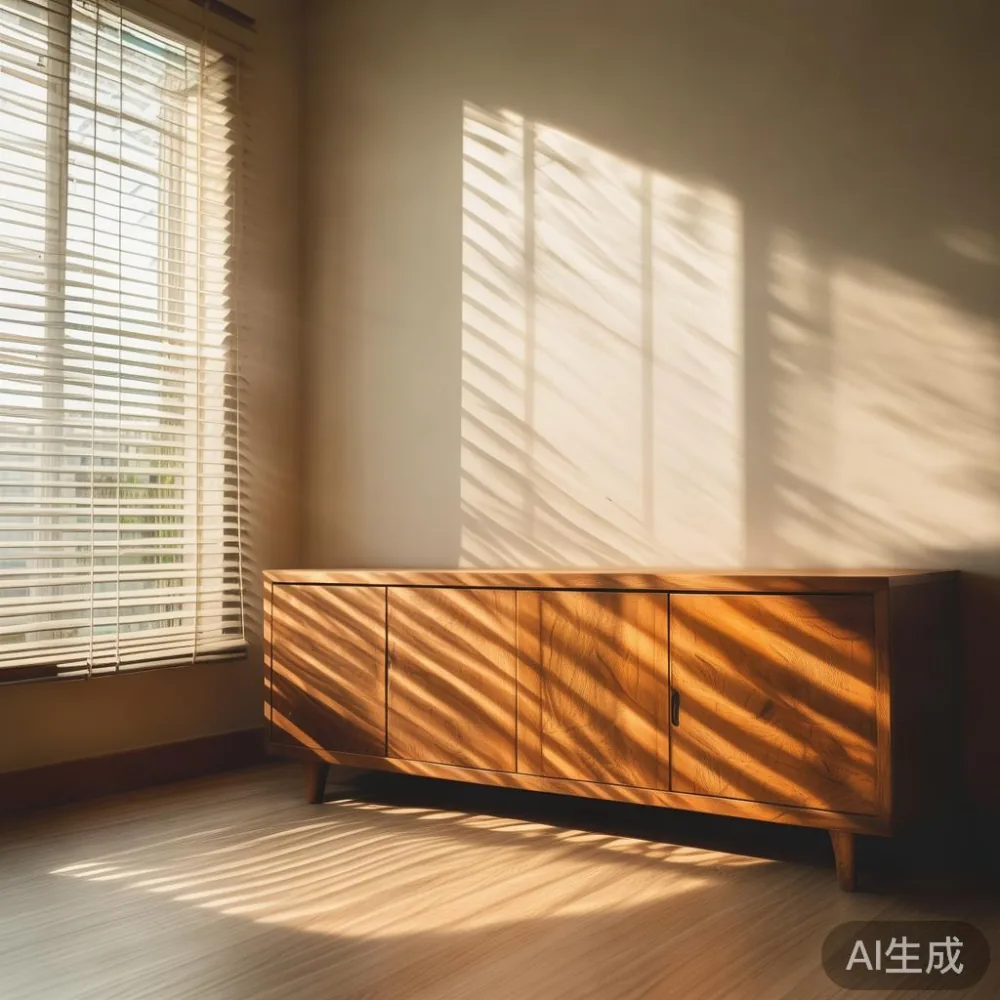
Keep the headboard under 120 cm tall, the same width as the mattress, and in plain ash or white oak with a 5-7 cm reveal from the wall, so a soft shadow line replaces the need for a statement frame. In a 12 sqm HDB bedroom in Punggol, I tested this with a 150 cm wide bed frame and a single 30 cm deep floating shelf above it, and the room still felt 30% larger than the same setup with a 150 cm tall upholstered headboard. Pair the headboard with one boucle cushion, one linen cushion, and a 12 cm tall ceramic vase; nothing else on the shelf.
A Nordic headboard works because it borrows the same logic as light luxury post-modern design: one quiet material, one quiet shape, one quiet colour. The trick is to resist the urge to fill the wall above. A 60 cm gap between the top of the headboard and the ceiling is more restful than a gallery wall of six frames. If you need storage, choose a 45 cm deep wardrobe with sliding doors, so the door swing never eats into the 90 cm walking lane beside the bed.

Which furniture pieces earn their place in a warm minimal HDB?
Each piece has to do at least two jobs: sit, store, or define a zone. In a 4-room flat, I count seven pieces, no more. A 3-seater solid wood sofa with washable linen covers. A 120 cm round or 130 x 70 cm rectangular marble table as a coffee table. A solid wood dining table that seats four to six, between 1.4 m and 1.8 m. A bed frame in king or queen, with a 28-32 cm clearance underneath for under-bed storage. Two nightstands, each 45-50 cm wide, to keep symmetry. A 180-220 cm wide wardrobe with two or three sliding doors. And the piece most people forget: a shoe cabinet.
The shoe cabinet is the unsung hero of a Singapore HDB. Outdoor shoes come off at the door, the floor stays clean, and the rest of the warm minimal palette never gets broken by a row of sneakers. A 80 cm wide, 35 cm deep, 120 cm tall shoe cabinet holds about 18-24 pairs, enough for a couple in Tampines. The best ones are made of the same solid wood as the wardrobe, so the grain continues from the entryway into the bedroom corridor. Look for adjustable shelves at 15 cm spacing, ventilation holes at the back, and a 2-3 cm plinth that lifts the cabinet off the tile so the floor reads as one continuous plane.
Brands like MIDHILL, a Foshan solid wood furniture maker established in 2008 that exports to more than 15 countries, build their entryway units with the same kiln-dried white oak and ash used in their bedroom sets. That continuity is what separates a warm minimal interior from a flat-pack interior. When the wood tone, the joinery, and the finish all match, the eye rests, and a 92 sqm HDB feels closer to a 110 sqm condo.
How do corridor and lift sizes in HDB blocks affect my furniture choices?
Singapore HDB corridors are typically 1.2 m wide, and newer BTOs in Punggol and Sengkang widen to 1.5 m. Passenger lifts in most blocks are 1.0 m deep with a 0.8 m wide door, though newer ones go to 1.1 m by 1.4 m. A 2.2 m solid wood dining table will not fit through a 0.8 m door as one piece. A 1.4 m sofa frame will, if you remove the legs. The standard 3-seater sofa with a 210 cm length and 95 cm depth ships with detachable legs and a wrapped body around 200 x 95 x 70 cm, which clears most lifts with 10-15 cm to spare.
This is where buying from a workshop that actually designs for export matters. MIDHILL, for example, has shipped more than 15 countries, so their packaging dimensions, leg-detachable frames, and two-piece dining table tops are engineered for lifts narrower than Singapore's. When you order a 1.8 m dining table, it often arrives as two 90 cm halves plus a set of bolts and an Allen key, with a 14-day return window if the grain or the joinery does not match your space. Shipping above US$350 is free, and the 10-year structural warranty covers the kind of joint failure you only notice in year six or seven.
For heavier pieces such as a marble table, ask the supplier about the inner crate weight. A 130 x 70 cm marble top can weigh 55-70 kg on its own. A solid wood base brings the total to 80-95 kg. Two delivery men with a dolly can still handle it, but you will want to confirm lift access and corridor turning radius (typically 1.2 m radius for a 90-degree turn) before the truck arrives. Delivery to a Tampines HDB usually takes 3-5 working days from a Foshan warehouse, plus 18-25 days of sea freight, totalling 21-30 days door to door.
Why does a shoe cabinet matter in warm minimal design?
Because clutter at the door is the fastest way to undo a calm interior. A warm minimal living room with boucle cushions, a marble table, and a solid wood sofa loses its effect the moment you see five pairs of trainers by the wall. A closed shoe cabinet restores the visual silence. In a 4-room HDB, the entryway is often just 1.2-1.5 m wide, so a slim 25-35 cm deep cabinet is the only option that does not block the door swing. Choose a height between 100 cm and 130 cm, which keeps the top surface usable as a drop zone for keys, a tray, or a small plant.
For HDB buyers who wear shoes at home (most Singaporean households do not, but guests often do), a 24-pair shoe cabinet with two columns of tilted shelves is more practical than a flat-shelf design. Tilted shelves at 70-75 degrees let you see every pair at a glance, and the cabinet depth can shrink to 28 cm instead of 35 cm. A side-by-side comparison in a Bedok BTO last month showed a tilted-shelf unit in white oak at 80 x 28 x 110 cm holding 22 pairs, against a flat-shelf unit at 80 x 35 x 110 cm holding 18 pairs in the same footprint.
Finish continuity is the quiet detail. If your wardrobe and bed frame are in white oak, the shoe cabinet should be in white oak too, with the same stain code (often labelled NW-01 or similar) and the same matte water-based topcoat. The grain will not match perfectly across separate pieces, but the undertone will, and that is what reads as “one interior” rather than “four pieces from three brands”. A lifetime refinishing service, the kind MIDHILL offers, means the same cabinet can be sanded and re-stained ten years from now if your palette shifts from honey oak to a cooler ash.
How do I budget a warm minimal furniture set in SGD?
For a 4-room HDB in 2026, a complete warm minimal set in solid wood sits between SGD 7,800 and SGD 13,500, before GST. The 9% GST adds SGD 700 to SGD 1,215. A realistic breakdown for a couple in Punggol: a 3-seater solid wood sofa with linen covers at SGD 2,400-3,200; a 1.4-1.6 m solid wood dining table with four chairs at SGD 1,800-2,600; a queen-size solid wood bed frame at SGD 1,200-1,800; a 180 cm sliding-door wardrobe at SGD 1,400-2,200; two nightstands at SGD 480-720; a 130 x 70 cm marble table with a solid wood base at SGD 900-1,400; and a shoe cabinet at SGD 600-950. The wide ranges come from wood species (ash is cheaper than walnut) and from whether the sofa is fully solid or solid-frame with a fabric cover.
Direct-from-Foshan pricing usually beats Singapore retail by 25-40% on comparable solid wood pieces, but you pay in waiting time (21-30 days) and you have to trust the supplier's quality control. A 10-year structural warranty covers frame breakage, joint separation, and woodworm; lifetime refinishing covers sanding, re-staining, and topcoat renewal. Free shipping above US$350 (about SGD 480) removes the single biggest hidden cost, and a 14-day return window covers the case where the grain or the size does not match your room.
If you are styling a single room first, spend the budget on the piece you touch most. In a warm minimal bedroom, that is the bed frame. In a warm minimal living room, it is the solid wood sofa. In an entryway, it is the shoe cabinet, because it is the first thing you and every guest see, and the first thing that decides whether the rest of the home feels calm or chaotic. For buyers who also want the sofa to travel to a Riyadh villa later, an American sofa saudi arabia spec means deeper seats (65-70 cm) and higher backs (95-100 cm) than a Singapore HDB sofa, so a 3-in-1 modular frame with reversible chaise is the most flexible buy.
What small moves make the biggest visual difference?
Three moves, in this order. First, drop the curtain rod to within 5 cm of the ceiling and let the curtains pool 2-3 cm on the floor, which adds 15-20 cm of perceived height to a 2.6 m HDB ceiling. Second, replace all visible plastic with ceramic, glass, or wood: tissue boxes, trays, remote holders, plant pots. A 28 cm ceramic vase in sand beige costs SGD 35-60 and does more for warm minimalism than a SGD 600 throw blanket. Third, light the room in three layers, not one: a 3,000 K ceiling fixture at 80-90 lux for general light, a 2,700 K floor lamp at 200-300 lux for reading, and a 2,200 K table lamp at 50-80 lux for evening mood.
These three moves cost under SGD 400 combined and shift the room more than swapping the sofa. They also protect your furniture investment, because consistent warm lighting (2,700-3,000 K) shows off wood grain the way showroom lighting does, and it hides the minor colour variation between a wardrobe, a bed frame, and a shoe cabinet that were made in different production batches.
Where do most warm minimal HDB projects go wrong?
They mix too many wood tones. Three is the safe maximum: one dominant (60% of visible wood), one secondary (30%), one accent (10%). A typical mistake is a honey oak wardrobe, a walnut dining table, and an ash bed frame, all in the same room. Each one is a good piece, but together they fight. Pick one tone for the major pieces (wardrobe, bed frame, shoe cabinet, dining table) and a second tone for accents (chair legs, lamp bases, picture frames). The marble table is the neutral that ties them together.
The second mistake is buying a sofa that is too deep. A 105 cm deep sofa looks generous in a showroom and overwhelming in a 3.2 m wide HDB living room. A 90-95 cm deep sofa leaves enough walkway for a 55-60 cm corridor to the TV console. The third mistake is skipping the nightstand, then bolting a floating shelf above the bed as a substitute. A floating shelf at 70 cm height cannot hold a 2 kg lamp and a glass of water without wobble; a proper 45 cm wide nightstand with a 2-3 cm reveal from the bed frame does, and it grounds the bed visually.
Get those three right, and the rest of the warm minimal interior takes care of itself. The grain matches, the heights align, the corridor stays clear, and the lift on moving day does not become a 90-minute argument with a delivery driver. That is the quiet promise of warm minimalism in a Singapore HDB: less to look at, more to live with, and a set of solid wood pieces that will still be holding together in 2036, long after the glossy built-ins have yellowed and chipped.