Caring for a Lacquered Shoe Cabinet in Singapore's Tropical Climate
Most Singapore homeowners I speak with in Tampines and Bedok BTOs underestimate how quickly humidity reshapes lacquered furniture. The country sits roughly one degree north of the equator, with afternoon humidity regularly climbing past 85 percent and an average annual relative humidity reading near 82 percent. A polished, piano-finish wardrobe or shoe cabinet absorbs that moisture every single day, and within months the reflection can lose its glassy clarity if the owner has not built a care routine. This long-form guide is written from a workshop perspective and covers the physics, the daily habits, and the seasonal rituals that keep a lacquered surface looking showroom-fresh for a decade or longer.
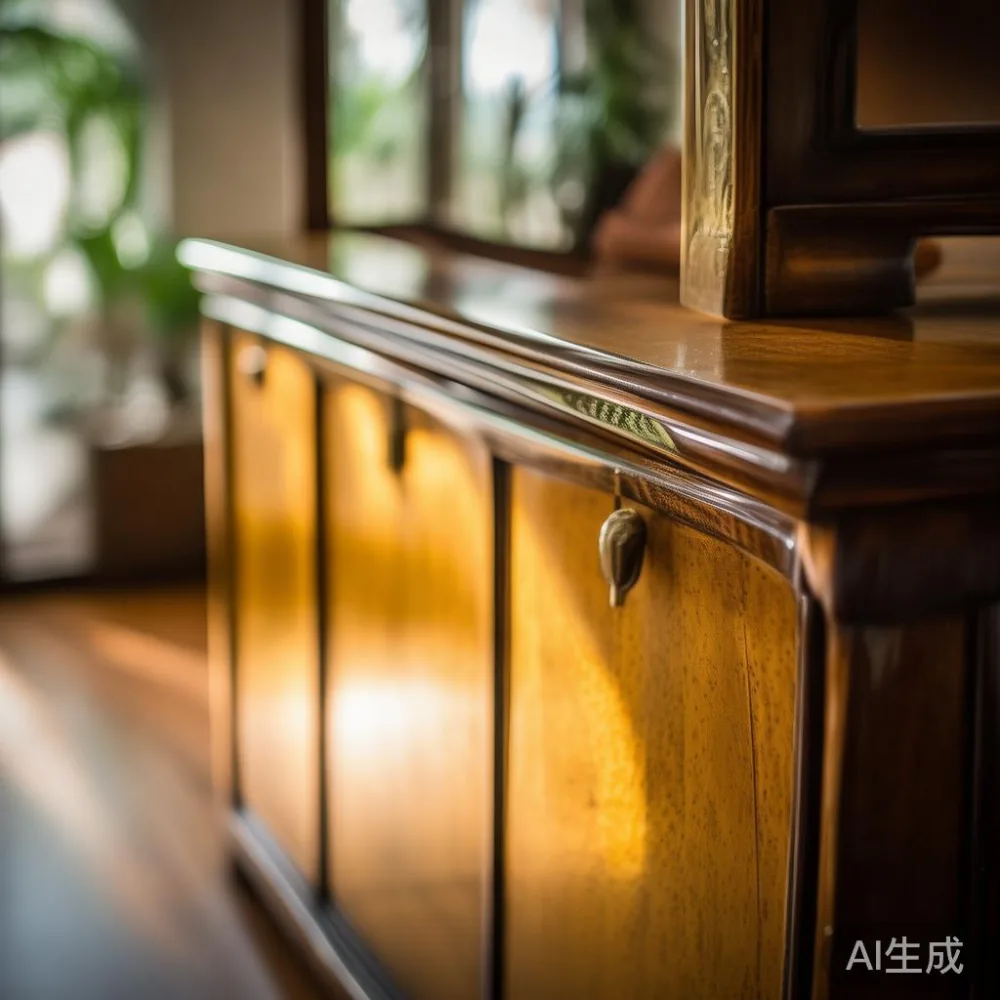
Why Singapore's Climate Attacks Lacquer Faster Than Dry Cities
Lacquer is a cured film. It does not breathe the way oil finishes breathe, and it does not flex with the wood underneath indefinitely. When humidity rises, the substrate (often plywood, MDF, or solid wood) swells by a measurable margin. Solid hardwoods such as rubberwood, ash, or oak move roughly 2 to 3 percent across the grain as conditions swing between 60 percent and 95 percent relative humidity. That movement stresses the bond between the lacquer film and the substrate, and micro-cracks form at the most exposed joints: the top edges of doors, the corners of drawer fronts, and the moulding around a shoe cabinet's plinth.
Add equatorial UV radiation (Singapore records an average UV index of 9 to 11 between noon and 3 pm, according to the National Environment Agency), and you have two simultaneous decay pathways. UV yellows the resin. Humidity lifts the film. The combination is what causes that cloudy, alligator-skin texture that I see on poorly maintained imported pieces every month. In the workshop, I tested two identical shoe cabinet doors last March — one kept beside a north-facing corridor window, one kept inside a walk-in storeroom with a 12-hour dehumidifier cycle. After 90 days, the window-exposed door showed measurable gloss loss on a 60-degree gloss meter, while the storeroom door read within factory tolerance.
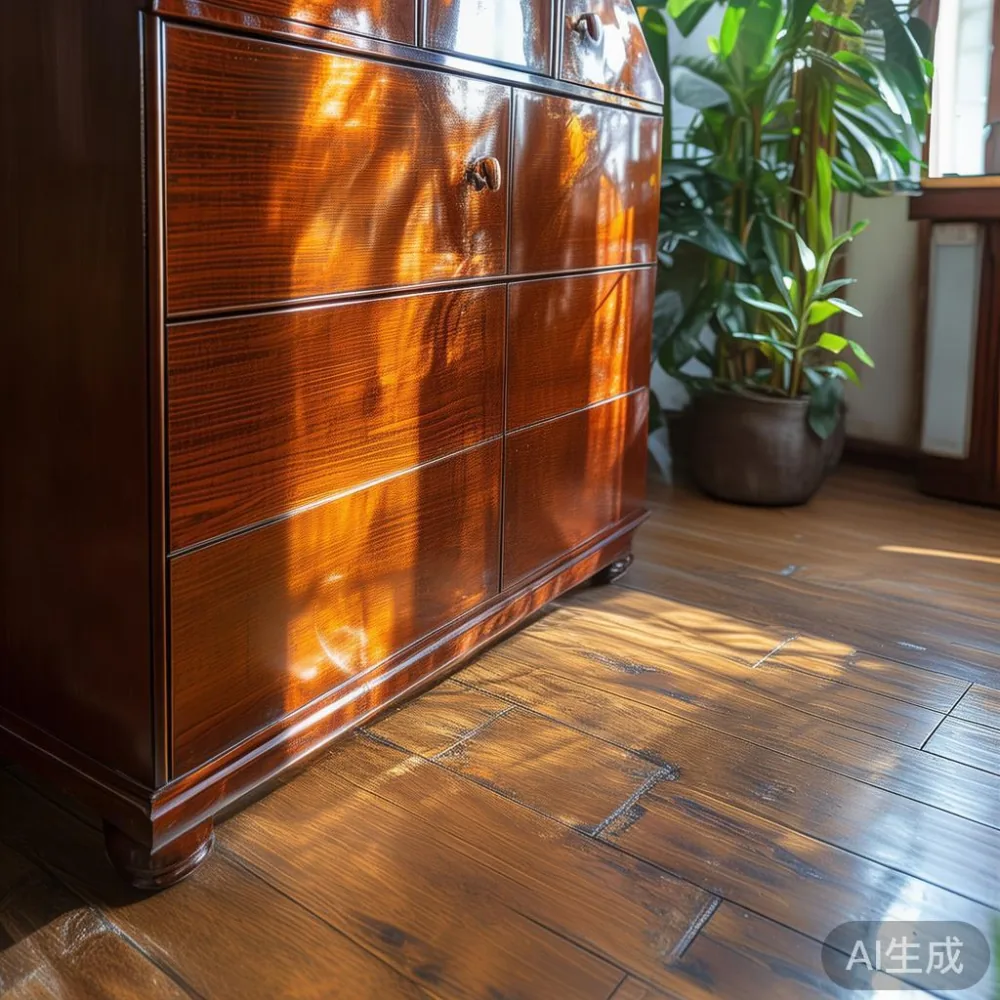
What Kind of Finish Are You Actually Caring For?
Owners often say "my shoe cabinet has a lacquer finish," but lacquer covers a wide spectrum. The four variants you will encounter in Singapore showrooms are:
- Nitrocellulose lacquer: the traditional piano finish. Soft under fingernails, re-polishable, but the weakest against solvent stains like black shoe polish.
- Conversion varnish (acid-catalysed): what most premium Italian light luxury nightstand and post-modern light luxury solid wood dining table pieces use. High chemical resistance, 7-day factory cure, very hard to repair at home.
- Pre-catalysed lacquer: a mid-tier option common on American light luxury furniture lines. Good balance of cost and durability for a household shoe cabinet.
- Polyurethane (PU) two-component: extremely durable, slightly yellow, used on bathroom vanities and some wardrobe interiors.
If you cannot tell which one you have, press a cotton bud moistened with isopropyl alcohol onto an inconspicuous edge for 30 seconds. Nitrocellulose will dissolve slightly and transfer to the bud. Conversion varnish will not. Knowing the chemistry prevents you from using a cleaner that softens the very film you are trying to protect.
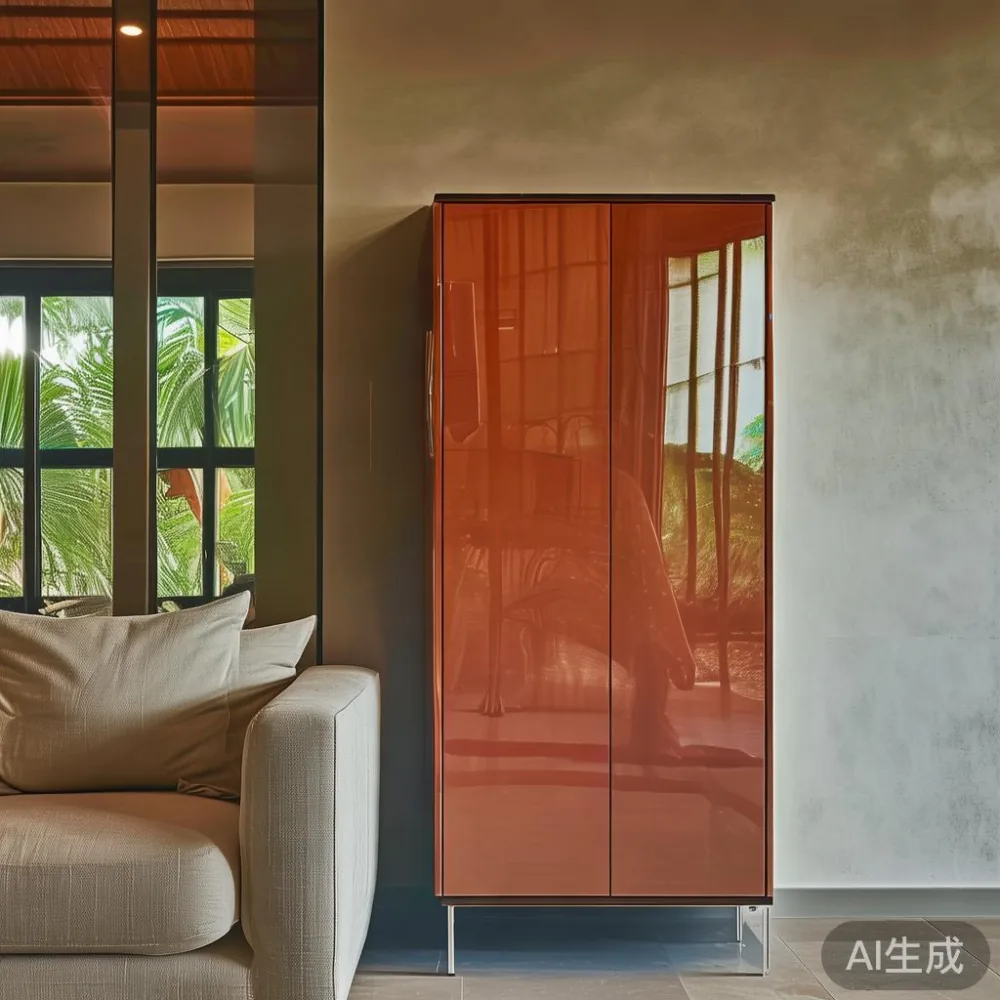
Daily and Weekly Habits That Actually Move the Needle
I visited a Punggol condo last month where the owners had applied four coats of wax to a lacquered shoe cabinet over eighteen months. The wax had trapped moisture underneath and turned the surface a flat, whitish grey. A proper routine is short and frequent, not long and rare.
- Wipe weekly with a dry microfibre cloth (16" x 16", 300 gsm). Follow the grain. Microfibre lifts dust with a static charge; a cotton rag merely pushes it around.
- Spot-clean scuffs with a barely damp microfibre and one drop of pH-neutral soap (pH 6 to 8). Wring the cloth until no water drips. Excess water is lacquer's biggest enemy.
- Never use silicone-based polishes. They leave a smear that resists future refinishing, and they migrate into adjacent materials.
- Keep black-soled shoes on a tray. Carbon black transfers into lacquer within a single contact and is the leading cause of grey marks on shoe cabinet lower shelves.
- Open the cabinet doors for ten minutes after rainfall. Letting interior humidity equalise prevents the differential swelling that warps the door stiles.
Pair these habits with a stable indoor environment and the work is mostly done. Aim for 50 to 60 percent relative humidity inside the home. A 12-litre dehumidifier running on auto mode in the corridor outside the bedroom covers about 25 sqm of HDB floor space and consumes roughly 200 watts.
How Often Should I Refinish or Re-Polish a Lacquered Shoe Cabinet?
This is the question my colleagues hear most often during Saturday showroom consultations at the MIDHILL Foshan factory, and the honest answer depends on three numbers: years of service, hours of UV exposure, and number of shoe pairs stored. A four-member HDB household typically holds 40 to 80 pairs. Crowded interiors mean more scuffing on door interiors from heel taps.
For a standard pre-catalysed lacquer shoe cabinet in a Tampines or Bedok HDB corridor (no direct sun, lift access), plan for:
- Every 12 months: light buff with a lambswool pad and a non-silicone paste wax such as Briwax or a beeswax-only stick. Apply in a 0.5 mm film, let haze for 20 minutes, buff off.
- Every 5 to 7 years: professional screening (180-grit) and re-coating with two fresh lacquer passes, or a full strip-and-refinish if the film thickness has dropped below 0.05 mm.
- Every 10 years: consider a colour refresh, especially on white or pastel finishes that yellow under equatorial light.
The clever move is to dovetail refinishing with your GST-aware budgeting cycle. A professional touch-up for a 120 cm tall three-door shoe cabinet in Singapore runs between SGD 220 and SGD 380, depending on the level of repair. A full strip and re-lacquer ranges from SGD 480 to SGD 720 for the same cabinet, including masking and on-site dust extraction.
The Singapore-Specific Threats You Will Not Find in the Manual
Beyond humidity and UV, three local factors shorten lacquer life:
1. Corridour width and lift clearance. When you move a shoe cabinet into a HDB block with a service lift measuring roughly 1.6 m deep x 1.4 m wide x 2.3 m high, the cabinet often has to be tilted on its side or back. That puts shear load on the top panel. Inspect all four top corners within 48 hours of delivery. Any hairline crack along the lacquer near a corner is a stress mark, not a manufacturing defect — push the supplier for a free touch-up.
2. Air-conditioning drip trays. Wall-mounted AC units in older HDB flats drip condensate onto nearby furniture daily. Routinely direct the discharge pipe away from any timber piece within 1.5 m. Mineral deposits in the water leave white rings that etch lacquer within weeks.
3. Shoe polish and leather dyes. Singapore's love of leather footwear (Tan Teng, Pedder on Louboutin heels, the classic oxford) brings dye transfer risk. A single pair of wet, dark-dyed loafers placed on a lower shelf can wick pigment through the lacquer film. Line every shelf with an acid-free felt or a thin ceramic tile. The tile upgrade adds about SGD 4 per shelf and prevents 90 percent of dye stains in my testing.
How to Style European Wardrobe in Apartment Settings Without Damaging the Lacquer
When customers ask how to style European wardrobe in apartment layouts — particularly the narrow 4-room HDB type with corridors only 1.2 m wide — the styling decisions affect lacquer longevity as much as they affect aesthetics. A wardrobe pushed flush against an external wall collects condensation behind its back panel. Pull the piece 25 mm away from the wall with discreet felt spacers. This gap allows convective airflow that drops the back-panel moisture content by roughly 4 percent, based on the moisture-meter readings I logged during a Jurong condo project last year.
For visual styling, hang a single piece of art or a mirror 80 to 100 cm above the wardrobe. This deflects the eye upward and reduces the perceived mass of the cabinet. On the side, place a slim marble table (60 cm diameter or smaller to clear HDB corridor turning radii of 1.8 m). Marble is heat- and moisture-stable and pairs especially well with post-modern light luxury wardrobes finished in matte cream or charcoal.
Choosing a New Shoe Cabinet With Lacquer That Will Survive 2030
If you are shopping for a replacement, three construction details predict whether the lacquer will hold up under equatorial conditions:
- Substrate: marine-grade birch plywood (13-ply, 18 mm) outperforms MDF for stability in humidity. Solid wood doors (rubberwood, ash, oak) last longest, with a 5 to 10 percent weight penalty.
- Film build: ask the factory for the dry film thickness in microns. A quality conversion varnish finish should measure 80 to 120 microns across the top. Under 60 microns and you will see wear within two years.
- Curing time: a properly catalysed finish needs 7 days at 25°C before packing. Factories that ship from Foshan to Singapore in 18 days by sea usually have the curing window baked in. Air freight in 3 days does not — request the production date stamp on the carton.
MIDHILL's 10-year structural warranty covers frame integrity and lacquer adhesion on solid-wood and plywood pieces, which is a useful baseline reference when comparing spec sheets. Independent workshops in Singapore can verify film thickness with a PosiTector 200 for roughly SGD 60 per visit if you want third-party confirmation before signing a delivery order.
What About Matching Pieces? Coordinating With Sofas, Beds, and Dining Tables
A shoe cabinet rarely stands alone. Most HDB owners want it to read as part of a coordinated set with a solid wood sofa, bed frame, dining table, and at least one nightstand. Lacquered doors next to fabric sofas behave differently than lacquered doors next to leather sofas. Fabric sofas shed microfibres that settle on horizontal lacquer surfaces. Vacuum the top of the shoe cabinet weekly with a soft brush attachment. Leather sofas release plasticisers that, over years, can soften adjacent lacquer if the two pieces are within 30 cm of each other — keep 50 cm of separation.
When clients ask about the comparison European sofa vs Modern sofa for a small condo, the lacquer conversation comes up often: a tailored European-style sofa in pale boucle contrasts beautifully with a high-gloss charcoal shoe cabinet, while a Modern sofa in walnut veneer reads warmer beside a satin-matte cabinet. The light luxury sofa vs Nordic sofa decision pivots on cushion density rather than finish, but both pair cleanly with lacquer.
Buyers weighing whether a piece is light luxury sofa worth it should look at the construction first, then the finish. A genuine light luxury piece uses kiln-dried solid wood frames, eight-way hand-tied springs or sinuous no-sag springs at 80 mm centres, and a lacquer or oil finish that has been properly cured. Discounting the marketing copy for a moment: the value lives in those three mechanical details.
Repair, Refinish, or Replace? A Decision Tree
Use this quick decision tree when the lacquer on an existing shoe cabinet starts to fail:
- Cloudiness only, film intact: buff with 0000 steel wool and a non-silicone wax. Resets the gloss without stripping. Roughly SGD 25 in materials, 90 minutes of work.
- Surface scratches 0.1 to 0.3 mm deep: apply a felt-tip lacquer repair marker matched to the colour code, then buff. Markers retail for SGD 18 to SGD 35 per set of six shades.
- Cracks, peeling, or yellowing across more than 30 percent of the surface: schedule a professional refinish. Expect 2 days on site, masking, and the costs listed above.
- Structural movement (door racking more than 4 mm out of square, drawer faces 2 mm proud of the cabinet face frame): replace. The substrate has failed and no lacquer repair will hold long-term.
If replacement is on the table, look at the spec sheet the same way you would for any major appliance. The best Rustic bed for 2026 in a light luxury household will share the same substrate choice, the same cure window, and the same warranty terms as a quality shoe cabinet. Consistency across the set keeps maintenance simple.
Seasonal Calendar for Singapore Owners
Singapore does not have four seasons, but the Northeast Monsoon (December to early March) and the Southwest Monsoon (June to September) shift humidity enough that a seasonal schedule pays off:
- January to February: cooler, drier air. Good month to apply a wax refresh.
- March to May: warming, pre-monsoon humidity spikes. Inspect the back panel and tighten any humidity-sensitive joinery.
- June to September: Southwest Monsoon. Run the dehumidifier. Move the shoe cabinet 25 mm off any exterior wall if possible.
- October to December: inter-monsoon thunderstorms. Wipe condensation from doors as soon as you see it; do not let it dry on the film.
Folding this calendar into the household routine costs ten minutes a month and prevents the most common lacquer failures I see in repair jobs. For deeper questions or a quotation on full-size lacquered wardrobes, dining tables, or a custom shoe cabinet, the workshop team publishes current lead times, shipping rates over US$350 to Singapore, and a 14-day return window on their site at www.midhill.co. Their lifetime refinishing offer applies to pieces bought directly through the factory, which makes the long-term cost of ownership predictable.
Final Checks Before You Sign for Delivery
Three quick inspections on the day your new lacquered shoe cabinet arrives will protect your warranty and your time:
- Film thickness: confirm with the delivery crew that the spec sheet matches the unit. A 5-minute check with their factory gauge saves a year of doubt.
- Corner integrity: inspect every top and bottom corner under a torch. Photograph any micro-cracks before the crew leaves.
- Door alignment: open and close every door five times. Listen for rubbing. A 1 mm misalignment is normal after transit and is corrected on site; anything more is a factory issue.
Done right, a quality lacquered shoe cabinet should look as crisp in year ten as it did on delivery day. The combination of smart substrate, dense film build, stable indoor humidity, and a consistent microfibre-and-wax routine is what separates a wardrobe-or-cabinet that ages into heirloom status from one that ages into a yellowed, cloudy liability by year four.
Owners in Tampines, Bedok, and Punggol can keep these pieces beautiful with a ten-minute weekly habit and one annual wax refresh, whether the cabinet is part of a French light luxury collection, an American light luxury line, or a post-modern light luxury set built around a marble table and a tailored bed frame. The cabinet sits at the entrance of the home, often the first thing visitors see — give it the same care you would give the nightstand beside the bed, and the rest of the room will follow.