Reading a Furniture Warranty Without the Fine-Print Headache: A Singapore Buyer’s Guide
Last month I visited a Tampines HDB buyer — three-room flat, fifth floor, lift capacity 850 kg — who had just unboxed a pale oak shoe cabinet from a local Instagram seller. The cabinet looked lovely. The warranty, printed on the back of the invoice in 4-point type, said: “Damage due to humidity, warping, cracking, or ‘natural movement of wood’ is not covered.” Within three weeks of Singapore’s usual 85% indoor humidity, the side panel had bowed 4 mm and the buyer discovered that what they thought was a five-year warranty covered, in practice, almost nothing. They came to us at MIDHILL — where I help with customer documentation — and asked the question every shopper should ask before paying: how do I actually read this thing?
What does a furniture warranty actually cover?
A furniture warranty is a contract, not a promise. In Singapore, the Consumer Protection (Fair Trading) Act gives you baseline rights, but a warranty goes further — or, more often, narrows things down. Three categories usually show up: structural (frame joints, load-bearing rails, drawer runners rated to 45 kg or 60 kg cycles), surface finish (lacquer peeling, veneer blistering, fabric pilling beyond normal wear), and hardware (hinges, soft-close mechanisms, gas struts on a lift-up shoe cabinet, magnetic catches). Read those three words — structural, surface, hardware — because everything else is usually an exclusion. A solid wood dining table with a French light luxury brushed-brass base, for example, might have a 10-year structural warranty on the timber but only 12 months on the brass finish. That is normal. What matters is whether the document tells you which is which in plain English.
Is a dining chairs worth the price in Singapore?
Yes — provided the warranty treats the chair as one unit, not as a Frankenstein of “frame warranted, foam not warranted, fabric not warranted, leg glides not warranted.” A well-written dining chair warranty in Singapore should cover the frame joint for at least 5 years, the webbing or suspension for 3 years, and the upholstery for 12 months against manufacturing defect (not against your spilled kopi or your cat). If the chair is solid wood with a post-modern light luxury curved back, expect the wood to be warrantied longer than the cushion foam — but the cushion should still be named explicitly, not left in a grey zone. A chair you sit on three times a day for ten years is worth SGD 280 to SGD 650 per seat only if the maker will put their name on the joint for at least five of those years.

Why do so many warranties feel like they protect the company, not you?
Because most of them are written by the company’s lawyer, not by the customer service team. Three phrases to circle in red whenever you see them:
1. “Normal wear and tear.” Undefined on purpose. Ask the seller: at what point does a finish scratch stop being a defect and start being wear? Get a number — e.g., “finish scratches under 2 mm and not visible from 1 metre are wear.”
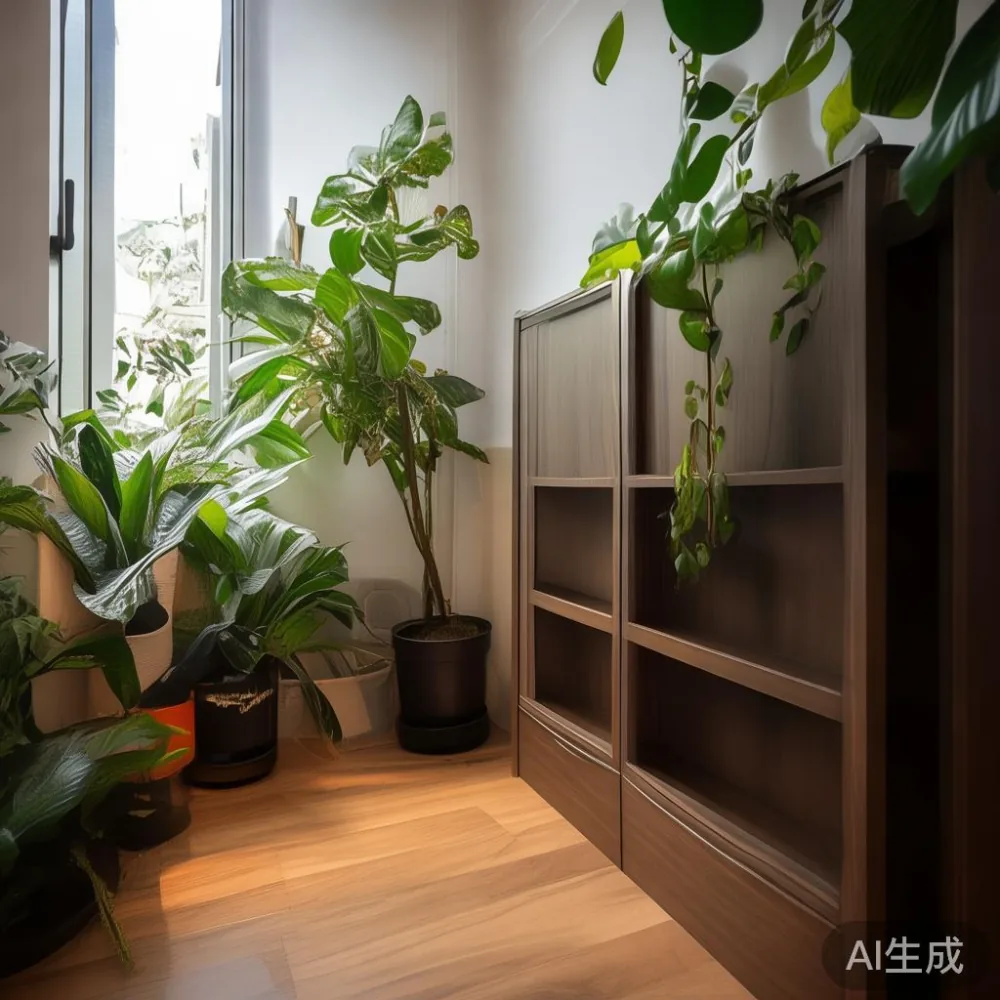
2. “Improper use.” This is the catch-all. Putting a 60 kg suitcase on a nightstand top, dragging a marble table across a corridor instead of lifting it, or placing a wardrobe 10 cm from a bathroom wall in a Punggol condo where the wall sweats in January — all of these can be labelled improper use. The fix: ask for two written examples of what counts as proper use.
3. “Consequential damages.” If the wardrobe collapses and damages your parquet floor, the warranty may cover the wardrobe but not the SGD 4,200 floor. Decide if that risk is one you want to carry.
How do Singapore home conditions change what the warranty should say?
Singapore is unusually hard on furniture. HDB flats in Bedok and Tampines run 28°C to 32°C with 70–85% relative humidity for most of the year; newer Punggol condos with full-height glazing can push interior temperatures to 34°C near the window wall. A warranty that says “suitable for indoor residential use” without specifying humidity range is not useful to you. What you want to see, or get added in writing:
– A stated tolerance for humidity, e.g., “40–75% RH without warping beyond 3 mm over a 1.2 m panel.”
– A clause on air-conditioning: most solid wood furniture makers will explicitly say the piece should be kept in an air-conditioned room (below 28°C, below 60% RH) for the first 25–30 days after delivery. Skipping this step voids more warranties than any other issue I have seen in the last 18 months.
– Corridor and lift access. A standard HDB passenger lift opening is roughly 80 cm wide by 200 cm tall; a service lift in a private condo is often 90 cm by 210 cm but the corridor turn at the lift lobby can be 120 cm. A wardrobe deeper than 60 cm may not fit through a 90° turn. If the warranty excludes “damage during delivery due to access constraints,” you — not the seller — pay for the scratched side panel. Always ask the seller to confirm access in writing before you place the order.
This is also why a shoe cabinet with a lift-up flap rather than a swing-out door is a quieter choice for tight HDB corridors: the assembled cabinet can ship at 35 cm deep instead of 45 cm, fitting through standard 80 cm door frames without disassembly.
What is the difference between a structural warranty and a lifetime warranty?
“Structural” means the load-bearing skeleton of the piece — the mortise-and-tenon joints on a bed frame, the dovetailed drawer boxes on a nightstand, the aprons and legs on a dining table. A 10-year structural warranty on a solid wood bed frame is meaningful because joint failure is rare in the first decade if the timber was properly kiln-dried to 8–12% moisture content. “Lifetime” is a marketing word unless the document defines the term: lifetime of the product? Lifetime of the buyer? Lifetime of the original invoice (often capped at 25 or 30 years)? At MIDHILL, our lifetime refinishing promise is tied to the original purchaser and the original delivery address — not transferable to a new owner if you sell the piece, and that boundary is written on the certificate. Ask every seller the same three lifetime questions and you will quickly see who has thought it through.
Does free shipping and free returns change the warranty math?
Yes, surprisingly. “Free shipping over US$350” sounds like a marketing line, but in warranty terms it tells you the maker has built delivery into the price — which usually means they employ or contract their own logistics team and the piece arrives shrink-wrapped and corner-protected, not tossed on a third-party lorry. That matters because “transit damage” is the single most common exclusion across the industry. If the seller offers free 14-day returns on top of that, the risk during the first fortnight is theirs, not yours, so inspect within 48 hours of delivery: open every drawer, lift the shoe cabinet flap 20 times, sit on the dining chair, run your hand under the marble table edge for chips. Photograph anything suspicious at once. A reputable seller will replace a chipped marble edge at no charge in week one; in week 15 they will call it “post-delivery damage” and charge SGD 180 to SGD 350 for the callout, plus parts.
How do I read the small print on a Singapore invoice in under ten minutes?
Use this checklist on every quote, not just the one you are about to sign:
– Warranty length per component (frame / finish / hardware), in years, not in vague phrases.
– Start date of the warranty: date of delivery, date of invoice, or date of manufacture? Delivery date is the one that protects you.
– Exclusions listed explicitly: humidity, sunlight, pets, commercial use, moving house, improper cleaning products.
– Claim procedure: email address, photo requirements, response time in business days, who pays return shipping.
– Geographic limit: Singapore only, or does it extend if you move to Johor or ship the piece to a European bed frame uae client for a relative? If you are buying solid wood furniture as a long-term piece, portability of warranty is a quiet bonus.
– Transferability: if you sell the bed frame with the condo, does the next owner inherit the warranty? Most do not, but some — including MIDHILL on selected ranges — will re-register for a SGD 60 admin fee.
What about GST, deposits, and what happens if the maker goes bust?
Singapore charges 9% GST on imported furniture (the rate moves with national budgets, so always confirm at point of purchase). On a SGD 4,800 dining table set that is SGD 432, which most sellers ask you to pay on top of a 30–50% deposit at order. If the maker goes into liquidation between your deposit and your delivery — and this has happened to two well-known regional brands in the last three years — your deposit is an unsecured creditor claim, which in practice means you wait in line and recover maybe 20 to 40 cents on the dollar. Two ways to reduce that risk: pay the deposit by credit card so the ChargeBack mechanism applies, and choose a maker with at least seven to ten years of continuous trading and a verifiable export footprint to 15 or more countries. A maker exporting to multiple continents usually has audited books, real factories, and the kind of boring stability that survives a downturn.
Quick red flags I look for before I sign anything
– Warranty longer than 25 years on a piece under SGD 1,000. Generous, or unsustainable?
– No named exclusions. If everything is covered, nothing usually is.
– “Lifetime” with no definition.
– Warranty that requires you to ship the piece back to a factory overseas at your cost.
– Warranty that voids if you use any cleaning product not on a list of six approved brands. (Real, but a sign the maker is more interested in control than service.)
A good warranty reads like a short, calm letter from a craftsman who expects the piece to outlast the contract. If the document reads like a fight, the relationship probably will too. Take your time, ask the three lifetime questions, check your lift and corridor dimensions in centimetres, and keep the certificate with the delivery photo. Your shoe cabinet, your bed frame, your wardrobe, your nightstand, your marble table — they will thank you for it every day for the next fifteen years.