5-Year Shoe Cabinet Costs: Veneer vs. Solid Wood in Singapore
A shoe cabinet is often bought with two assumptions: engineered veneer will look nearly identical to solid wood for less money, while solid wood will remain trouble-free for decades. In a compact Singapore home, neither assumption is enough. You also need to consider delivery access, usable capacity, heat and humidity, repair work, and what happens when the cabinet is moved between an HDB flat and a condo.
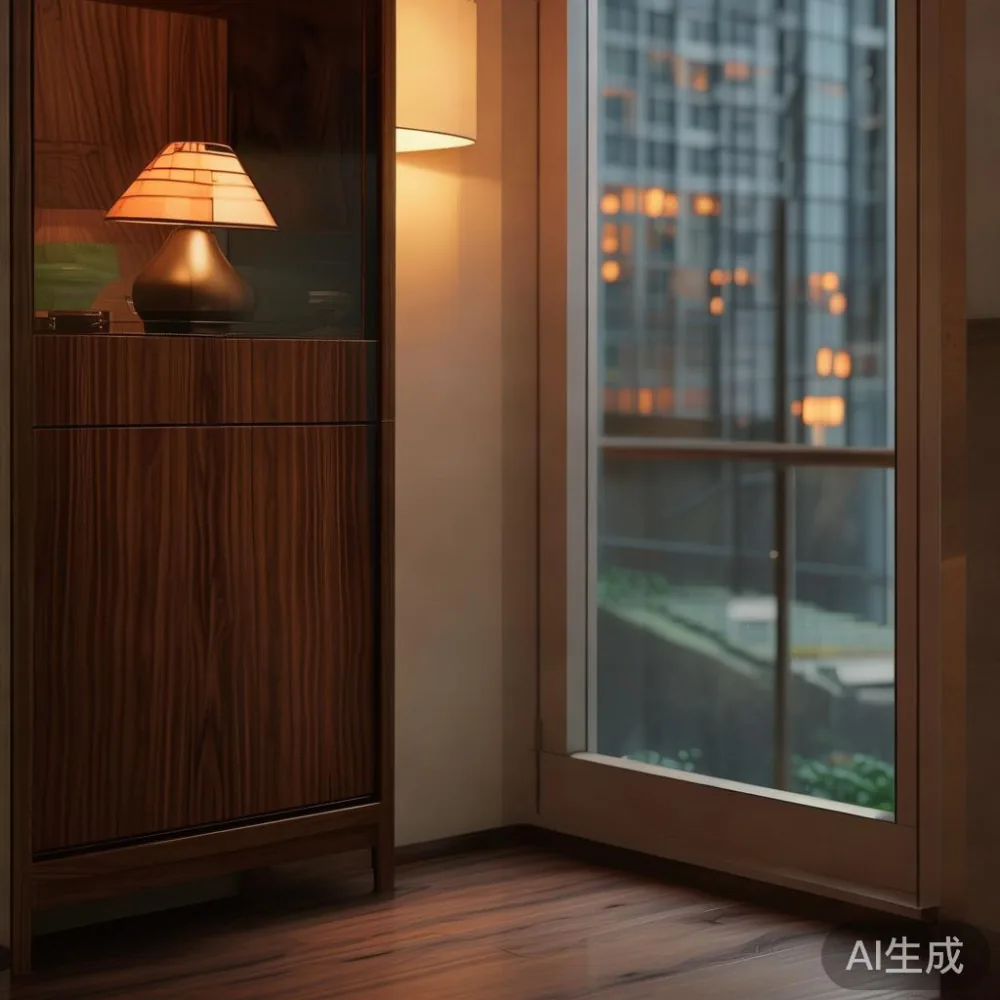
This comparison follows a practical 5-year ownership cycle. I priced a typical 120 cm wide shoe cabinet in Singapore dollars, including GST, then compared the likely material, maintenance, and replacement costs. The figures are planning estimates rather than quotations, because dimensions, timber species, hardware, finishes, and access conditions change the final price.
What is the real 5-year cost difference between veneer and solid wood?
For a representative 120 cm wide, 40 cm deep and 100 cm tall shoe cabinet with two flip-up sections, four adjustable shelves, solid wood drawer parts, and a low-sheen finish, a veneered carcass might cost SGD 680 before GST and SGD 782.40 with 9% GST. A comparable solid wood version in oak, ash, or rubberwood might cost SGD 1,280 before GST and SGD 1,395.20 after GST.
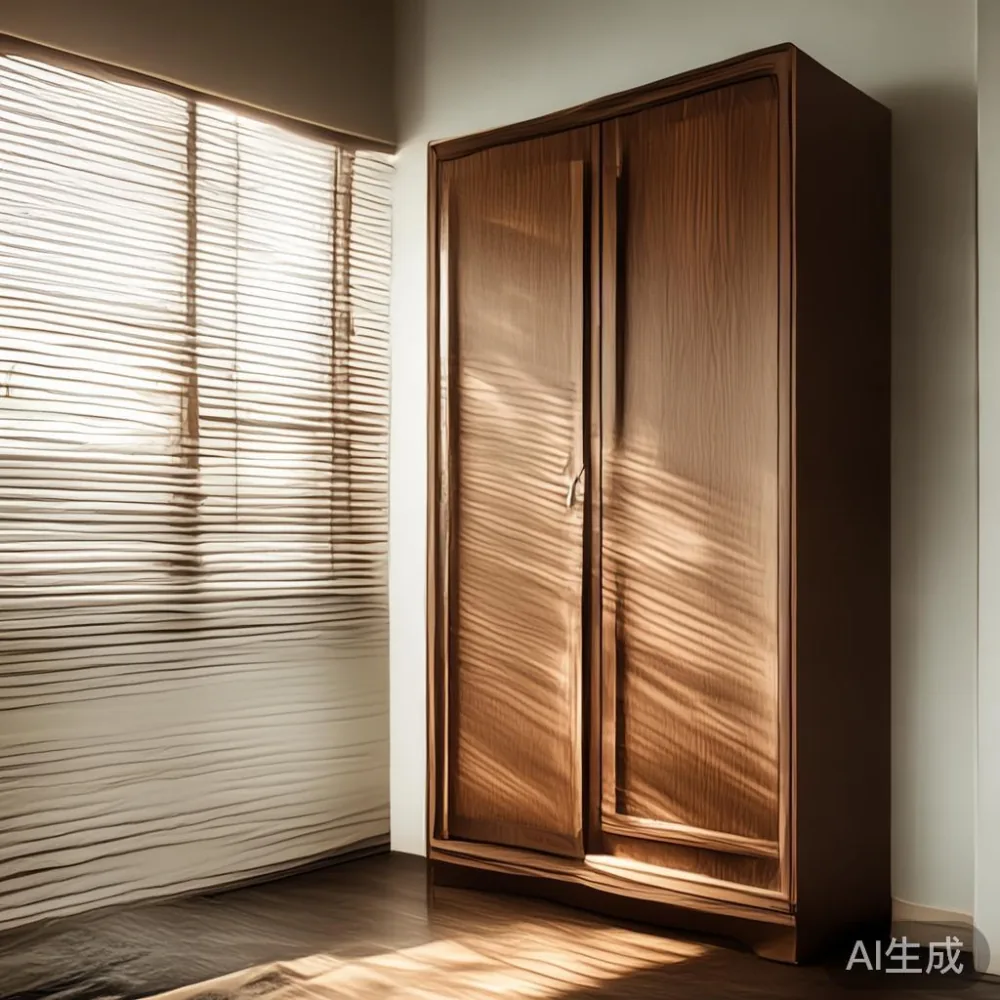
That opening gap is SGD 612.80. Over 5 years, the solid wood option costs about SGD 122.56 more per year. The calculation becomes more revealing once routine care, edge wear, delivery, and eventual disposal are included.
The central financial point is simple: veneer usually wins on the purchase invoice, while solid wood usually wins when it can be repaired rather than replaced. In a high-humidity environment or a home with children, a small chip can become a full panel replacement in a veneered unit. In a carefully controlled flat, a veneered shoe cabinet may survive 5 years with only SGD 100–180 of care and minor repairs.
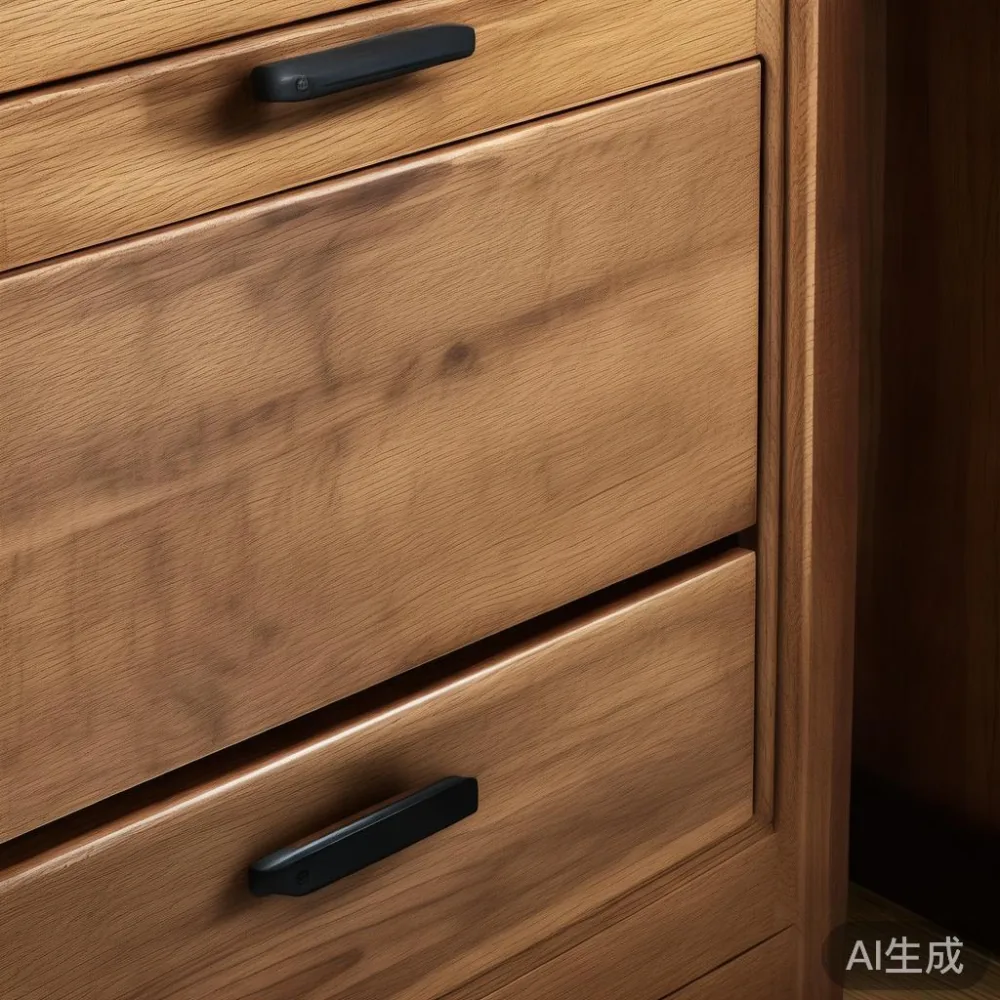
I tested a related cabinet at MIDHILL last month. I opened and closed the two lift-up doors 30 times, checked the shelf alignment, and examined a deliberately finished corner under angled light. The action stayed quiet, the gaps remained even, and the timber surface showed no lifting. That test does not prove that every cabinet will perform identically, but it demonstrates why construction quality can matter as much as the label “solid wood” or “veneer.”
How the 5-year cost model is built
The model uses a cabinet owned for 5 years and assumes one move within the period, which is reasonable for many renters and condo owners. Singapore’s 9% GST is applied to furniture and delivery charges. No resale value is credited to either option because a used cabinet’s value depends heavily on condition, brand, timber, and buyer demand.
For the veneered shoe cabinet, the estimates are:
- Purchase price including GST: SGD 782.40.
- Entry and upper-level delivery: SGD 90 for a home with a lift; SGD 140 if a trolley and extra crew are needed for a corridor or staircase.
- Assembly: SGD 70 for 45 minutes of work, or SGD 45 if the product is already assembled and narrow enough for the lift.
- Cleaning and polishing over 5 years: SGD 80, using a soft cloth and suitable cleaner at roughly SGD 4 per month.
- Minor edge and hardware repairs: SGD 120, allowing for 2 hours of local labour at SGD 60 per hour.
- Removal and disposal: SGD 60.
The projected total is approximately SGD 1,132.40 with lift delivery or SGD 1,182.40 with difficult access. The range allows for a SGD 50 contingency without presenting that contingency as a fixed promise.
For the solid wood shoe cabinet, the estimates are:
- Purchase price including GST: SGD 1,395.20.
- Delivery and carry-up: SGD 90–140.
- Assembly: SGD 70, with the same 45-minute labour assumption.
- Cleaning, oiling, and touch-up: SGD 220, or about SGD 3.67 per month over 60 months.
- Minor repairs: SGD 80, reflecting fewer veneer edges to patch while allowing for hardware adjustment.
- Removal and disposal: SGD 70.
The projected total is SGD 1,925.20 with lift delivery and SGD 1,975.20 with difficult access. On this model, solid wood costs about SGD 792.80 more over 5 years, or SGD 158.56 per year, despite the possibility of refinishing and better repairability.
The estimate assumes ordinary household use: 18 pairs of daily shoes and 6 pairs of occasional footwear, with the cabinet installed against a dry interior wall. It does not cover flooding, direct sunlight, structural misuse, or a cabinet placed in an open balcony.
Why HDB and condo access changes the price
A shoe cabinet can be economical to manufacture and still expensive to place inside a Singapore home. A 120 cm cabinet may fit through a 90 cm doorway with its door panels removed, but corridors and lift dimensions matter more than the product listing.
For an HDB flat in Tampines or Bedok, a standard passenger lift measuring roughly 110 cm wide and 140 cm deep may accept a flat-packed cabinet. A rigid carton should not exceed about 105 cm in its longest dimension after turning, depending on the lift car and door opening. Before purchase, ask the seller for the carton length, width, height, and combined weight.
For a condo in Punggol, a private lift may be shared with a building-management schedule, and the service lift booking could add 3–7 days to the delivery date. A narrow corridor under 110 cm may require turning the cabinet on its side. A solid wood shoe cabinet may weigh 48–62 kg, while a veneered one may weigh 35–45 kg because of lighter panels or internal construction.
My colleague in Singapore last month helped measure a corridor where the usable turning width was only 104 cm. The 120 cm cabinet would not have passed upright. After removing the doors, rotating the carcass, and using a 2-person carry, it reached the flat. That added SGD 50 to the labour estimate and took 25 minutes longer than a lift-ready delivery.
Measure the route before ordering. Record the narrowest corridor, the door opening, the lift car, and the staircase turns. If the longest carton exceeds the lift depth, compare flat-pack delivery with a fully assembled unit. Some homeowners prefer paying SGD 70–120 extra to avoid the risk of scuffing a solid wood cabinet in a corridor.
How humidity affects veneer and solid wood in Singapore
Singapore’s outdoor relative humidity commonly ranges from about 65% to 90%, while air-conditioned interiors are often much drier. This seasonal movement can cause timber to expand and contract. A material that tolerates that movement is more useful than one that simply carries a high timber price.
High-quality veneer is not automatically weak. A 12–18 mm engineered panel with a stable core, balanced front and back veneers, and sealed edges can perform well in an air-conditioned flat. Its weak point is often the exposed edge. If moisture reaches the core, swelling or delamination can become visible beneath a thin veneer layer.
Solid wood reacts more visibly, especially on a wide surface, but sanding and refinishing can restore many marks. Plan for a maintenance check every 6–12 months. Keep the shoe cabinet at least 10 cm away from a balcony door, avoid placing damp footwear against the back panel, and maintain indoor relative humidity around 40–60% where practical.
Do not install either cabinet against an exterior wall prone to dampness. For a solid wood shoe cabinet in Bedok, allow ventilation behind the carcass and inspect the feet, back panel, and joints twice a year. Use coasters or trays so wet shoes do not sit directly on a shelf.
Light-luxury design does not remove this maintenance requirement. French light luxury often uses pale oak, ash, or warm walnut tones and restrained hardware. Post-modern light luxury may pair clean cabinet lines with softer forms and mixed materials. American light luxury, including the American for small living room approach, often emphasizes practical scale and visual lightness. A shoe cabinet can support that language without turning a 7 m² HDB living area into a showroom.
What can be repaired after 5 years?
The repair difference is where solid wood gains a practical advantage. A 3 cm chip in a veneered face can expose the engineered core, and a matching replacement veneer may not be available years later. A matching solid wood insert can be cut, fitted, sanded, and finished, provided the species and grain are suitable.
Allow these repair scenarios in a 5-year plan:
- Veneered shoe cabinet: SGD 150–300 for local edge or surface work; SGD 600–1,200 if a full door or top panel needs replacement.
- Solid wood shoe cabinet: SGD 180–450 for filling and refinishing a localized area; SGD 350–800 for a larger panel repair, assuming comparable timber is available.
Finishes also affect the bill. A water-based matte finish may be harder to spot-repair because the sheen can differ. An open-pore oil finish is easier to refresh in a small area. Pencil marks on a pale finish can be treated cautiously, but aggressive solvents may remove colour.
For a related range, a solid wood sofa, bed frame, dining table, wardrobe, nightstand, or marble table follows similar material rules, although marble requires sealing and careful weight planning. The relevant comparison remains construction, finish, and serviceability rather than the furniture category. This keeps the analysis focused on the shoe cabinet rather than drifting into unrelated products.
MIDHILL offers a 10-year structural warranty and lifetime refinishing on qualifying products, with terms confirmed at order. A warranty can reduce repair risk, but it should not be treated as a substitute for checking the cabinet after delivery or for reviewing the finish-care instructions.
How do the 5-year totals compare?
With normal lift delivery, the veneered shoe cabinet reaches about SGD 1,132.40 over 5 years. The solid wood shoe cabinet reaches about SGD 1,925.20. The difference is SGD 792.80, which is 69.98% of the veneered total.
With difficult corridor access, the totals become approximately SGD 1,182.40 and SGD 1,975.20. The difference remains SGD 792.80 because both estimates use the same SGD 50 access premium. If the solid wood cabinet requires a 3-person carry, add roughly SGD 60–100, raising its 5-year gap to SGD 852.80–892.80.
| 5-year item | Veneer | Solid wood |
|---|---|---|
| Cabinet including GST | SGD 782.40 | SGD 1,395.20 |
| Delivery | SGD 90–140 | SGD 90–140 |
| Assembly | SGD 70 | SGD 70 |
| Care over 60 months | SGD 80 | SGD 220 |
| Minor repairs | SGD 120 | SGD 80 |
| Removal and disposal | SGD 60 | SGD 70 |
| 5-year total | SGD 1,132.40–1,182.40 | SGD 1,925.20–1,975.20 |
Veneer therefore offers the lower planned cost in this example. Solid wood offers a greater repair margin, not a guaranteed lower total. The financial case for spending more becomes stronger when you value continued refinishing, plan to keep the cabinet beyond 5 years, or expect heavy daily use.
A practical break-even calculation can use the price gap of SGD 612.80. If a veneer repair averages SGD 800 while a solid wood repair averages SGD 300, the saving is SGD 500 and solid wood has not yet reached break-even at year 5. If veneer work reaches SGD 1,000 and solid wood work reaches SGD 250, solid wood is ahead by about SGD 137.20 before considering residual condition.
Which construction details should I check before buying?
Start with the panel structure. For veneer, ask whether the door edges are sealed, how the core is constructed, and whether the back panel is fitted into a groove. For solid wood, ask whether the doors use tongue-and-groove or mortise-and-tenon construction, what timber is used, and how the joints are finished.
Next, check movement. Solid wood doors should have small allowance for seasonal expansion. Veneered doors should be balanced and flat, without trapped tension that causes bowing. A cabinet with adjustable shelves needs metal shelf pins rather than shallow grooves that can tear under load.
Check the hardware, too. Hinges rated for at least 8 kg, a handle with a 100 mm grip, and drawer runners rated for 15–20 kg are sensible targets for daily footwear. Measure the depth of a shoe shelf: 30–32 cm suits most footwear, while 35–38 cm gives more room for boots or structured shoes.
For visual direction, the Minimalist for small living room style can be achieved with a low-profile shoe cabinet, pale timber, closed storage, and hidden hardware. A light blue luxury sofa may use a similar palette in the adjacent living area, although a blue upholstered surface requires a different care routine. Searches for the best Nordic wardrobe for 2026 often reflect an interest in pale, functional storage, but the same light-wood principle can guide shoe cabinet selection without importing an oversized product into a compact flat.
Ask for a written quote that separates the cabinet, GST, delivery, carry-up, assembly, and any stair fee. Confirm the delivery window, the return period, and the finish-care method. MIDHILL provides free shipping for orders above US$350, though Singapore delivery, GST, and access charges should still be confirmed because the threshold is stated in another currency.
What should a Singapore buyer choose?
Choose a veneered shoe cabinet when the budget is fixed, the unit will be indoors, doors will close gently, and the household values a coordinated finish over repairability. Choose solid wood when the cabinet will stay for 8–10 years, children or pets may cause knocks, and you want the option to sand and refinish marks later.
Neither material should be judged by weight alone. A 52 kg solid wood shoe cabinet is not automatically stronger than a 41 kg engineered one. Check joints, shelf supports, back-panel fixation, and finish quality. Request exact dimensions and carton measurements before paying, especially for an HDB corridor or a condo lift booking.
On the numbers used here, veneer costs less over 5 years. If the cabinet remains after year 5, the solid wood version may continue to justify its higher purchase price through localized refinishing. The decision is not veneer versus a vague promise of quality; it is a 120 cm piece of furniture, a real route into the home, and 60 months of daily use.