5-Year Shoe Cabinet Cost Comparison: Veneer vs Solid Wood
A shoe cabinet sits at the edge of daily life and long-term planning. In a Singapore HDB flat, it must negotiate with lift doors, corridor turns, shoe trays, humid air, and a limited storage wall. In a Bedok or Tampines condo, it may need to coordinate with pale oak flooring, warm white walls, brushed metal fittings, and a marble table in the dining area. Its material affects the purchase price, care routine, repair options, and resale impression across 5 years.
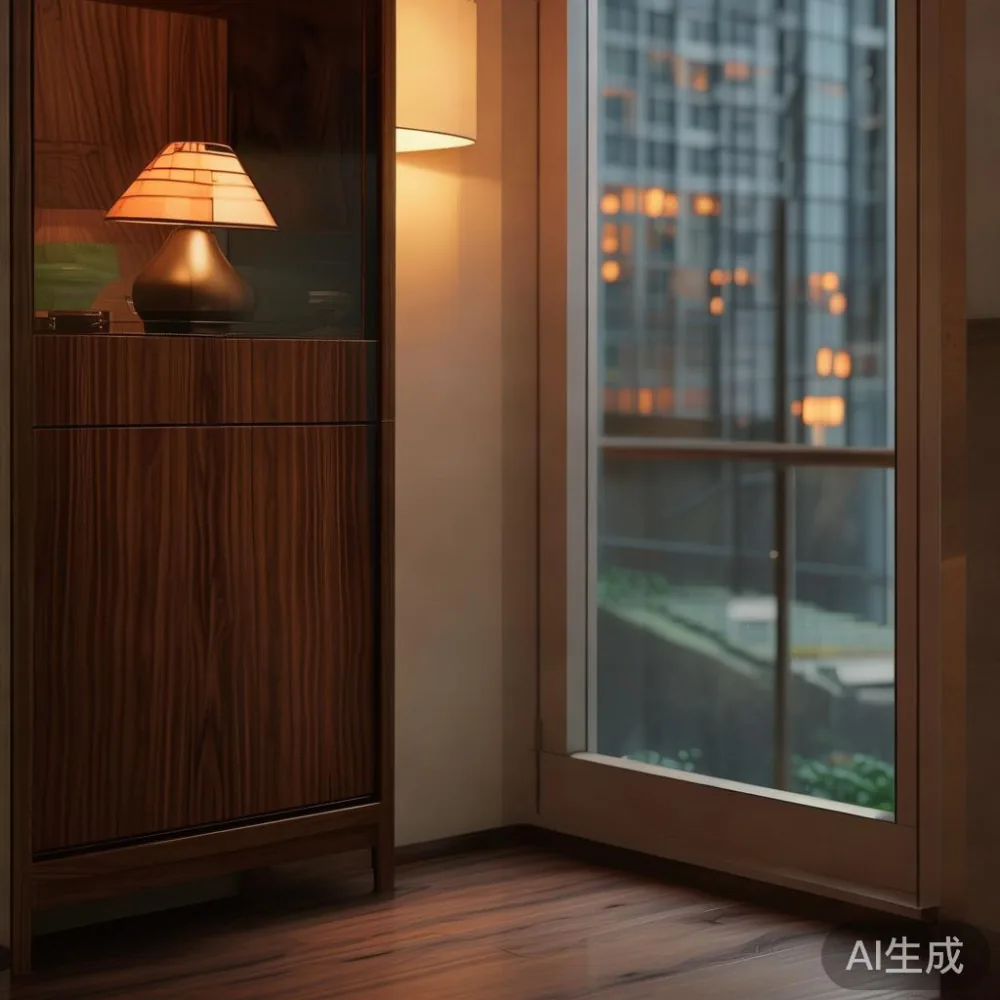
This comparison assumes a freestanding cabinet measuring 90 cm wide, 35 cm deep and 110 cm high, with 3 hinged doors, 6 adjustable shelves, a ventilated lower section, and a natural wood finish. Prices are planning estimates in SGD, including standard GST where applicable. They are not quotations because timber grade, veneer thickness, hardware, finish, and delivery location can change the final figure.
For practical purposes, a good veneer option might cost SGD 520 before GST, while a comparable solid oak shoe cabinet might cost SGD 980. Over 5 years, those figures need to include maintenance, repair, refinishing, transport, and the value of usable space. A low sticker price is only part of the calculation.
What 5-Year Total Cost Means for a Shoe Cabinet?
The 5-year total cost is the purchase price plus spending needed to keep the shoe cabinet usable from month 1 through month 60. I would separate three ideas: direct cash cost, household labour, and expected future resale condition. Labour is not charged to the bank, but it has a real cost in a busy household.
For this example, the veneer shoe cabinet is SGD 520 before GST and the solid oak version is SGD 980 before GST. Both figures use the same 90 cm width, 35 cm depth and 110 cm height. The veneer version uses 12 mm particleboard panels faced with 0.6 mm oak veneer and a clear protective coat. The solid wood version uses 18 mm oak boards, solid timber rails and a similar clear coat. Both have 6 shelves, 3 doors and nylon adjustable feet.
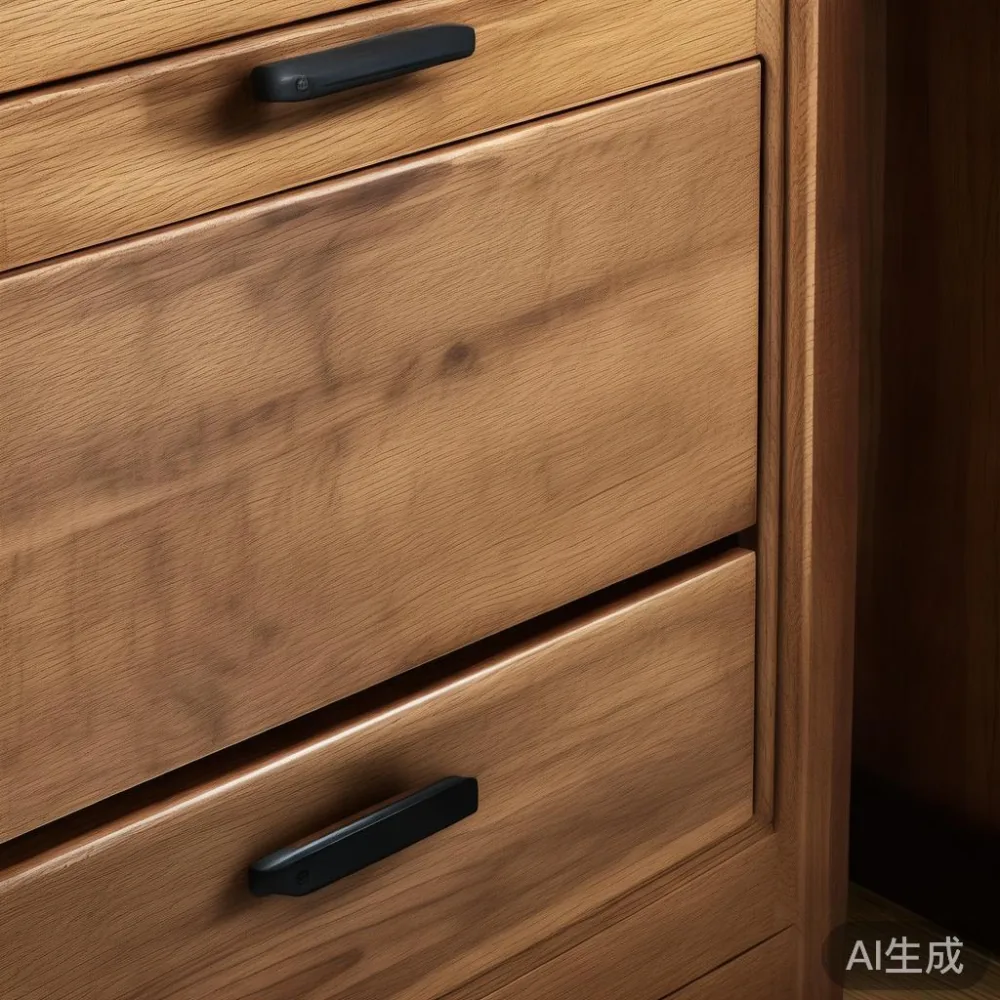
The veneer scenario includes 1 minor repair at SGD 45, 2 delivery-related removal trips at SGD 35 each, and no full refinishing during the period. Its estimated total is SGD 635. The solid wood scenario includes 1 hinge repair at SGD 55, 1 sanding-and-refinishing service at SGD 210, and the same removal trips. Its estimated total is SGD 1,315. These are model costs, not promises about every cabinet.
One real first-person experience changes how I read the numbers. Last month I visited a colleague in Punggol and inspected a 90 cm shoe cabinet installed beside an entryway bench. Its oak veneer had lifted along 1 lower edge, about 18 cm long, after repeated contact with damp shoes. The sheet itself had not swollen deeply, and a careful repair was possible. A solid oak cabinet across the corridor had scratches from moving boxes, but its edges and shelf ends remained solid and could be sanded locally.
That visit showed why edge construction matters as much as the material name. Veneer can be sensible where the cabinet is protected and regularly wiped. Solid wood offers more local repair freedom when it receives knocks or begins to show wear. Neither material should be placed directly under an open window, beside a wet washing area, or where floor-cleaning water regularly splashes.
How Do Veneer and Solid Wood Behave in Singapore Homes?
Veneer is a thin layer of timber, usually 0.3 mm to 1.0 mm, bonded to a manufactured panel. A 0.6 mm oak veneer may look convincing at normal viewing distance, while 0.6 mm is not the same as a 6 mm solid board. The panel beneath can be particleboard, MDF, plywood or another engineered wood product. The core largely controls how the cabinet handles humidity and impact.
Solid wood uses timber through the visible board and across the shelf edges. Oak is common for its grain and hardness, while walnut has a darker appearance. Teak and other species may suit certain warm interiors. For a Singapore home, solid wood is attractive when a family expects frequent moving, changing shoe habits or long-term refinishing. Veneer can work well in a secondary shoe cabinet that is not exposed to repeated knocks.
Humidity is a real planning issue. Singapore’s outdoor air is often humid, and HDB corridors and condo utility areas may be less ventilated than main rooms. Good results depend on moisture control rather than on a claim that one material is humidity-proof. Leave about 5 cm behind a freestanding cabinet where possible, keep it 10 cm away from a wall that may collect condensation, and use a tray or mat below damp footwear.
Size and weight influence delivery. A flat-packed veneer cabinet may weigh 28 kg, while a solid oak version may weigh 46 kg. The 90 cm width should fit most common HDB lift doors, but the turning space inside a lift car can be tighter than the door opening. A carton measuring 96 cm long, 38 cm wide and 18 cm thick may fit an 82 cm lift doorway only if the carton angle and internal dimensions allow it.
Condo corridors are not automatically larger. A 90 cm cabinet should be checked against a 110 cm corridor turning point, a 100 cm lift lobby and the building’s service elevator rules. Measure door openings before buying, and ask the supplier for the packed carton size rather than estimating from the assembled dimensions.
What Does a Veneer Shoe Cabinet Cost Over 5 Years?
A practical veneer budget in Singapore can range from SGD 380 to SGD 750 before GST for a cabinet of roughly 80 cm to 100 cm wide. The width, number of shelves, finish, hardware and delivery charge matter. A basic 90 cm model with 3 doors and 6 shelves may be around SGD 520, while a thicker veneer, better hardware or a more decorative front may be SGD 680.
At a planning price of SGD 520, add 9% GST for a Singapore purchase where GST applies, giving SGD 566.80. Add SGD 45 for one minor repair and SGD 70 for 2 removal or disposal trips, producing a 5-year cash total of SGD 681.80. That is a useful midpoint for comparing against solid wood, not a guaranteed market average.
Veneer care is usually light. Dust the surface with a dry microfibre cloth, wipe shoe marks promptly and avoid silicone sprays, oil-soaked cloths and standing water. A mild wood-cleaner product may be used only if the manufacturer approves it. Let the cabinet dry fully after damp cleaning. A small repair might cost SGD 25 to SGD 60, while replacement edge banding can cost SGD 40 to SGD 120 depending on the panel.
One risk is peeling or bubbling at an exposed edge. Water can enter through a chipped seal, especially near the floor. The cost of a new door panel can be SGD 150 to SGD 300, while a cabinet-wide refinishing project may be SGD 250 to SGD 450. If the shoe cabinet is repeatedly exposed to wet shoes, a replacement or a more protective placement may be economically preferable to repeated repairs.
The household time estimate is 20 minutes per month for dusting and 15 minutes per quarter for deeper cleaning. That is roughly 2 hours per year, or 10 hours over 5 years. This labour is not included in the SGD 681.80 cash total, but it gives the comparison a fairer shape. The veneer route suits owners who value a controlled initial budget and are willing to protect the cabinet from edge damage.
How Much Does Solid Wood Cost Over 5 Years?
A 90 cm solid oak shoe cabinet with 3 doors and 6 shelves may be priced around SGD 850 to SGD 1,250 before GST. Solid walnut, wide boards, soft-close hinges, framed doors and a hand-applied finish can push the price above SGD 1,500. A straightforward oak model may cost SGD 980 before GST, which becomes SGD 1,068.20 after GST at 9%.
Using the same example, add SGD 55 for one hinge repair and SGD 210 for sanding and refinishing after 3 years. Add SGD 70 for 2 removal trips. The estimated 5-year cash total is SGD 1,403.20. If no refinishing is required, the figure would be SGD 1,193.20. The difference between the two scenarios explains why a warranty and care history matter.
Solid wood can be repaired locally because scratches and small chips can be filled and sanded. A deeper gouge may require a matching patch or a small piece of timber. Refinishing a complete cabinet may cost SGD 180 to SGD 350, while a spot repair may cost SGD 60 to SGD 120. These estimates assume the existing finish is compatible with the new product. Repeated unknown coatings can make a local repair less predictable.
Weight is another cost. A 46 kg solid oak cabinet is harder to move than a 28 kg veneer cabinet. A 2-person carry within a HDB flat may be manageable, but a staircase and landing can require extra time. Some delivery teams charge SGD 80 to SGD 160 for a second-floor carry, while a lift-included service may be lower. Confirm whether the price includes lift use, corridor movement, assembly and disposal of packaging.
Solid wood makes more sense for a primary entryway cabinet when the family wants the option to sand and refinish it after several years. Its higher starting price may be justified by long service life, not by a guarantee against movement, cracking or colour change. A cabinet made from wide boards may need seasonal care as the timber responds to indoor humidity.
Is Veneer More Cost-Effective for a Shoe Cabinet in an HDB Flat?
For many HDB households, yes, if the cabinet is placed sensibly and the buyer accepts moderate care limits. In a compact Tampines flat, a 60 cm to 80 cm wide shoe cabinet may already provide useful capacity with 4 shelves and a lower ventilated section. A narrower cabinet can reduce transport problems and leave more circulation space beside a door.
The cost difference can be illustrated at two sizes. A 70 cm veneer shoe cabinet may cost SGD 380 before GST, or SGD 414.20 with GST. A 70 cm solid oak shoe cabinet may cost SGD 760 before GST, or SGD 828.40 with GST. Over 5 years, adding modest repairs and 2 removal trips gives approximately SGD 529.20 for veneer and SGD 963.40 for solid wood. The exact result depends on finish and hardware.
However, a family that moves every 2 or 3 years should include disassembly and reassembly. A screw-fixed solid wood cabinet may be moved for SGD 100 to SGD 200 each time, while a flat-packed veneer cabinet may need only SGD 30 to SGD 70 in assembly labour. A relocation-heavy household may obtain more value from a simpler veneer design than from a heavier cabinet that needs careful handling.
Light-luxury styling does not require a thick veneer edge. French light luxury can be suggested through a pale oak surface, restrained profiles, linen curtains and small ceramic objects. American light luxury may use a warmer walnut tone, black metal pulls and a symmetrical entryway. Post-modern light luxury can combine a straight cabinet with curved lighting or a marble table nearby. These are visual directions, not material guarantees.
A shoe cabinet should not block an HDB fire door, obstruct a lift lobby or press against skirting boards. Keep 5 cm from the floor when cleaning is easier, and keep the front clear for about 60 cm where the corridor permits. A 110 cm high cabinet may look right beside a solid wood sofa or bed frame, but it should not become a tall visual barrier in a narrow foyer.
What About Delivery, GST, Returns and Warranty?
Singapore buyers should record the full price, including GST and delivery. At 9% GST, the comparison changes from SGD 520 plus GST to SGD 566.80, and from SGD 980 plus GST to SGD 1,068.20. A promotion that seems attractive before GST may be less useful if delivery is excluded.
Delivery usually takes 7 to 21 days for a made-to-order shoe cabinet, while an in-stock model may arrive in 5 to 10 days. Building access can add time. A lift-included HDB delivery may cost SGD 40 to SGD 80, while a stair carry or corridor turn may cost SGD 80 to SGD 160. The supplier should state the packed dimensions, carton weight, delivery day and whether installation is included.
MIDHILL gives customers a 10-year structural warranty and lifetime refinishing for qualifying solid wood furniture. Its policy details should be checked for the specific shoe cabinet, finish and components. A lifetime refinishing promise can be valuable, but it is not the same as replacing every moving part at no charge. Ask whether hinges, drawer slides, handles and surface repairs are treated differently.
The 14-day returns policy also deserves attention. Confirm whether a custom-size cabinet is returnable, who pays return freight, and how a used or installed cabinet is assessed. A cabinet with a factory finish may be easier to return than one drilled for a particular HDB wall. Photograph the packed carton, corners, doors and finish before signing for delivery.
For households comparing other furniture, questions such as where to buy dining table from MIDHILL or the phrase MIDHILL sofa can lead to a wider matching process, but the shoe cabinet should be judged by fit, capacity and care rather than by matching everything to one showroom category.
Which Finish Is Easier for a Singapore Shoe Cabinet?
Oak veneer with a matte finish can be visually calm in a Punggol home and tends to disguise small dust marks. Walnut veneer can add contrast to a Bedok condo with white walls, but darker surfaces may show fingerprints and fine dust more readily. Solid oak has visible grain variation and can develop a more lived-in surface. Solid walnut offers richer colour and stronger contrast around a marble table.
The finish is part of the material decision. A lacquered surface may wipe cleanly but can chip at exposed edges. An oil or wax finish can be refreshed locally, yet it may need more frequent attention. A hard-wax oil may offer a repair-friendly balance, subject to the supplier’s instructions. Test the product on a hidden area before applying it to a visible panel.
For a high-use entryway, use a tray beneath shoes and a mat below damp footwear. Wipe the lower rail once a week, inspect hinges every 3 months and tighten screws only when needed. Keep the cabinet away from direct air-conditioning condensation and do not place it beside a wet mop bucket. A good routine may require 15 minutes per week, or about 65 hours over 5 years.
Styling questions can help define the surrounding room. Searches for how to style Japandi sofa in apartment or how to style Japandi wardrobe in room are useful if the shoe cabinet must share the same calm visual language. A European light luxury nightstand nearby may echo the cabinet’s handles and finish, while a French provincial bed may call for warmer timber and soft textiles. The phrase is French provincial bed worth it appears in planning notes because a heavier bed frame changes both room circulation and future refinishing needs.
A French provincial bed worth it comparison should include mattress support, room width, delivery access and noise, not only appearance. A bedroom may offer more controlled conditions than an entryway. A bed frame should have enough clearance for walking, while a wardrobe should open without colliding with a shoe cabinet or bedroom door. These details prevent the cabinet from becoming attractive in isolation but awkward in daily use.
Which Choice Fits Your 5-Year Budget?
Choose a veneer shoe cabinet when the cabinet will be protected, the household wants a lower initial spend, and the appearance of oak or walnut is the priority. Plan for edge damage and avoid placing it near damp cleaning routines. In the sample, a 90 cm veneer model reaches about SGD 681.80 over 5 years, including 9% GST, one minor repair and 2 removal trips.
Choose solid wood when the cabinet will be moved less often, receives regular use, or the owner values sanding and refinishing. The sample solid oak model reaches about SGD 1,403.20 over 5 years, including 9% GST, one hinge repair and a full refinishing service. If it remains in very good condition, the same model may be around SGD 1,193.20. The budget should reserve money for finish maintenance rather than assume it will remain untouched.
For a 70 cm unit, the difference may be more manageable in a compact condo. For a 100 cm unit with 8 shelves and soft-close hinges, the solid wood premium may be SGD 300 to SGD 700 before GST. Measure the route from the service elevator to the final position. A 90 cm cabinet weighing 46 kg may require 2 people, while a 35 kg panel may still need careful turning through a 82 cm lift door.
The best decision is the one that accounts for the room, the household’s maintenance habits and the cabinet’s 5-year role. If you want French light luxury, American light luxury or post-modern light luxury, the finish can carry that character without making the shoe cabinet visually heavy. Review the dimensions, packed weight, GST, delivery days, warranty coverage and returns terms before paying.
A clear 5-year worksheet should list the purchase price, GST, delivery, repair reserve, refinishing reserve and expected removal cost. Keep the worksheet with the receipt and take photos at delivery. That small record protects both your budget and your ability to maintain the shoe cabinet as part of a considered Singapore home.