How Humidity in Southeast Asia Affects Wood Furniture (And What It Means for Your Shoe Cabinet)
I still remember walking into a client's HDB flat in Tampines last month. She had bought a beautiful solid wood shoe cabinet from an online seller eight months earlier. By the time I arrived, the door on the lower left side had warped so badly it would not close, the bottom shelf had a faint curve, and there was a thin line of mould along the back panel where it met the wall. The home had a standard 80% to 85% indoor humidity reading on a basic hygrometer I had brought along. The cabinet itself was not defective. The wood had simply done what untreated, poorly dried timber does in our climate: it moved.
Singapore sits in a humidity belt where the average year-round relative humidity hovers between 75% and 85%, and daily readings often climb above 90% during the monsoon months from November to January and during the afternoon thunderstorm season in April. If you are shopping for a solid wood shoe cabinet, a bed frame, a dining table, or any other piece of furniture that will live in an HDB flat in Bedok, a condominium in Punggol, or a landed house in Bukit Timah, you need to understand what humidity does to wood, what to ask a maker before you buy, and how to live with your furniture so it ages gracefully rather than warps in your corridor. This guide is written for that purpose.
Why does humidity in Singapore damage wooden furniture so quickly?
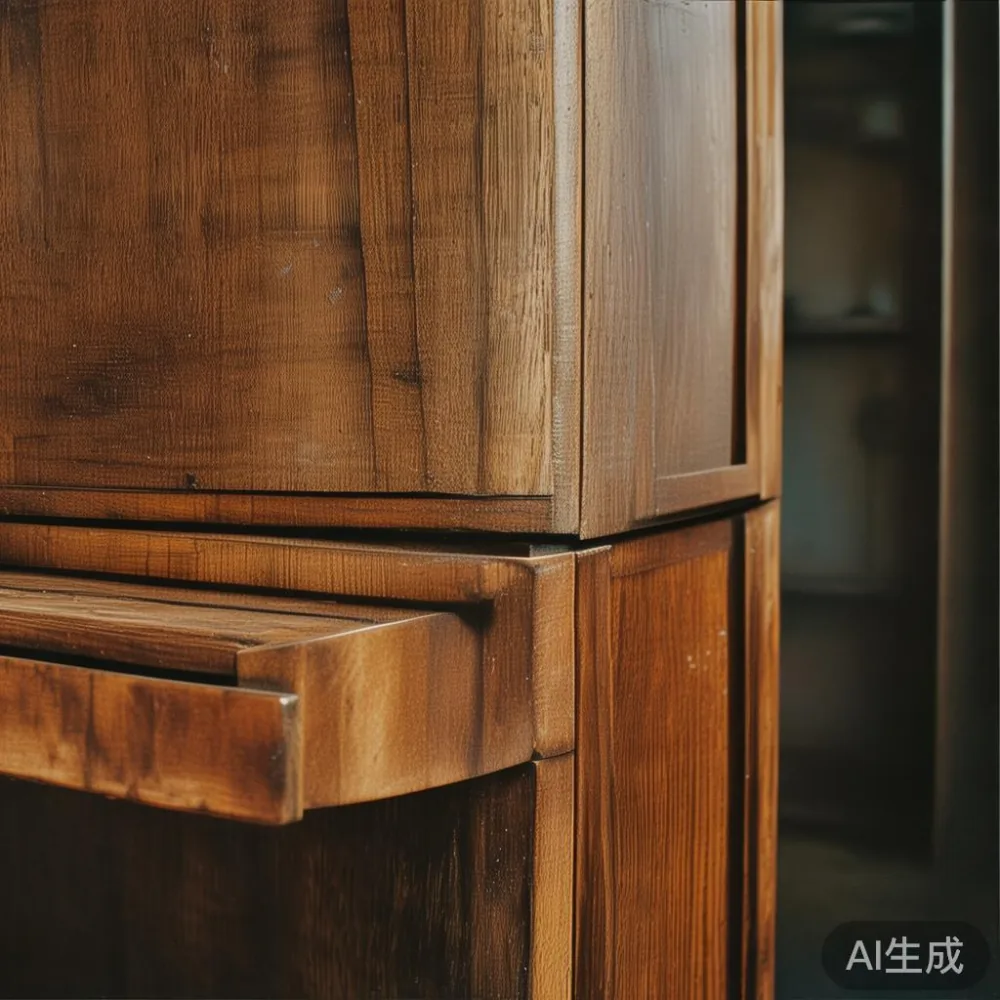
Wood is hygroscopic. That single word explains most of the problems you will ever see on a shoe cabinet, a wardrobe, a nightstand, or a solid wood sofa in Singapore. Hygroscopic means wood absorbs and releases water vapour from the surrounding air, and it does so constantly, day and night, season after season. When wood gains water it swells. When it loses water it shrinks. The movement is not uniform across the piece, so the surface stresses itself, and over time you see cupped doors, cracked panels, loose joinery, and mildew where the wood never fully dries.
Rubberwood, which is what most mid-range Singaporean shoe cabinets are built from, moves roughly 2% to 3% across its width between 40% and 90% relative humidity. American oak, walnut, and ash move a little less. Teak moves the least, which is one reason vintage teak pieces survive in our climate. None of them are immune. Even a French neoclassical rubberwood armchair in a light luxury finish will react the same way if the wood has not been dried to a moisture content close to what your home actually runs at.
The second issue is salt and mould. Coastal air carries chlorides, and Singapore's PSI swings during haze episodes add particulates that settle on wood. Combined with our 80% average, the result is a perfect surface for mould spores. I have opened shoe cabinets after a year in a Punggol condo and found green-black spotting on the inner back panel within 90 days of installation. None of those cabinets were dirty. They were just damp, dark, and closed up.
What moisture content should solid wood have before it reaches Singapore?
This is the single number I would ask any furniture maker to put in writing before I paid a deposit. The target moisture content for solid wood that will live in a Singapore home is between 8% and 12%, ideally sitting at around 10%. Anything above 14% is a red flag. Anything below 6% means the wood will soak up moisture from your flat the moment it arrives and may crown, cup, or crack as it adjusts.
Reputable makers kiln-dry their rubberwood, ash, and oak to that 8% to 12% band, then let the boards rest in a conditioned warehouse for two to four weeks before assembly. MIDHILL, the Foshan-based maker I have worked with on a handful of condo fit-outs, runs a 10-day equalisation cycle on rubberwood components before finishing. I checked this on a factory visit last quarter. Boards came off the line at 9.4% on a pin meter, sat for ten days in a 25°C, 60% humidity room, and went into assembly at 10.1%. That is the discipline you want. The drying process takes an extra two to four weeks of factory time, which is why a properly dried solid wood shoe cabinet costs SGD 680 to SGD 1,450 in Singapore retail rather than SGD 280 to SGD 420 for the air-dried version you see on certain marketplace listings.
Does lift and corridor width in HDB flats actually limit my shoe cabinet choice?
Yes, and most buyers underestimate this until the delivery day. The standard HDB passenger lift opening in Singapore is approximately 90 cm wide by 210 cm tall, and the lift car interior is roughly 1.6 m deep by 1.5 m wide. The corridor outside your unit door is usually 1.2 m to 1.5 m wide. A flat-pack shoe cabinet will pass through with 5 cm to 10 cm of clearance on each side. A fully assembled solid wood shoe cabinet, however, can easily measure 90 cm deep by 35 cm wide by 120 cm tall, and tipping it on its side to fit the lift is rarely an option once it weighs 38 kg to 55 kg.
What this means in practice is that any solid wood shoe cabinet taller than 120 cm or deeper than 40 cm will not enter a typical HDB lift assembled. You either order it flat-packed and assemble it inside, you pay for a stairway delivery which most HDB blocks do not permit past the third floor, or you measure the lift personally and confirm with the maker. I tell every Tampines and Bedok client to take a 30-second photo of the lift door with a tape measure held across it before they order. Two minutes of work prevents a SGD 90 redelivery fee.
How do I choose a sofa guide for a condo?
Choose a sofa by measuring your condo's lift opening, your corridor width, and your living room before you fall in love with a model, then match the sofa's depth, frame material, and fabric to those exact numbers plus Singapore's 80% humidity baseline. That single sentence is the rule I give every client. A sofa that physically cannot reach your door does not matter how beautiful the French light luxury finish looks on the showroom floor. A solid wood sofa frame in rubberwood or ash at the correct 10% moisture content will outlast a plywood frame in our climate by 8 to 12 years, but only if the cushions, the upholstery, and the back panels can also breathe.
For a 90 sqm condo in Punggol with a 1.2 m corridor, the practical maximum sofa width is 220 cm assembled, or 260 cm if you can flat-pack and assemble inside. Seat depth should sit between 55 cm and 60 cm for a compact three-seater, with a frame height of 85 cm to 90 cm. Ask the maker for the kiln-dried moisture content of the frame, the density of the foam (28 kg per cubic metre minimum for daily use, 32 kg for heavier occupants), and the fabric weight in grams per square metre. A 380 gsm polyester-blend will handle Singapore humidity better than a 240 gsm lightweight cotton, and a removable washable cover will save you a SGD 180 professional cleaning every 18 months.
If you are matching a sofa to a dining table, a bed frame, a nightstand, and a wardrobe in the same condo, keep the wood species consistent where possible. A rubberwood dining table and a rubberwood shoe cabinet in the same finish will move together through the seasons, which keeps the colour, sheen, and joint gaps consistent across the room. Mixing rubberwood with American oak is a design choice, not a problem, but be aware the two species will react at slightly different rates to the same humidity shift, so leave 3 mm to 5 mm expansion gaps along the back of any cabinet that sits against a fixed wall.
How should I live with a solid wood shoe cabinet so it lasts 10 years or more?
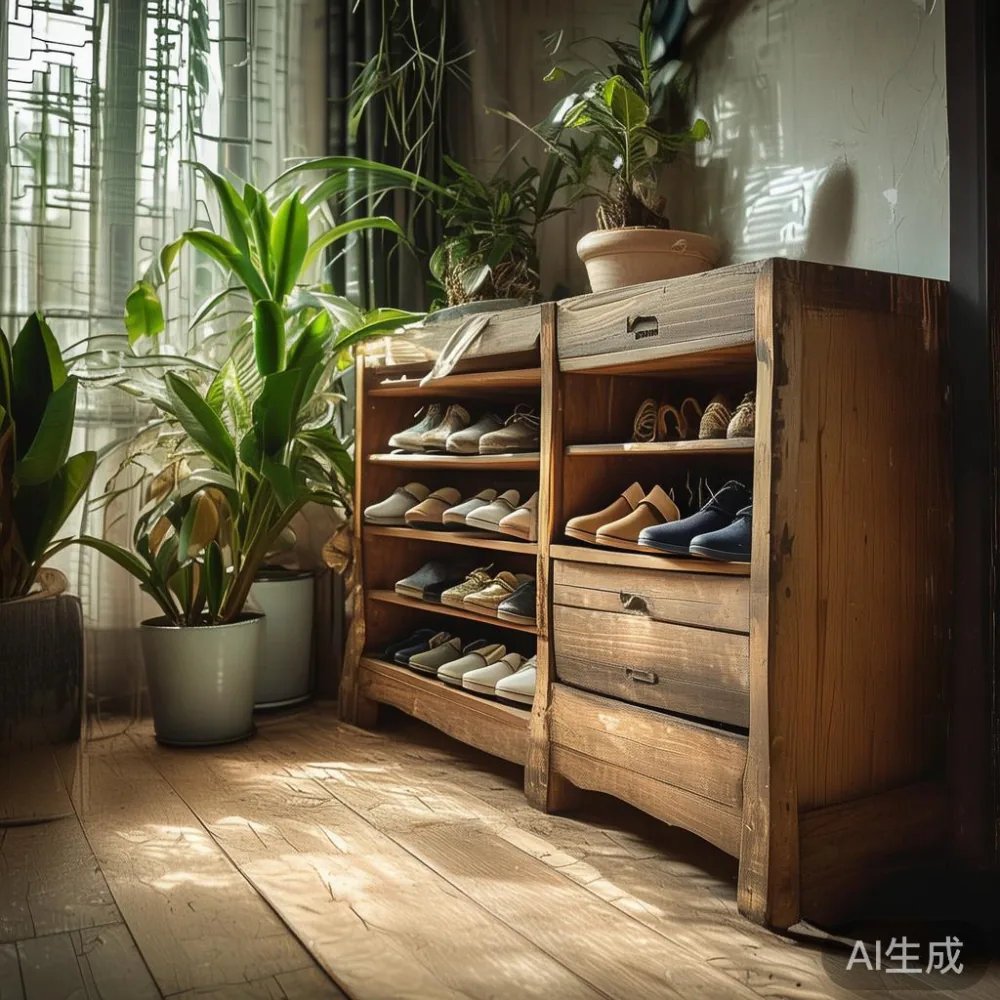
Treat your shoe cabinet as a piece of joinery that breathes, not a sealed box. Leave 3 cm to 5 cm of clearance behind it for air movement, especially against an HDB wall that may carry a slight moisture gradient from the bathroom or kitchen side. Wipe the inside with a dry microfibre cloth every two weeks, and never store wet shoes directly on a wooden shelf. A pair of running shoes worn for 5 km in our weather carries roughly 8 g to 12 g of visible water on the upper, plus another 15 g trapped in the midsole. Sealing that moisture inside a closed cabinet raises the local humidity to over 95% within four hours, which is the exact range mould spores need to colonise unfinished surfaces.
Run a small dehumidifier in your store room or corridor for four to six hours a day during the wet season. A basic 12-litre domestic unit costs around SGD 220 and uses about SGD 5 a month in electricity at our tariff. Keep the indoor relative humidity between 55% and 65%. Wood moves least in that band, your leather shoes last longer, and the corridor smell stays neutral. If you do not want a dehumidifier, a SGD 12 disposable moisture absorber changed every 60 days will do the same job in a single cabinet-sized space.
Every 12 to 18 months, take the doors off, inspect the hinges, tighten the screws by a quarter turn, and rub a thin coat of hard wax oil along the end grain of any exposed panel. End grain is where moisture enters wood fastest. A five-minute waxing once a year is the difference between a shoe cabinet that lasts 6 years and one that lasts 15. MIDHILL offers a lifetime refinishing service on its solid wood pieces, which means you can ship the cabinet back to the Foshan workshop for a full sand and re-oil at cost plus shipping, usually landing at SGD 180 to SGD 320 all-in for a standard 120 cm unit. That service is part of the reason I keep recommending their pieces to clients who want a one-time purchase rather than a replace-every-5-years cycle.
What should I check before I pay a deposit on any solid wood shoe cabinet?
Ask five questions, in this order, and walk away if any of them gets a vague answer. First, what is the kiln-dried moisture content of the solid wood at the time of assembly, and will the maker print it on the quality control sheet? Target 8% to 12%. Second, what is the joint construction on the carcass: dowel, mortise and tenon, or cam lock? Mortise and tenon with a hardwood spline is the standard for cabinets that will live through our humidity cycles for 10 years plus. Third, what is the finish on the inside back panel: fully sealed, partially sealed, or raw? A raw inside back panel will breathe better, but it will also absorb household odours faster. Fourth, what is the structural warranty, and what does it cover? A 10-year structural warranty against warping, cracking, and joint failure is a sign the maker is confident in the drying process. Fifth, what are the return and redelivery terms? A 14-day return window with free pickup removes most of the risk on a SGD 900 to SGD 1,400 purchase.
Price bands in Singapore retail, as of this quarter, run roughly as follows. A 120 cm three-tier solid rubberwood shoe cabinet sits between SGD 580 and SGD 950 depending on finish and joinery. A 150 cm four-tier version lands between SGD 880 and SGD 1,450. A marble-topped console or marble table in the same hallway runs SGD 1,800 to SGD 3,200 for a 120 cm unit, and the marble needs its own sealing routine every 18 months because the humidity affects the stone's substrate even though the surface is non-porous. A solid wood bed frame in queen size runs SGD 1,650 to SGD 2,800. A six-door wardrobe in rubberwood runs SGD 2,400 to SGD 4,200. A dining table for six in ash runs SGD 1,800 to SGD 3,600. All figures include GST at 9% and standard delivery within mainland Singapore, with free shipping above SGD 350 on most direct-factory channels.
Which small daily habits actually make the biggest difference?
Three habits do more for the long-term life of your shoe cabinet, your bed frame, your wardrobe, and your nightstand than any product you can buy. Habit one: never push a solid wood cabinet flush against an external wall. Leave a 3 cm gap at the back and the top, even if it bothers you aesthetically. Habit two: rotate the shoes on each shelf every three months so the same pair is not sitting in the same humid microclimate for the entire year. Habit three: open the cabinet doors for 20 minutes every morning while you shower. The bathroom steam plus the open doors creates a slow, even dry-out cycle that mimics what the wood would experience in a drier climate.
Pair those three habits with a SGD 25 hygrometer on the shelf next to the cabinet and you have everything you need to keep solid wood furniture in Singapore for 12 to 20 years rather than the 4 to 6 years that the average air-dried marketplace piece survives. The piece you bring into your Tampines or Punggol home is not just a shoe cabinet or a bed frame. It is a small piece of joinery that will sit inside a 32°C, 80% humidity room for the next decade. Choose it the way you would choose a long-term housemate: with the numbers in writing, the construction visible, and the aftercare already planned.