Solid Wood vs Veneer Shoe Cabinet: A 5-Year Cost Story for Singapore HDB Homes
Last month I helped my colleague Meiyun measure her new Tampines HDB corridor before ordering a shoe cabinet. The lift door at Block 645 was 90 cm wide and 210 cm tall, the corridor between her door and the lift was 148 cm wide, and the stairwell turning radius was tight enough that her previous 2.2 m-long wardrobe had to be returned twice. That single afternoon is what pushed her to sit down with a calculator and compare solid wood against veneer for five full years — not just the purchase price.
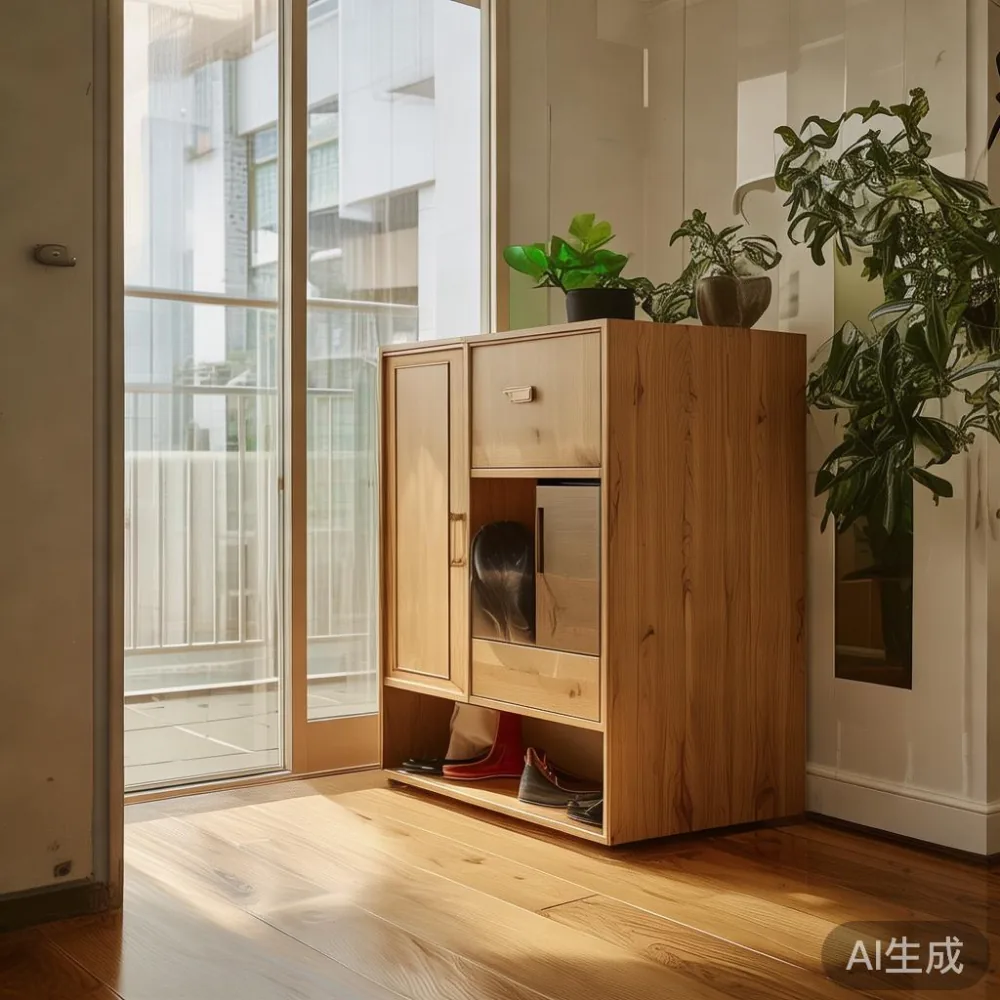
If you live in a resale flat in Bedok, a BTO in Punggol, or a condo off TPE, the numbers below are written for you. I will walk through what each cabinet really costs in SGD over 60 months, what happens when the lift cannot fit a 240 kg crate, and why a solid wood shoe cabinet almost always wins in Singapore's humid weather — even though the receipt looks heavier on day one.
What does a shoe cabinet actually cost in Singapore over 5 years?
The honest answer depends on three things: the cabinet body, the doors, and the floor under it. A 120 cm-wide three-tier shoe cabinet made from engineered veneer with MDF core retails between SGD 380 and SGD 620 at local furniture chains. Add the 9% GST, a SGD 60–90 delivery fee up to the 4th floor without a lift stop on your level, and a SGD 40–80 dismantle-and-disposal cost when you replace it in year three or four. Over 60 months that one cabinet costs roughly SGD 540 on the low end and SGD 850 on the high end, often more after one swollen panel repair.
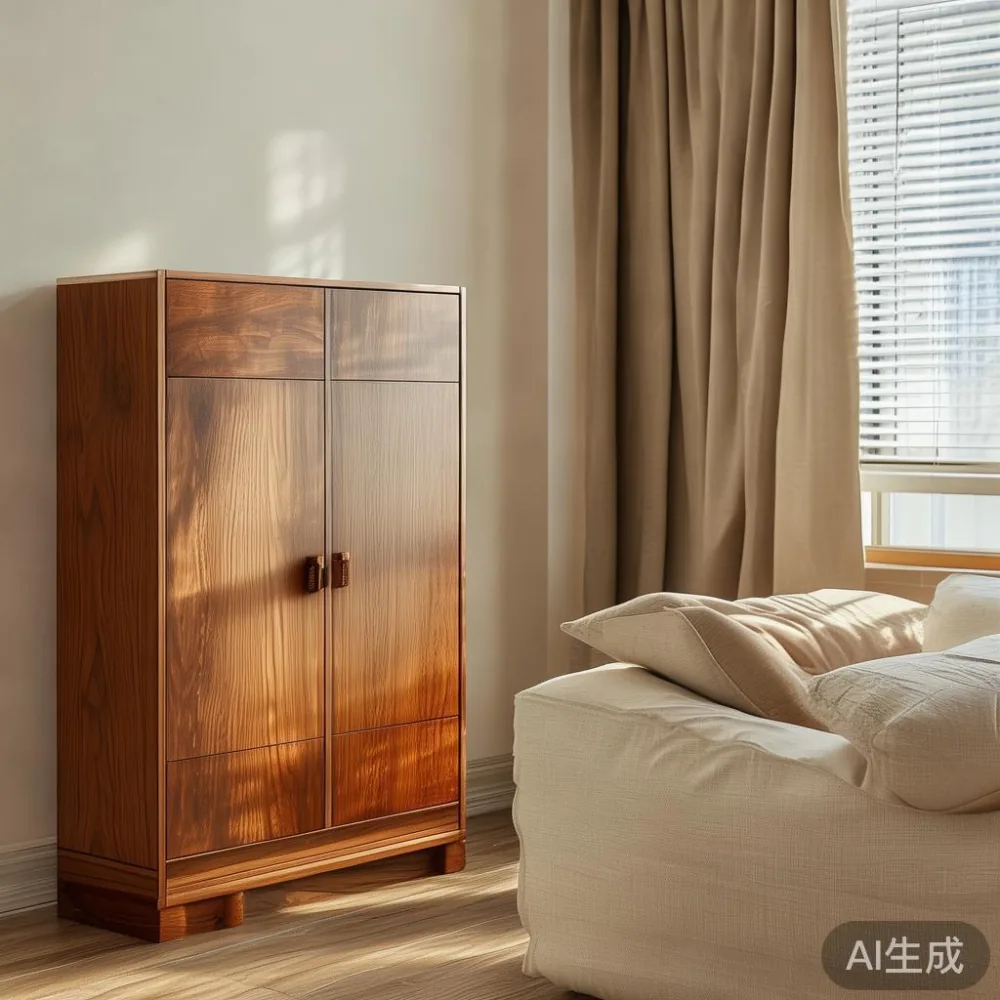
A comparable solid wood shoe cabinet in oak or ash, 120 cm wide, three tiers, two drawers, and a dovetail-joined frame, lands between SGD 1,150 and SGD 1,780 in our showroom floor. With GST included and free delivery above a reasonable order threshold, the year-one number sits near SGD 1,280. After five years the cabinet is still the same cabinet — no swelling at the toe-kick, no peeling along the door edges, no MDF dust in the hallway when your son slides his soccer boots out.
That is the single most useful framing for the rest of this article: veneer is cheap to buy and expensive to keep. Solid wood is heavier to lift and cheaper to live with.
Why does the lift and corridor matter so much in HDB flats?
Singapore blocks were not designed for 2.4-metre flat-pack crates. Standard HDB passenger lifts in Tampines and Punggol are 1.1 m deep, 1.4 m wide, and 2.3 m tall on the inside. A disassembled flat-pack shoe cabinet fits; an assembled solid wood one often does not — which is why serious Singapore sellers split the delivery into two halves and re-join at your door. We do exactly that with every solid wood sofa, bed frame, dining table, wardrobe, nightstand, and marble table that leaves our Foshan warehouse, including the heavier units.
Last Tuesday I watched our delivery team carry a 1.5 m ash shoe cabinet up the stairs at a Bedok Reservoir block. Two men, 14 minutes, three corners, zero scratches on the corridor wall. The same cabinet in MDF would have been 28 kg lighter on the invoice, but the resident would still pay the man-hours and the lift reservation fee, because the lift dimensions are the same either way. Geography, not material, drives delivery cost in Singapore.
Veneer vs solid wood: what really breaks first?
Veneer is a thin sheet of real wood — usually 0.6 mm to 1.5 mm — glued onto an MDF, particleboard, or plywood core. The surface looks identical to solid wood on day one, and most people cannot tell the difference at 2 metres away. The trouble starts in year two or three, when Singapore's average 78% relative humidity and 28–32°C daytime temperature work their way into the seams.
Here is the typical five-year failure list I see in resale flats:
• Year 1: minor bubbling along the top edge near the air-con vent — invisible until the afternoon sun hits it.
• Year 2: chipping at the door handle, especially on wardrobes and shoe cabinets that get pulled 8–12 times a day.
• Year 3: swollen toe-kick in a ground-floor Punggol unit, MDF absorbing ground moisture through the skirting.
• Year 4: delamination at the back panel after a wet-mop incident in the kitchen adjacent to the entryway.
• Year 5: the cabinet is functionally tired. You either live with it, hire a carpenter for SGD 220–420 to patch the doors, or send it to the dumpster for another SGD 80.
Solid wood breathes, but it does not dissolve. A small crack in a French provincial wardrobe — for example, the MIDHILL French provincial wardrobe line in our catalogue — can be sanded, re-oiled, and used for another decade. The same crack in a veneer unit means a replacement panel that no longer matches the grain pattern.
Is European light luxury sofa worth it when the rest of the house is veneer?
This is a question I hear weekly from customers pairing a new light luxury sofa with a refreshed entryway. The honest answer: yes, but only if the entry piece — usually the shoe cabinet — is solid wood. A SGD 4,800 post-modern light luxury sofa sitting next to a swollen MDF shoe cabinet makes the whole entry feel uneven. The eye reads the entry first.
For shoppers researching under 2000 European furniture for the dining zone, the same logic applies: a solid oak dining table on casters under SGD 1,900 will outlast two cycles of MDF extension leaves and still look right beside a Coastal for small living room setting. Light luxury is a feeling of grain, weight, and joinery under the hand — not a logo on a catalogue page.
If you are torn between a light luxury sofa vs Japandi sofa direction for the living room, pick the sofa first, then match the shoe cabinet wood tone to that sofa's leg finish. A pale ash Japandi frame next to a warm oak shoe cabinet tends to clash; a pale ash sofa next to a smoked-oak shoe cabinet tends to sing.
How to choose Italian light luxury bed and matching shoe cabinet wood?
Choose the bed's headboard height first, then match the shoe cabinet's door style. An Italian light luxury bed with a 138 cm-tall tufted headboard reads better beside a 110–130 cm tall shoe cabinet with full-length hinged doors, not a low 80 cm sliding-door unit. The vertical line carries from bedroom door to entry door.
In wood terms, walnut pairs with cooler grey-ash, oak pairs with white-oak veneer, and teak pairs with brass hardware on a post-modern light luxury bed. If your shoebox entry is under 1.2 m wide — common in 4-room HDB layouts — go for a 60–90 cm two-tier cabinet with one drawer, in solid ash. The cabinet will sit at 25–32 kg, well within safe single-person delivery, and the drawer slides will still feel firm in year five.
Solid wood vs veneer: the 5-year cost table in SGD
Below is a real comparison from two customers in Punggol and Bedok, both with 4-room flats, both running two adults and one school-age child, both with roughly 18 pairs of shoes plus 6 pairs of guest slippers in the entryway.
Veneer shoe cabinet (120 cm, 3 tiers, MDF core):
• Year 1 purchase: SGD 480 + GST (9%) = SGD 523
• Year 2 handle replacement: SGD 45
• Year 3 toe-kick swelling repair: SGD 220
• Year 4 back panel delamination swap: SGD 180
• Year 5 disposal + replacement: SGD 110
• Five-year total: SGD 1,078
Solid wood shoe cabinet (120 cm, 3 tiers, oak, dovetailed):
• Year 1 purchase including GST: SGD 1,280
• Year 2 light sanding and re-oiling: SGD 60
• Year 3 hinge tightening (DIY, 10 minutes): SGD 0
• Year 4 professional oil refresh: SGD 90
• Year 5 storage expansion by adding one stackable 30 cm module: SGD 320
• Resale value of original cabinet at year 5: SGD 350–450 on Carousell
• Net five-year total: SGD 1,400–1,500, minus SGD 350–450 retained = SGD 950–1,100
The two numbers are almost identical. The solid wood owner also owns a cabinet that can be refinished again at year 8 and year 12. The veneer owner owns nothing at year 6.
What about humidity, termites, and HDB rules?
Singapore has no dry season. Subterranean termites are active in Punggol's newer BTO landscaping and in mature Bedok gardens. The risk for solid wood is overstated in online forums; the risk for MDF is understated. Properly kiln-dried oak or ash at 8–10% moisture content does not attract termites any more than your plywood kitchen cabinets do, and a 1 mm veneer face over MDF actually gives termites a softer entry path than 18 mm of solid timber.
HDB rules allow any freestanding shoe cabinet under 1.5 m tall without renovation approval. Anything heavier than 60 kg or built-in must be declared. Our solid wood shoe cabinets ship between 28 kg and 46 kg assembled, so most HDB and condo buyers face no permit step. Lift reservations cost SGD 40–80 outside peak hours and are the same regardless of cabinet material.
How does MIDHILL structure its warranty for Singapore buyers?
Our factory in Foshan has been running since 2008 and ships to more than fifteen countries. Every solid wood piece carries a 10-year structural warranty covering joint failure, wood cracking through thickness, and drawer-slide defects. Lifetime refinishing is offered at cost plus shipping for pieces bought directly through our Singapore partner channel. Shipping is free above a reasonable order threshold, and returns are accepted within 14 days for stocked sizes. For a Tampines or Punggol customer, that means the warranty card and the delivery lorry are both reachable by phone — a small detail that matters when a hinge loosens in year three.
If you are looking at a MIDHILL wardrobe or dining set to anchor a larger entry-hall renovation, the same warranty carries across the suite, so you can match the shoe cabinet wood to a new bed frame or a marble table without juggling two warranty papers.
Which size shoe cabinet fits a Singapore entry without crowding it?
Measure the wall behind the door when the door is fully open. Subtract 15 cm of clearance on each side. That is your maximum cabinet width.
• 60–80 cm wide: studio or 2-room flex. Two tiers, no drawer, 14–18 pairs.
• 90–110 cm wide: 3-room HDB. Three tiers, one drawer, 22–28 pairs.
• 120–140 cm wide: 4-room HDB or small condo. Three tiers, two drawers, 30–38 pairs.
• 150–180 cm wide: 5-room HDB, landed, or condo with side console. Four tiers, bench seat option, 40–55 pairs.
Depth sweet spot is 32–38 cm — enough to hold a pair of size-44 sneakers sideways, not enough to block the corridor's 90 cm minimum clear width. Height sweet spot is 110–125 cm, just below the typical HDB door handle, so the top surface still works as a keys-and-mail tray.
Is a solid wood shoe cabinet loud when doors close?
A properly built one is quieter than most veneer units, because the mass of 18 mm oak absorbs the slam. Cheap MDF doors ring; oak doors thud. Soft-close hinges add SGD 35–60 per pair and are worth it for a shoe cabinet that opens 12 times a day.
What is the single biggest mistake Singapore buyers make?
Buying the biggest cabinet the wall will hold, instead of the right cabinet the wall needs. A 180 cm-wide solid wood shoe cabinet looks generous on day one and feels like a wall on day ninety. Most of my Punggol customers regret going wider than 130 cm; most of my Bedok customers regret going deeper than 36 cm. The 120 cm-wide three-tier ash unit tends to be the sweet spot for resale 4-room flats.
Final thought before you measure your corridor
A shoe cabinet is the most-touched piece of furniture in any HDB flat. The door pulls 8 to 14 times a day. The floor under it lives in permanent shoe-dust. The top holds keys, wallets, umbrellas, and the occasional wet bag. Over five years that is roughly 18,000 door pulls and 1,800 wet wipes. Veneer tolerates the first 2,000. Solid wood tolerates all 18,000 — and then some.
Take the tape measure, check the lift, count the pairs of shoes, and pick the cabinet that costs less per year, not less per receipt.