A Lighter Footprint: Styling Small Singapore Apartments With a Shoe Cabinet
Singapore homes rarely suffer from a shortage of ideas; they suffer from a shortage of breathing room. In an HDB flat in Tampines, a pair of shoes beside the entrance can quickly become a small avalanche. In a Bedok condo, the lift landing may look neat while shoes collect in the corridor. Punggol families often face the same squeeze: enough footwear for changing routines, but not enough floor area to display it openly.
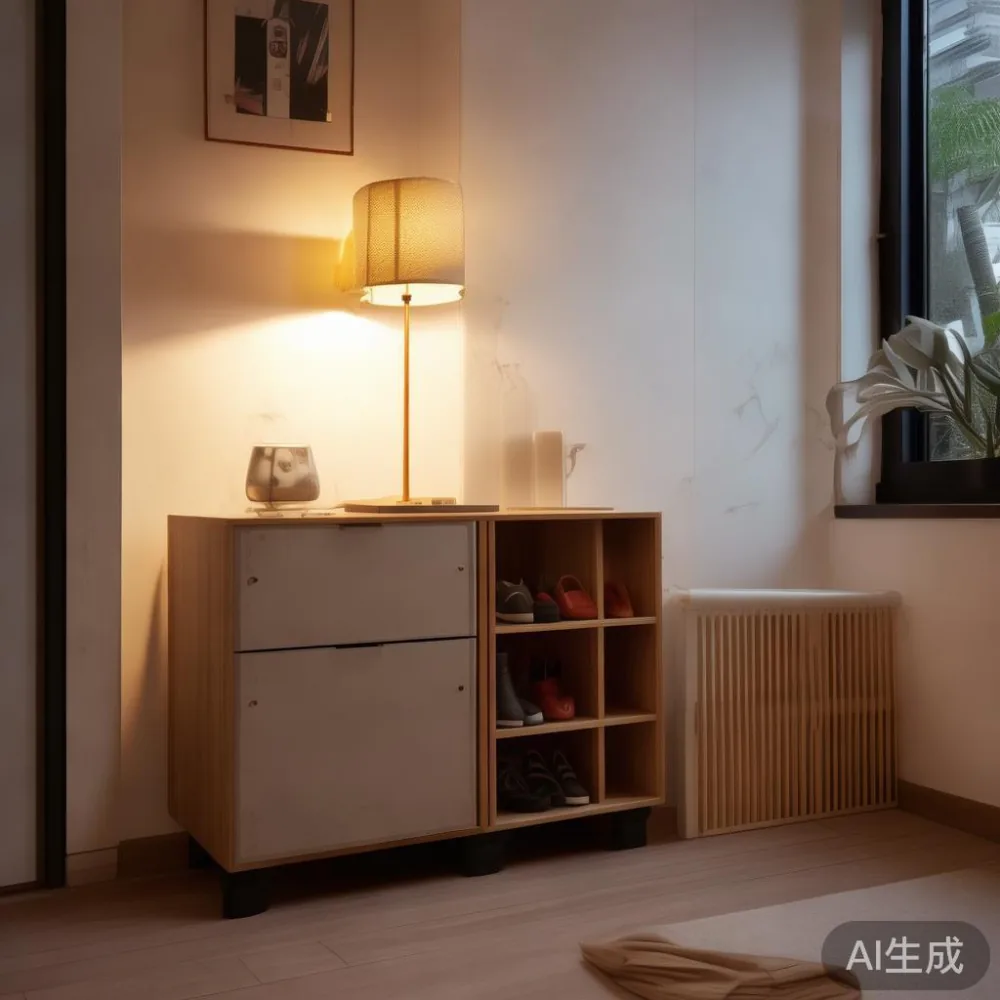
A well-proportioned shoe cabinet gives footwear a defined home without turning the entrance into a storage showroom. Its real purpose is not merely to conceal clutter, but to make daily movement feel calmer. A cabinet measuring 80 cm wide, 35 cm deep and 95 cm tall can hold roughly 18 pairs in two rows, yet occupy less than half the width of a standard 150 cm sideboard. That distinction matters in a 90 cm lift or a 120 cm condominium corridor.
Light luxury can still feel restrained. The direction here draws on French light luxury, with pale oak, gentle profiles and quiet hardware, alongside American light luxury for warmer woods and straightforward construction. Post-modern light luxury adds useful tension through clean geometry, fluted panels and carefully measured contrast. The result should look composed rather than over-decorated.
How wide should a shoe cabinet be for a Singapore entrance?
Begin with the wall, not the shoe collection. Leave at least 3 cm between the cabinet and a side wall for alignment and cleaning, and keep 80 cm of clear passage where possible. A cabinet between 80 cm and 100 cm wide is usually sufficient for one household member or a couple with a shared collection. A 60 cm model can suit a studio, but it may hold only 10 to 12 pairs if the shelves are fixed at standard spacing.
Depth is equally important. Most everyday pairs fit within a 30 cm cabinet, while ankle boots may need 38 cm. Check the tallest boots and measure them before ordering. For a narrow HDB entrance, choose adjustable shelves at 15 cm, 18 cm and 21 cm intervals rather than paying for compartments that remain unused.
Consider the route from lift to door. In many HDB blocks, internal corridors are about 120 cm to 150 cm wide, while shoe racks placed near the lift must not project into a fire-safety route. In Bedok or Tampines condos, lobbies often have generous 180 cm paths, yet private lift corridors can narrow to 110 cm. A cabinet that is 35 cm deep preserves more circulation than a 50 cm display unit while still accepting most sneakers and loafers.
Height affects the visual weight. A cabinet under 90 cm can feel low and relaxed, whereas one between 100 cm and 120 cm uses vertical space efficiently. It should not sit directly beneath a high mirror if the top is crowded; leave 15 cm to 20 cm of clear surface for keys, a small tray and perhaps 2 items of mail.
Those searching for specialist advice may compare solid wood sofa, bed frame, dining table, wardrobe, nightstand and marble table options for the same apartment. Keep their footprints on a layout plan, just as you would a shoe cabinet. A coordinated interior works when scale is consistent, not when every object is maximal.
Which shoe cabinet finish works with pale HDB interiors?
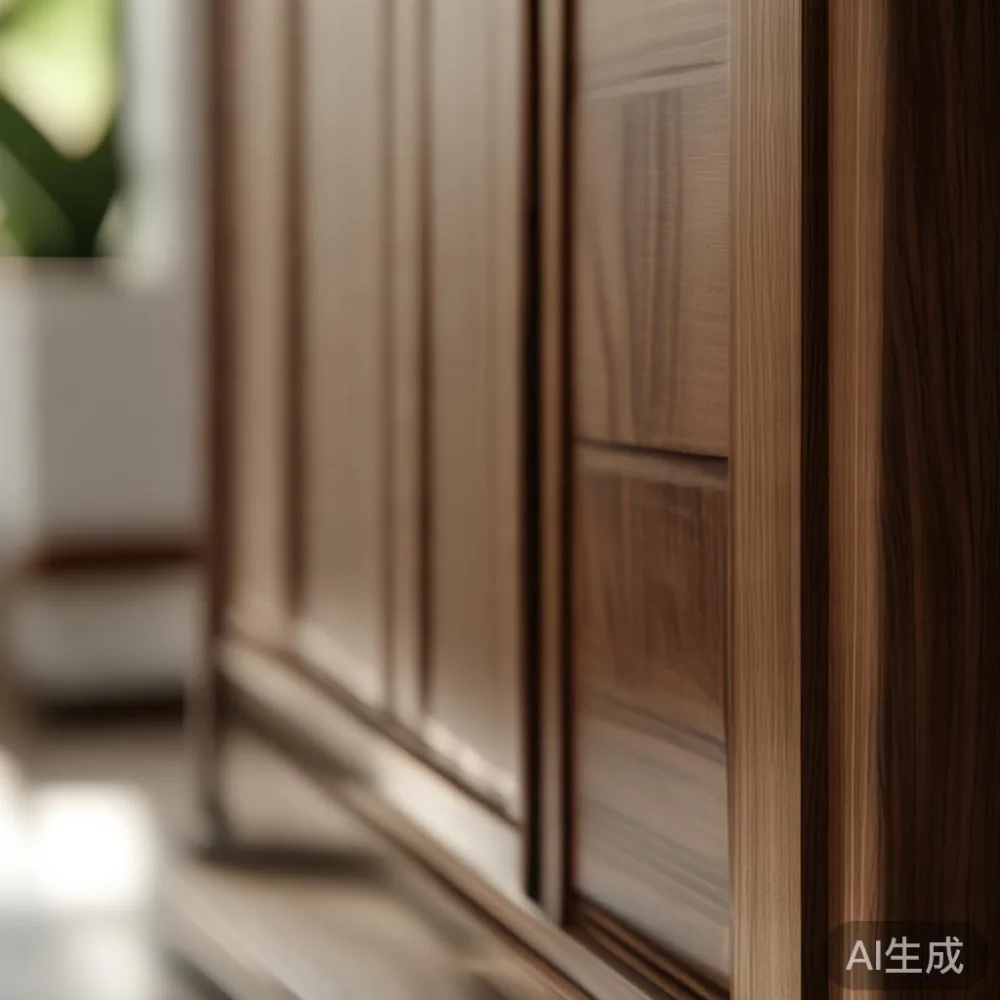
Light oak suits the pale cabinetry and cool walls common in newer Tampines and Punggol flats. Its open grain reflects daylight and prevents the entrance from feeling visually heavy. A honey-toned finish introduces more warmth and pairs well with American light luxury styling, especially beside a charcoal wall or a linen-toned sofa. Smoked walnut gives stronger contrast, but it should occupy less than 25% of the visible wall so the room does not feel compressed.
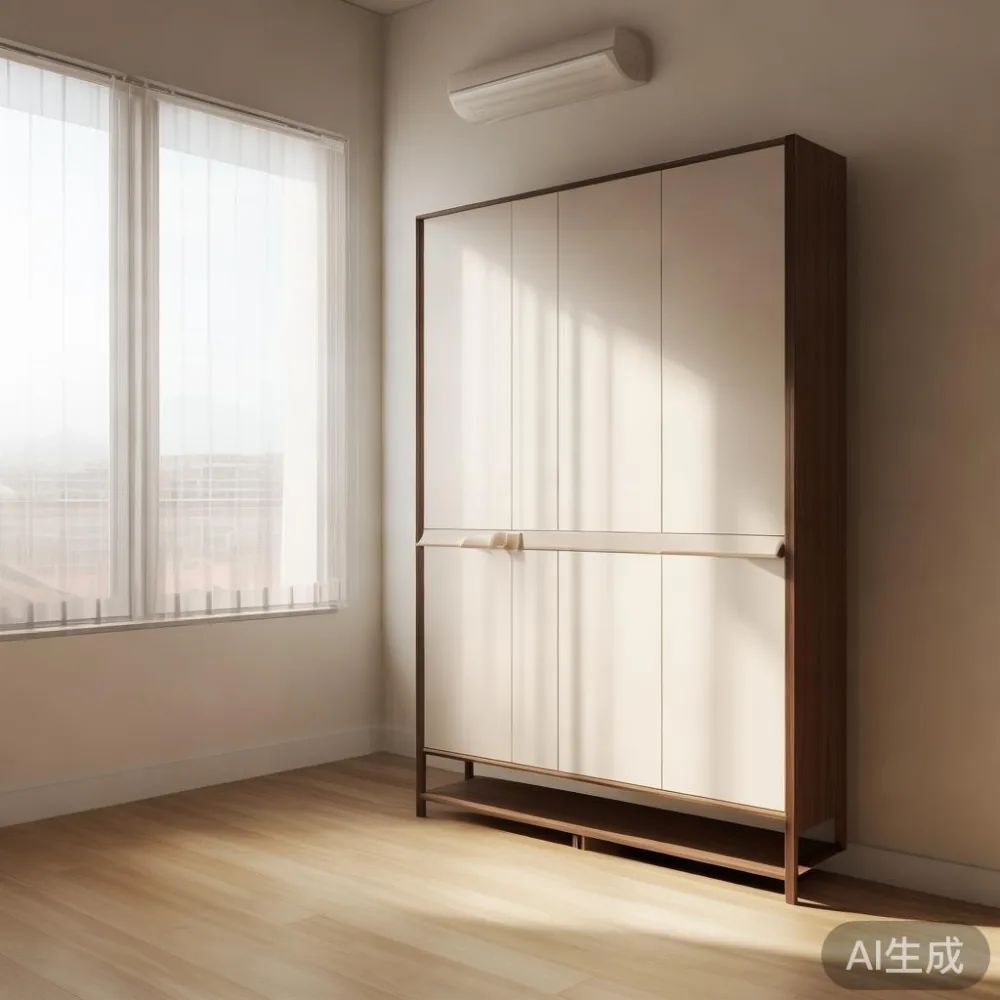
French light luxury often centres on pale, tactile surfaces: cream walls, brushed brass pulls, light oak and softly curved edges. Those qualities translate neatly to a shoe cabinet. A rectangular carcass in solid wood with two fluted doors can provide texture without relying on extra objects. If the unit has a marble table beside it, repeat one material detail rather than matching the entire room; a warm brass pull can link the two pieces.
Watch the undertone under actual home lighting. Singapore evening light can make yellow oak look orange, while cool LED strips can turn grey beige nearly blue. Request finish samples, place them near the entrance for 24 hours and compare them with the floor, skirting and door. MIDHILL offers guidance on finishes and dimensions, useful when a standard catalogue colour may not reflect a particular flat.
Hardware should remain small. A 12 cm pull has enough presence for daily use without becoming the room's focal point. Matte black creates definition against pale timber, while brushed brass feels more formal. A slim shoe cabinet with closed storage will usually appear less crowded than an open rack containing 20 visible pairs.
Can a shoe cabinet double as a console without blocking the lift?
Yes, but only within a clear width and depth. A 90 cm wide, 32 cm deep shoe cabinet can act as an entrance console if its top reaches 85 cm to 90 cm and includes a 30 cm high compartment for a single tray. Avoid placing a chair in the same 90 cm zone; the result will resemble a dining table arrangement in a much smaller area.
Before delivery, measure the lift door, lift cabin and turning space. A standard residential lift interior may be around 110 cm wide by 140 cm deep, but older blocks and newer condos vary considerably. A 90 cm cabinet can pass through a 90 cm opening if carried at a slight angle, whereas a 120 cm model may not. Record the narrowest door and handrail clearance with a tape measure rather than relying on building plans.
Corridor clearance should remain as practical as the cabinet itself. Keep the unit flat against the wall and allow 2 cm to 3 cm for skirting. If the corridor is only 100 cm wide, a 35 cm deep cabinet leaves 65 cm, which is usable but visually tight. A 25 cm to 30 cm deep shoe cabinet is often the more comfortable choice in that setting.
This is where research terms such as for sale Mid-century modern furniture and designer Modern light luxury furniture can become distracting. The labels suggest character, but a small entrance needs fewer gestures. One strong shoe cabinet, one warm light and 1 neat tray create enough visual interest. Mid-century-inspired tapered legs may be useful, yet closed-door storage usually gives a cleaner post-modern silhouette.
MIDHILL also provides a 10-year structural warranty and lifetime refinishing, which can matter if timber surfaces need care after years of use. Ask for the exact scope of the refinishing service, including expected turnaround and whether hardware replacement is included.
What should sit on top of a small shoe cabinet?
Restraint is the rule. Use a surface area of 80 cm by 30 cm as a practical boundary, and keep at least 60% of it clear. A shallow dish measuring 18 cm in diameter is enough for keys; a small lamp with a 20 cm shade adds warmth without demanding table space. Avoid a large vase, 3 framed photographs and a full stack of post together, since they can visually widen the cabinet.
For natural textures, place 1 branch of greenery in a 12 cm vase or set a 15 cm ceramic object against the wall. A full-length mirror mounted above the cabinet can make the entrance feel larger, but position it carefully. If the cabinet is 95 cm tall, the mirror's lower edge can begin at 105 cm, leaving 10 cm for a narrow ledge or nothing at all. Mirrors should be fixed with suitable wall anchors rather than leaned unsecured.
Light should come from more than the ceiling. A warm wall sconce at 130 cm to 150 cm above floor level can create a welcoming pool of light, provided the electrical work is handled correctly in an HDB flat. A rechargeable table lamp offers a simpler option and costs around SGD 35 to SGD 80. The aim is 2700K to 3000K, not the cool white that can make compact rooms feel more clinical.
People often begin comparing a light luxury sofa vs Mid-century modern sofa while planning a living room, then reproduce the same visual density at the entrance. Keep the sofa's palette in mind: if it has tapered walnut legs, use walnut accents on the shoe cabinet; if it is upholstered in cream, select light oak rather than dark timber. This creates continuity without adding furniture.
How do you style a shoe cabinet in a compact condo?
Start by removing anything that does not support a daily ritual. Loose parcels, 4 shopping bags and an umbrella stand can be relocated to a vertical hook or a slim enclosed compartment. The cabinet should manage footwear, not become a catch-all for objects without homes.
Use the surrounding floor to determine the style. If the entrance has terrazzo tiles and straight lines, a shoe cabinet with solid wood framing and subtly rounded corners can soften the setting. If the condo has dark stone and brushed metal fittings, a warmer timber finish with matte hardware will prevent the space from becoming stark. French light luxury works especially well here because texture, proportion and muted colour do the work.
For open shelving, limit each level to one category and leave 20% of the shelf empty. Six pairs on a 60 cm shelf may look intentional; 11 pairs compressed together will not. Closed doors are more practical during the humid months, when dust and moisture can affect shoes. Singapore's relative humidity often sits around 70% to 80%, so ventilated panels and removable shelves deserve attention.
A useful test is to view the entrance from the lift door. You should see 1 main object, 1 secondary object and a clear path. If the shoe cabinet, mirror, pendant and floor mat all carry strong patterns, simplify 2 elements. This approach suits both French and American light luxury, as neither depends on visual clutter to feel luxurious.
I visited a colleague's 2-bedroom condo in Punggol last month and measured the shoe cabinet zone before her new unit arrived. The delivery route included a 92 cm lift door and a 105 cm private corridor. Her 88 cm wide, 30 cm deep shoe cabinet fitted around a 90-degree turn, while a 120 cm console had to remain at the studio. Seeing those dimensions in place made the 12 cm difference feel larger than it sounded on a product page. The lesson was simple: circulation is part of the furniture decision.
How much does a solid wood shoe cabinet cost in Singapore?
For a compact unit made from solid wood rather than particle board, expect roughly SGD 680 to SGD 1,250 for widths between 70 cm and 90 cm. A 60 cm model may fall near SGD 520 to SGD 780, while a 100 cm to 120 cm cabinet with more detailing can reach SGD 1,400 to SGD 2,200. Marble, metal and glass additions can add SGD 150 to SGD 600 depending on the material and hardware.
The finish affects both price and longevity. Standard oak or walnut tones may sit in the middle of the range, while hand-finished surfaces, fluted doors and premium hardware move upward. Confirm whether quoted prices include GST. Singapore GST is currently 9%, so a displayed SGD 1,000 price before tax becomes SGD 1,090 after tax. A precise landed total makes comparison easier.
Look for the details that affect daily use: solid wood drawer boxes, smooth runners, adjustable shelves, recessed handles and finished cabinet backs. A 10-year structural warranty offers useful reassurance, but the fine print should identify which timber components and joints are covered. Lifetime refinishing is another point to clarify, especially for colour matching after a repair.
Shipping is a meaningful part of the total. MIDHILL provides free shipping above US$350, although a Singapore order below that threshold may still incur freight or handling charges that should be confirmed before payment. Ask for a delivery window in business days and whether stair carry is included. In an HDB lift, the crew still needs floor access, unit numbers and a parking allocation, so provide them 3 to 5 days before arrival if the building requires notice.
Returns are generally allowed within 14 days under the stated policy. Because a made-to-order cabinet may take 30 to 45 days to produce, confirm whether made-to-size pieces are returnable and whether a restocking fee applies. Track the timber tone, hardware finish and cabinet dimensions in writing before the order is placed.
How do I keep a small entrance from feeling crowded?
Measure twice, buy less and give every object a boundary. A shoe cabinet around 80 cm wide and no deeper than 35 cm can organise 12 to 20 pairs while preserving the visual calm of a compact Singapore home. Choose a light timber finish, restrained hardware and a top surface with 1 or 2 functional items. Most importantly, check the route from lift to unit, not just the empty wall where the cabinet will stand.
The wider apartment can follow the same discipline. A solid wood sofa should suit the room's clear width, a bed frame should sit 60 cm to 70 cm from surrounding walls where possible, and a dining table needs at least 75 cm of clearance on each occupied side. A wardrobe with closed fronts can define storage without exposing its contents, while a compact nightstand keeps the bedside area light. A marble table may work as a small round surface with a 90 cm to 100 cm diameter, yet it should not compete with the entrance focal point.
For a bedroom, how to choose light luxury bed is a useful framework: measure first, establish clearance, then consider the frame's visual weight. A low-profile solid wood frame in pale oak can keep a 3-room HDB bedroom airy. An upholstered headboard may look refined, but it requires wall clearance and careful cleaning. For storage, the best European light luxury wardrobe for 2026 should be judged by internal planning, hinge quality and fit within the HDB corridor, not merely by the richness of its doors.
Readers searching for Vintage for small living room ideas may expect curated character, but vintage pieces work best as accents. Add 1 chair with a recognisable profile or 1 side table with an interesting edge rather than filling the room with nostalgic objects. The shoe cabinet can provide the same contrast through fluted timber, shaped handles or a warm finish while retaining practical storage.
In a compact flat, luxury is often the sense of order rather than the amount of material. A clear 90 cm path, a properly fitted cabinet and 2 warm lights can make an entrance feel more generous than 2 extra decorative pieces. Respecting the building's lift and corridor dimensions also prevents the home from feeling crowded before anyone has crossed the threshold.