Sizing a Shoe Cabinet for a Singapore HDB Living Room: The Practical, Numbers-First Guide
I spent the first Saturday of last month in a 4-room HDB flat in Tampines with a client who had bought a shoe cabinet online without measuring anything. The cabinet arrived in two cartons, the corridor outside his unit on the 9th floor is 1.2 m wide, and the lift cabin measures 1.1 m deep by 1.4 m wide with a 2.1 m door height. One carton fitted. The other did not. We ended up unboxing it in the lift lobby, carrying the panels down two flights to a friend’s ground-floor unit for storage, and re-scheduling the assembly crew. The cabinet itself was fine. The size was not. That afternoon is the reason I now write down every number before any HDB client in Singapore commits to a shoe cabinet.
Why shoe cabinet sizing is the first decision, not the last
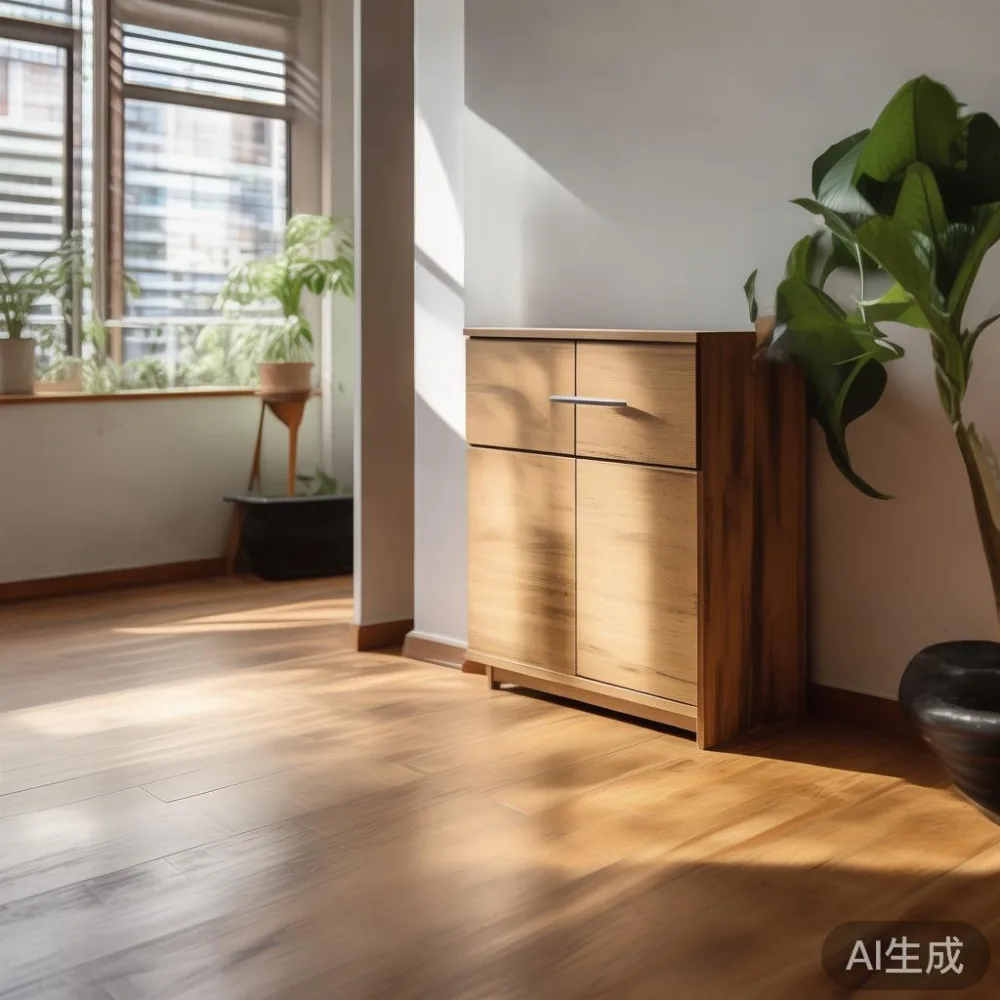
A shoe cabinet in an HDB living room does three jobs at once: it stores roughly 12 to 30 pairs depending on internal width, it acts as a low visual anchor between the sofa and the dining table, and it conceals the daily mess of slippers, trainers and work shoes that otherwise migrates toward the door. Get the size wrong and the room feels pinched. Get it right and the same room feels calmer and more generous, even at the same square footage.
Singapore HDB living rooms are tighter than the floor plan drawings suggest. A standard 4-room flat living room runs about 3.2 m to 3.8 m long and 2.8 m to 3.4 m wide, which gives you roughly 9 to 12 sqm to work with once the sofa, TV console and dining table are placed. A 5-room flat in Punggol or Bedok gives you closer to 13 to 16 sqm. Every centimetre you give the cabinet is a centimetre you take from circulation space.
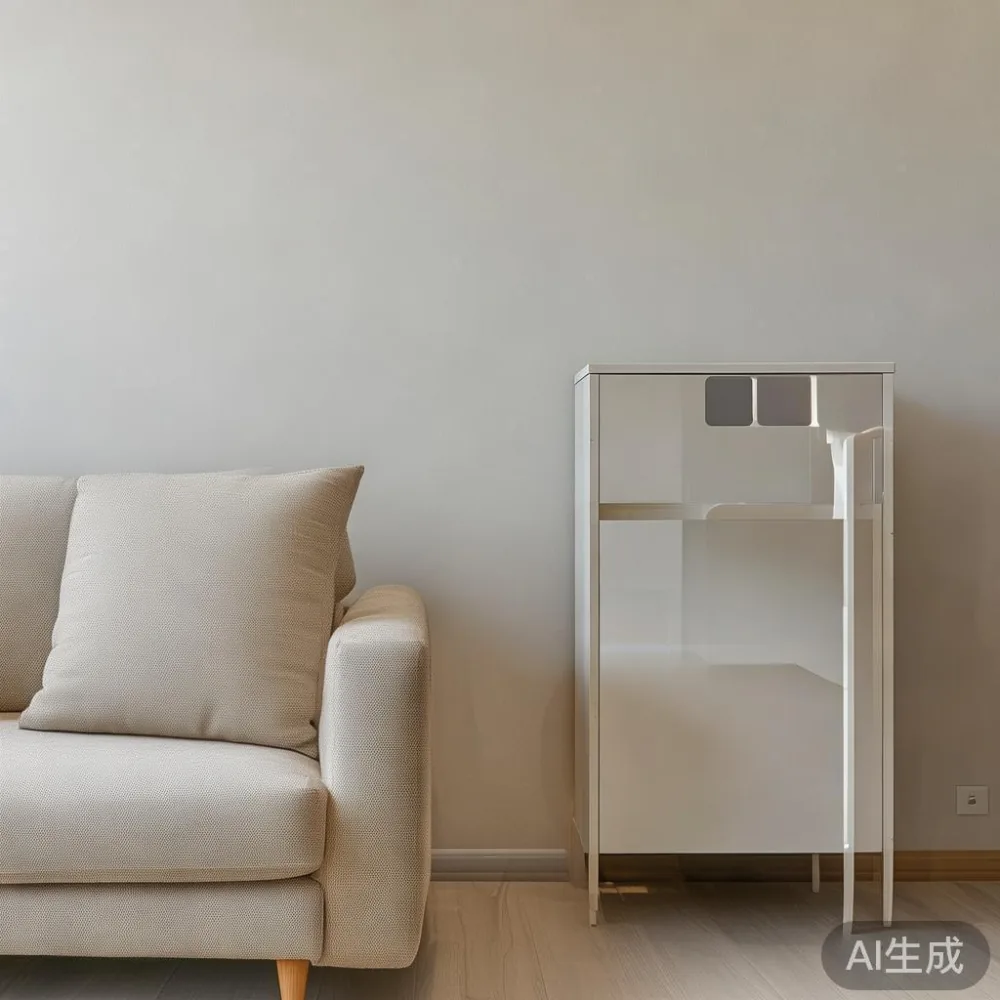
MIDHILL has been building solid wood furniture from Foshan since 2008 and ships to more than 15 countries. Their sizing notes for a single-row shoe cabinet list a typical width of 80 cm, depth of 35 cm and height of 110 cm, which is a useful baseline before we add or subtract anything for your flat.
How do you measure your HDB living room correctly for a shoe cabinet?
Grab a tape measure, a piece of A4 paper, and a pencil. Draw the room to scale, even roughly. Then take six numbers and write them on the drawing in pencil.
First, the wall length where the cabinet will sit. Measure the full wall and then measure the usable length after the air-conditioner compressor ledge, the switch plate, the door swing arc and the skirting. In most HDBs that ledge eats 15 to 25 cm at one end. Second, the ceiling height at that wall. HDB ceilings are nominally 2.6 m, but with a light fixture or a cornice you may have only 2.45 m of clear space. Third, the door swing. A standard HDB bedroom or bathroom door needs 65 to 75 cm of clear arc; a main entrance door needs 90 to 100 cm. Mark that arc. Fourth, the corridor and lift dimensions if you are ordering flat-pack. Fifth, the distance between the sofa and the opposite wall, because the cabinet depth plus circulation should leave 70 to 80 cm minimum for a person to walk past while someone is sitting down. Sixth, the height of the nearest power outlet, since many clients in Tampines and Punggol want to charge a robot vacuum or a diffuser on top of the cabinet.
If any of those numbers are missing, do not order yet. The cheapest cabinet in Singapore becomes the most expensive one if it has to be returned. A typical courier return from a Jurong warehouse to your HDB, plus a 30 to 60 SGD collection fee, plus 9 percent GST on the original invoice, is enough to ruin a Saturday.
What cabinet dimensions actually work in a 4-room and 5-room HDB?
Here is the table I keep on my phone and share with every client. All numbers are external, in centimetres.
For a 4-room flat living room of about 10 sqm with a 3-seater sofa and a 4-seater dining table already in place, a two-row shoe cabinet between 90 cm and 120 cm wide, 35 cm to 40 cm deep and 100 cm to 115 cm tall is the comfortable zone. Two rows means a top row that flips up for trainers and a bottom row that opens outward for slippers; in a single-person household you might fit 18 to 24 pairs, and in a family of four closer to 30 if you keep heels and boots in the wardrobe instead.
For a 5-room flat living room of about 14 sqm in Punggol or Bedok, you can stretch to 140 cm to 160 cm wide, still 35 cm to 40 cm deep, and up to 120 cm tall, which gives you a useful top surface for a tray, a small plant and the keys. Above 120 cm the cabinet starts to look like a sideboard, which is fine if you want it to double as one.
For a 3-room flat living room of about 7 sqm, I usually recommend a single-row cabinet between 70 cm and 90 cm wide, 30 cm to 35 cm deep and 95 cm to 105 cm tall. Going deeper than 35 cm in a tight room is the single most common mistake I see, because the eye reads depth more honestly than width.
Will the cabinet actually fit through the lift and the corridor?
This is the question that turns a happy Saturday into a long one. Singapore HDB lift cabins are not all the same size, and older blocks in Bedok and Tampines can have tighter cabins than the newer ones in Punggol.
A good rule of thumb: the largest carton, after unboxing the cabinet on a flat surface, should be no more than 60 cm deep, 115 cm wide and 200 cm tall for a standard passenger lift, and you should always call your town council to confirm the cabin dimensions in your block. Older blocks sometimes list 1.0 m by 1.3 m cabins. If your carton exceeds any of those dimensions, ask the supplier before paying whether they can split the cabinet into three smaller cartons instead of two. MIDHILL, for example, ships most of its solid wood shoe cabinets in three cartons as a default precisely because lift access in HDB blocks is rarely guaranteed.
Corridors are usually fine at 1.2 m to 1.5 m wide, but the corner at the lift lobby often narrows to 1.0 m because of the fire hose cabinet and the recycling chute door. Walk that corner before you order. If the cabinet cannot be tilted around it, no amount of internal storage will make up for a cabinet living in the corridor.
How much weight can an HDB floor take, and how heavy is a solid wood cabinet?
A solid wood shoe cabinet is heavier than the engineered-wood or plywood version you see in many Singapore showrooms. A two-row cabinet in oak or ash at 120 cm wide typically weighs 55 kg to 75 kg fully assembled, and 60 kg to 90 kg in denser woods. Spread across four feet on a screeded HDB floor, that is roughly 14 kg to 22 kg per foot, which is well within HDB’s 150 kg per sqm design live load for domestic floors. You do not need to worry about the floor.
You do need to think about moving it. A 70 kg cabinet across a corridor and into a lift is a two-person job, and a three-person job on a tight corner. If you live above the 15th floor, plan the delivery for a weekday morning when the lift is quieter and the lobby has fewer prams. Free shipping over US$350 from MIDHILL applies, but delivery into the home is usually a quoted line item in Singapore, often between SGD 60 and SGD 120 depending on the floor and the number of cartons.
Which finish and style suit a light-luxury HDB living room?
Light luxury is a finish and a proportion, not a price tag. For HDB living rooms I tend to suggest two directions. The first is a French provincial look in warm white or muted greige with a slim 2 cm profile on the cabinet doors, paired with a brass or brushed gold handle. It pairs naturally with a solid wood bed frame in the master bedroom if you want the flat to read as one interior rather than four rooms of unrelated furniture. The second is a post-modern light-luxury direction with a darker walnut or smoked oak finish, slab fronts and no visible handles, which sits well next to a marble dining table or a marble side table in the living room.
A reader in Bedok wrote to me asking whether an Italian light luxury bed is worth it for a small HDB master bedroom; I told her the bed is rarely the problem in a small room, the wardrobe is, and that an Italian-style finish on a shoe cabinet and a wardrobe will do more for the perceived size of the flat than a statement bed will. The same logic applies to dining room pieces, which is why clients who ask about vintage for dining room usually end up choosing one walnut cabinet and one walnut sideboard rather than two unrelated pieces of furniture.
How should the shoe cabinet relate to the rest of the room?
Coordinate, do not match. In a Tampines 5-room flat last month I placed a 140 cm wide walnut shoe cabinet opposite a 220 cm solid wood sofa in a slightly cooler ash, and the small difference in tone made the cabinet look intentional instead of bulky. The cabinet sat about 80 cm from the TV console and roughly 110 cm from the dining table, which left enough room for a person to pull out a dining chair without bumping into the cabinet door.
Lighting matters more than people expect. A small picture light or a warm LED strip at 2700K along the top of the cabinet adds about SGD 40 to SGD 80 to the project and makes the cabinet feel like part of the architecture rather than a piece of furniture pushed against a wall. If you want the cabinet to double as a sideboard, leave 8 cm to 10 cm behind it for the cable of a small lamp.
One more honest note on the broader living room mix. Clients who pick a Japanese-leaning sofa usually want lighter woods and lower profiles, and they tend to compare Japanese sofa vs Nordic sofa before they commit. Both work in HDBs, but neither forgives a deep cabinet. If your sofa is 95 cm deep, the cabinet opposite should not exceed 35 cm, otherwise the room reads as a corridor rather than a living room.
What about an office, a study corner, or a work-from-home setup?
More HDB buyers are carving a small work corner out of the living room, especially in 3-room and 4-room flats where the study is a half-room. A shoe cabinet at 35 cm deep will not work as a desk, but a 160 cm wide two-row cabinet can sit behind a 140 cm desk at 90 degrees and provide useful storage for files, a printer and a stack of catalogues. Clients who want a stronger French provincial for office look often choose the same handle and finish across both pieces so the corner reads as one piece of architecture.
If you are ordering matching pieces for an HDB home office, MIDHILL can supply a coordinating desk and a two-drawer nightstand in the same wood, and a separate MIDHILL dining table for the dining zone in a complementary tone, all on the same consolidated shipment so you only pay one delivery fee and one round of GST. That is often the difference between a coherent flat and a mismatched one.
What is a realistic Singapore budget for the right-sized cabinet?
Prices in Singapore change, but as a working range for a solid wood two-row shoe cabinet delivered to an HDB, plan for SGD 1,200 to SGD 2,400 for a 120 cm cabinet in oak or ash, and SGD 2,000 to SGD 3,600 for the same cabinet in walnut or in a French provincial painted finish. Add SGD 80 to SGD 180 for delivery into the home above the ground floor, 9 percent GST on the full invoice, and SGD 40 to SGD 120 if you want assembly.
Wholesale pricing for two or more cabinets, or a cabinet plus a matching sideboard or dining table, usually drops 10 to 18 percent off the single-piece retail. A Singapore agent handling wholesale French provincial furniture will often quote a project price rather than a piece price, which is worth asking about if you are furnishing more than one room at once.
Is the right size really about the cabinet, or about the room?
It is about the room. A correctly sized shoe cabinet is the one that disappears into the layout and lets the rest of the living room do its job. A 90 cm cabinet in a 4-room HDB usually looks better than a 160 cm cabinet in the same room, because the smaller piece leaves air on either side and lets the eye rest. A 160 cm cabinet in a 5-room flat, by contrast, can carry the entire wall between the entrance and the dining zone and earn its footprint.
If you remember nothing else, remember the six numbers: wall length, ceiling height, door swing, lift cabin depth, sofa-to-wall distance, and the corridor corner at the lift lobby. Measure them twice, write them on the plan, and only then choose the cabinet. A shoe cabinet is one of the most affordable pieces of solid wood furniture you will buy for an HDB, and it is also the one most likely to be returned because of a centimetre someone forgot to measure. Light luxury for apartment interiors is a finish language, not a rescue plan; the sizing has to do its own work first.