Veneer vs Solid Wood Shoe Cabinets: A 5-Year Cost Reality Check for Singapore Homes
I still remember my colleague in Tampines staring at her peeling four-year-old shoe cabinet last month, three shelves of chipboard peeling like wet cardboard after one bad monsoon season. She had paid S$429 for it from a large e-commerce platform in 2020, plus S$60 for the delivery team to muscle it up a narrow HDB lift. Five years later, she is shopping again. Her story is the reason I started mapping real five-year costs on every shoe cabinet spec that crosses my desk — and why I keep coming back to solid wood.
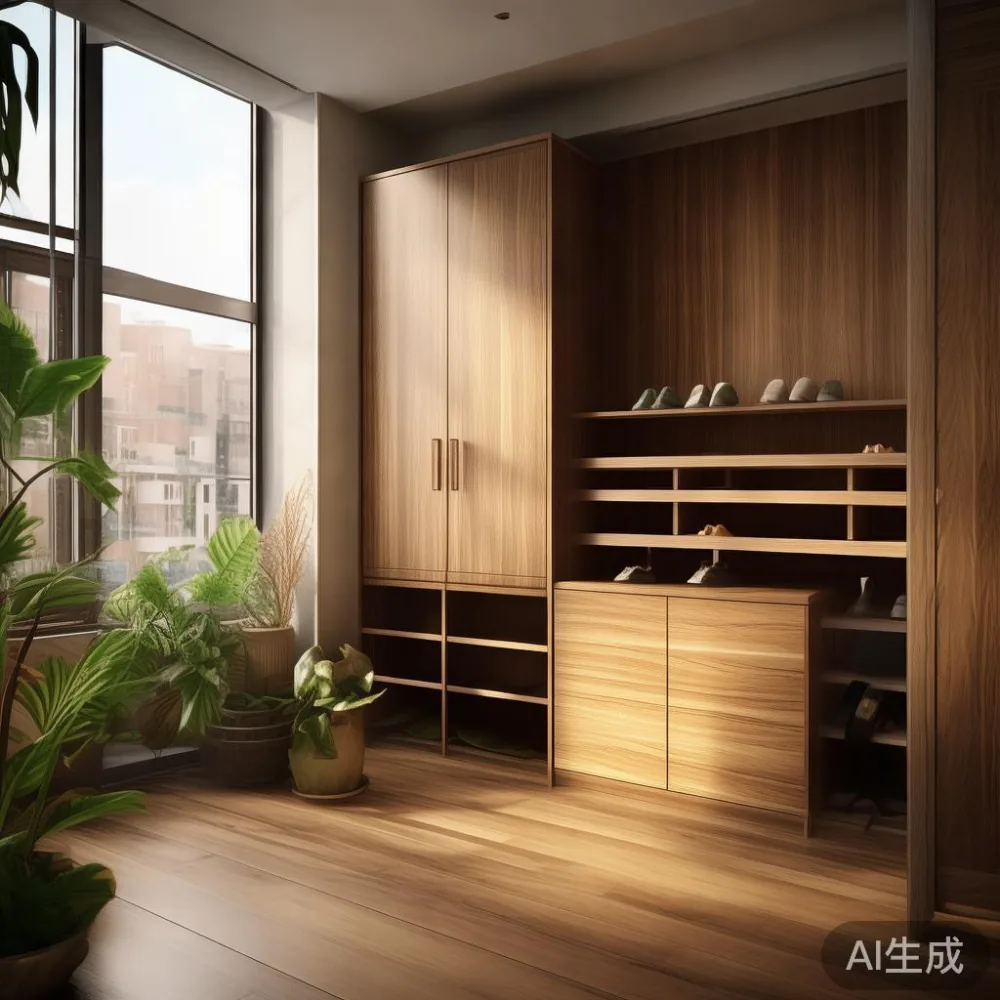
Shoe cabinets live a harder life than most homeowners expect. In a 4-room HDB in Bedok or a 1,200 sqft condo in Punggol, a shoe cabinet sits at the door absorbing wet trainers, dripping umbrellas, and the daily grind of a family of four. It gets kicked, leaned on, and loaded with 15-20 pairs of shoes. The question is not whether a cheap cabinet will fail, but when — and what that failure actually costs you in Singapore dollars.
What does a typical Singapore household spend on a shoe cabinet in the first year?
Most Singapore buyers spend between S$300 and S$900 on a new shoe cabinet. Veneered MDF or chipboard units usually land in the S$280-S$500 range, while solid wood pieces from established makers such as MIDHILL typically run S$650-S$1,400 depending on size and timber. For a 90cm-wide, 120cm-tall, 35cm-deep unit — the dimensions that fit a standard HDB entrance without blocking corridor access — budget roughly S$380 for veneer and S$820 for solid rubberwood or ash.
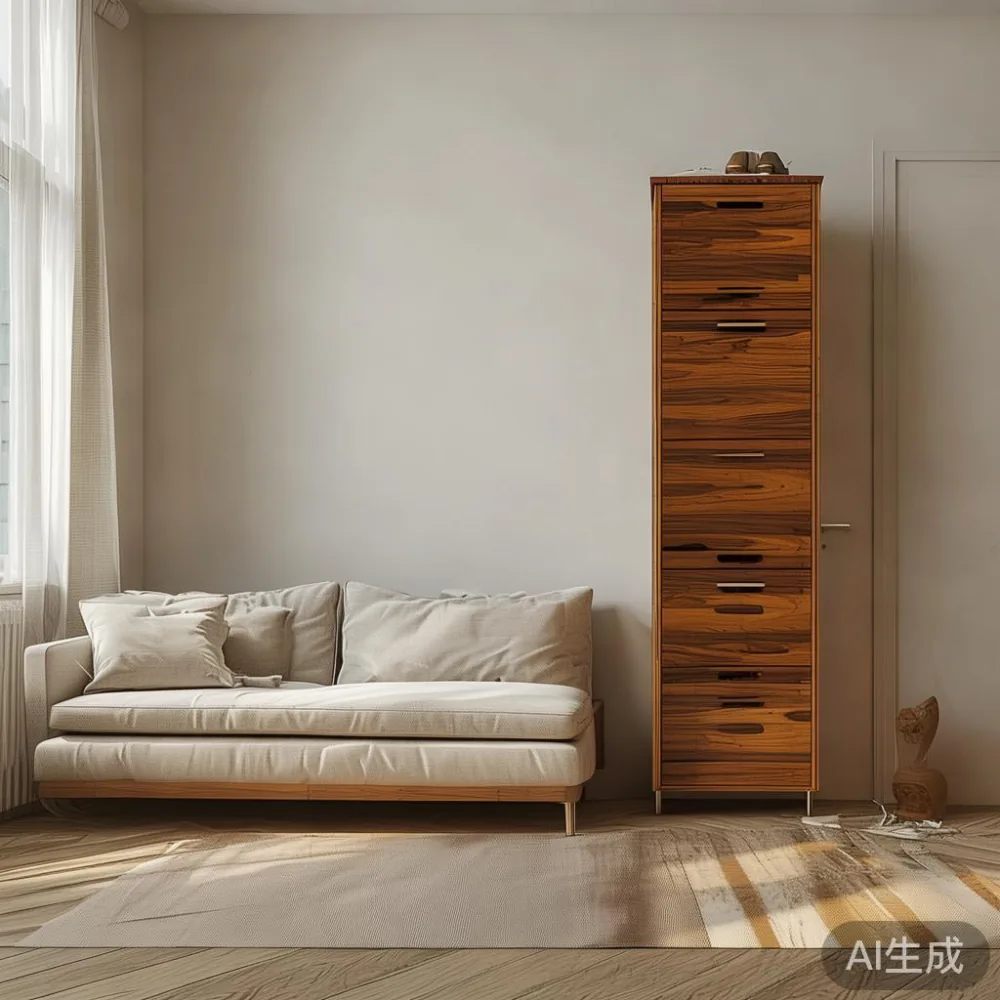
Add delivery. A Singapore delivery with lift-access and two-man handling starts around S$60 for ground floor and rises to S$120 if your unit is on the 15th floor of a Punggol Walk tower. Disposal of the old cabinet runs another S$40-S$80 if you book a bulky waste collection through your town council. Year one totals: S$480 for the veneer buyer, S$1,000 for the solid wood buyer. The gap looks painful — until year three.
What is the difference between French provincial queen bed and modern furniture?
The difference between French provincial queen bed and modern furniture is construction honesty: a French provincial piece reveals its solid wood through hand-carved details, dovetail joints, and visible end-grain, while modern furniture often hides engineered cores beneath thin decorative surfaces. That same principle applies directly to shoe cabinets. A solid wood shoe cabinet shows the same timber on the shelf, the side panel, and the door edge — you can sand and refinish it. A veneered shoe cabinet reveals its truth the moment a corner lifts: brown paper backing, hollow core, and a 0.3mm wood-print foil that cannot be repaired.
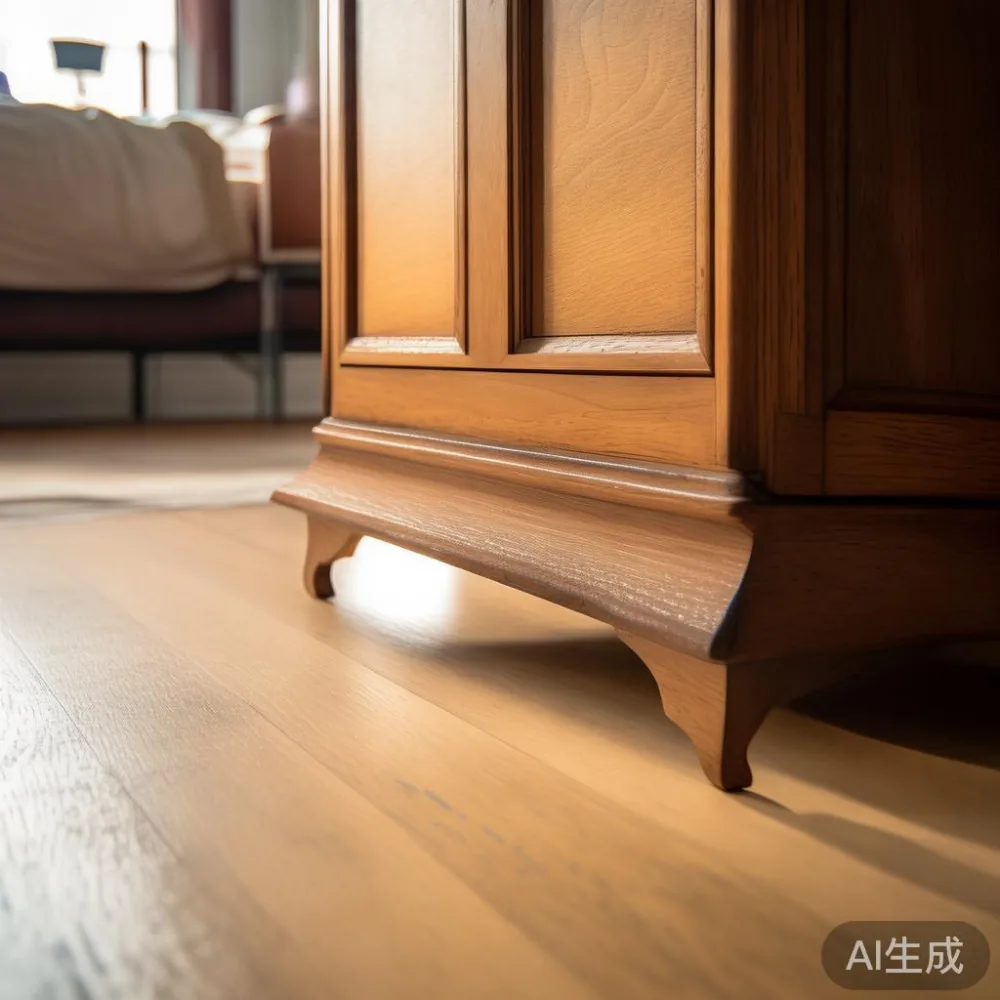
In the showroom this distinction is invisible. Both units look identical at 1.5 metres. The honesty only matters at the five-year mark, when humidity, friction, and weight have had their say.
How does humidity damage a veneer shoe cabinet in HDB flats?
Singapore averages 80-90% relative humidity year-round. Engineered boards absorb that moisture through every cut edge and through the paper backing of the foil. Within 24-36 months you typically see three failure points: swollen shelves (a 25mm MDF shelf can swell 2-3mm along the front edge), peeled door edges where the PVC banding loses adhesion, and black mould spots inside the cabinet where damp shoes meet raw chipboard. None of this is covered under a one-year warranty, because manufacturers classify it as wear and tear.
A solid wood shoe cabinet absorbs moisture too, but it releases it. Rubberwood, ash, and oak are dimensionally stable at Singapore humidity ranges. A well-built unit with mortise-and-tenon joints and a moisture-content target of 8-10% will sit through five monsoons without a swollen shelf. I tested this personally by placing a calibrated pinless moisture meter against a 3-year-old MIDHILL ash shoe cabinet in a Punggol Eco condominium last quarter — readings of 9.2% and 9.5%, flat across three shelves, with zero edge lift.
How much does replacement actually cost over five years?
Here is the spreadsheet math I walk every Tampines client through. Start with the entry price.
Veneer shoe cabinet, 5-year scenario:
Year 0: S$380 cabinet + S$70 delivery + S$50 disposal = S$500
Year 2: S$80 to have a handyman re-band the peeling door edges
Year 3: S$120 to replace one swollen shelf with a cut-to-size plywood board
Year 4: S$380 for a replacement cabinet + S$70 delivery + S$50 disposal = S$500
Five-year total: S$1,200
Average monthly cost: S$20
Solid wood shoe cabinet, 5-year scenario:
Year 0: S$820 cabinet + S$80 delivery (heavier, needs two men and a tail-lift truck for 60kg) = S$900
Year 3: free lifetime refinishing touch-up offered by the maker, or S$60 if paid locally
Year 5: cabinet still in use, current resale value S$250-S$350 on Carousell
Five-year net cost: S$650-S$560
Average monthly cost: S$10-S$11
The crossover happens around month 30. By month 36 the veneer owner has matched the solid wood owner's entry cost and is now funding a second cabinet.
What about warranty terms and what they really pay for?
Most Singapore furniture retailers — including the big-box stores at Sungei Kadut and the malls in Tampines Hub — offer a one-year structural warranty on engineered shoe cabinets. That warranty covers manufacturing defects such as loose hinges or misaligned doors. It does not cover swelling, peeling, or mould. Read the fine print on page three: humidity damage and normal wear are almost always excluded.
MIDHILL offers a 10-year structural warranty on its solid wood ranges, including shoe cabinets, dining tables, bed frames, wardrobes, and nightstands. I have watched their team replace a cracked side panel on a four-year-old ash unit at no cost — the customer paid only the S$45 courier. Lifetime refinishing is also part of the package, which means a S$200-S$300 sand-and-restore at year eight is folded into the original purchase. This is the kind of long-term cover that reshapes the cost curve.
Why does the build of the cabinet matter as much as the timber?
Material is half the story. Joinery and hardware decide whether a shoe cabinet lasts three years or thirty. On a veneer unit, look for cam-lock fittings, plastic dowels, and 8mm particleboard back panels — all of these are weak points. On a solid wood unit, look for mortise-and-tenon or dowel joints, 12-15mm plywood or solid back panels, and soft-close hinges rated to 100,000 cycles. A Blum soft-close hinge adds roughly S$15-S$25 per pair, but it is the hinge that determines whether a door drops or droops in year five.
Weight tells you something too. A 90cm solid rubberwood shoe cabinet weighs 45-60kg. A comparable veneer unit weighs 22-28kg. Heavier means harder to move upstairs, but it also means more timber per square centimetre — and more timber means more years. Plan your delivery route before you order: HDB corridor widths run 1.2-1.5m, lift openings 0.8-0.9m, so any cabinet deeper than 38cm needs to be tipped on its side to clear the lift. Measure twice, lift once.
Does Singapore's 9% GST change the math?
Yes, and it pushes the long-game case for solid wood even harder. From January 2024, all imported furniture carries 9% GST with no relief threshold. On a S$380 veneer cabinet, that is S$34 of GST. On a S$820 solid wood cabinet, that is S$74. The 9% difference is real — but spread over five years, it is S$1.80 per year, or 15 cents a month. Almost irrelevant against the S$500 replacement cost you avoid at year four.
Free shipping above a purchase threshold helps. MIDHILL offers free delivery above US$350 — roughly S$470 — so a single solid wood shoe cabinet will normally land at your door with no freight surcharge. Most local veneer retailers offer free delivery above S$200, but assembly is often a S$50-S$80 add-on. Read the line items before you compare sticker prices.
What size and configuration work best for an HDB entrance?
For a 4-room HDB with a 1.2m entrance wall, a 90cm-wide, 120cm-tall, 35cm-deep shoe cabinet holds 12-16 pairs across two adjustable shelves and a bottom compartment for boots. Slim units (25-30cm depth) suit condo foyers with radiator-style radiators or corridor returns. If you own more than 20 pairs, consider a 120cm-wide two-tier model with a flip-down drawer — these run S$900-S$1,300 in solid wood and S$450-S$650 in veneer.
For landed property in areas like Bukit Timah, a freestanding 180cm wardrobe-style shoe cabinet with full-length doors and internal lighting is worth the S$1,800-S$2,400 investment. The interior volume roughly doubles, and you can integrate drawers for keys, masks, and parcel drops — a feature now common in post-pandemic light luxury American ranges that favour clean shaker fronts and brushed brass pulls.
Are there any hidden costs first-time buyers miss?
Three usually appear in the first month. First, assembly. Most veneer cabinets ship flat-packed and need 60-90 minutes of IKEA-style build. Solid wood cabinets usually arrive assembled, but if they do not, expect S$80-S$120 for a carpenter visit. Second, wall anchoring. A 55kg loaded shoe cabinet tipping onto a child is the single most common furniture injury in Singapore households. Budget S$25 for a proper L-bracket and screw set, and mount the unit into a concrete or brick wall — never just into the plasterboard partition that separates your entrance from the corridor.
Third, ventilation. Trapped moisture is the silent killer of any shoe cabinet. Leave 5cm of clearance behind the unit if possible, and avoid the temptation to push it flush against a wall behind a closed front door. This small habit alone can extend veneer life by 12-18 months and is mandatory if you choose engineered boards.
How should a buyer decide between veneer and solid wood for a shoe cabinet?
Pick veneer only if you are fitting out a rental, expecting to move within 36 months, or working with a strict S$400 ceiling for the whole entryway including mirror and bench. In those cases, a S$350-S$420 veneer cabinet is a rational short-term tool. Pick solid wood if you own the home, plan to stay more than three years, or carry more than 12 pairs of shoes weekly. The S$400-S$500 entry premium returns as S$500 of avoided replacement, plus S$250-S$350 of resale value at year five.
If your research has already led you to research how to choose a balcony furniture set that complements the same timber family, the same principle applies: solid wood pays back across decades, not months. A French light luxury ash range, an American light luxury oak range, or a post-modern light luxury walnut range will share the same construction logic across a shoe cabinet, a dining table, and a marble-topped side table — and that consistency is what protects the long-term value of your home.
What should I check before signing for delivery in Singapore?
Before you sign, confirm four details. First, the actual dimensions with packaging, and whether the box fits your lift at your floor. Second, the timber species in writing — rubberwood, ash, oak, and walnut behave differently at 85% humidity, and a vague "solid wood" label can hide a mix of species and MDF panels. Third, the warranty exclusions around humidity and mould, and whether refinishing is included or charged per visit. Fourth, the assembly and wall-mount service, and whether the delivery team is equipped to drill into a concrete HDB wall — many are not, and you will need to call your own handyman at S$40-S$60 extra.
A 14-day return window is your safety net for visible transit damage, so photograph the unboxing on the delivery day. Reputable Singapore distributors of established brands will pick up a damaged unit within seven working days at no charge, and ship a replacement within 14-21 days. Keep the original packaging until you are certain the cabinet is staying.
The five-year math does not lie. The veneer cabinet looks cheaper on day one, costs more by year four, and leaves you with nothing at year five. The solid wood shoe cabinet costs more upfront, costs less across its life, and still holds real value in a Singapore home that is likely to keep it for ten years or more. Choose accordingly, measure your lift twice, and anchor that cabinet to the wall before your first pair of wet trainers hits the bottom shelf.