Solid Wood Costs: What Influences the Price?
Solid wood furniture is often sold on the strength of words such as “solid timber,” “European oak,” or “Italian marble,” but those labels explain only part of the price. The real figure is shaped by timber grade, construction, dimensions, hardware, surface treatment, logistics and warranty support. For Singapore homes, fit can matter just as much as material, especially where a shoe cabinet must pass through a lift, turn along a corridor and settle neatly inside an HDB flat or condo.
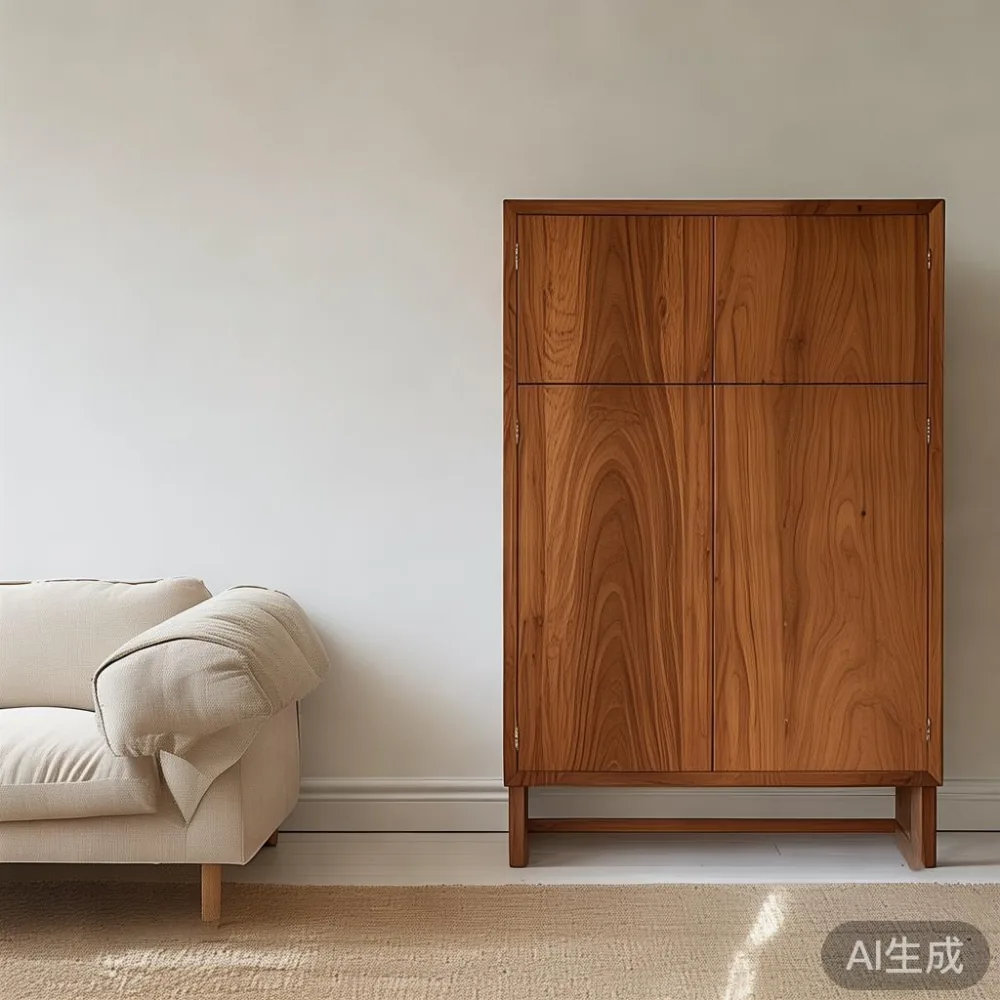
Consider two shoe cabinets made from similar-looking timber. One weighs 34 kg and uses 18 mm solid wood panels with solid-wood drawers, concealed hinges and a hand-applied oil finish. The other weighs 22 kg, uses 12 mm panels with plywood backs, standard hinges and a sprayed lacquer surface. The second cabinet may look convincing in a photograph, yet it can require more labour, packaging and after-sales support than its lower material cost suggests.
This guide breaks the price of solid wood furniture into measurable parts. It also explains why a Singapore buyer should compare the delivered, usable product rather than the factory quotation alone. MIDHILL, a Foshan solid wood furniture maker established in 2008, exports to more than 15 countries and backs its products with a 10-year structural warranty and lifetime refinishing service. Those are useful benchmarks because they make quality claims financially meaningful.
Is the timber itself the largest part of a solid wood furniture price?
Timber is important, but “solid wood” covers several grades. Clear, straight-grained boards with few knots are more expensive to obtain than timber with small knots, colour variation or irregular grain. The species matters too: white oak, walnut, teak and ash behave differently in price and processing, while lower-grade wood may be repaired or concealed in hidden components.
Buyers should ask whether the visible surface is solid wood or veneer. A 180 cm shoe cabinet may use solid timber for the façade and drawer fronts, with plywood or MDF inside concealed structural areas. That mixed construction can be sensible: it controls weight and movement while keeping the visible grain consistent. The key is disclosure, not automatically paying for every hidden surface to be solid wood.
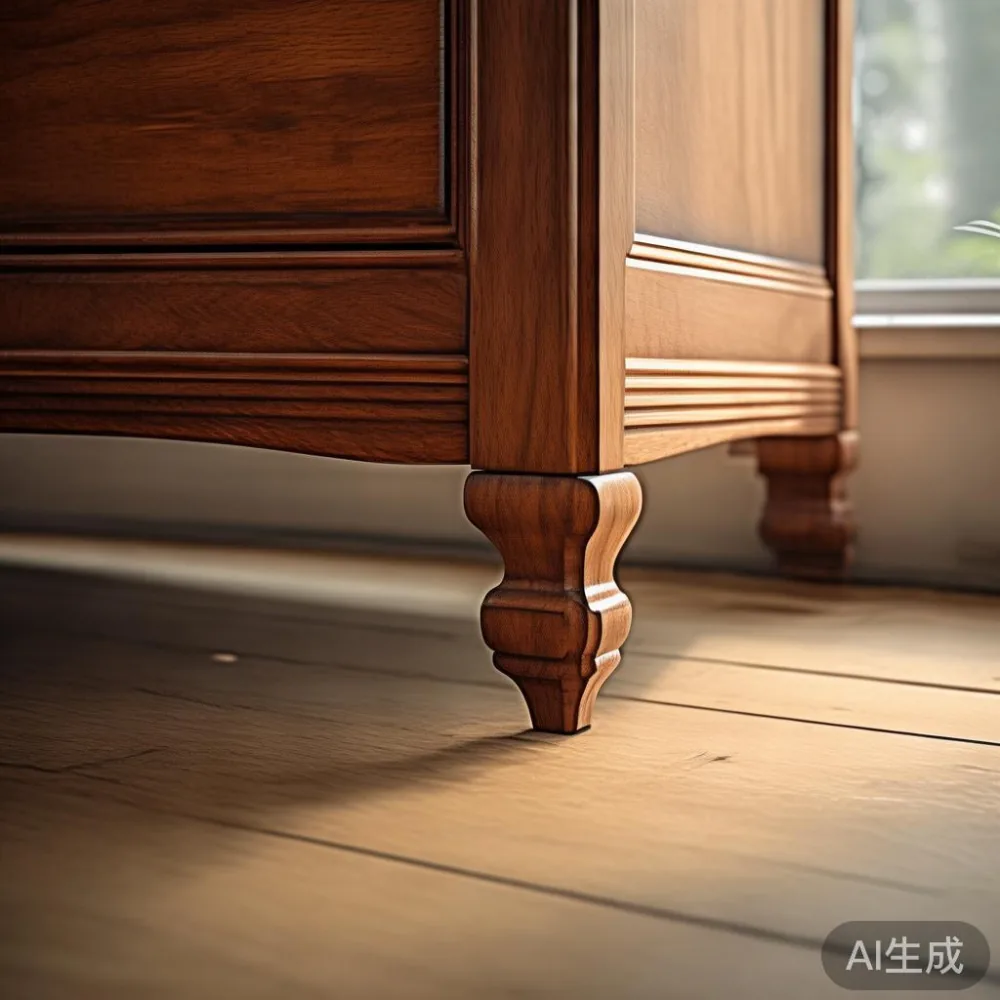
Thickness has a direct effect. Moving from 12 mm to 18 mm increases the volume of timber and the labour needed to cut, join and finish it. Thick solid-wood sofa frames, bed frames and dining tables also resist deflection better. For a shoe cabinet, 15-18 mm sides and drawer fronts are a practical middle ground in Singapore homes, where frequent humidity changes can make thinner panels feel less substantial.
Moisture control affects the factory price indirectly. Wood dried to roughly 8-12% moisture is more stable in Singapore’s humid climate than timber straight from wetter regions. Proper kiln drying, acclimatisation and machining add cost, but they reduce splitting, bowing and joint movement over 5-10 years. Saving S$80 at the factory can become expensive if drawer fronts begin to jam after 2 years.
How much should joinery and construction add to the price?
Construction determines whether a piece is a useful product or merely a convincing appearance. Joinery methods include dowels, mortise-and-tenon joints, dovetails, tongue-and-groove joints, screws and concealed metal fittings. A hand-cut dovetail may take 25-40 minutes; a routed alternative can take 3-5 minutes. Labour is only one part of the calculation, since hand methods also require skilled supervision and more material for joints.
A shoe cabinet exposes its construction through daily use. Drawers open and close perhaps 6 times each day, or more than 2,000 times in a year. Full-extension runners, solid-wood drawer boxes and dovetail corners generally command a premium over friction hinges and nailed-back panels. For a 90 cm unit with 3 drawers, upgraded runners might add S$45-S$110, depending on the slide length and brand.
Load ratings provide another comparison. A shoe cabinet supporting 35 kg is adequate for ordinary footwear, while a cabinet intended to hold heavier boxes may need 50-60 kg capacity. Solid-wood sofa frames and bed frames should have published load assumptions, preferably around 120 kg per seat and 150-200 kg per bed depending on the design. For dining tables, stability comes from the leg section and fastening method as much as from the top.
Do not confuse weight with quality. A 60 kg shoe cabinet is not automatically better than a 34 kg model if excess mass comes from unfinished internal panels. Ask for sectional drawings, timber thickness, joint types, back-panel material and drawer specifications. A seller that can explain these details in millimetres is usually more useful than one offering only a broad “premium grade” label.
Why do light-luxury finishes cost more than standard finishes?
A surface finish protects the wood and defines its visual character. Lacquer, stain, wax, oil and open-pore treatments each have different repair requirements. A 6-coat lacquer process may add S$120-S$260 to a 100 cm shoe cabinet because every layer needs preparation, sanding, drying and inspection. An oil finish may cost less in the workshop but require periodic maintenance.
Light-luxury positioning often favours restrained detail: softened edges, narrow shadow lines, pale oak tones, bronze hardware and carefully balanced proportions. French light luxury leans towards elegant curves and tactile upholstery; American light luxury is generally more generous in scale and comfort; post-modern light luxury may combine clean geometry with selective curves. None of these styles automatically means expensive. The material and execution still need to match the visual ambition.
This distinction matters when comparing a French-style solid wood sofa with a similar-looking imported piece, or when reviewing a marble table. A marble top contributes material cost, but edge profile, support spacing, stone thickness and packaging can add more. A 140 cm marble table might use a 20 mm slab with a 40-50 cm apron, while a 10 mm decorative top needs different reinforcement. The price should reflect performance, not fashionable terminology.
Search results for the top 10 Modern light luxury furniture may be dominated by large room sets, yet a shoe cabinet offers a more manageable way to assess the same principles. Check whether the finish has a documented care method, whether small marks can be refinished, and whether colour samples are shown under neutral daylight. For Singapore conditions, a repairable oil or matte-lacquer finish may be easier to live with than a very glossy surface.
What should Singapore buyers measure before paying for delivery?
Measure the route, not just the furniture. A shoe cabinet that measures 180 × 40 × 90 cm will not fit through a 76 cm-wide doorway unless it is assembled elsewhere. HDB and condo lift doors may be about 80-90 cm wide, while interior lift dimensions can be tighter. Corridors often include 90-degree turns, fire doors and protruding pipes. Add 5-10 cm of working clearance rather than treating the published aperture as an exact fit.
For a typical Punggol, Tampines or Bedok flat, measure:
• The shoe cabinet’s longest and deepest dimensions, including any projecting handles.
• Lift door width, lift depth, diagonal depth and the space needed to manoeuvre the cabinet.
• The shortest corridor width between walls, railings and service risers.
• The actual floor area available in the entryway, including space for doors and drawers to open.
• The route from the loading point, including stairs, thresholds and turning corners.
Compact HDB solutions are often better than forcing a large unit through a narrow route. A 70 cm-wide shoe cabinet with a 32 cm depth may hold 15-20 pairs, while an 85 cm unit with a 38 cm depth may hold 25-32 pairs, depending on shelf spacing and whether tall boots are excluded. Flip-down or sliding fronts can reduce the clearance required to open drawers, but mechanisms usually cost more and need more care.
Singapore buyers should also include GST when comparing quotations. A displayed product price of S$1,200 becomes S$1,320 after 9% GST. Delivery to the lift lobby may add S$35-S$80, while room-of-choice placement may add S$50-S$120. A more expensive cabinet that arrives assembled and positioned may cost less in practical terms than a cheaper flat-pack model requiring 90 minutes of assembly.
How do hardware, drawers and moving parts affect a shoe cabinet price?
Hardware is a small line in a furniture invoice but a large factor in daily satisfaction. Drawer slides, hinges, handles and wall anchors should be rated and suited to the dimensions. European hinges may cost S$12-S$25 each, concealed push-to-open mechanisms can cost S$25-S$55 per door, and full-extension slides for a 500 mm drawer may range from S$18-S$45.
Handles provide another visible choice. A 160 mm solid-brass pull might cost S$22-S$45 before finishing, compared with S$3-S$10 for a basic zinc-alloy handle. The difference is reasonable if the solid wood sofa, bed frame, wardrobe, nightstand or marble table in the same collection shares a coherent hardware finish. It is less convincing if one inexpensive handle is used to disguise weak construction elsewhere.
Test movement before purchase. Drawers should open smoothly and remain stable when loaded, with no side-to-side play. Hinges should align, and the doors should close without scraping. A shoe cabinet with ventilated rear panels also needs practical spacing from the wall; 8-12 cm behind the unit can improve airflow and make cleaning easier in humid Singapore conditions.
Modular construction can reduce both packaging risk and price. A shoe cabinet made from two modules may fit a lift more easily than a single 170 cm carcass. However, the joint must remain secure and visually neat. Two modules also create more surface area for collection dust, so tight-fitting seams and removable trays have practical value.
Why is custom sizing more expensive than a standard catalogue size?
Custom sizing consumes design, material and setup time. A standard 80 cm shoe cabinet may be cut in one production run, while a 137 cm made-to-measure unit needs special sheet dimensions, a separate cutting programme and individual finishing work. Expect an uplift of roughly 10-25%, with larger or unusually shaped pieces sometimes costing more.
Custom work is not automatically poor value. A 150 cm shoe cabinet designed around an awkward entryway may use the available depth better than a standard model, hold 24-30 pairs and avoid an expensive alteration after delivery. The return cost of replacing an unsuitable cabinet can exceed a S$200 customisation fee.
For bedroom furniture, the same discipline applies when considering how to choose European light luxury bed. Check the mattress fit, headboard height, room clearance and access route, then inspect the solid-wood slat or platform system. If the question is how to choose French bed, look at the frame profile, upholstery method, centre support and warranty terms rather than relying on a country label.
Many buyers begin with for sale Vintage furniture listings, but a reproduction should not be described as genuinely old. Its price may reflect styling, provenance or restoration. Solid wood furniture built for humid climates needs current joinery and moisture control, not simply distressed edges copied from a 40-year-old cabinet. MIDHILL’s lifetime refinishing policy is relevant because wear and changing tastes are expected over a decade or more.
Does a 10-year structural warranty really change the value?
Yes, when the scope is clear. A 10-year structural warranty covers defined failures such as frame cracking, joint separation or manufacturing defects, but it may not cover ordinary surface wear, accidental damage or movement caused by unstable floors. Ask whether the warranty applies to the whole piece, selected structural components or only certain components.
Lifetime refinishing has a different purpose. It does not mean every scratch is repaired without charge; it means the manufacturer provides a service pathway for refinishing over the product’s usable life. For solid wood dining tables, that can be valuable after 8-12 years of daily use. The service terms, transport charges and restoration limits should be confirmed in writing.
Returns matter because furniture is difficult to assess from images. A 14-day return policy gives Singapore buyers time to inspect a shoe cabinet at home, including drawer alignment, finish consistency and comfort with its scale. Confirm whether the original packaging is required, who bears return freight and how long a refund takes after the item reaches the warehouse.
Shipping promises should also be specific. Production may take 20-35 days, followed by 7-14 days for international delivery, while made-to-order pieces can take 35-50 days before dispatch. These timelines should not be confused with the arrival window. Transparent dates, carton dimensions and a tracking process indicate a more mature operation than a vague “fast delivery” claim.
How can I compare two solid wood furniture quotations fairly?
Compare the same specification. Record the external dimensions, timber species, visible solid-wood parts, panel thickness, joinery, drawer hardware, finish, load rating, warranty, lead time and delivered price. Do not compare a solid-wood shoe cabinet against a veneered cabinet as if they were identical products.
Here is a simple calculation. A 90 cm solid-wood shoe cabinet at S$980 may become S$1,078 after 9% GST. Add S$60 for lift-lobby delivery and S$90 for room placement, giving S$1,228 delivered. A comparable model at S$1,180 with included delivery and placement may be better value despite its higher base price. The useful comparison is total cost, not sticker price.
Then test service risk. A lower quotation with no structural warranty may need replacement sooner. A higher quotation with replaceable drawer slides, repairable finishes and a clear return policy may spread its cost over 10 years or longer. A dining table used 4 times a week, a solid wood sofa used daily and a shoe cabinet opened hundreds of times each year all create different demands, so the warranty should match the stress placed on the product.
Design terminology should guide the search without replacing evidence. A French sofa vs Japandi sofa comparison often comes down to curved detailing versus clean geometry, but frame quality and seat construction still decide longevity. A Mid-century modern dining table may use tapered legs and a rounded top, yet the fastening system and top thickness determine stability. For a wardrobe and nightstand, drawer or door alignment and usable interior space deserve more attention than decorative labels.
Finally, check whether the price reflects removable protection rather than permanent excess packaging. A shoe cabinet may arrive in foam, cardboard and a fitted carton, but it should also have toe protection for corridor corners. Good packaging adds perhaps S$25-S$60 per unit; inadequate packaging can cost far more through transit damage, especially with marble tables and solid-wood bed frames.
What is a sensible budget for solid wood furniture in Singapore?
Prices vary with scale and specification, so broad ranges are more useful than a single figure. A compact 70-90 cm shoe cabinet with solid-wood fronts and repairable hardware may fall around S$650-S$1,250 before GST. A wider 120-160 cm cabinet with upgraded slides, multi-layer lacquer or custom sizing may range from S$1,200-S$2,600 before GST.
A 180-200 cm solid-wood dining table may fall around S$2,200-S$4,800 before GST, depending on timber and top profile. A queen-size solid-wood bed frame with a supportive platform may range from S$1,600-S$3,800. A wardrobe may begin around S$1,800 and rise above S$4,000 with custom internals, while a marble table may range from S$1,500-S$3,600 before GST.
These figures are not guarantees; they are negotiating anchors. Compare what is included, especially hardware, assembly, delivery, GST and after-sales support. Free delivery above US$350 is not a Singapore delivery promise, so local freight terms need confirmation. A model priced at S$1,150 before GST, for example, reaches S$1,253.50 and may still require a S$45-S$110 delivery charge.
The strongest value is not the lowest number. It is a piece whose material, dimensions, finish and support arrangements remain appropriate for a Singapore home after 5, 10 or 15 years. Start with an accurate room survey, request a written specification and test the mechanism before installation. The right shoe cabinet should fit its route, hold the required pairs and remain serviceable long after the showroom photograph has changed.