Choosing the Right Shoe Cabinet for a Singapore HDB Living Room
A shoe cabinet that looks generous in a showroom can feel cramped in a Singapore HDB living room. The deciding factor is not simply how many pairs it holds, but how its width, depth and height work with your sofa, TV console, dining table, lift and corridor. A 150 cm cabinet may suit an open-plan unit in Tampines, while the same cabinet could obstruct a 90 cm doorway in a compact Bedok flat.

This guide explains how to measure before you buy, compare practical cabinet sizes and plan delivery. The measurements use centimetres, prices are shown in SGD, and examples reflect common layouts in HDB flats and private condos in Singapore. MIDHILL is a Foshan solid wood furniture maker established in 2008, exporting to more than 15 countries, with a 10-year structural warranty, lifetime refinishing service, free shipping for orders over US$350 and a 14-day return policy.
What size shoe cabinet actually fits a Singapore HDB living room?
Begin with the available floor area rather than the cabinet catalogue. For a typical 3-room HDB living room, reserve a clear zone measuring about 100-140 cm wide for a shoe cabinet beside the sofa. A 120 cm cabinet often gives sufficient capacity for roughly 30-40 pairs of everyday shoes, depending on shelf spacing and whether the unit includes a closed upper section. Compact units measuring 80-100 cm wide usually hold around 15-25 pairs, while 150-180 cm cabinets can accommodate approximately 40-60 pairs when shelves are adjustable.
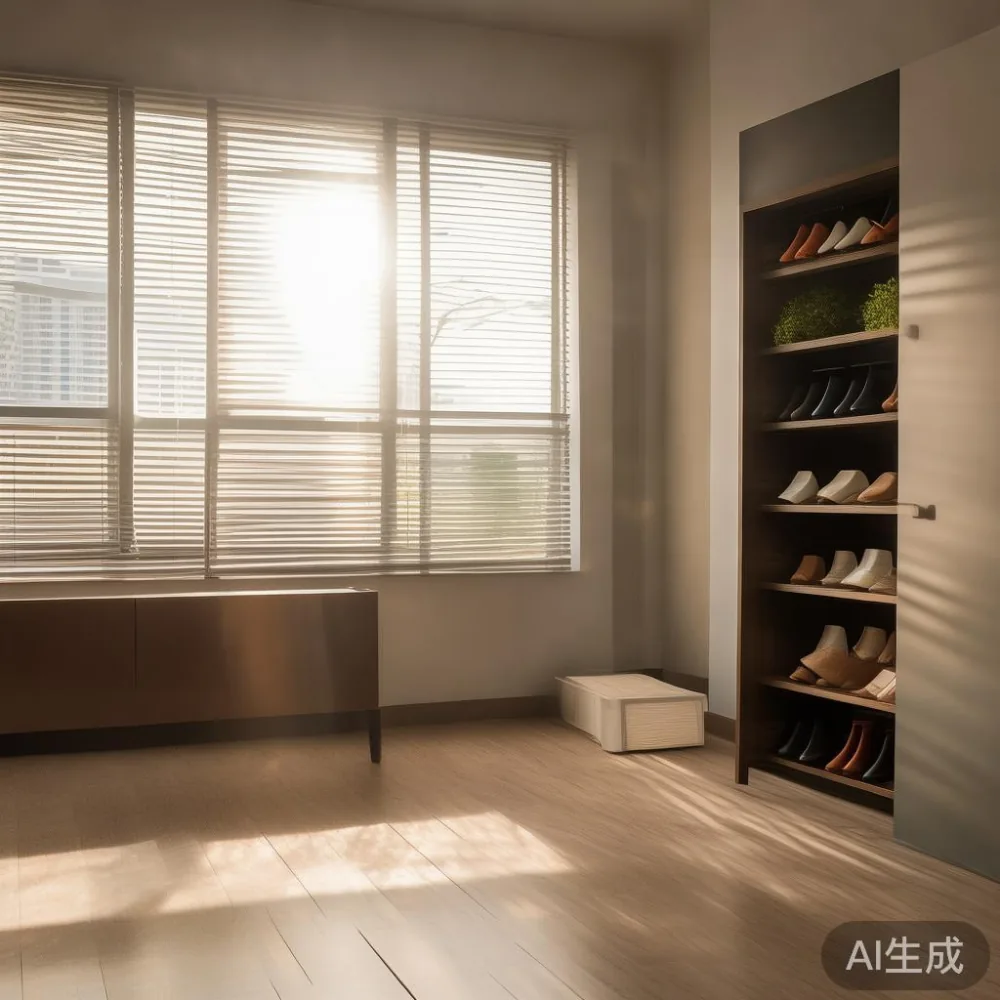
Depth is equally important. A cabinet with a 35 cm depth can handle most pairs of everyday shoes, but deeper styles at 40-45 cm may fit boots and larger footwear. Check the projection against your circulation route. In a common HDB dining-living arrangement, leave at least 75-90 cm between the shoe cabinet and the opposite wall. This clearance allows household members to sit down, carry laundry and move a chair without scraping the cabinet.
Height should work with the surrounding furniture. A cabinet under 100 cm can sit beside a compact solid wood sofa without competing with it. A 150-180 cm unit offers more storage but may dominate a narrow room. Match the cabinet plinth with the legs of your solid wood sofa or dining table where possible, or choose a low profile if the space feels visually tight.
Last month I visited a Punggol HDB flat to check a client’s planned shoe cabinet placement. The client had selected a handsome 160 cm model, but the actual corridor between the sofa arm and the balcony sliding door was only 82 cm at its narrowest point. A 140 cm cabinet fitted the available wall, while the 160 cm version blocked the balcony access. The smaller unit also kept a clear 70 cm passage after installation. That visit reinforced how a few centimetres can decide whether a piece feels comfortable or simply oversized.
How should I measure my corridor, lift and doorway?
Measure the route from the building entrance to the living room, not just the room itself. For a Singapore HDB tower, the lift dimensions can restrict delivery even when the unit fits inside the flat. Record the lift door width and internal depth, then check the widest stair turn or corridor pinch point. Many corridors and lift lobbies provide only about 90-110 cm of turning space, so a rigid cabinet wider than 110 cm may need to be turned on its side or partially assembled.
For the front door, measure both the leaf and frame opening. A 90 cm door with 82-85 cm of usable clearance is more realistic than the nominal width. The shoe cabinet should ideally enter at least 5 cm narrower than the tightest point. This gives delivery handlers room to angle the piece without forcing the timber or damaging the walls.
Measure the route in three dimensions: width, height and depth. The unit must pass through the doorway without striking a ceiling fan, downlight or sprinkler pipe. A cabinet 180 cm tall may need a flat-pack design if the lift interior is only 200 cm high and the package cannot stand upright. If the carton can be disassembled into sections no taller than 120 cm, installation becomes much easier.
Ask the retailer for the packaged dimensions and weight, not merely the assembled dimensions. A 140 cm shoe cabinet may arrive in a carton measuring 146 × 42 × 118 cm and weighing 48-62 kg, depending on the timber and construction. A heavier cabinet can exceed the safe handling guidance for a small lift. Two installers should carry any piece over 55 kg, and a third person may be useful around tight turns.
Also photograph the route before delivery day. In a Bedok block, a client’s ground-floor corridor narrowed to 96 cm because of a fire hose cabinet. The shoe cabinet carton passed easily through the lift, but it had to be tilted around that obstacle. A delivery-day obstacle can cost time and may lead to a failed delivery if the furniture cannot be moved safely.
Which shoe cabinet size suits my number of shoes?
Estimate your daily footwear before choosing the width. A resident who owns fewer than 20 pairs may be well served by an 80-100 cm shoe cabinet with 4-6 tiers. Around 30 pairs generally calls for a 110-140 cm cabinet with adjustable shelves. Households with 40-60 pairs often prefer a 150-180 cm unit, ideally combining open display shelves with closed cupboards for less-used footwear.
Count actual pairs rather than individual shoes. For example, 10 pairs of slippers occupy less space than 10 pairs of bulky trainers, while a pair of rain boots may need 30-35 cm of shelf length. Internal shelf spacing also matters. A compartment of 14 cm can hold flats and low shoes, whereas sturdy boots may require 24 cm. If the cabinet has sliding doors, usable access becomes narrower than the cabinet’s exterior width, so allow roughly 5-8 cm of operating space on each side.
Capacity labels should be treated as guidance because footwear differs. A 120 cm cabinet with five shelves might hold 24-36 pairs, while the same exterior width with three deep shelves could hold only 18-24 pairs. Adjustable shelves are useful in a family home where children’s shoes take less room than adult work shoes.
For visual balance, follow the rule of the room. A long wall beside a 200-220 cm sofa can carry a 140-160 cm shoe cabinet without appearing disproportionate. Against a shorter 160 cm sofa, an 80-100 cm cabinet may align more comfortably. Avoid squeezing a 180 cm cabinet between a doorway and the balcony corner unless the cabinet is shallow and the passage remains at least 75 cm.
Ventilation deserves attention too. Shoes release moisture, and Singapore humidity often exceeds 70%. Back ventilation slots, cedar inserts or open shelves can help air circulate. Leave 5-10 cm behind a closed cabinet if the design permits rear ventilation, and avoid placing it directly against a sunlit glass wall, where afternoon heat can intensify.
What should I check before ordering a solid wood shoe cabinet?
Look for clear information about timber, finish, joints and dimensions. Kiln-dried solid wood is preferable for Singapore interiors because it is less likely to move as humidity changes. Ask whether the back, sides and shelves are solid wood or whether panels are plywood or fibreboard. Although a mixed construction can reduce weight, exposed shelves and frames should have enough rigidity to resist bowing.
The finish should suit a light-luxury interior. French light luxury often pairs pale oak or warm ash with cream walls and restrained metal details. Post-modern light luxury can use a cleaner geometric shape, while American light luxury tends toward warmer timber tones and substantial profiles. MIDHILL’s 2026 Modern light luxury furniture direction reflects this preference for measured proportions, natural grain and practical storage.
Check the warranty wording carefully. MIDHILL provides a 10-year structural warranty and lifetime refinishing, which is meaningful for a frequently handled cabinet. The lifetime refinishing service should be documented in the quotation, including what is covered, how to request it and whether transport is chargeable. Keep the receipt and product identification details for future service.
Do not treat “solid wood” as a reason to ignore the final measurements. Grain direction can make two identically sized cabinets look different. Natural timber may vary in colour and texture, and knots are normal rather than defects. A good supplier should explain how the finished piece may differ from product photography.
For the wider apartment, check the shoe cabinet against the solid wood sofa, bed frame, dining table, wardrobe, nightstand and marble table already in the room. The cabinet should not be the only piece with a dramatically different colour. Harmonise it with one repeated tone, such as matching oak tones on the dining table and bed frame, while retaining contrast through shape rather than loud finishes.
How much will the shoe cabinet cost after GST and delivery?
In Singapore, consumer prices normally include GST. A mid-sized 120 cm solid wood shoe cabinet may fall around SGD 1,180-SGD 1,880, while a wider 160-180 cm model may range from SGD 1,880-SGD 3,200. Premium timber, thicker shelves, glazed doors and more elaborate joinery can push selected designs above SGD 3,500. Prices vary with timber, finish and construction, so request a written quotation with the exact external and internal dimensions.
Confirm whether installation is included. A straightforward room placement may add about SGD 60-SGD 120, whereas carrying a cabinet to an upper HDB floor with tight corridors may add SGD 150-SGD 300. If the cabinet must be assembled on site, allow another SGD 80-SGD 180. Check whether the retailer removes the packaging and whether stair or lift surcharges apply.
MIDHILL offers free shipping for orders above US$350, equivalent to approximately SGD 470 before card or bank conversion effects. The final Singapore quotation should still show the currency-conversion basis, taxes and delivery charges. Typical production plus delivery planning is 18-35 days after order confirmation, with stock items sometimes available within 7-14 days. Peak renovation periods can add 7-12 days, so keep the installation window flexible.
The 14-day return policy provides a useful protection when specifications have been checked carefully. Photograph the cabinet and packaging on arrival, inspect for transit marks and confirm that the colour, dimensions and condition match the order. Do not assemble or alter the cabinet if a return may become necessary, because damage to a modified product can affect eligibility.
Can a shoe cabinet work in an HDB flat and a private condo?
HDB flats often reward compact planning. In a 3-room unit, an 80-120 cm shoe cabinet can sit beside the sofa or near the entrance, provided the route to the dining table remains clear. In larger 4- or 5-room BTO layouts, a 140-180 cm cabinet may form a useful transition between the entrance and living area. Measure balcony doors because their tracks often project 4-8 cm into the room.
Condos usually offer more wall length, but the design brief may demand greater precision. A pale oak shoe cabinet with fluted or framed doors can coordinate with a marble table and an Italian light luxury for bedroom scheme elsewhere in the home. The living room should still lead visually, so keep the cabinet finish lighter than a dark marble table or strongly contrasting wardrobe.
If the shoe cabinet is being planned alongside other furniture, use one supplier when possible for easier coordination. A search for where to buy wardrobe from MIDHILL can be useful for matching bedroom pieces, while the shoe cabinet should be selected specifically for the living room’s clearances. The general question of how to choose American sofa concerns seat depth and room width rather than cabinet size, but matching the timber tone remains useful. Likewise, anyone comparing modern Mid-century modern furniture for the living room can keep tapered forms consistent across pieces.
Do not use the shoe cabinet to conceal every loose object. A shoe cabinet works best when it manages footwear, bags or a few daily necessities, not when it becomes an oversized visual barrier. Keep decorative objects limited to 3-5 pieces if the cabinet has open display sections.
What are the most common sizing mistakes?
The most frequent mistake is measuring only the wall. A 150 cm cabinet may fit the wall but project too far into a walkway. The second is failing to account for door hinges and handles. A cabinet with a handle extending 5 cm needs that full 5 cm included in the usable passage.
Another error is selecting capacity before checking shelf intervals. Buy the width your household needs, but make sure the vertical spacing fits boots, sandals and formal shoes. A cabinet with fixed 18 cm shelves may suit flats and loafers but waste space around ankle boots. Adjustable holes at 2.5 cm or 3 cm intervals provide more practical flexibility.
People also underestimate turning space. A rigid 180 cm cabinet can be difficult to rotate through a 90-degree corridor even if its width is below 110 cm. Ask whether the cabinet separates from its plinth and whether the doors and drawers can be removed before delivery. This is especially relevant in older HDB blocks and condos with managed delivery windows.
Ignore the drawer extension when checking daily access. A 120 cm cabinet with full-extension drawers may require another 40-50 cm of free space when opened. In a narrow living room, hinged doors or lift-up sections may be easier to use than three deep drawers. If you are comparing designs for how to choose Mid-century modern bed proportions, note that the same visual spacing principle applies: the bed should not press against the shoe cabinet, and a 60 cm side clearance is preferable where possible.
How do I prepare the room before the shoe cabinet arrives?
Clear the installation zone 24 hours before delivery and protect the floor with cardboard or a clean blanket. Confirm the electrical points, TV cables and nearby furniture are out of the installer’s path. If the cabinet will be fixed to the wall, ask the installer whether anti-tip fittings are required and whether masonry, drywall anchors or a freestanding anti-tip strap is suitable for your wall.
Use a level to check the floor. HDB living rooms are usually level, but a cabinet placed beside a balcony threshold may bridge a slight change. Adjustable feet can correct differences of 10-20 mm. Place the cabinet in position, then remove the protective film after checking for scratches. Do not leave adhesive film on timber for longer than the finish supplier recommends, because heat can make residue difficult to remove.
Add shoe storage accessories only after the cabinet is stable. Cedar blocks should not obstruct ventilation slots, and a bench seat should not project more than 30 cm into a passage below 90 cm. Keep the front of each shelf accessible, and assign the lowest tiers to frequently worn shoes rather than display pieces.
Before signing off, inspect the doors, drawers, shelf pins and finish under normal daylight. Check that every drawer closes evenly and that the cabinet stands vertically within about 3 mm over its height. If the model belongs to a broader collection, confirm whether matching solid wood sofa, dining table, wardrobe, nightstand or marble table pieces are made to compatible timber tones. This final check turns a size decision into a coordinated room rather than a collection of unrelated furniture.