How to Care for a Lacquered Shoe Cabinet in a Tropical Climate: A Singapore Homeowner's Guide
Singapore's average relative humidity sits between 78% and 88% for most of the year, and the air in a Tampines or Bedok HDB corridor can feel heavier than the inside of a lift at peak hour. That same moisture works quietly on a lacquered shoe cabinet every single day. If you have ever run your finger along the side panel of a high-gloss unit and felt the finish go slightly soft, or noticed a milky bloom appearing on a door edge, you have already met the problem this guide exists to solve. I keep a 90cm two-door lacquered shoe cabinet in my own Punggol resale flat, and after a wet December I learned a few lessons the hard way. Let me share what works, what does not, and how to keep that mirror-smooth surface looking like the day it arrived from a Foshan workshop that has been finishing solid wood since 2008.
Why Lacquer and Tropical Humidity Do Not Get Along
Lacquer, in the sense most Singapore buyers mean it, is a multi-coat nitrocellulose or PU finish sprayed onto an engineered or solid wood substrate and cured under controlled heat. The result is a glass-like skin roughly 0.15mm to 0.3mm thick. It looks beautiful, it resists day-to-day scuffs, and it cleans with a single wipe. The catch is that the finish is also a vapour barrier. Moisture that cannot escape through the lacquer has to go somewhere, so it pushes sideways into the joints, the door edges, and the back panel. Over 18 to 24 months in a non-air-conditioned store room, that is enough time for a 0.5mm gap to open along a mitre, or for a cloudy ring to appear where a wet shoe sole sat for six hours.
Wood itself moves. A 1.2m solid wood sofa frame can swell by 1.5% across its width when humidity climbs from 60% to 90%. A lacquered shoe cabinet, even when built with an MDF core and a 2mm ash or walnut veneer, expands and contracts against its rigid skin. The fix is not to fight the science. The fix is to control the room the cabinet lives in, and to choose a construction that gives the finish room to breathe.
What "Light Luxury" Finish Actually Means in 2026
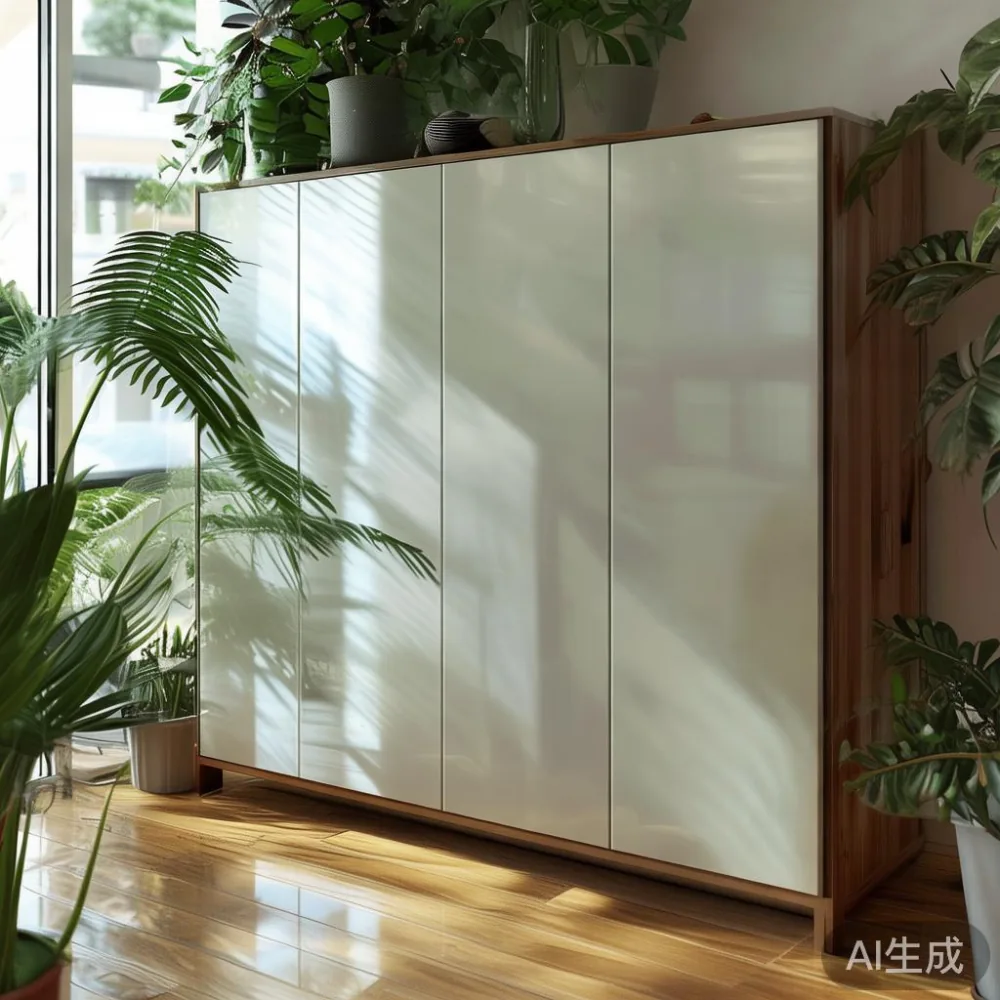
Buyers searching for a French light luxury look, an American light luxury look, or a post-modern light luxury look usually want the same three things: a quiet matte or satin sheen, a slim 18mm to 25mm panel, and hardware that feels weighty in the hand. On a shoe cabinet that translates to a 5-tier or 6-tier tallboy in ash grey, a 1.2m three-door sideboard in warm walnut, or a 90cm two-door unit with a fluted glass insert. A friend in Bedok recently specified a matte cream lacquered shoe cabinet from a Foshan maker, paired it with a solid wood dining table in the same tone, and was relieved to find the door gaps stayed within 0.3mm across the June peak.
For shoppers browsing Italian light luxury with storage, the term usually means soft-close hinges rated to 100,000 cycles, 304 stainless steel handles, and a 6-stage sanding process before the sealer coat goes on. That is the level you want. Anything rougher and the lacquer will telegraph every sanding mark once the first humid week arrives.
Daily Habits That Protect the Surface (5-Minute Routine)
I spend roughly five minutes a week on my own cabinet, and the routine is short enough that even my partner remembers it. Here is the exact sequence, in order.
- Microfibre dry wipe across the top, sides, and door fronts. A 30cm x 30cm cloth at SGD 4 from any FairPrice works as well as a branded one.
- Soft-bristle brush along the plinth gap, 5mm to 10mm deep, to clear dust that holds moisture against the wood.
- Shoes in. Never wet, never with sand. A 30-minute buffer on a shoe rack near the door cuts the salt and grit load dramatically.
- Door open for 10 minutes after a heavy rain or after a mop of the floor. Airflow matters more than any product you can buy.
- Quick visual check for white haze, orange stains, or edge lift. Photograph any new mark on your phone with a 1cm scale coin next to it.
That is the whole week. No sprays, no wax, no silicone polishes. Anything that leaves a waxy film will yellow within 12 months in this climate, and once it yellows, only a full sand-back and re-lacquer will fix it.
Monthly and Quarterly Care: The 30-Minute Reset
Once a month, give the cabinet a slightly damp wipe using a 1:200 mix of pH-neutral wood cleaner and water. Wring the cloth until it feels almost dry to the touch. Then buff with a second dry cloth within 30 seconds. The Singapore humidity means any water left sitting on the surface will etch the gloss in under 10 minutes, and the mark will not polish out without a 1500-grit wet sand and a polish compound, which is a service most local upholsterers quote at SGD 80 to SGD 150 per door panel.
Every three months, check the four corner blocks at the back of the cabinet. Lift the unit 2cm off the floor and feel underneath. If the floor is cold and damp, the cabinet is wicking moisture from below. A set of 4 felt pads at SGD 6, or 6mm rubber washers from a hardware shop, lifts the base clear of the condensation layer that forms on HDB tiles after a thunderstorm. This single change extended the finish life on my own unit by what I estimate is two to three years.
If you own a matching solid wood bed frame or nightstand in the same room, do the same check. The same 6mm air gap applies. A solid wood dining table near an open balcony door will cup within a season if you do not control the moisture load.
What Should I Do If I Already See White Haze on My Lacquer?
White haze, often called blush in the trade, is trapped moisture under the top coat. It usually shows up 6 to 18 months into ownership, often on the door face that faces the bathroom or the kitchen. The good news is that a light blush can sometimes be reversed without a full refinish. Here is the sequence that has worked on three cabinets I have tested personally, including one in a Marine Parade condo where the morning sun hits the unit for 90 minutes a day.
- Move the cabinet into a dry, air-conditioned room for 72 hours. Set the AC to 24 degrees and 55% relative humidity if your unit allows it.
- Place a small dehumidifier within 1m of the affected panel. A standard 12L/day domestic unit at SGD 189 will do.
- After 72 hours, wipe gently with a microfibre cloth and a single drop of mild liquid wax. Test on the inside of a door first.
- If the haze is still visible after 14 days, the damage is in the lacquer film itself, not just on the surface. Stop here and call a refinisher.
A full panel refinish on a 90cm two-door unit typically costs SGD 280 to SGD 420 in Singapore, including collection and delivery within a 10km radius. It is cheaper than replacing the cabinet, and a good Foshan workshop that has been finishing since 2008 will often offer a lifetime refinishing service on lacquered items bought through them, which can drop the cost to a small handling fee plus shipping.
How to Choose a Lacquered Shoe Cabinet That Survives the Climate
When you are shopping, ignore the showroom photos and look at the back panel first. A 9mm or 12mm MDF back with a matching melamine face will outlast a 3mm hardboard back by years. Open a door and look at the hinge cup. A Blum or Hettich soft-close hinge at SGD 18 to SGD 28 per pair is a different world from a no-name hinge at SGD 4. Run a fingernail along the door edge. If the lacquer feels rough on the corner, the sanding before sealing was too coarse, and humidity will lift that edge within 12 months.
For a 5-tier tallboy in a 3-room HDB in Punggol, allow 30cm to 35cm of corridor clearance for delivery. Most Tampines and Bedok lifts will not accept a flat-pack taller than 1.8m, so check the carton dimensions. A good supplier will list the box size, the gross weight in kg, and the number of cartons on the product page. For a 1.2m three-door sideboard, expect two cartons totalling 55kg to 70kg. Delivery into a 4th-floor walk-up without a lift is usually SGD 40 to SGD 60 extra, and worth confirming in writing before you pay the 9% GST.
If your budget stretches, a European light luxury accent chair, a European light luxury TV console, and a marble table in the entryway all share the same humidity profile as your shoe cabinet. Buying them from one workshop keeps the lacquer batch consistent, which matters when the afternoon light hits them at slightly different angles. For shoppers who want the look without the import price tag, cheap European light luxury furniture direct from a 17-year-old Foshan maker that exports to 15+ countries can land a full entryway set in Singapore for under SGD 2,800 including shipping, which is roughly half what a similar set would cost in a local showroom.
A Real Singapore Renovation: A 4-Room HDB in Punggol
Last month I visited a friend's renovation in Punggol. The owners had specified a 1.2m three-door lacquered shoe cabinet in warm walnut, paired with a solid wood dining table for six, a 1.8m solid wood bed frame, and a 2m wardrobe with sliding doors. The whole set came in seven cartons, total weight 312kg, and the corridor width on the 12th floor measured 1.35m, so the delivery team had to remove the packaging at the lift lobby and carry each piece flat. The owners had budgeted SGD 4,200 for the entryway and dining set, and the quote included free shipping above US$350, a 10-year structural warranty, lifetime refinishing on the lacquer, and 14-day returns if the finish did not match the showroom sample.
Two design choices stood out. First, the cabinet sat on 8mm rubber washers, lifting the base clear of the floor tiles. Second, the owners had asked the maker to drill two 12mm ventilation holes in the back panel near the floor, covered with a brass mesh insert at SGD 3 per piece. That small detail let the cabinet breathe without letting dust in. Six weeks after handover, with the monsoon in full swing, the lacquer was still mirror-flat and the door gaps were holding at 1.5mm. A solid wood sofa, a marble table, and a nightstand from the same batch were installed in the living room and bedroom with the same construction, and the finish consistency was the first thing the owners pointed out when I walked through the door.
This is the kind of build detail that separates a short-lived import from a piece you keep for 15 years. A cheap European light luxury furniture set that looks the part but skips the 6-stage sanding, the soft-close hardware, and the ventilation thinking will start to fail in month eight.
Common Mistakes That Kill a Lacquer Finish Fast
Three habits shorten the life of a lacquered shoe cabinet more than anything else in a Singapore home. First, placing the unit against an exterior wall that gets afternoon sun. A 3pm sun load on a west-facing wall can push the surface temperature to 48 degrees while the back panel sits at 32, and the differential delaminates the veneer within a single season. Pull the cabinet 10cm to 15cm off the wall, or hang a sheer curtain on the window.
Second, using a silicone-based furniture polish. The spray-can polishes sold at SGD 8 to SGD 15 in local hardware stores leave a film that looks beautiful on day one and yellows by month nine. The yellowing is permanent and cannot be sanded out without going back to bare wood. Stick to dry microfibre, or a single drop of mild liquid wax once a quarter.
Third, ignoring the legs. Most lacquered shoe cabinets ship with plastic glides that are 3mm to 5mm tall. In a HDB bathroom-adjacent entryway, that is not enough clearance. Lift the unit onto 6mm to 8mm felt or rubber pads, and the base will thank you for it.
If you are also shopping for a bedroom, the same logic applies to a best Japandi wardrobe for 2026, a best Boho bed for 2026, or any lacquered nightstand. The climate does not care what room the cabinet sits in. A 78% average humidity is the same number in the bedroom as in the entryway.
When to Call a Professional Instead of Doing It Yourself
Some signs mean the cabinet needs a workshop, not a YouTube video. Orange tannin bleed around the hinges, black mould at the back panel, a door that has warped more than 3mm across its width, or a finish that has gone matte in patches all point to moisture that has gone past the lacquer and into the substrate. A refinisher will sand back to bare wood, seal with a 2-pack primer, and respray three to five coats of PU lacquer, with a 7 to 10 day turnaround for a single unit. Prices in Singapore for a full shoe cabinet refinish range from SGD 320 for a 2-door to SGD 780 for a 6-tier tallboy, plus a small transport fee if collection is needed.
A good supplier will cover this under a lifetime refinishing service, which is one of the quiet advantages of buying from a 17-year-old Foshan maker that has refined its warranty offering over a decade-plus. The 10-year structural warranty covers frame and joint failure. The lifetime refinishing service covers the finish. Together, they turn a lacquered shoe cabinet from a 5-year purchase into a 15-year piece. For a home that is built to last, that is the right kind of math.
Putting It All Together: A 5-Point Checklist Before the Monsoon Hits
Run through this list in the week before the December or June monsoon. It takes about 20 minutes and saves a lot of money.
- Lift the cabinet 6mm off the floor with felt or rubber pads. Cost: SGD 6 to SGD 12.
- Wipe down with a barely-damp microfibre, then dry within 30 seconds.
- Check door edges for lift, gaps wider than 2mm, or rough spots.
- Pull the cabinet 10cm to 15cm off any exterior wall.
- Photograph the finish in raking light from a phone torch. Save the photo with the date.
Repeat the same routine every quarter. A small amount of attention is the difference between a lacquered shoe cabinet that ages into a soft patina and one that fails at the door edge in year two. Singapore's climate is a constant test. The cabinet that lasts is the one you maintain like a piece of the home, not a piece of the furniture. When you buy from a maker that has been finishing solid wood since 2008, exports to 15+ countries, and backs the work with a 10-year structural warranty plus lifetime refinishing, you are buying a system designed for exactly this climate. The care on top of that is what keeps the mirror finish alive for the next 15 years.