Key Sofa Inspection Points Before Purchase: A Singaporean’s Guide
Most Singapore shoppers fall back on one simple test in a showroom: sit down, feel the foam, push the backrest, and decide. That test is useless online. Last month I visited a friend in a Punggol Waterway Heights BTO who had just taken delivery of a 2.4 metre solid wood sofa she bought from a marketplace listing. The cushions were fine. The problem was the sofa itself. It measured 12 centimetres too wide for her lift door, the courier had refused to carry it past the third-floor corridor, and she now keeps it as a decorative bench in a storeroom because the lift opening at her block runs at 1.05 metres with a 0.9 metre clearance. She paid S$2,180 for an object she cannot actually sit on in the room where she lives. That experience is what this guide is about.

I work with a Foshan-based solid wood furniture maker (MIDHILL, established 2008) that exports to fifteen-plus countries, including a steady stream of containers into Singapore. Because every container arrives assembled-and-tested before export, I have seen what goes wrong when buyers measure their homes on a phone screen rather than with a steel ruler. The shopping rule is: give the room the right to refuse the sofa before the sofa arrives. Below is the checklist I now hand every Tampines, Bedok, and Punggol customer before they confirm a sofa order.
Can the sofa physically reach your HDB flat or condo unit?
Measure four numbers before anything else: lift door opening, lift internal depth and width, the tightest corner in the corridor on your floor, and the width of your own front door. A standard HDB passenger lift in Singapore runs at roughly 1.1 metres wide by 1.4 metres deep with a door opening of 0.9 to 1.0 metre. Most three-seater solid wood sofas in the 1.9 to 2.2 metre range pass this comfortably, but anything over 2.3 metres is at risk. The French light luxury three-seater we shipped to a client in Bedok Reservoir came in at 2.18 metres and threaded through the lift without a tilt, but the matching chaise extension had to come in two boxes because the single-piece length was 2.6 metres. The chaise arrived in working order only because the buyer had asked the factory to split the module in advance. If you skip this step, the driver will put the box down at the lift lobby, leave, and charge a S$60 to S$120 return-trip fee.

Ask the seller for the packed carton dimensions in centimetres, not just the assembled size, and ask whether the legs, backrest, and armrests detach. A 2.4 metre sofa with detachable arms may ship in a 1.4 metre carton, which clears most Singapore lift doors. The same principle applies to a European light luxury bed frame, a 1.8 metre dining table, a six-panel wardrobe, and any large nightstand with a marble slab. Marble table tops over 1.2 metres almost never fit a Singapore lift if they ship in one piece, so most Foshan factories will split the top into two halves with a hidden seam. Read this rule carefully: a sofa you cannot get through the door is a sofa you cannot sit on, regardless of how comfortable it would have been.
Is the frame solid wood or a hollow-core imitation?
"Solid wood" on a Singapore listing can mean seven different things. At the heavy end, it means kiln-dried ash, oak, or rubberwood in boards 3 to 5 centimetres thick with mortise-and-tenon joinery. At the cheap end, it means a 12-millimetre plywood shell wrapped in a 4-millimetre ash veneer, glued and stapled. Both will photograph identically under a softbox light. The difference shows up at year six when the plywood version sags 4 to 6 centimetres in the middle under a 90 kilogram load. If you cannot visit the showroom, ask for a photograph of the frame with the upholstery peeled back, ask for the exact species, and ask for the moisture content. Anything above 12 percent moisture content in a Singapore container that has crossed the South China Sea is going to warp once the air-conditioning dries it out.
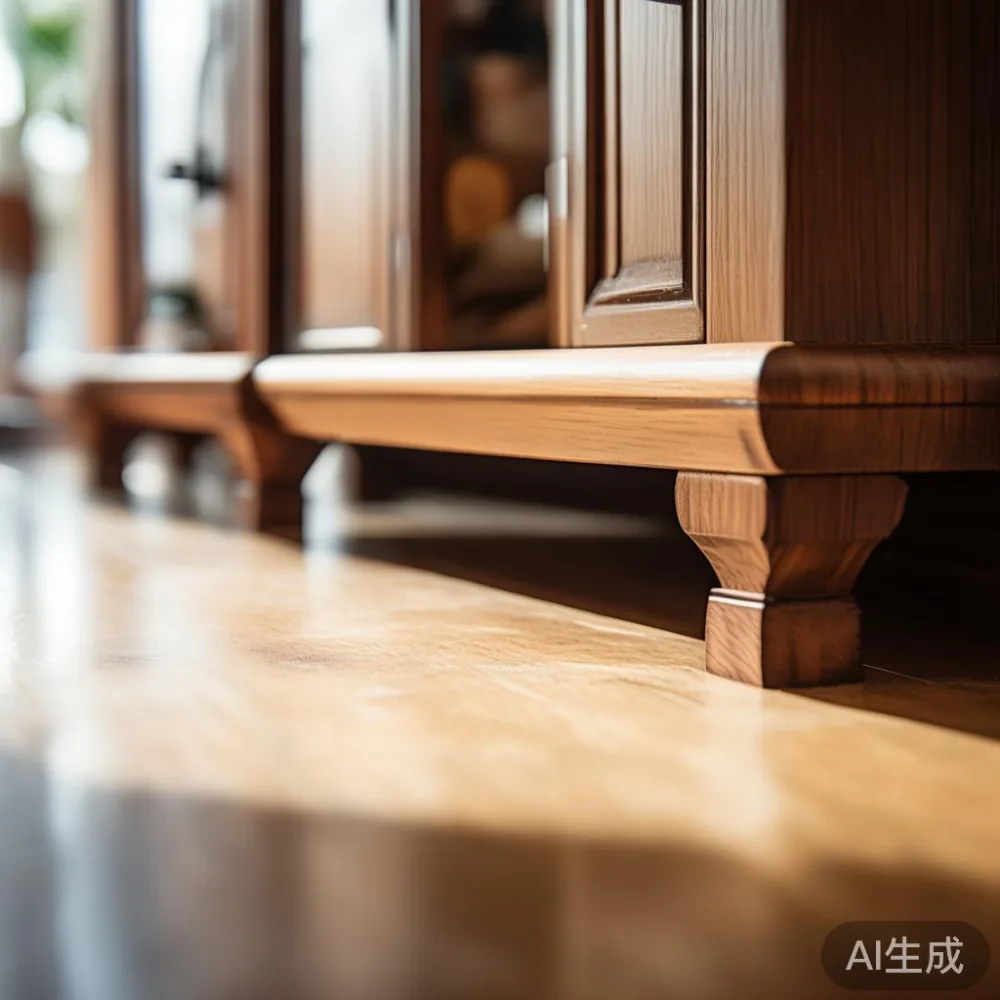
MIDHILL publishes kiln-dried ash and rubberwood specs as standard for its sofas, bed frames, dining tables, wardrobes, and nightstands, and the ten-year structural warranty is a useful proxy to the underside of the furniture. A seller offering a six-month warranty is signalling something about what is inside the wood. Ask for a copy of the warranty terms in writing before you pay the deposit, and read the exclusions. Most sofa warranties exclude "commercial use, abnormal load, and exposure to direct sunlight," which in a Tampines flat with afternoon sun on the window can void your coverage by month four. Pull the curtain fabric sample across a window for ten minutes before you commit. If it fades, the warranty will not help you.
Is the foam density written somewhere you can read it?
Showroom cushions feel like showroom cushions. The foam inside them sits between 25 and 35 kilograms per cubic metre for residential-grade seating. Anything below 25 will feel soft for two months and then collapse to half its height. Anything above 35 will feel firm for ten years, which is what most Singapore buyers actually want under daily use. Ask the seller for the foam density number. If the answer is "high density" without a number, treat that as a no. A legitimate factory will print the density on the spec sheet next to the fabric composition, the suspension type, and the load rating.
Suspension matters as much as foam. Eight-way hand-tied springs cost more and ship heavier, but they last 15 to 25 years. Sinuous S-springs cost less and last 8 to 12 years. Webbing lasts 5 to 8 years and is what most sub-S$1,200 listings use. For a three-seater solid wood sofa in a Tampines living room used every evening by two adults and a child, webbing is a false economy. You will replace the sofa once during your ten-year ownership cycle, which costs more than buying the right suspension the first time. The same logic applies when you compare a Japandi sofa in apartment settings versus an industrial entry: a Japandi frame is usually softer, lower, and relies on webbing, while an industrial frame in a guest room tends to be deeper and uses S-springs because the seat needs to hold shape under occasional heavy use.
Will the colour hold up under Singapore afternoon sun?
I keep a small fabric swatch book from MIDHILL on my desk, and the first thing I do with any new arrival is lay a 5 centimetre square on my office windowsill for a fortnight. Singapore UV is unforgiving. A beige boucle that looked perfect in the showroom turns into a pale yellow patch over the window seat within three months. The same effect hits marble table tops and lacquered wardrobes. Anything with a clear coat that exceeds a 2H pencil hardness rating will hold its sheen, anything below 1H will dull within the year. Ask for the rub count on the fabric too. A Martindale rub count above 30,000 is the residential benchmark. Below 15,000 and a sofa in a Bedok household with a cat will pill on day one.
Colour also affects how a sofa reads against the rest of the room. If you already own a shoe cabinet in white oak at the entryway, the living-room sofa should share that undertone. A warm walnut sofa against a cool ash shoe cabinet makes the whole flat feel disjointed. Match the wood tone at 10 percent darker or 10 percent lighter, never the same shade. The same rule applies to a dining table against a kitchen island, and to a bed frame against a wardrobe. The four-glass rule is: never buy a piece of furniture in a colour you cannot match to two existing pieces in the same room. For anyone planning a 2026 light luxury furniture refresh, this is the single piece of advice I would tattoo on the inside of the wardrobe door.
What does the warranty actually cover in writing?
A ten-year structural warranty means the factory replaces the load-bearing rails if they fail under the prevailing humidity in Singapore, at no labour cost to you. Lifetime refinishing means the factory will strip and re-lacquer the wood once per ownership cycle, usually at a 30 to 45 day turnaround in Foshan plus shipping, which adds another three to four weeks door-to-door for a Singapore customer. Free shipping over US$350 is the export-side threshold, which converts to roughly S$480 and applies to most sofa orders above this value, although shipping to a Punggol OCR address with no loading bay may still attract a S$40 to S$80 surcharge. A 14-day return policy only applies if the sofa arrives damaged or with the wrong SKU, not because the colour does not suit your living room. Read the return policy carefully. Singapore consumer protection under the Lemon Law requires the defect to be manufacturing-related, not preference-related, and the courier's packaging photograph is the evidence that decides the case.
Most warranty disputes in Singapore happen because the buyer assumed the warranty covered moving damage. A sofa that arrives in a Tampines flat, sits for eight months, then gets moved to a Punggol condo during a renovation is no longer covered. Photograph the sofa on the day it arrives, with the courier's unboxing visible, and keep that photograph for the full warranty period. If a crack appears at month thirty, that day-zero photograph is what gets the claim paid. The same discipline applies to a bed frame that ships with a stone-topped nightstand, a dining table that ships with a marble extension leaf, or any piece that involves a delivery team carrying it past a corridor mirror.
What about price versus free returns? Can the same sofa actually be cheaper at the showroom down the street?
A solid wood three-seater in the Foshan direct-export channel sits between S$1,650 and S$2,800 landed in Singapore, including GST at 9 percent and door-to-door delivery. The same SKU at a Simei or Tampines retail showroom will retail between S$2,800 and S$4,400 because the local agent needs to cover a 12 to 18 month rental on the showroom unit, plus the cost of carrying inventory. The math is not always in favour of the showroom, but the showroom has one advantage that the factory does not: you can see the sofa before you buy it. A 12 percent price premium for that certainty is reasonable. A 60 percent premium is not.
Before you decide, ask the showroom to disclose the landed cost in writing. If they refuse, walk. Then compare to the factory-direct quote, including the GST line item, the delivery surcharge to a non-blockwater block, and the lift-door surcharge if any. For a customer in a Punggol OCR unit with a 0.85 metre lift door, expect a S$120 surcharge to disassemble and re-assemble a 2.4 metre sofa in the corridor. For the same sofa to a Tampines HDB with a 1.05 metre lift door, the surcharge is zero. This is the single most underrated line item in a Singapore sofa purchase, and it is the line item that turns a S$2,200 object into a S$1,200 loss when the buyer ignores it.
Is the sofa compatible with the rest of your furniture plan?
The mistake I see most often is a sofa that fights the rest of the room. A solid wood sofa with turned legs and tufted cushions in a flat with a minimalist white-oak shoe cabinet looks stranded. A clean-lined ash sofa in a flat with a traditional rosewood shoe cabinet looks lost. Match the design language first, then match the wood tone, then match the cushion style. French light luxury pairs with marble table tops, curved legs, and soft chenille. American light luxury pairs with squared edges, deep seats, and tight-backed upholstery. Post-modern light luxury pairs with mixed metals, low backs, and slim arms. The right answer is the language you have already committed to in the dining table, the wardrobe, and the bed frame.
If you are starting from scratch with a MIDHILL bed in a 1.8 metre king size, plan the sofa around the same wood species, the same finish, and the same hardware. A matching five-piece set from one factory reads as a designed interior even at a low clearance budget. A sofa from one factory, a bed from another, a wardrobe from a third, and a nightstand from a fourth reads as a clearance shop. For shoppers considering the best Coastal wardrobe for 2026 as the anchor piece in a master bedroom, build the sofa selection around that wardrobe, not the other way around. For shoppers considering an industrial entry for the guest room and a Japandi sofa in apartment living room in the same flat, keep them in separate rooms with separate wood tones so the two styles do not clash in the corridor. The single best rule is: choose one design language per room, never per flat.
How do you avoid the show-and-buys that arrive broken?
Two out of every hundred sofas that ship Foshan-to-Singapore arrive with concealed damage that the buyer only notices at month three. The damage is usually a cracked mortise joint, a hairline fracture in a marble top, or a foam compression set that only shows when the box is opened late. Photograph the unboxing. Photograph the inside of the carton. Photograph each cushion as you remove it. If you do not photograph at unbox, you cannot claim at month three, and the factory's ten-year warranty will read the absence of evidence as the absence of a defect. Keep them for two years. The same discipline applies to any bed frame with a slatted base, any dining table with an extension mechanism, any wardrobe with soft-close hinges, and any nightstand with a marble top. Photograph at unbox, photograph at month six, photograph at year one. The factory's warranty reads photographs, not feelings.
For shoppers planning a full five-piece set in 2026 light luxury furniture, the same rule applies to a European light luxury bed frame with a tufted headboard, paired with a marble dining table, a four-door wardrobe, and a pair of nightstands. Buy them in one container if you can. A single shipment from Foshan takes 18 to 24 days door-to-door to a Singapore HDB, with GST at 9 percent paid on the landed value. Splitting into two shipments doubles the freight cost, doubles the GST line, and doubles the chance that one of the two shipments arrives damaged. Buy one container, sell one load. The same logic applies to anyone asking how to style a French provincial bed in apartment settings: the provincial frame is heavy, the carved headboard is wide, and you want it in one piece, not two.
What is the right way to test a sofa before you buy it online?
Ask the factory for a swatch book with seven fabric samples, four wood finish samples, and a 10 centimetre square of cushion foam. Press the foam between your fingers for ten seconds. If it springs back fully within three seconds, it sits above 28 kilogram density. If it stays compressed, it sits below 22 kilogram density. Lay the wood sample on a windowsill for a week. If it warps, the factory is shipping at above 14 percent moisture content and the sofa will move in your flat. Rub the fabric sample against a white cotton sheet thirty times. If colour transfers, the dye is not fixed and the fabric will bleed onto your child's clothing by month four. These three tests cost you nothing, take one week, and save you the cost of a sofa you cannot sit on because the foam is wearing the wrong density.
For shoppers planning how to style a Japandi sofa in apartment living rooms, the same three tests apply. A Japandi sofa in a 1.2 metre wide corridor in a Singapore BTO needs to clear the lift, fit through the door, and match the existing shoe cabinet at the entryway. Run the swatch book against the shoe cabinet finish before you commit. If the undertone clashes, choose a different fabric. For shoppers considering an industrial entry for the guest room, the same swatch book approach protects you against a sofa that looks right in the listing and clashes against the guest-room bed frame the day it arrives. The factory that ships swatches is the factory that has tested the sofa. The factory that does not ship swatches is the factory that has not tested anything.
What is the final pre-payment checklist?
Seven items, all on paper. One: packed carton dimensions in centimetres, with a note on whether the frame splits into modules. Two: lift clearance at your block, written into the order so the delivery team confirms before they load the truck. Three: foam density in kilograms per cubic metre, fabric rub count in Martindale cycles, and suspension type. Four: wood species and moisture content in writing, with a 10-year structural warranty attached. Five: GST line item at 9 percent, shipping line, lift surcharge if any, and total landed cost in Singapore dollars. Six: 14-day return window with the manufacturing-defect condition written in. Seven: day-zero unboxing photographs of every cushion, every joint, every marble top, and every soft-close hinge, kept on your phone for the full warranty period. If all seven are in writing, pay the deposit. If any one is missing, walk.
For shoppers choosing the best Coastal wardrobe for 2026 as the centrepiece of a bedroom, the same seven-item checklist applies, with one addition: ask for the wardrobe's internal drawer weight capacity in kilograms, written into the order. A 25 kilogram drawer capacity holds folded blankets. A 12 kilogram drawer capacity does not. The same question applies to a nightstand drawer, a dining table extension leaf, and a sofa's storage chaise. The seven-item checklist is the difference between a sofa you can sit on for ten years and a sofa you cannot sit on from the day it arrives.